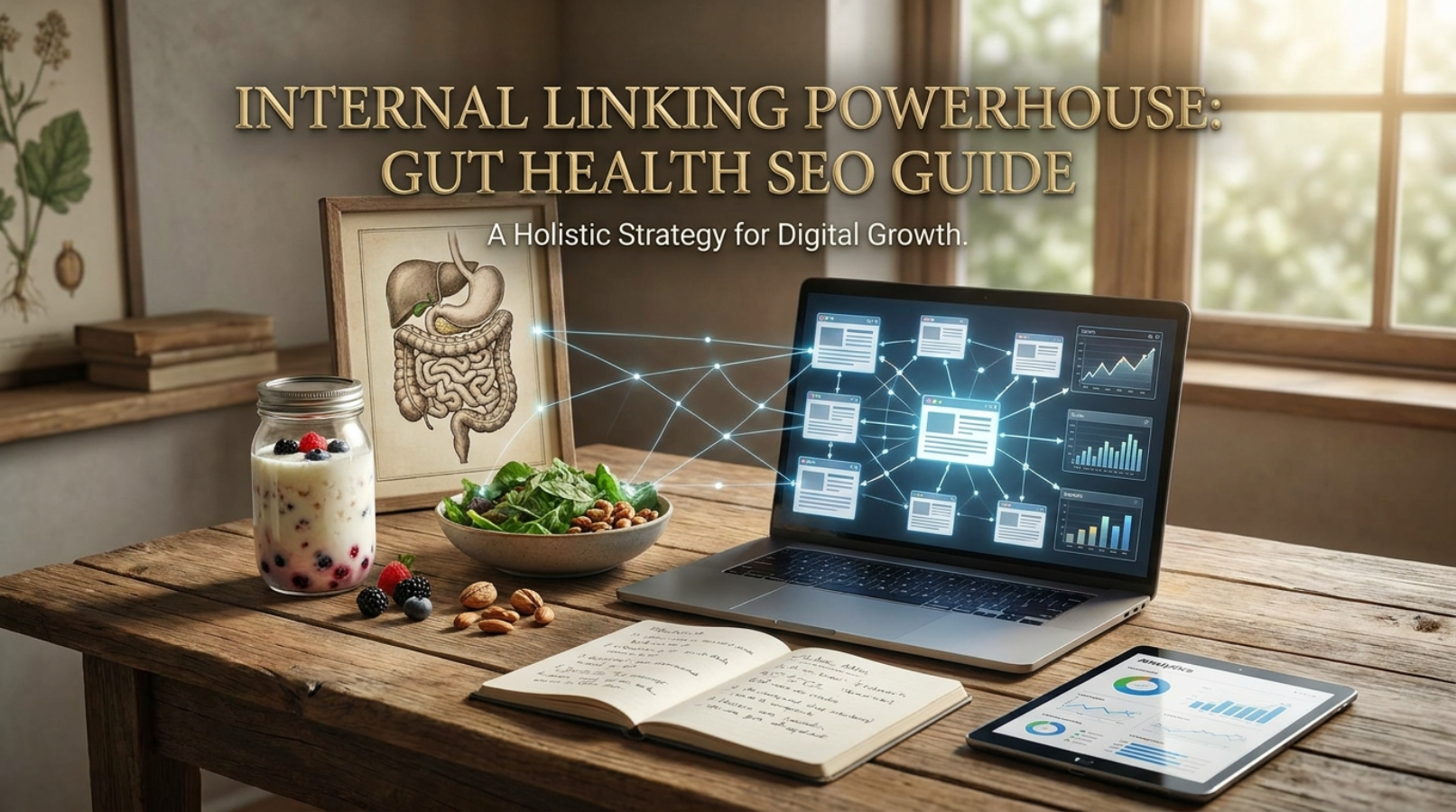
An internal linking powerhouse can turn a collection of helpful gut-health articles into a connected resource that readers can actually use. Instead of leaving related topics scattered across your website, thoughtful internal links guide people from one useful answer to the next. At Gutrova, this approach also works naturally with the Copy Button, giving readers an easy way to save and share helpful wellness information.
Quick Answer: What Is an Internal Linking Powerhouse?
An internal linking powerhouse is a website structure where relevant pages connect naturally through useful internal links. For a gut-health website, those links can connect related subjects such as fiber, probiotics, digestion, hydration, fermented foods, bloating, and seasonal wellness.
The goal isn’t to add as many links as possible.
Instead, each link should help the reader understand a topic more deeply or find the next useful piece of information. A strong internal linking system can also help search engines discover and understand the relationships between pages on your site.
Why an Internal Linking Powerhouse Matters
Imagine someone lands on an article about winter wellness.
They read about hydration and then wonder how much fiber they need. From there, they may want to learn about fiber-rich foods. Next, they might become interested in fermented foods or the gut microbiome.
Without internal links, that journey stops.
With relevant links, the reader can continue exploring without returning to Google every time a new question comes up.
That’s the real value of an internal linking powerhouse. It creates a path through your content rather than treating every article as a separate island.
For a health website, this can be especially useful because many nutrition topics overlap. Fiber connects with digestion. Fermented foods connect with gut bacteria. Hydration connects with bowel regularity. Seasonal eating connects with meal planning.
Your links should reflect those natural relationships.
Internal Linking Powerhouse Starts With Topic Relationships
A common mistake is linking pages simply because the words happen to match.
That’s not enough.
The strongest internal links connect ideas, not just keywords.
For example, an article about daily fiber could naturally link to:
- Fiber Foods
- Soluble Fiber
- Natural Fiber
- Fiber-Rich Meals
- Constipation and Fiber
- Gut Microbiome Foods
Similarly, an article about probiotics might connect to:
- Probiotic Foods
- Fermented Foods
- Synbiotics
- Gut Microbiome
- Beneficial Bacteria
- Digestive Health
These connections give readers context.
They also help create clear content clusters.
Think in Content Clusters
A content cluster usually starts with a broad topic and branches into narrower questions.
For example:
Gut Health
→ Gut Microbiome
→ Fiber
→ Probiotics
→ Prebiotics
→ Fermented Foods
→ Digestion
→ Bloating
→ Seasonal Gut Health
Then each major topic can have its own supporting articles.
This structure makes your website easier to browse because related information stays connected.
Build an Internal Linking Powerhouse Around Seasonal Content
Seasonal gut health is a great example of how internal links can make content more useful.
Suppose your website publishes an article about summer hydration.
That article could naturally point readers toward:
Hydration
→ Digestive Drinks
→ Lemon Water
→ Herbal Tea
→ Fiber and Hydration
→ Constipation
→ Summer Nutrition
Now consider a winter article.
Winter Wellness
→ Fiber-Rich Winter Foods
→ Hydration in Cold Weather
→ Fermented Foods
→ Healthy Comfort Foods
→ Gut-Friendly Meals
→ Daily Movement
The connections don’t need to be identical.
In fact, they shouldn’t be.
A summer article may emphasize fluids and water-rich foods, while a winter article may focus more on warm meals, movement, and maintaining regular routines.
The internal links should follow the reader’s needs.
Use Descriptive Anchor Text
Anchor text is the clickable wording used for an internal link.
Good anchor text tells readers what they’ll find next.
For example:
Helpful:
“Learn how much daily fiber you need.”
Less helpful:
“Click here to learn more.”
Descriptive wording gives readers a reason to continue.
It also provides useful context about the destination page.
You don’t need to force your exact target keyword into every anchor. Natural language is usually better.
For instance, an article about bloating could link with phrases such as:
- foods that may support digestion
- fiber-rich choices
- how to increase fiber gradually
- fermented foods
- tips for eating slowly
Each phrase can point to a genuinely relevant article.
Internal Linking Powerhouse Means Linking With Purpose
Every internal link should earn its place.
Before adding one, ask a simple question:
Will this link help the reader right here?
If the answer is no, skip it.
Too many links can make an article feel cluttered. Readers may also lose sight of the main point when every sentence contains another destination.
A better approach is to place links at moments when curiosity naturally appears.
For example:
Adding more fiber to your diet? Learn how to increase fiber gradually without making your meals unnecessarily complicated.
The reader has a clear reason to click.
That feels much more natural than inserting five unrelated links into one paragraph.
Create Links From Older Articles to New Ones
Internal linking shouldn’t happen only when publishing a new article.
Your existing content is valuable, too.
Let’s say you’ve already published 20 gut-health articles and then create a new guide about seasonal nutrition. Search through your older, relevant articles and identify places where the new guide genuinely adds value.
An article about:
- meal planning
- healthy groceries
- fiber foods
- gut-friendly recipes
- fermented foods
- winter wellness
might all provide natural opportunities.
This simple habit can make your internal linking powerhouse stronger over time.
Don’t Forget the New Article
There are two directions to consider.
Older → newer
Existing pages link to the new article.
Newer → older
The new article links back to established, useful resources.
Together, these connections create a web rather than a one-way road.
Internal Linking Powerhouse and Reader Experience
SEO matters, but reader experience comes first.
Imagine someone reading an article about constipation. They see a natural link to a detailed guide on fiber-rich foods. That link saves them time because they don’t have to search for the information themselves.
That’s useful.
Now imagine the same article contains links to ten loosely related pages. The reader has to decide which one matters. The experience becomes harder instead of easier.
Good internal linking reduces friction.
It helps people answer their next question without leaving your website.
For a health blog, that can be particularly valuable because readers often have several connected questions at once.
Link Deep, Not Just to Your Homepage
Your homepage is important, but it shouldn’t receive every internal link.
A healthy content structure sends readers deeper into the site.
For example:
Gut Health → Fiber → Daily Fiber → Fiber Foods → Fiber-Rich Recipes
This creates a logical journey.
You can also connect different branches:
Fiber Foods → Gut Microbiome
and
Gut Microbiome → Fermented Foods
The result is a website where useful information supports other useful information.
That’s much stronger than repeatedly linking everything back to the homepage.
Avoid Common Internal Linking Mistakes
Even a well-planned strategy can become messy.
Adding links just to increase link count
More isn’t automatically better. Relevance matters.
Using the same anchor text everywhere
Repeated exact-match anchors can sound unnatural. Mix clear, descriptive phrases when they accurately describe the destination.
Linking unrelated topics
A link should make sense in its surrounding paragraph. Don’t force a connection simply because two articles share one word.
Forgetting older content
New articles shouldn’t be the only pages receiving internal links. Review your existing library regularly.
Creating dead ends
Important articles should connect to other useful resources. A reader shouldn’t have to start a fresh search after every article.
Overloading paragraphs
Five links in one short paragraph can feel more like a menu than an article. Spread useful links across the content instead.
Build Your Internal Linking Powerhouse With a Simple Map
You don’t need complicated software to start.
A basic spreadsheet can be enough.
Create columns for:
| Article | Main Topic | Supporting Topics | Links To | Links From |
|---|---|---|---|---|
| Winter Wellness | Seasonal Gut Health | Hydration, fiber, movement | Fiber, hydration | Seasonal articles |
| Fiber Foods | Fiber | Gut bacteria, digestion | Daily fiber, recipes | Winter wellness |
| Fermented Foods | Fermentation | Probiotics, microbiome | Probiotics, gut microbiome | Gut health |
| Summer Hydration | Hydration | Digestion, fluids | Digestive drinks, fiber | Seasonal articles |
This gives you a quick picture of your site’s relationships.
As the website grows, the map becomes increasingly useful.
You can spot isolated articles, repeated topics, and opportunities for stronger connections.
A Practical Internal Linking Routine
Try this workflow whenever you publish a new article.
Step 1: Identify the main topic.
Know exactly what the article is trying to answer.
Step 2: Find three to five closely related articles.
Choose pages that genuinely expand the subject.
Step 3: Add links where readers naturally need more information.
Don’t insert them randomly.
Step 4: Review older content.
Find existing articles that could benefit from linking to the new page.
Step 5: Check the anchor text.
Make sure it accurately describes the destination.
Step 6: Read the article from start to finish.
If a link feels awkward while reading, reconsider it.
That final step is easy to skip. It’s also one of the most useful.
I like reading an article as if I were a first-time visitor. If I can move naturally from one question to another, the internal linking is doing its job.
Internal Linking Powerhouse: Quality Beats Quantity
A small website can have excellent internal linking.
You don’t need hundreds of articles.
What matters is creating meaningful relationships among the content you already have.
For example, ten strong gut-health articles can form a useful mini-library if each one connects to the others at sensible points.
As you publish more, keep building from that foundation.
Over time, your website becomes easier to explore because readers aren’t constantly starting over.
FAQ About an Internal Linking Powerhouse
What is an internal linking powerhouse?
An internal linking powerhouse is a well-connected website where relevant pages link naturally to one another. It helps readers discover related information and gives search engines clearer context about the site’s content structure.
How many internal links should an article have?
There isn’t one ideal number for every article. Focus on relevance and usefulness instead. Add links where they genuinely help readers explore a related topic.
Should internal links use exact-match keywords?
Not always. Descriptive, natural anchor text is usually more reader-friendly. Use exact phrases when they fit naturally, but don’t force the same wording repeatedly.
Should older articles link to new content?
Yes. Reviewing relevant older articles after publishing a new page can help connect your content library and make the new resource easier for readers to discover.
Can internal linking help a health website?
Yes. Health topics often overlap, so useful internal links can help readers move from broad information to more specific guidance. For example, a seasonal wellness article can connect naturally with hydration, fiber, fermented foods, digestion, and microbiome content.
Conclusion: Turn Your Content Into an Internal Linking Powerhouse
A strong internal linking powerhouse isn’t about stuffing articles with clickable words. It’s about building useful paths between pages so readers can keep learning without getting lost.
For Gutrova, that means connecting related subjects naturally: seasonal wellness with hydration, fiber with digestion, fermented foods with the microbiome, and practical recipes with everyday nutrition.
Start small. Pick a few important articles, identify their closest supporting topics, and add links where they genuinely help.
Then keep doing the same thing as your content library grows.
When internal links serve the reader first, your website becomes easier to navigate, easier to understand, and much more useful as a complete health resource. And when readers find a tip worth keeping, the Copy Button gives them a simple way to save or share it for later.
Yoast focus: The exact keyphrase “internal linking powerhouse” appears in the SEO title, meta description, H1, introduction, multiple H2/H3 headings, body copy, FAQ, and conclusion, while related wording is varied to avoid keyword stuffing.









1 thought on “Internal Linking Powerhouse: Gut Health SEO Guide”