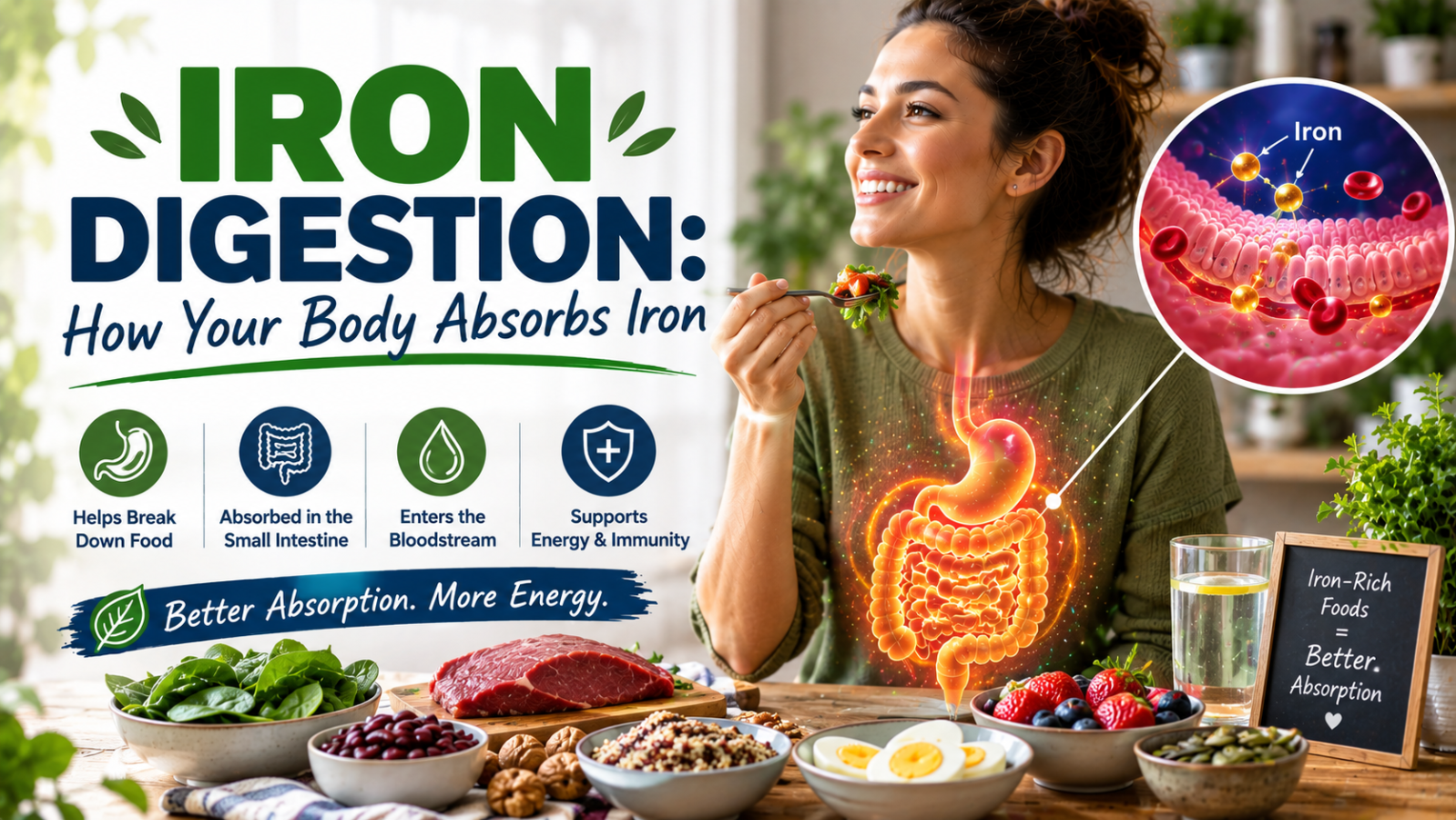
Iron digestion is the process that helps your body release, absorb, and use iron from the foods you eat. Iron plays an important role in several body functions, yet eating an iron-rich food does not mean your body absorbs all of its iron. Use the Copy Button to save the practical tips in this guide and revisit them when planning your meals.
Quick Answer: What Is Iron Digestion?
Iron digestion involves breaking down food and making iron available for absorption. Most iron absorption takes place in the small intestine, although the type of iron and the foods eaten alongside it can influence the amount your body absorbs.
In simple terms, your body must first process food before it can use its iron. Vitamin C can support the absorption of certain forms of dietary iron, while other dietary factors may reduce absorption.
How Iron Digestion Begins After You Eat
Iron enters your digestive system through food and, in some cases, supplements.
As you chew, food breaks into smaller pieces. It then moves into the stomach, where acids and digestive activity continue the process.
The stomach helps prepare nutrients for the next stage of digestion.
However, iron does not simply pass straight into the bloodstream. It must become available from the food before your body can absorb it.
Think about a meal containing spinach, beans, meat, or fortified cereal. Each food provides iron differently, and each travels through the digestive system as part of a larger meal.
That is one reason nutrition can become more interesting than a simple list of nutrients.
I’ve noticed that people often look at an iron number on a nutrition label and assume the story ends there. In reality, the digestive process and the rest of the meal can also matter.
Iron Digestion in the Stomach
The stomach provides an acidic environment that helps break down food.
During digestion, stomach acid and other digestive processes help release nutrients from the foods you consume. This can make iron more available as food continues through the digestive tract.
The exact process depends partly on the type of iron present.
For example, iron from animal foods differs from much of the iron found in plant foods. These forms are handled differently during absorption.
Still, both begin their journey as part of the food you eat.
A balanced meal contains many components at once. Protein, carbohydrates, fats, vitamins, minerals, and plant compounds all move through the digestive system together.
Therefore, it makes sense to view iron as part of your overall eating pattern rather than as an isolated nutrient.
Iron Digestion and the Small Intestine
Much of the important work happens in the small intestine.
After food leaves the stomach, it enters the small intestine, where nutrients can be absorbed. Iron that becomes available for absorption can pass through the intestinal lining and enter the body.
Your body also regulates iron carefully.
It does not necessarily absorb the same amount from every meal. Instead, the form of iron, your nutritional status, and the foods consumed alongside it can influence absorption.
This regulation is one reason food sources matter.
Research suggests that dietary iron is not absorbed equally from all foods. As a result, the combination of foods on your plate can sometimes make a practical difference.
That doesn’t mean every meal requires complicated planning.
Small, consistent choices are usually easier to maintain.
The Two Types of Dietary Iron
Dietary iron generally comes in two forms: heme iron and nonheme iron.
Heme Iron
Heme iron is found in animal foods such as meat, poultry, and seafood.
The body generally absorbs heme iron differently from nonheme iron. For that reason, food source can affect the way iron moves through the digestive process.
Nonheme Iron
Nonheme iron is found in many plant foods and fortified foods.
Beans, lentils, leafy greens, nuts, seeds, and fortified cereals can provide nonheme iron. Animal foods can also contain some nonheme iron.
Nonheme iron absorption can be influenced by other foods eaten during the same meal.
This is where vitamin C becomes particularly useful.
Iron Digestion and Vitamin C
Vitamin C can support the absorption of nonheme iron.
That means pairing certain plant-based iron sources with vitamin C-rich foods may be a practical strategy.
For example, you could eat:
- Lentils with bell peppers
- Beans with tomatoes
- Spinach with citrus fruit
- Fortified cereal with strawberries
- Tofu with broccoli
These combinations don’t need to be complicated.
A squeeze of lemon over a meal or a piece of fruit on the side can add vitamin C naturally.
Instead of obsessing over perfect food pairings, look for simple combinations you already enjoy.
A colorful plate often makes this easier.
Peppers, berries, oranges, kiwi, tomatoes, and broccoli can all contribute vitamin C to meals.
Foods That Provide Iron
Iron appears in a wide variety of foods.
Animal-based sources can include:
- Beef
- Poultry
- Seafood
- Certain shellfish
Plant-based and fortified sources can include:
- Lentils
- Beans
- Chickpeas
- Tofu
- Spinach
- Pumpkin seeds
- Some nuts and seeds
- Fortified cereals
- Fortified grain products
Different foods provide different amounts and forms of iron.
Therefore, variety can be helpful.
You don’t need to rely on one food every day. Rotating foods can also provide protein, fiber, vitamins, and other important nutrients.
For example, one day might include lentil soup, while another includes a tofu bowl or a meal with seafood.
That approach is usually more enjoyable than eating the same “healthy” food repeatedly.
What Can Affect Iron Digestion and Absorption?
Several factors can influence how your body absorbs dietary iron.
The type of iron is one factor. Foods eaten alongside it can also play a role.
Vitamin C may support nonheme iron absorption. On the other hand, some naturally occurring food compounds can reduce the absorption of certain forms of iron.
For example, compounds found in tea and coffee can affect iron absorption when consumed close to a meal.
This does not mean you must give up coffee or tea.
Instead, timing can matter for people who are trying to maximize iron absorption.
Similarly, plant foods contain compounds that interact with minerals.
That doesn’t make plant foods unhealthy. Whole grains, beans, nuts, seeds, and vegetables provide valuable nutrients and fiber.
A varied diet remains the most practical foundation.
Iron Digestion, Coffee, and Tea
Coffee and tea are part of many daily routines.
For some people, breakfast doesn’t feel complete without a hot cup. I’ve certainly seen how difficult it can be to suggest changing a morning coffee habit.
However, tea and coffee contain compounds that can affect the absorption of nonheme iron.
The effect may matter more for someone who has been advised to pay close attention to iron intake.
Rather than making extreme changes, timing may be worth considering.
Enjoying coffee or tea separately from an iron-focused meal can be a simple adjustment for some people.
Still, one cup of coffee does not automatically make a healthy diet ineffective.
Context matters.
Your total diet, eating habits, and individual nutritional needs all play a role.
Can Iron Digestion Cause Stomach Problems?
Iron-containing foods do not automatically cause digestive discomfort.
However, iron supplements can cause digestive side effects for some people.
Constipation, nausea, stomach upset, or changes in bowel habits may occur with certain products. Responses can vary from person to person.
Food sources may feel easier for some people because iron comes as part of a regular meal.
For instance, beans provide iron along with fiber and other nutrients. Lean meat provides protein alongside heme iron.
If you notice digestive discomfort after changing your diet, look at the full situation.
A sudden increase in fiber, a new supplement, or a major dietary change may all affect digestion.
Gradual changes are often easier on the gut.
Iron Digestion and Gut Health
Your digestive system plays a direct role in nutrient absorption.
That includes iron.
A healthy eating pattern can support digestion by including a variety of plant foods, adequate protein, and other nutrient-rich choices.
Fiber also deserves attention.
Fruits, vegetables, beans, and whole grains can support regular eating patterns and provide nutrients beyond iron.
Meanwhile, fermented foods may add variety to your diet.
The gut microbiome is an active area of scientific research, and researchers continue studying how diet influences gut microorganisms and nutrient metabolism.
However, no single food can solve every digestive concern.
A bowl of spinach will not magically transform gut health, and one supplement cannot replace a balanced diet.
Consistency usually matters more.
Simple Ways to Support Iron Digestion
You don’t need a complicated routine.
These practical habits can help you build meals around iron-rich foods.
Include Different Iron Sources
Rotate animal and plant sources based on your eating preferences.
For example, try lentils one day, tofu another day, and seafood or poultry at another meal.
Add Vitamin C-Rich Foods
Pair plant-based iron foods with colorful fruits and vegetables.
A serving of strawberries, bell peppers, broccoli, or citrus can fit easily into a meal.
Avoid Extreme Food Rules
You don’t need to remove every food that might influence mineral absorption.
Instead, focus on your overall dietary pattern.
Increase Fiber Gradually
Beans and lentils are nutritious, but a sudden increase can cause gas or bloating.
Give your digestive system time to adjust.
Build Meals You Enjoy
Nutrition works better when your habits are realistic.
Choose iron-rich foods that fit your taste, budget, and lifestyle.
Easy Meal Ideas That Include Iron
Breakfast can include fortified cereal topped with strawberries.
Another option is oatmeal with pumpkin seeds and fruit.
For lunch, try lentil soup with a tomato-based salad.
A bean bowl with bell peppers, avocado, and a squeeze of lime can also make a satisfying meal.
Dinner might include tofu with broccoli and rice.
If you eat animal foods, lean meat, poultry, or seafood can also contribute dietary iron.
The goal isn’t to make every meal perfect.
Instead, look for opportunities to include iron-containing foods throughout the week.
That approach feels more natural and is easier to maintain.
Are Iron Supplements Necessary?
Iron supplements can be appropriate in certain situations, but they are not necessary for everyone.
Some people use them after receiving guidance from a healthcare professional. Others may be able to meet their needs through food.
Supplement products can vary.
Different forms may have different instructions and may affect digestion differently. Therefore, reading the label carefully is important.
Taking extra iron simply because it sounds healthy is not always a good idea.
Your body regulates iron, and individual needs can differ.
Food remains valuable because it provides iron alongside many other nutrients.
Frequently Asked Questions About Iron Digestion
What is iron digestion?
Iron digestion is the process of breaking down iron-containing foods and making iron available for absorption. Much of the absorption takes place in the small intestine.
Does vitamin C help iron absorption?
Yes. Vitamin C can support the absorption of nonheme iron, which is commonly found in plant foods and fortified products.
Which foods contain iron?
Meat, poultry, seafood, beans, lentils, tofu, spinach, pumpkin seeds, and fortified cereals can provide iron.
Can coffee affect iron absorption?
Coffee and tea contain compounds that can affect nonheme iron absorption. Timing may matter for people who are focusing closely on iron intake.
Can iron supplements upset your stomach?
Some people experience digestive changes with certain iron supplements. Food-based sources may be easier to include in regular meals for some individuals.
Final Thoughts on Iron Digestion
Iron digestion is a gradual process that begins with the food on your plate and continues as your digestive system releases and absorbs nutrients. The type of iron matters, while vitamin C and other foods can also influence absorption.
Rather than chasing complicated nutrition rules, focus on practical habits. Eat a variety of iron-containing foods, include vitamin C-rich produce, and build meals that you genuinely enjoy.
Iron digestion is also part of a bigger picture that includes your overall diet and digestive health. Small changes can become useful habits when they fit naturally into everyday life.
Finally, use the Copy Button to save this guide and keep these iron digestion tips handy when planning your next meal.

Elizabeth Boham is a respected functional medicine physician and wellness educator with a passion for helping people improve their health through nutrition and lifestyle changes. As a contributor to Gutrova, she shares practical insights on gut health, digestive wellness, and healthy living, making complex health topics easy to understand and apply in everyday life.









1 thought on “Iron Digestion: How Your Body Absorbs Iron”