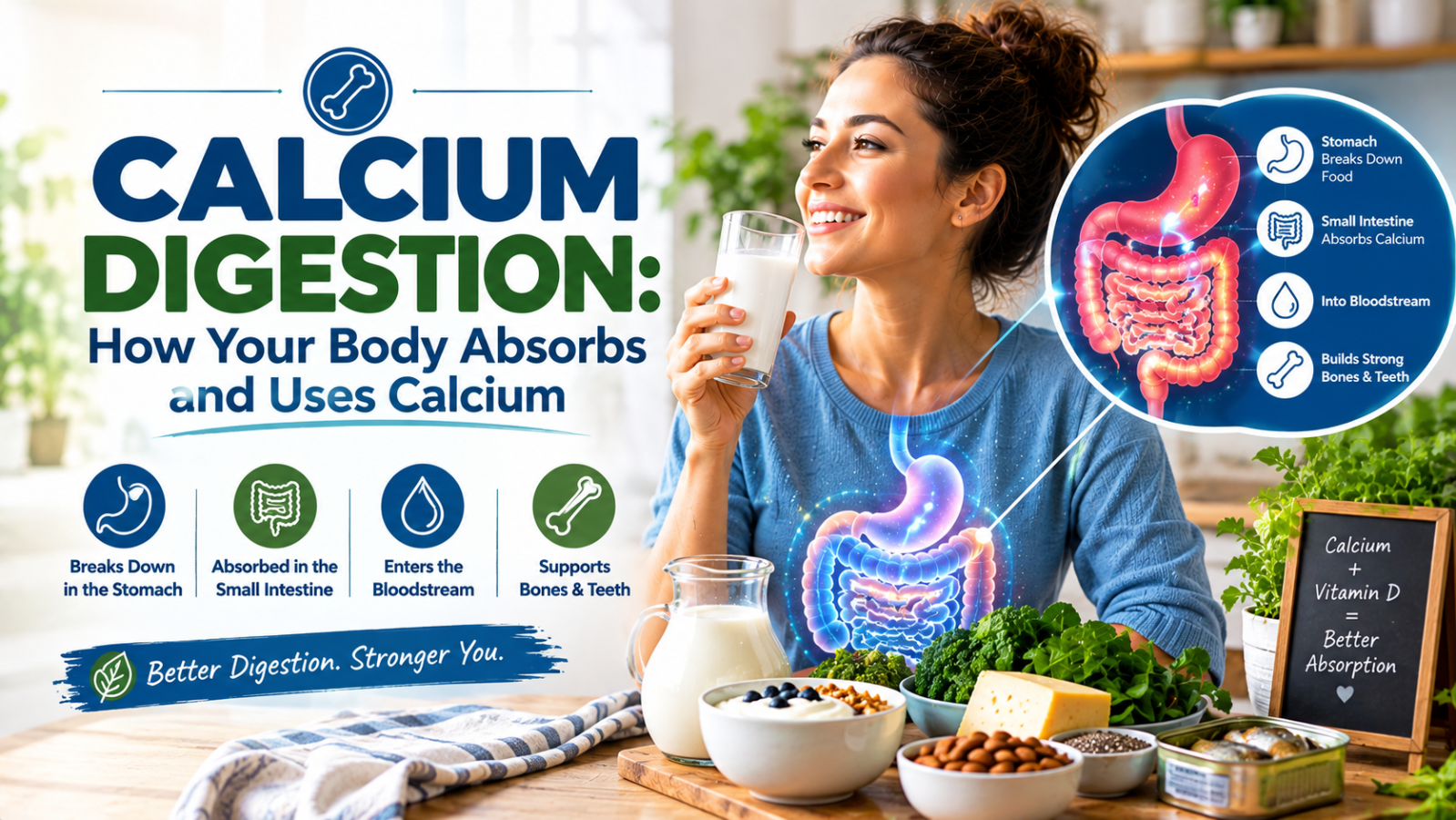
Calcium digestion is the process your body uses to release, absorb, and use calcium from the foods and drinks you consume. Although calcium is widely known for supporting bones and teeth, your digestive system plays an important role before the mineral can be put to use. You can also use the Copy Button to save the practical tips in this guide for later.
Quick Answer: What Is Calcium Digestion?
Calcium digestion describes what happens after you eat calcium-containing food. Your digestive system breaks down the food, releases calcium, and allows much of the mineral to be absorbed through the small intestine.
Vitamin D also supports calcium absorption. However, food source, overall diet, and individual digestive factors can influence how much calcium your body ultimately absorbs.
How Calcium Digestion Begins in Your Digestive System
The process begins the moment you start eating.
Chewing breaks food into smaller pieces, while saliva starts preparing it for digestion. After swallowing, food travels to the stomach, where acids and digestive activity continue breaking it down.
Calcium does not simply move directly from your plate into your bones. Instead, it must first become available during digestion.
Imagine eating yogurt, cheese, tofu, or a calcium-fortified food. Each contains calcium in a different food structure, so your digestive system has work to do before the nutrient can move farther along.
The stomach helps prepare food for the next stage. Afterward, the small intestine takes on much of the work involved in calcium absorption.
This is why nutrition and digestion are closely connected.
I’ve found that people often focus only on the nutrients listed on a package. Yet the body’s job doesn’t end when you eat the food. Digestion is what helps make those nutrients available.
Calcium Digestion in the Stomach
Your stomach creates an acidic environment that helps break food apart.
As food mixes with stomach contents, proteins and other food components begin changing. This process can help release minerals from the foods you eat.
However, the stomach is not where most calcium absorption occurs.
Its main role is preparation. Food gradually becomes a partially digested mixture before moving into the small intestine.
Different calcium sources may also behave differently during digestion.
For example, calcium naturally present in dairy foods comes alongside protein and other nutrients. Fortified foods contain added calcium, while supplements may provide concentrated forms of the mineral.
Therefore, not every calcium source follows exactly the same path through a meal.
Still, the digestive system handles all of them as part of the broader process of breaking down food and absorbing nutrients.
Why the Small Intestine Matters for Calcium Digestion
The small intestine plays a central role in calcium absorption.
Once partially digested food reaches this area, nutrients can pass through the intestinal wall. Calcium that is absorbed can then enter the bloodstream and become available for the body’s needs.
Your body carefully regulates calcium.
It doesn’t simply absorb unlimited amounts at every meal. Instead, several factors influence the process.
Vitamin D is one of the most important.
Research and health experts generally recognize vitamin D as a key nutrient for calcium absorption. As a result, getting enough calcium is only one part of the picture.
The small intestine also absorbs many other nutrients.
That is why a varied, balanced diet supports more than one body function. A meal can provide calcium, protein, vitamins, healthy fats, and other nutrients at the same time.
Calcium Digestion and Vitamin D: Why They Work Together
Vitamin D helps the body absorb calcium from the digestive tract.
For that reason, these two nutrients are frequently discussed together.
The National Institutes of Health recognizes the important relationship between vitamin D and calcium. Simply put, your body needs adequate vitamin D to support normal calcium absorption.
You can get vitamin D from certain foods and fortified products. Sunlight exposure also contributes to vitamin D production, although many factors affect how much a person produces.
Meanwhile, calcium comes from a variety of foods.
Neither nutrient replaces the other.
Instead, they work as part of a larger nutritional system. A balanced eating pattern can help you include both without turning every meal into a complicated calculation.
Foods That Support Healthy Calcium Digestion
Calcium comes from more foods than many people realize.
Milk is a familiar source, but plenty of other options can contribute to your daily intake.
Common calcium-containing foods include:
- Milk
- Yogurt
- Cheese
- Fortified plant-based beverages
- Calcium-set tofu
- Fortified cereals
- Canned sardines with edible bones
- Canned salmon with edible bones
- Certain leafy green vegetables
- Fortified foods and beverages
The amount of calcium varies from one food to another.
Absorption can vary as well. Therefore, eating a mix of calcium-rich foods may be more useful than depending on a single source.
For example, you might have yogurt at breakfast, use fortified milk in a smoothie, and enjoy tofu or fish at dinner.
That approach also keeps meals interesting.
Calcium Digestion From Dairy Foods and Plant Foods
Dairy products are common calcium sources in the United States.
Milk, yogurt, and cheese naturally contain calcium. They can fit easily into breakfast, snacks, or meals.
Plant-based eaters also have options.
Fortified soy, almond, oat, and other plant-based beverages may contain added calcium. However, products differ, so checking the nutrition label is helpful.
Calcium-set tofu is another useful choice.
Certain vegetables contain calcium too. Yet plant foods can also contain natural compounds that influence mineral absorption.
That doesn’t make those foods less healthy.
Beans, vegetables, whole grains, nuts, and seeds offer fiber and many other nutrients. Instead of avoiding them, focus on dietary variety.
A diverse plate can support both your digestive system and your overall nutrition.
What Can Affect Calcium Digestion and Absorption?
Several things can influence calcium absorption.
Your vitamin D status is one factor. The amount of calcium consumed at one time may also matter.
Food composition can play a role too.
Some foods contain naturally occurring compounds that can interact with minerals. At the same time, your overall dietary pattern can affect how nutrients work together.
Age may influence nutrient needs as well.
However, you don’t need to analyze every meal.
Trying to create a perfectly optimized plate can make healthy eating stressful. A more realistic approach is to eat varied foods consistently.
Small habits tend to be easier to maintain.
For instance, adding calcium-rich foods to meals throughout the week may be more practical than attempting to get everything from one oversized serving.
Calcium Digestion and Fiber: Can You Have Both?
Absolutely.
Fiber and calcium can both be part of a healthy eating pattern.
Some people assume that a high-fiber diet automatically prevents the body from absorbing minerals. The reality is more complicated than that.
Different fibers and plant compounds have different effects. In addition, the amount eaten and the rest of your diet can matter.
Fiber-rich foods offer valuable benefits for digestion.
Vegetables, fruits, beans, whole grains, nuts, and seeds can support a varied diet. Many of these foods also provide vitamins and minerals.
Instead of cutting out nutritious plant foods, aim for balance.
If you’ve recently increased your fiber intake, go gradually. A sudden jump can cause gas or bloating for some people.
Drinking enough fluids may also make the adjustment more comfortable.
Can Calcium Digestion Cause Constipation or Bloating?
Calcium-rich foods do not automatically cause digestive problems.
However, some people notice changes when they begin using a calcium supplement.
Constipation can occur with certain supplements or changes in routine. Individual responses can differ.
Food sources may feel easier for some people because calcium becomes part of an ordinary meal.
For example, yogurt with berries makes a simple breakfast. Calcium-set tofu can work in a stir-fry, while fortified milk can be added to oatmeal.
If a meal causes bloating, look at the entire meal.
The issue may not be calcium itself. Large portions, lactose, added sweeteners, high amounts of fiber, or other ingredients may contribute to digestive discomfort.
That broader perspective can be helpful.
Calcium Digestion and Gut Health
Your digestive tract processes the food you eat and helps your body absorb nutrients.
Calcium is one of those nutrients.
A gut-friendly eating pattern can include fiber-rich foods, fermented foods, fruits, vegetables, and appropriate sources of protein and healthy fats.
Some calcium-rich foods also fit naturally into that pattern.
Yogurt, for example, can provide calcium and may contain live cultures. Plant-based meals can include calcium-set tofu alongside vegetables and fiber-rich foods.
Researchers continue studying the relationship between diet, gut microorganisms, and nutrient metabolism.
However, no single food can solve every digestive concern.
Consistent eating habits usually matter more than searching for one “perfect” superfood.
Simple Ways to Support Calcium Digestion Every Day
You don’t need a complicated routine.
A few practical habits can help you build a more balanced diet.
Include Calcium Foods Across the Day
Rather than getting all your calcium from one meal, spread calcium-containing foods across your usual eating routine.
Try yogurt at breakfast, a fortified beverage in the afternoon, or tofu with dinner.
Include Vitamin D Sources
Because vitamin D supports calcium absorption, it deserves attention too.
Fortified foods and other dietary sources can contribute to your overall intake.
Eat a Variety of Foods
No single food provides everything your body needs.
Therefore, include fruits, vegetables, whole grains, proteins, and calcium-rich foods throughout the week.
Make Changes Gradually
A sudden increase in fiber or a major dietary change can upset digestion.
Instead, give your body time to adjust.
Choose Foods You Actually Enjoy
A healthy eating pattern should feel realistic.
If you dislike plain milk, there are other calcium sources to explore.
Easy Meal Ideas for Calcium and Digestive Health
Breakfast can be as simple as plain yogurt with blueberries and oats.
Another option is oatmeal prepared with a fortified plant-based beverage.
For lunch, try a grain bowl with calcium-set tofu, beans, and colorful vegetables.
A smoothie can also work well. Combine a fortified beverage with fruit and yogurt if dairy fits your eating style.
Dinner offers plenty of possibilities.
Salmon with vegetables and a whole grain makes a balanced meal. Tofu stir-fries, bean dishes, and dairy-based meals can contribute calcium too.
Variety keeps things practical.
You don’t need to eat every calcium-rich food in a single day.
Are Calcium Supplements Necessary?
Not everyone needs a calcium supplement.
For many people, food can provide calcium as part of a balanced diet. However, some individuals may use supplements when dietary intake is difficult to meet or when a healthcare professional recommends one.
Supplement forms can differ.
Directions may also vary, so it is important to read the product label carefully.
Don’t assume that more calcium is always better.
Supplements can be useful in specific situations, but they do not replace a varied diet. Food still provides a wider range of nutrients and can contribute to a balanced eating pattern.
Frequently Asked Questions About Calcium Digestion
What is calcium digestion?
Calcium digestion is the process of breaking down calcium-containing foods and making calcium available for absorption. Much of the absorption occurs in the small intestine.
Does vitamin D help calcium absorption?
Yes. Vitamin D helps the body absorb calcium through the digestive tract, which is why both nutrients are important.
Which foods contain calcium?
Milk, yogurt, cheese, fortified beverages, calcium-set tofu, canned fish with edible bones, and certain vegetables can provide calcium.
Can calcium supplements cause constipation?
Some people may experience constipation or other digestive changes with certain calcium supplements. Responses can vary depending on the person and the product.
Does fiber interfere with calcium?
Fiber-rich foods can be part of a healthy diet that includes adequate calcium. You do not need to avoid nutritious high-fiber foods simply because they contain fiber.
Final Thoughts on Calcium Digestion
Calcium digestion is part of a larger process involving the stomach, small intestine, vitamin D, and the foods you eat every day. Your body must first process food before calcium can be absorbed and used.
Instead of searching for a perfect calcium source, focus on variety. Include foods you enjoy, add calcium-rich choices regularly, and build meals around a balanced mix of nutrients.
Calcium digestion also works best as part of a bigger picture. Healthy eating habits, adequate nutrition, and a well-functioning digestive system all matter.
Simple, consistent food choices are usually easier to maintain than complicated nutrition rules.
Finally, use the Copy Button to save this guide and keep the meal ideas and calcium digestion tips handy for your next grocery trip.












1 thought on “Calcium Digestion: How Your Body Absorbs and Uses Calcium”