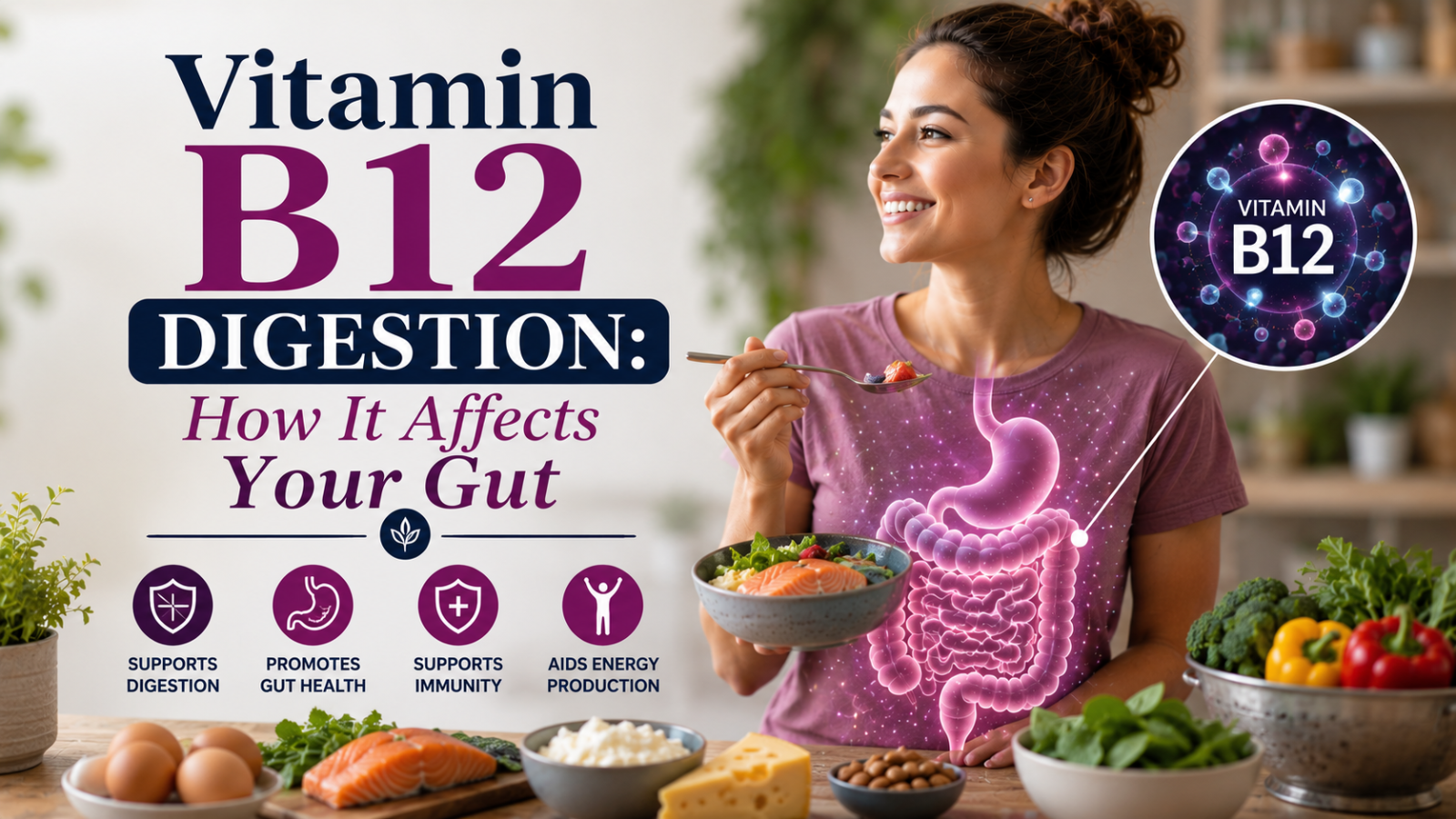
Vitamin b12 digestion is more complex than many people realize because your body must break down, transport, and absorb this essential nutrient through several carefully coordinated steps. If you enjoy Gutrova’s practical health tips, you can also use the handy Copy Button to save or share useful information from this guide.
Although vitamin B12 isn’t usually discussed as a digestive nutrient, your stomach and intestines play a major role in helping your body absorb it. A healthy digestive process helps make the vitamin B12 in your food available for your body to use.
Quick Answer: What Is Vitamin B12 Digestion?
Vitamin b12 digestion refers to the process your body uses to release vitamin B12 from food, bind it to helpful proteins, and absorb it through the small intestine. Stomach acid and a protein called intrinsic factor both play important roles.
Therefore, digestion can influence how efficiently your body obtains B12 from food. Eating enough B12 matters, but your body must also be able to process and absorb the nutrient properly.
What Is Vitamin B12 and Why Does Your Body Need It?
Vitamin B12 is a water-soluble vitamin that supports several important functions in the body. It contributes to normal red blood cell formation, nerve function, and DNA production.
Unlike many nutrients, B12 is found naturally in meaningful amounts primarily in animal-derived foods. Meat, fish, eggs, milk, yogurt, and other dairy products can provide vitamin B12.
Your body also stores some B12, particularly in the liver. However, storage doesn’t mean absorption becomes unimportant.
A person can consume foods containing B12 while still having difficulty absorbing enough of it. That is one reason vitamin b12 digestion deserves attention.
Common Food Sources of Vitamin B12
Many people get B12 from a varied diet that includes:
- Fish and seafood
- Meat and poultry
- Eggs
- Milk
- Yogurt
- Cheese
- Fortified cereals
- Fortified plant-based foods
People following vegan diets may need to pay closer attention to fortified foods because natural plant foods generally don’t provide reliable amounts of vitamin B12.
How Vitamin B12 Digestion Begins in the Stomach
The first important stage of vitamin b12 digestion begins in the stomach. When you eat a food containing B12, the vitamin is typically attached to proteins within that food.
Stomach acid and digestive enzymes help separate vitamin B12 from those food proteins. As a result, the vitamin becomes available to continue through the digestive process.
This step demonstrates why digestion isn’t simply about breaking food into smaller pieces. Your digestive system also helps release nutrients so your body can eventually absorb them.
I find this part especially interesting because we often think of the stomach as a simple mixing chamber. In reality, it plays a highly organized role in nutrient processing.
Stomach Proteins Help Protect B12
After vitamin B12 separates from food, it attaches to another protein. This temporary partnership helps protect the vitamin as it moves beyond the stomach.
The process continues when food enters the small intestine. Therefore, several organs work together during vitamin b12 digestion.
Why Intrinsic Factor Matters for Vitamin B12 Digestion
Intrinsic factor is a protein produced by specialized cells in the stomach. It has an essential role in helping the body absorb vitamin B12.
As digestion progresses, B12 eventually binds to intrinsic factor. This combination then travels toward the final absorption site in the small intestine.
Without this process, getting vitamin B12 from food becomes much more difficult.
The relationship between intrinsic factor and B12 is one of the most distinctive examples of how digestion supports nutrient absorption.
Where Does B12 Get Absorbed?
The final stage occurs in a portion of the small intestine called the ileum. Specialized receptors there recognize the vitamin B12–intrinsic factor combination.
Once the body absorbs B12, the nutrient can enter circulation and become available for important biological functions.
Because several steps are involved, vitamin b12 digestion depends on more than simply eating foods rich in B12.
The Connection Between Vitamin B12 Digestion and Gut Health
Gut health and nutrient absorption are closely connected, although they aren’t exactly the same thing. Your digestive tract must perform several jobs efficiently to process food and make nutrients available.
For vitamin B12, the stomach and small intestine have particularly important roles. A healthy digestive system supports the normal sequence of events involved in releasing, binding, and absorbing B12.
Research suggests that the gut microbiome may also interact with nutrient metabolism in complex ways. However, scientists are still learning about many details of those relationships.
It’s best not to oversimplify the connection. Eating fermented foods or taking probiotics, for example, doesn’t automatically improve B12 absorption.
Instead, think about gut health as part of a broader picture that includes diet, digestion, nutrient intake, and individual health factors.
A Balanced Diet Supports Digestive Function
Foods rich in fiber can support regular digestion and feed beneficial gut microbes. Meanwhile, adequate protein, healthy fats, and a variety of vitamins and minerals support overall nutrition.
A diverse diet won’t guarantee better vitamin b12 digestion, but it can help create a strong nutritional foundation.
What Can Affect Vitamin B12 Digestion?
Several factors can influence the body’s ability to process and absorb vitamin B12. Some relate to food choices, while others involve changes in digestive function.
Age can also affect digestion. For example, some older adults may produce less stomach acid, which can make it harder to release B12 from food proteins.
Certain digestive conditions may also interfere with nutrient absorption. In addition, surgery involving parts of the stomach or small intestine can affect the normal absorption process.
Medications may influence B12 status in some people as well. Therefore, persistent concerns about nutrient absorption deserve individualized attention.
Low Stomach Acid and B12
Stomach acid helps release vitamin B12 from proteins found in food. When that process changes, the early stages of vitamin b12 digestion may also change.
However, low stomach acid isn’t something you should assume based on occasional bloating or indigestion. Many digestive symptoms have different causes.
That distinction matters because guessing can lead people toward unnecessary supplements or restrictive diets.
Best Foods to Support Vitamin B12 Digestion
A practical approach begins with eating enough B12-containing foods while maintaining a balanced eating pattern.
For people who eat animal products, fish, eggs, dairy, and meat can contribute vitamin B12. Variety can make meals more interesting and may also provide other nutrients that support general health.
Here are a few simple meal ideas:
Breakfast
Try eggs with sautéed spinach and whole-grain toast. Alternatively, yogurt topped with berries can provide a convenient option for people who consume dairy.
Lunch
A salmon salad with colorful vegetables offers protein, healthy fats, and a variety of plant foods. Add beans or whole grains for extra fiber.
Dinner
Chicken, fish, or another protein source paired with roasted vegetables can create a balanced plate. Meanwhile, a baked sweet potato can add fiber and a naturally satisfying flavor.
The goal isn’t to create a perfect meal every time. Consistency and variety usually make healthy eating easier to maintain.
Can Supplements Help With Vitamin B12 Digestion?
Vitamin B12 supplements can be useful in certain situations, particularly when dietary intake is low or absorption is affected. However, supplements don’t work as a replacement for understanding why B12 levels may be low.
Different forms of B12 supplements are available. Some people also use fortified foods as part of their regular routine.
Health professionals may recommend a specific approach based on a person’s diet, age, medications, or absorption concerns.
For example, someone eating a completely plant-based diet has different nutritional considerations from someone who regularly eats fish, eggs, and dairy.
Therefore, the best strategy depends on the individual.
Food First When Appropriate
For many people, whole foods provide an easy starting point. They offer vitamin B12 along with protein and other nutrients.
However, dietary choices alone may not address every absorption issue. That’s why vitamin b12 digestion and vitamin B12 intake should be considered as related but separate topics.
Everyday Habits That Support Healthy Digestion
You don’t need an elaborate routine to support normal digestion. Small habits can make meals feel more comfortable and encourage a consistent eating pattern.
Consider these practical ideas:
- Eat a varied diet throughout the week.
- Include foods naturally rich in vitamin B12 if they fit your eating pattern.
- Choose fortified foods when appropriate.
- Eat fiber-rich plant foods regularly.
- Drink enough fluids throughout the day.
- Avoid rushing through every meal.
- Chew food thoroughly.
- Include regular movement in your routine.
- Get adequate sleep.
- Manage stress with realistic habits.
- Avoid unnecessarily restrictive diets.
- Pay attention to persistent digestive symptoms.
- Discuss ongoing nutrient concerns with a qualified health professional.
These habits don’t guarantee improved nutrient absorption. Still, they can support general digestive health and healthier eating patterns.
Vitamin B12 Digestion vs. Vitamin B12 Intake
It’s easy to confuse these two ideas.
Vitamin B12 intake describes how much B12 you consume through food or supplements. Vitamin b12 digestion, on the other hand, describes how your digestive system processes the nutrient before absorption.
You need both parts of the equation.
For instance, a person might eat foods containing B12 but have difficulty with one stage of absorption. Another person may absorb B12 normally but consume very little of it.
That difference explains why nutrition isn’t always as simple as adding one food to your grocery list.
Signs That May Suggest a B12 Concern
Symptoms alone can’t diagnose a vitamin B12 issue. Still, persistent changes in energy, nerve-related sensations, or other unexplained concerns may deserve attention from a healthcare professional.
The NIH and other health authorities recognize vitamin B12 as an essential nutrient with important roles throughout the body.
Digestive symptoms can have many possible causes, too. Therefore, it’s better to look for patterns and seek appropriate guidance rather than assuming vitamin B12 is responsible.
A balanced approach is especially helpful because internet searches can make common symptoms seem connected to almost anything.
Simple Ways to Make B12 Foods Part of Your Routine
Adding B12-rich foods doesn’t have to complicate your meals.
Try keeping eggs available for quick breakfasts. Add canned salmon or tuna to lunches, or use plain yogurt as a snack.
If you follow a plant-based eating pattern, check labels on fortified foods. Breakfast cereals, plant milks, and other products can vary widely.
I also like the practical approach of building meals around foods you already enjoy. A healthy eating routine is much easier to maintain when it doesn’t feel like a daily project.
For example, instead of forcing yourself to eat the same breakfast every morning, rotate several options.
Variety can prevent food boredom while giving you a broader mix of nutrients.
Frequently Asked Questions About Vitamin B12 Digestion
What helps vitamin B12 digestion?
Normal stomach acid, digestive enzymes, intrinsic factor, and a functioning small intestine all contribute to the process. A balanced diet also supports general digestive health.
Does vitamin B12 improve digestion?
Vitamin B12 has important functions in the body, but it isn’t a general digestive remedy. It shouldn’t be viewed as a guaranteed solution for bloating, constipation, or other digestive problems.
Can poor digestion cause low vitamin B12?
Certain problems affecting the stomach or small intestine can interfere with B12 absorption. However, many factors can influence B12 status, including dietary intake.
Are eggs good for vitamin B12?
Eggs contain vitamin B12 and can contribute to daily intake. The amount varies, so eating a varied diet can help provide a broader range of nutrients.
Do gut bacteria produce vitamin B12?
Some microorganisms can produce compounds related to vitamin B12. However, the relationship between gut microbes and the B12 available for human nutrition is complex.
Final Thoughts on Vitamin B12 Digestion
Vitamin b12 digestion is a multi-step process involving the stomach, digestive proteins, intrinsic factor, and the small intestine. Eating foods that contain B12 is important, but your body must also release and absorb the nutrient effectively.
The most practical approach is to maintain a varied diet, include reliable B12 sources that fit your eating pattern, and avoid assuming that every digestive symptom points to a nutrient problem. Small, sustainable habits usually make more sense than chasing quick fixes.
If you found these vitamin b12 digestion tips helpful, use the Copy Button to save the guide or share it with someone who wants to better understand the connection between digestion and nutrient absorption.

Elizabeth Boham is a respected functional medicine physician and wellness educator with a passion for helping people improve their health through nutrition and lifestyle changes. As a contributor to Gutrova, she shares practical insights on gut health, digestive wellness, and healthy living, making complex health topics easy to understand and apply in everyday life.









1 thought on “Vitamin B12 Digestion: How It Affects Your Gut”