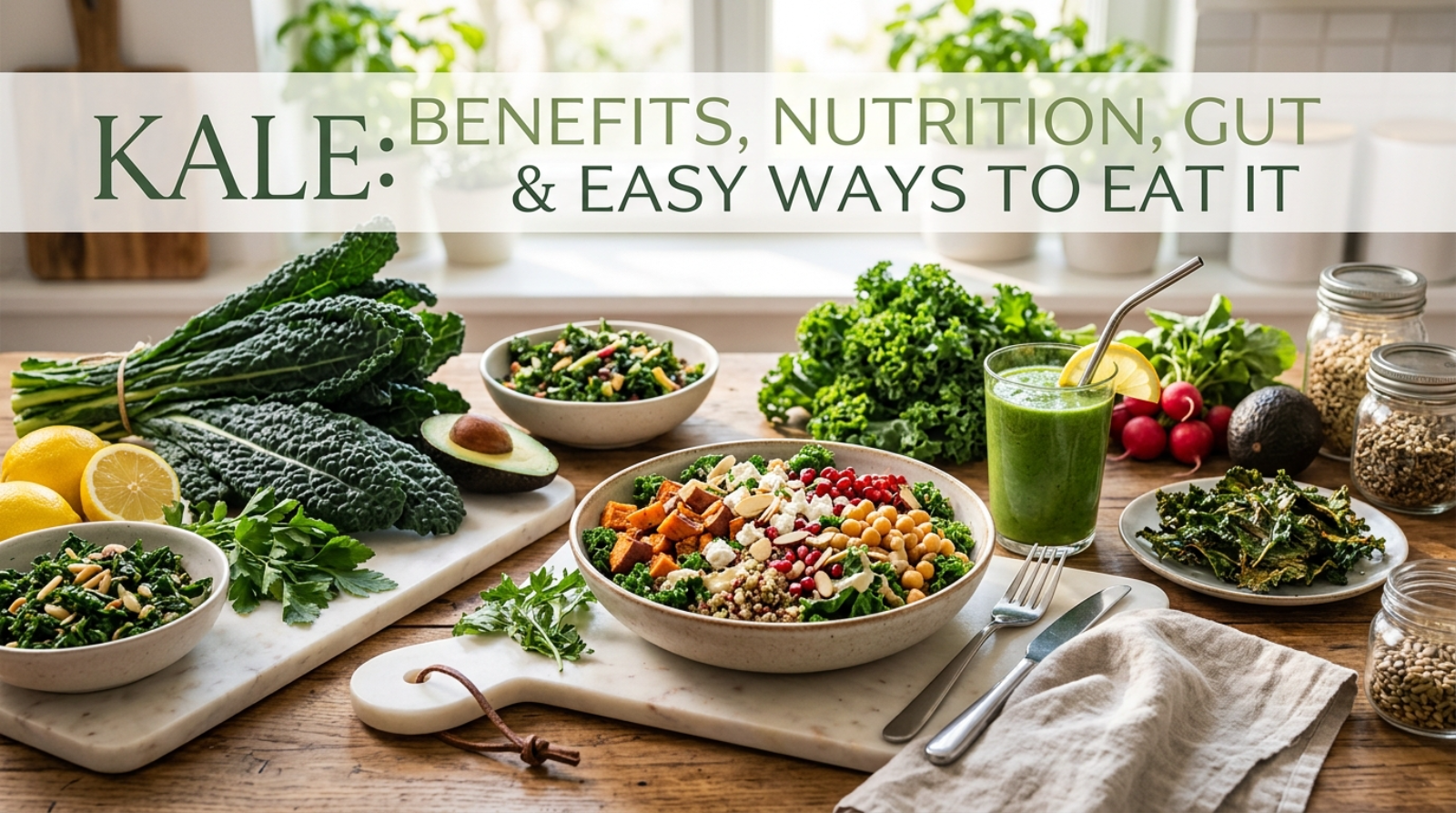
Kale is one of those leafy greens that can do far more than sit beside a piece of chicken on your dinner plate. Its fiber, vitamins, minerals, and plant compounds make it a useful addition to a varied diet, especially when you prepare it in ways you actually enjoy. You can also use the Copy Button to save your favorite tips and meal ideas for later.
Quick Answer: Is Kale Good for You?
Yes, kale is a nutrient-dense leafy green that provides fiber, vitamin K, vitamin C, folate, carotenoids, and minerals such as calcium and potassium. It also contains naturally occurring plant compounds that add nutritional variety to your meals.
For gut health, kale can contribute dietary fiber and help increase the range of plant foods in your diet. However, you don’t need to eat huge bowls of raw greens to benefit from it.
A practical approach is to add kale to meals you already enjoy. Cook it into soups, blend a small amount into smoothies, massage it into salads, or sauté it with garlic and olive oil.
Kale Nutrition: What Makes This Green Special?
Kale packs plenty of nutrition into a relatively simple vegetable.
It provides vitamins A, C, and K, along with folate and several minerals. Dark green leaves also contain carotenoids and other plant compounds that contribute to their color and nutritional value.
The exact nutrient profile can vary with the variety and preparation method. Still, the bigger picture remains useful: leafy greens are an easy way to increase the nutritional variety of your diet.
One practical advantage is versatility. A bunch of kale can become a salad, soup ingredient, side dish, smoothie addition, or crispy snack.
That flexibility makes it easier to use regularly instead of buying vegetables that end up forgotten in the refrigerator.
Raw or Cooked Kale?
Both options can work.
Raw kale has a firm texture and stronger flavor. Cooking softens the leaves and makes them easier to mix into warm dishes.
If raw kale feels tough or bitter, don’t give up on it immediately. Try steaming, sautéing, or adding it to soup instead.
I find that preparation makes a huge difference with sturdy greens. A little olive oil, garlic, lemon, and heat can turn something that feels overly earthy into a surprisingly good side dish.
Kale and Gut Health
Your digestive system benefits from a diet that regularly includes fiber-rich plant foods.
Kale contributes dietary fiber, although it isn’t the only vegetable you should rely on. Its real value comes from being part of a broader pattern that includes many different plants.
Fiber also supports normal bowel function. Some dietary fibers reach the large intestine, where gut microorganisms can interact with them.
That doesn’t mean one serving will suddenly change your microbiome.
Instead, think about the foods you eat across an entire week. Kale alongside beans, oats, berries, onions, lentils, nuts, seeds, and other vegetables creates much more dietary variety than focusing on one “superfood.”
How Kale Supports Healthy Digestion
Fiber intake is closely connected with normal digestive function.
Still, increasing fiber too quickly can be uncomfortable. If your usual diet contains few vegetables, suddenly eating enormous portions of raw kale may leave you feeling bloated or gassy.
Therefore, start with an amount that feels manageable.
Add a handful to a soup or cook it with dinner. Once your body is comfortable with that amount, you can gradually use more.
Drinking enough fluid also becomes important as you increase your overall fiber intake.
And remember that digestion is personal. A meal that feels perfectly comfortable for one person may not feel the same for someone else.
Kale and the Gut Microbiome
The gut microbiome interacts with components of the foods that pass through your digestive tract.
Plant foods provide different types of fiber and other compounds. As a result, eating a broad mix of plants is a sensible foundation for supporting a diverse diet.
Kale can contribute to that variety.
You don’t need to eat it every day, either. Rotate it with spinach, cabbage, broccoli, Brussels sprouts, collard greens, and other vegetables.
This approach also keeps meals interesting.
If every healthy meal tastes identical, sticking with the habit becomes harder. Variety helps with both nutrition and enjoyment.
Kale Benefits From Its Plant Compounds
Kale contains several naturally occurring plant compounds, including carotenoids.
These compounds are part of the reason dark green vegetables are often highlighted in healthy eating patterns. Kale also provides vitamin C and other nutrients that support normal body functions.
However, more isn’t automatically better.
You don’t need green juice, kale chips, and a giant salad all on the same day. A varied plate can provide many of the same categories of nutrients through different foods.
For example, combine cooked greens with lentils, tomatoes, whole grains, and olive oil.
That simple meal gives you a broader nutritional mix while keeping kale in a supporting role.
Can Kale Help You Feel Full?
Kale itself is low in calories, so a bowl of plain leaves may not keep you satisfied for very long.
The answer isn’t necessarily to eat more greens. Instead, build a complete meal around them.
Add protein, fiber-rich carbohydrates, and a source of fat.
For breakfast, try sautéed kale with eggs and whole-grain toast. At lunch, combine it with chickpeas, quinoa, avocado, and roasted vegetables.
At dinner, add cooked greens to beans and brown rice.
The result is more satisfying than a giant bowl of raw leaves with a little dressing.
Kale and Weight Management
Kale can fit comfortably into a weight-management eating pattern because it adds volume, fiber, and nutrients to meals.
However, no single vegetable determines weight change.
The rest of the meal matters. A salad loaded with creamy dressing, fried toppings, and large portions can have a very different nutritional profile from a simple kale salad with beans, vegetables, and a light vinaigrette.
Rather than fearing calories, focus on building meals that satisfy you.
Pair greens with protein and fiber. Use flavorful dressings in reasonable amounts. Add whole-food toppings that make the meal enjoyable.
Healthy food shouldn’t feel like punishment.
Best Ways to Prepare Kale
The right cooking method can change both flavor and texture.
Sautéed Kale
Heat a little olive oil in a skillet. Add chopped kale and cook until the leaves soften.
Garlic, lemon juice, black pepper, and a pinch of salt can make a simple side much more appealing.
Steamed Kale
Steaming keeps the preparation simple.
Serve the cooked greens with beans, roasted vegetables, fish, chicken, or whole grains.
Kale in Soup
This is one of the easiest options if you don’t love the texture of raw greens.
Add chopped leaves toward the end of cooking so they soften without becoming completely mushy.
Massaged Kale Salad
Raw leaves can be tough because they contain sturdy plant fibers.
Massaging chopped kale with dressing for a minute or two softens the leaves and distributes the flavor.
Try olive oil, lemon juice, and a little mustard. Add chickpeas, carrots, cucumber, and pumpkin seeds for a more substantial meal.
Easy Ways to Eat Kale Every Week
You don’t need elaborate recipes to make greens part of your routine.
Try these combinations:
- Add chopped kale to scrambled eggs.
- Stir it into lentil soup.
- Blend a small handful into a fruit smoothie.
- Mix it with roasted sweet potato.
- Add cooked leaves to pasta.
- Toss kale with chickpeas and lemon dressing.
- Fold it into an omelet.
- Add it to a bean burrito.
- Mix chopped kale into grain bowls.
- Sauté it with garlic and olive oil.
- Add it to homemade vegetable soup.
- Use it as a base for a hearty salad.
- Combine it with quinoa and roasted vegetables.
- Add cooked greens to a breakfast hash.
- Bake seasoned leaves for homemade kale chips.
Frozen kale can also be useful for cooked meals.
Keep a bag available for soups, stews, smoothies, and quick skillet dishes. It won’t replace fresh greens in every recipe, but it can reduce food waste and make healthy meals easier on busy days.
Does Kale Cause Bloating?
Kale can cause digestive discomfort in some people, particularly when eaten in large amounts.
Raw kale may feel harder to digest because of its firm structure. In addition, a large salad often contains other high-fiber ingredients that may contribute to gas or bloating.
If that happens, try cooked greens.
You can also reduce the serving size and increase it gradually. This gives your digestive system time to adjust to a higher fiber intake.
Pay attention to the whole meal, too.
A bowl containing kale, beans, onions, cauliflower, and a large amount of dressing may produce a different digestive experience than a small serving of cooked kale with rice and grilled fish.
Kale and Thyroid Health: What to Know
Kale belongs to the cruciferous vegetable family, which also includes broccoli, cabbage, and Brussels sprouts.
These vegetables contain compounds sometimes discussed in relation to thyroid function. For most people, eating normal amounts of cruciferous vegetables as part of a varied diet isn’t a reason for concern.
However, people with specific thyroid conditions or dietary instructions may need individualized advice.
Cooking also changes some of the compounds found in cruciferous vegetables.
The sensible takeaway is not to fear kale. Instead, enjoy a variety of vegetables and follow personalized nutrition guidance when you have a specific health need.
Kale vs. Spinach: Which Is Better?
Both are excellent leafy greens, but they aren’t identical.
Kale tends to have a sturdier texture and provides vitamin C, vitamin K, carotenoids, and fiber. Spinach is softer and works particularly well in eggs, smoothies, soups, and quick sautés.
So which should you buy?
The one you’ll actually eat.
Better yet, rotate them. Use spinach in your breakfast eggs one morning, then choose kale for a dinner salad later in the week.
Different vegetables bring different nutrients and plant compounds to the table.
A Simple Gut-Friendly Kale Bowl
Here’s an easy formula you can adjust to whatever is already in your kitchen.
Start with cooked quinoa, brown rice, or another whole grain.
Add chopped kale, roasted sweet potato, and chickpeas. Then include avocado or a drizzle of olive oil for some healthy fat.
Finish with pumpkin seeds, lemon juice, and fresh herbs.
Now you’ve got several plant foods, fiber sources, textures, and flavors in one bowl.
For additional protein, add eggs, tofu, chicken, salmon, or another option you enjoy.
The formula is more useful than following a rigid recipe.
How to Choose and Store Kale
When shopping, look for leaves that appear fresh and crisp rather than limp or excessively wet.
Different varieties have different textures. Curly kale tends to be firm, while lacinato kale has long, flatter leaves.
After bringing it home, refrigerate it and keep it reasonably dry.
Before eating, rinse the leaves thoroughly. Remove tough stems if you don’t enjoy their texture, then chop the leaves according to your recipe.
If you bought more than you can use fresh, consider cooking the extra and storing it for another meal.
That simple habit can keep good produce from becoming refrigerator waste.
Frequently Asked Questions About Kale
Is kale good for your gut?
Yes. Kale can support a gut-friendly eating pattern by contributing fiber and increasing plant-food variety. However, overall dietary diversity matters more than relying on kale alone.
Can you eat kale every day?
Many people can include kale regularly. Still, rotating it with spinach, cabbage, broccoli, and other vegetables gives your diet more variety.
Is raw kale better than cooked kale?
Neither is universally better. Raw kale works well in salads, while cooking softens the leaves and may make them easier to eat and digest.
Can kale cause gas?
It can. Large portions of raw kale may cause gas or bloating in some people, especially if they’re not accustomed to high-fiber meals. Smaller portions and cooked greens may be easier to tolerate.
Is kale better than spinach?
Both are nutritious leafy greens. Rather than choosing one winner, use both when you can. Their different textures and nutrient profiles make them useful in different meals.
Final Thoughts on Kale
Kale earns its place in a healthy kitchen because it’s nutritious, flexible, and easy to work into familiar meals. It provides fiber, vitamins, minerals, carotenoids, and other plant compounds while helping you add more variety to your diet.
For gut health, the bigger picture matters most. Kale can be one helpful part of a fiber-rich, plant-diverse eating pattern, but it doesn’t need to carry the entire burden of healthy eating.
Start with a small serving if you’re new to leafy greens. Cook it with garlic, blend it into a smoothie, add it to soup, or build a satisfying grain bowl around it.
Finally, use the Copy Button to save the ideas you’ll actually use. The best healthy food habit is usually the one that’s simple enough to repeat.












1 thought on “Kale: Benefits, Nutrition, Gut Health & Easy Ways to Eat It”