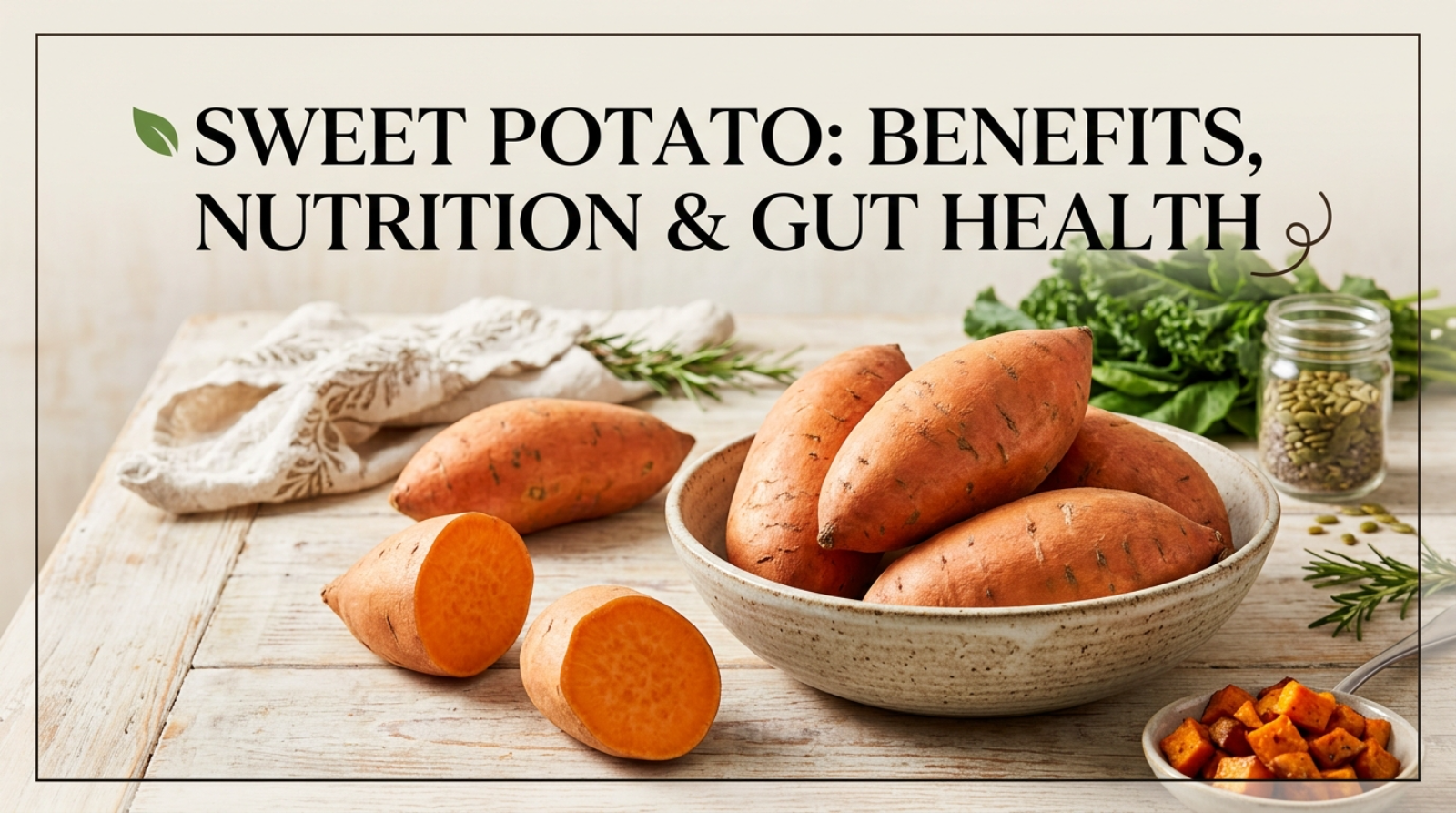
Sweet potato is a naturally sweet, filling root vegetable that can bring fiber, color, and useful nutrients to everyday meals. It can turn a basic dinner into something satisfying without requiring complicated ingredients or elaborate cooking. Use the Copy Button to save the meal ideas and practical tips you want to try later.
Quick Answer: Is Sweet Potato Good for You?
Yes, sweet potato is a nutritious food that provides carbohydrates, fiber, potassium, vitamin C, and carotenoids such as beta-carotene, depending on the variety.
Its fiber can contribute to normal digestion, while its plant compounds add nutritional variety to your diet. The orange varieties are especially well known for their beta-carotene content.
However, sweet potato isn’t automatically healthier than every other carbohydrate. What matters is how it fits into your overall eating pattern, portion, preparation method, and personal needs.
For a balanced meal, pair it with protein, vegetables, healthy fats, or legumes.
Sweet Potato Nutrition: What Does It Provide?
Sweet potato has a lot going for it nutritionally.
It provides complex carbohydrates that supply energy, along with dietary fiber and several vitamins and minerals. Orange-fleshed varieties contain beta-carotene, which the body can convert into vitamin A.
It also provides potassium and vitamin C.
The skin contains additional fiber and plant compounds, so you can keep it on when you enjoy the texture and wash the vegetable well first.
One thing I appreciate about sweet potato is its versatility. The same ingredient can work at breakfast, lunch, or dinner without feeling like you’re eating the same meal repeatedly.
Why the Color Matters
Sweet potatoes come in several colors.
Orange varieties contain plenty of beta-carotene. Purple varieties contain different plant pigments, including anthocyanins.
Therefore, choosing different varieties can add some nutritional variety to your meals.
You don’t need to hunt down every color at the grocery store, though. The variety you actually enjoy and eat regularly is a good choice.
Sweet Potato and Gut Health
Sweet potato can fit nicely into a gut-friendly eating pattern because it provides dietary fiber.
Fiber is important for normal digestive function. Some types also reach the colon, where gut microorganisms can interact with them.
That doesn’t make sweet potato a magic food for the microbiome.
Instead, think of it as one useful source of plant-based carbohydrate and fiber.
Pair it with other plant foods for greater variety. A meal containing sweet potato, black beans, greens, avocado, and pumpkin seeds offers several different food components in one bowl.
That’s a much more useful approach than relying on one so-called superfood.
How Sweet Potato Supports Digestion
A regular intake of fiber can support normal bowel function.
Sweet potato contributes to that intake, especially when you eat the skin. However, your total diet matters more than the fiber from one serving.
If you’re currently eating very little fiber, increase it gradually.
A sudden jump from low-fiber meals to huge portions of vegetables, beans, and root vegetables may leave you feeling gassy or bloated.
Instead, make small changes.
Try adding half a baked sweet potato to dinner. Later, use it in a grain bowl or breakfast hash.
Your digestive system may handle gradual changes more comfortably.
Adequate fluids are also useful when increasing dietary fiber.
Sweet Potato and the Gut Microbiome
Your gut microbiome interacts with many components of the foods you eat.
Plant foods provide fibers and other compounds that can become part of that environment. Consequently, eating a variety of plants is generally more useful than focusing on one food repeatedly.
Sweet potato contributes to that variety.
You can rotate it with regular potatoes, winter squash, carrots, beans, whole grains, and other vegetables.
Research into the gut microbiome continues to show how complex the relationship between diet and intestinal microorganisms can be.
For everyday eating, the takeaway is simple: build variety over time.
You don’t need a perfect plate at every meal.
Sweet Potato Benefits for Steady, Satisfying Meals
Sweet potato can make a meal feel hearty without relying on highly processed ingredients.
Its carbohydrate content provides energy, while fiber adds texture and helps make the meal more substantial.
However, eating a plain sweet potato by itself may not be very satisfying for everyone.
Instead, build a complete plate around it.
Try baked sweet potato with grilled chicken and roasted vegetables. For a plant-based option, combine it with black beans, greens, avocado, and salsa.
The combination of carbohydrate, fiber, protein, and fat creates a more balanced meal.
That approach also makes portion decisions feel less rigid.
Can Sweet Potato Help With Weight Management?
Sweet potato can fit into a weight-management eating pattern.
It contains carbohydrates and calories, so portion size still matters. However, its fiber and satisfying texture can make it a useful alternative to more heavily processed carbohydrate foods.
The preparation method matters, too.
A baked sweet potato topped with beans and vegetables is very different from sweet potato fries covered in sauces and eaten alongside a large fast-food meal.
That doesn’t mean fries are forbidden.
Rather, consider the whole meal.
If you want sweet potato to play a regular role in your diet, choose preparations you can enjoy without turning every serving into a dessert or fried side dish.
Sweet Potato and Blood Sugar: What to Know
Sweet potato still contains carbohydrates, so it can raise blood glucose.
However, the effect of a meal depends on more than one food.
Portion size, cooking method, the other foods on your plate, and your individual response can all matter.
Pairing sweet potato with protein, fiber-rich vegetables, beans, or healthy fats can create a more balanced meal.
For example, try roasted sweet potato with salmon and broccoli.
Or make a bowl with sweet potato, lentils, spinach, and avocado.
If you monitor blood glucose for a specific reason, your personal response is more useful than assuming every serving will affect you in exactly the same way.
Best Ways to Cook Sweet Potato
The cooking method can completely change the eating experience.
Baked Sweet Potato
Baking is one of the easiest options.
Wash the skin, pierce the potato, and bake until tender. You can then split it open and add savory toppings.
Try black beans, plain Greek yogurt, herbs, or sautéed greens.
Roasted Sweet Potato
Cubed sweet potato works beautifully on a sheet pan.
Toss it with a little oil and seasonings, then roast until tender with browned edges.
Add broccoli, onions, or chickpeas to create a complete sheet-pan meal.
Steamed Sweet Potato
Steaming produces a softer texture without requiring much oil.
It’s particularly useful when you want sweet potato for bowls, mash, or baby-friendly family meals.
Mashed Sweet Potato
Mashed sweet potato can be a simple side dish.
Instead of loading it with sugar, try cinnamon, black pepper, herbs, olive oil, or a small amount of butter.
The natural sweetness is usually enough.
Easy Sweet Potato Meal Ideas
Sweet potato works in far more meals than the classic Thanksgiving casserole.
Try these simple combinations:
- Baked sweet potato with black beans and salsa.
- Roasted cubes with chicken and broccoli.
- Sweet potato and egg breakfast hash.
- Mashed sweet potato with grilled fish.
- Sweet potato tacos with beans and avocado.
- Roasted sweet potato grain bowls.
- Sweet potato and lentil curry.
- Sweet potato soup with ginger.
- Sweet potato and chickpea salad.
- Baked sweet potato topped with Greek yogurt and herbs.
- Sweet potato breakfast bowls with nuts and berries.
- Roasted sweet potato with Brussels sprouts.
- Sweet potato and quinoa bowls.
- Mashed sweet potato with sautéed spinach.
- Sweet potato wedges with a homemade yogurt dip.
One of my favorite shortcuts is roasting several servings at once.
Then I can refrigerate the leftovers and add them to eggs, salads, bowls, or wraps during the next few days.
That saves time without making meals feel repetitive.
Sweet Potato Skin: Should You Eat It?
You can eat the skin if you enjoy it.
The skin contributes fiber and contains plant compounds, so there’s no nutritional reason to remove it simply because it’s a skin.
However, texture matters.
Some people prefer the skin crisp after roasting. Others like the softer flesh and peel it away.
Wash the outside thoroughly before cooking.
If the skin is damaged or you simply don’t enjoy it, removing it is perfectly reasonable.
Healthy eating doesn’t need to become a test of endurance.
Does Sweet Potato Cause Bloating?
Sweet potato can cause digestive discomfort for some people, particularly in larger portions.
Individual tolerance varies, and preparation can matter.
If you notice bloating after eating a large serving, try reducing the portion and see how you feel.
You can also experiment with cooking methods.
Instead of eating a large amount of sweet potato alongside beans and several other high-fiber foods, try a smaller serving with a simpler meal.
That makes it easier to identify what your body tolerates.
If digestive symptoms repeatedly occur, don’t assume one ingredient is automatically responsible.
The entire meal deserves consideration.
Sweet Potato vs. Regular Potato
Both sweet potatoes and regular potatoes can fit into a nutritious diet.
Sweet potatoes are particularly rich in beta-carotene, while regular potatoes provide nutrients such as potassium and vitamin C.
The better choice isn’t always one specific potato.
Sometimes you simply want the flavor of a regular baked potato. Other days, sweet potato’s natural sweetness works better.
Rotate them.
You can also alternate preparation methods so meals stay interesting.
A balanced diet has room for both.
Building a Gut-Friendly Sweet Potato Bowl
A simple bowl can turn sweet potato into a complete meal.
Start with roasted sweet potato cubes.
Add black beans or lentils for plant protein and additional fiber. Then include greens such as spinach or kale.
Next, add avocado or a small amount of olive oil.
Finish with pumpkin seeds, herbs, and lemon juice.
Now you’ve combined several plant foods with different textures and flavors.
For extra protein, add chicken, fish, eggs, tofu, or another option you enjoy.
The best part is flexibility.
You can swap ingredients based on what you have in your kitchen.
How to Buy and Store Sweet Potato
Look for sweet potatoes that feel firm and have smooth, relatively unblemished skin.
Avoid ones with significant soft spots, moisture, or signs of spoilage.
Store them in a cool, dry, well-ventilated place rather than treating them like refrigerated produce.
Once cooked, leftovers should be refrigerated promptly and used within a reasonable period.
If you roast a batch for meal prep, let it cool appropriately before storing it in a covered container.
Then you have an easy ingredient ready for several meals.
Frequently Asked Questions About Sweet Potato
Is sweet potato good for your gut?
Yes, sweet potato can support a gut-friendly diet because it provides dietary fiber and adds plant-food variety. However, digestive health depends on your overall eating pattern rather than one food.
Can you eat sweet potato every day?
Many people can enjoy sweet potato regularly. Still, rotating it with other vegetables, whole grains, beans, and root vegetables provides greater dietary variety.
Is sweet potato better than regular potato?
Neither is automatically better. Sweet potato provides beta-carotene and other nutrients, while regular potatoes also provide useful nutrients. Both can fit into a balanced diet.
Can sweet potato cause gas?
It can cause bloating or gas in some people, especially in larger servings. If you’re sensitive to it, try a smaller portion and increase gradually.
Is sweet potato good for weight management?
Sweet potato can fit into a weight-management diet because it provides fiber and can make meals satisfying. However, overall calorie intake, food choices, activity, and individual needs matter.
Final Thoughts on Sweet Potato
Sweet potato is an easy, flavorful way to add fiber, carbohydrates, potassium, vitamin C, and plant compounds to your meals. Orange varieties also provide beta-carotene, while other varieties bring their own colors and plant pigments.
For gut health, its biggest advantage is that it fits naturally into a diverse, fiber-rich diet. Sweet potato doesn’t need to be a miracle food to be worth eating; it simply needs to be one of many nutritious foods you enjoy regularly.
Bake it, roast it, mash it, or add it to bowls and breakfast dishes. Start with portions that feel comfortable, then experiment with different combinations.
Finally, use the Copy Button to save the sweet potato ideas that fit your routine. A few ready-to-use meal combinations can make it much easier to keep nutritious foods on the menu.

Elizabeth Boham is a respected functional medicine physician and wellness educator with a passion for helping people improve their health through nutrition and lifestyle changes. As a contributor to Gutrova, she shares practical insights on gut health, digestive wellness, and healthy living, making complex health topics easy to understand and apply in everyday life.











1 thought on “Sweet Potato: Benefits, Nutrition & Gut Health”