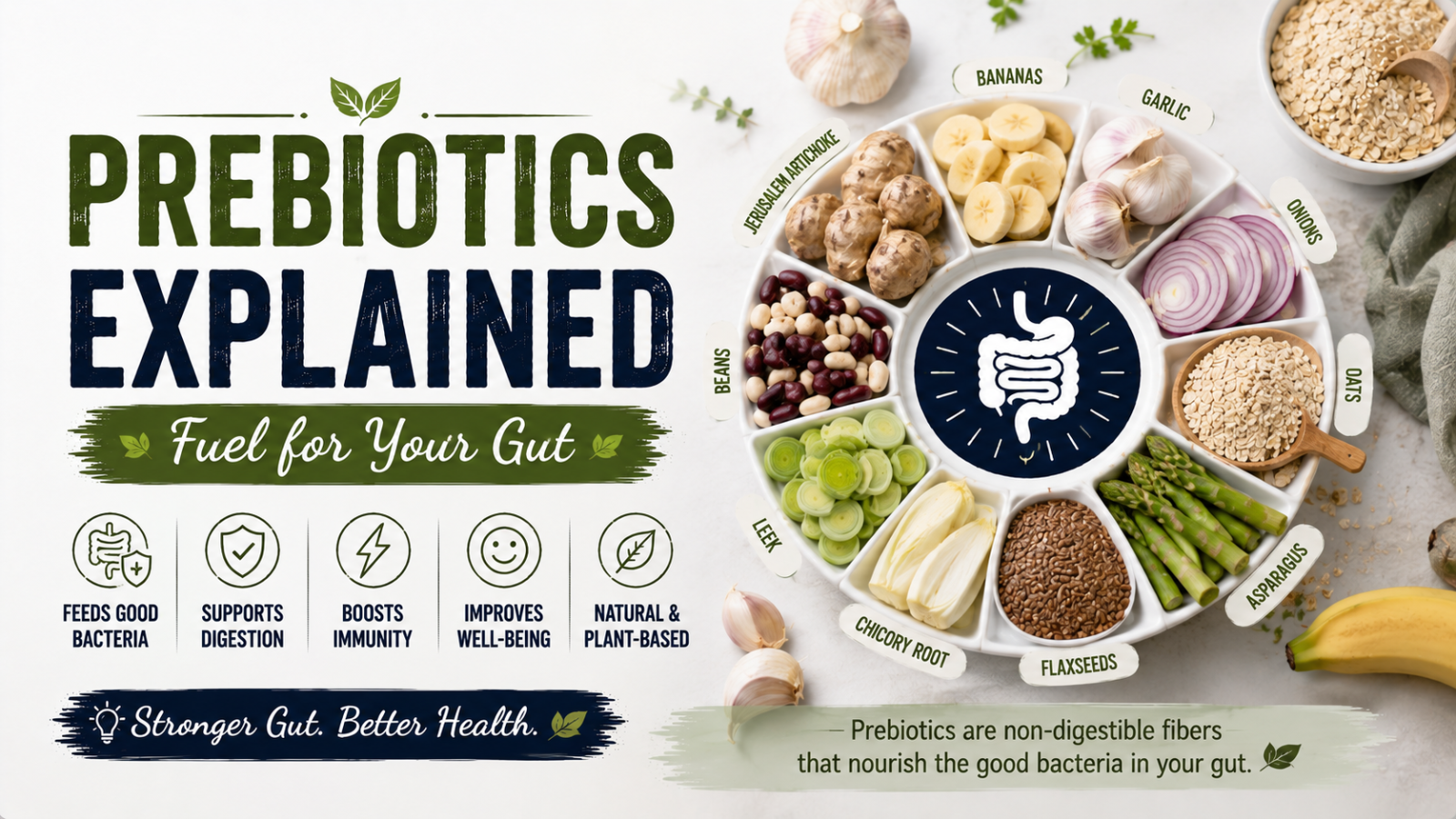
Prebiotics explained simply: they are compounds in certain foods that beneficial gut microorganisms can use as fuel. You don’t need an expensive powder or a complicated supplement routine to start eating more prebiotic-rich foods. Use the Copy Button to save the practical food ideas and gut-health tips from this guide.
Quick Answer: What Are Prebiotics?
Prebiotics are substances that certain beneficial microorganisms in the gut can use. Many prebiotics come from types of dietary fiber and naturally occur in plant foods such as onions, garlic, oats, beans, and certain fruits and vegetables.
When these compounds reach the large intestine, gut microorganisms can interact with them. As a result, prebiotics may support a healthy gut environment as part of a varied diet.
However, prebiotics aren’t the same as probiotics. Probiotics are live microorganisms, while prebiotics provide compounds that microorganisms can use.
Prebiotics Explained in Simple Terms
Think of your gut as a busy neighborhood containing many different microorganisms.
Those microorganisms need an environment that supports normal growth and activity. Some food components can help provide that environment.
That’s where prebiotics come in.
Prebiotics are not living bacteria. Instead, they are substances that can be used selectively by microorganisms in ways associated with health benefits.
The scientific definition is more detailed, but the everyday idea is straightforward: certain foods contain compounds that can help support beneficial activity in the gut.
You don’t need to identify every gram of prebiotic fiber on your plate.
A more practical approach is to eat a variety of plant foods regularly.
How Prebiotics Work in the Gut
Prebiotic compounds travel through the digestive system and reach the large intestine.
There, certain gut microorganisms can use them. During this process, microorganisms produce various compounds that researchers continue to study.
One group includes short-chain fatty acids, which are produced when certain fibers are fermented by gut microorganisms.
This is one reason dietary fiber receives so much attention in gut-health discussions.
However, not all fiber is automatically classified as a prebiotic.
That distinction matters.
Dietary fiber is a broad category, while prebiotics refer to compounds that meet more specific criteria. Still, many fiber-rich plant foods can contribute to a gut-friendly eating pattern.
Prebiotics Explained: Why Gut Bacteria Need Them
Your gut microbiome isn’t a single type of bacteria.
It’s a diverse community containing many different microorganisms. Diet can influence the environment in which these organisms live.
Therefore, eating a broad range of plant foods gives your digestive system exposure to different fibers and natural compounds.
Prebiotics can be part of that picture.
Health experts generally agree that dietary patterns matter more than searching for one magical ingredient. A person who eats beans, whole grains, fruits, vegetables, nuts, and seeds gets a wider range of food components than someone who depends on one prebiotic supplement.
That’s also easier to maintain.
A varied diet doesn’t need to look perfect. It can start with adding one extra plant food to meals you already enjoy.
Prebiotics vs. Probiotics: What’s the Difference?
The names sound similar, so the confusion is understandable.
However, prebiotics and probiotics have different roles.
Prebiotics are compounds that certain microorganisms can use.
Probiotics are live microorganisms that may provide health benefits when consumed in adequate amounts.
A simple way to remember the difference is this:
- Prebiotics provide fuel.
- Probiotics are live microorganisms.
- Fermented foods are foods changed through fermentation, although not every fermented food qualifies as a probiotic.
Some products combine prebiotics and probiotics. These combinations are sometimes called synbiotics.
Still, you don’t need a specialized product to support a varied diet.
For example, a meal containing yogurt, oats, berries, and nuts can include several different food components without requiring complicated nutrition planning.
Prebiotics Explained: The Best Food Sources
Many everyday plant foods contain compounds associated with prebiotic activity.
You may already eat some of them.
Garlic and Onions
Garlic and onions are commonly used to add flavor to meals.
They also contain certain carbohydrates that can act as prebiotic substances. Add them to soups, sauces, roasted vegetables, and bean dishes.
If raw garlic feels too strong, cooked garlic still adds plenty of flavor.
Oats
Oats are an easy breakfast staple and provide dietary fiber.
Try oatmeal with berries, walnuts, and yogurt for a filling meal that includes several different gut-friendly foods.
Overnight oats can also make busy mornings easier.
Beans and Lentils
Beans and lentils contain fiber and other carbohydrates that can reach the large intestine.
They can be especially useful for increasing plant diversity.
Add chickpeas to salads, use black beans in tacos, or make a lentil soup.
If you don’t eat legumes often, start with smaller servings because a sudden increase may cause digestive discomfort.
Bananas
Bananas are convenient, affordable, and easy to use.
Their carbohydrate composition changes as they ripen, so different stages of ripeness can provide different types of starch and sugars.
Add bananas to oatmeal, smoothies, or yogurt.
Asparagus
Asparagus contains dietary fiber and naturally occurring carbohydrates associated with prebiotic activity.
Roast it with olive oil and serve it beside fish, chicken, tofu, or a grain-based meal.
Other Plant Foods
Prebiotic compounds can also be found in foods such as certain whole grains, fruits, vegetables, and legumes.
Therefore, don’t become obsessed with a short list.
Eating a range of plant foods is usually more useful than forcing yourself to eat large amounts of one ingredient.
Are All Fiber-Rich Foods Prebiotics?
No.
This is one of the most important details when discussing gut nutrition.
Fiber and prebiotics overlap, but the terms don’t mean exactly the same thing.
Dietary fiber refers to a broad group of carbohydrates that resist digestion in the small intestine. Some types can be used by gut microorganisms and meet the definition of prebiotics.
Other fibers may support digestion in different ways.
That doesn’t make non-prebiotic fiber less valuable.
For example, fiber can contribute to normal bowel function and help create satisfying meals. Different fibers have different properties, which is another reason food variety matters.
Instead of searching for the “best” fiber, try eating different sources.
Can Prebiotics Support Gut Health?
Prebiotics may support beneficial microorganisms and contribute to a healthy gut environment.
However, gut health involves far more than one type of food.
Sleep, physical activity, stress, hydration, medications, and your overall dietary pattern can all influence digestive well-being.
That’s why I prefer a food-first perspective.
It keeps things practical.
Rather than adding three powders to your morning drink, you might get meaningful variety from oatmeal with fruit at breakfast, a bean-based lunch, and vegetables with dinner.
Small habits can become consistent habits.
Consistency often matters more than creating a perfect-looking plate once in a while.
Prebiotics and the Gut Microbiome
Research suggests that diet can influence the gut microbiome.
The foods you eat regularly help shape the environment inside your digestive system. Prebiotic compounds are one part of that relationship.
Still, no single food can “reset” your microbiome.
Claims about completely rebuilding your gut with a particular powder, drink, or supplement deserve healthy skepticism.
The microbiome is complex and changes over time.
Instead, focus on patterns.
A diet containing many types of plant foods provides different fibers and plant compounds. As a result, it creates more dietary diversity than repeatedly eating the same few foods.
That doesn’t mean you need dozens of ingredients at every meal.
Variety across the week works, too.
Prebiotics Explained for Better Everyday Eating
Prebiotic-rich eating doesn’t need a special meal plan.
Start by looking at your current routine.
Do you usually eat toast for breakfast? Add oats on some mornings. Do you often have chicken and rice for dinner? Try adding beans or roasted vegetables.
Simple changes count.
One of my favorite approaches is building meals with layers. Start with a familiar base, then add one plant food that brings a new flavor or texture.
For example:
- Oatmeal + banana + berries + nuts
- Rice + black beans + sautéed onions + vegetables
- Lentil soup + whole-grain bread + salad
- Yogurt + oats + fruit
These meals aren’t complicated. However, they can add more plant variety to an ordinary day.
Can Prebiotics Cause Gas or Bloating?
They can.
Prebiotic compounds and certain fibers are used by microorganisms in the large intestine. That process can produce gas.
A sudden increase in high-fiber or prebiotic-rich foods may cause bloating or digestive discomfort for some people.
Therefore, gradual changes often make sense.
If your usual diet is low in fiber, don’t suddenly eat huge portions of beans, garlic, onions, and fiber supplements in one day.
Instead, increase plant foods step by step.
Cooking can also change the texture of foods and make some ingredients easier to tolerate.
Pay attention to portion size as well. Sometimes the problem isn’t the food itself but the sudden amount.
How to Add More Prebiotics to Your Diet
A few small changes can make your meals more diverse.
Try these practical ideas:
- Add oats to your breakfast routine.
- Include beans in tacos or grain bowls.
- Cook onions into soups and sauces.
- Add garlic to roasted vegetables.
- Eat bananas as an easy snack.
- Make lentil soup for lunch.
- Try asparagus with dinner.
- Add berries to oatmeal.
- Rotate different whole grains during the week.
- Include vegetables in sandwiches and wraps.
- Add chickpeas to salads.
- Use beans in homemade chili.
- Keep frozen vegetables available for busy nights.
- Try overnight oats.
- Build meals around more than one plant food.
You don’t need to do everything at once.
Choose two or three ideas that fit your current routine. Once those habits feel normal, add more variety.
Should You Take a Prebiotic Supplement?
Food is often the simplest place to start.
Prebiotic supplements can be useful in some situations, but they aren’t automatically necessary for everyone.
Supplements may contain concentrated amounts of specific fibers or prebiotic compounds. Because of that concentration, they can sometimes cause digestive changes.
If you’re thinking about a supplement, consider why you want one.
Are you unable to get enough fiber-rich foods? Are you looking for a particular product for a specific reason?
Avoid treating supplements as a shortcut around everyday eating.
A powder can’t replace the nutritional variety found in fruits, vegetables, legumes, and whole grains.
The NIH provides educational information on dietary supplements and gut-related nutrition topics, while organizations such as Harvard Health and Mayo Clinic also emphasize the importance of overall dietary patterns.
Prebiotics Explained: A Simple Food-First Strategy
You don’t need to track every prebiotic compound.
Try this simple strategy instead.
Step 1: Add One Fiber-Rich Food
Start with something familiar, such as oats, beans, or fruit.
Step 2: Increase Plant Variety
Rotate your choices during the week.
Choose lentils one day, black beans another day, and chickpeas later in the week.
Step 3: Make Changes Gradually
Your digestive system may need time to adjust.
Smaller increases are often more comfortable than dramatic changes.
Step 4: Keep Meals Enjoyable
Don’t force foods you hate.
If you dislike raw onions, use cooked onions. If lentils aren’t your favorite, try beans or oats instead.
The best eating pattern is one you can realistically continue.
A Practical Day of Prebiotic-Rich Eating
Here’s what a simple day might look like.
For breakfast, have oatmeal with a banana, berries, and walnuts.
At lunch, try a grain bowl with chickpeas, vegetables, and a yogurt-based dressing.
Dinner could include lentil soup with whole-grain bread and a side of roasted vegetables.
This isn’t a strict plan.
It’s simply an example of how several plant foods can fit into ordinary meals.
You can swap ingredients based on your preferences, budget, and schedule.
That’s one reason food-first gut health is so practical.
Frequently Asked Questions About Prebiotics
What are prebiotics in simple terms?
Prebiotics are compounds that certain beneficial microorganisms in the gut can use. Many occur naturally in fiber-rich plant foods.
Are prebiotics the same as probiotics?
No. Prebiotics are compounds that microorganisms can use, while probiotics are live microorganisms associated with health benefits.
What foods contain prebiotics?
Common examples include garlic, onions, oats, beans, lentils, bananas, asparagus, and other plant foods.
Can prebiotics cause bloating?
Yes, some people may experience gas or bloating, especially after suddenly increasing prebiotic-rich foods. Gradually increasing fiber and plant foods may feel more comfortable.
Do I need a prebiotic supplement?
Not necessarily. Many people can include prebiotic compounds through a varied diet containing fruits, vegetables, legumes, and whole grains.
Final Thoughts on Prebiotics Explained
Prebiotics explained simply are compounds that certain gut microorganisms can use, often found naturally in everyday plant foods. They can support a healthy gut environment, although they work best as part of a broader pattern of nutritious eating.
You don’t need a perfect diet or a shelf full of supplements to make prebiotics part of your routine.
Start with ordinary foods. Add oats to breakfast, include beans or lentils during the week, cook with garlic and onions, and keep fruits and vegetables within easy reach.
Most importantly, make changes gradually and keep meals enjoyable. A varied diet is easier to maintain when it fits your real life.
Use the Copy Button to save this guide on prebiotics explained, then choose one or two ideas you can realistically try this week.

Here’s a short Gutrova-style author biography for Josh Axe:
Josh Axe
Josh Axe is a wellness expert, author, and educator known for his work in nutrition, natural health, and gut wellness. As a contributor to Gutrova, he shares practical insights on digestive health, healthy eating habits, and lifestyle strategies that help readers build a stronger foundation for overall well being. His content focuses on making wellness simple, actionable, and accessible for everyday life.











1 thought on “Prebiotics Explained: Fuel for Your Gut”