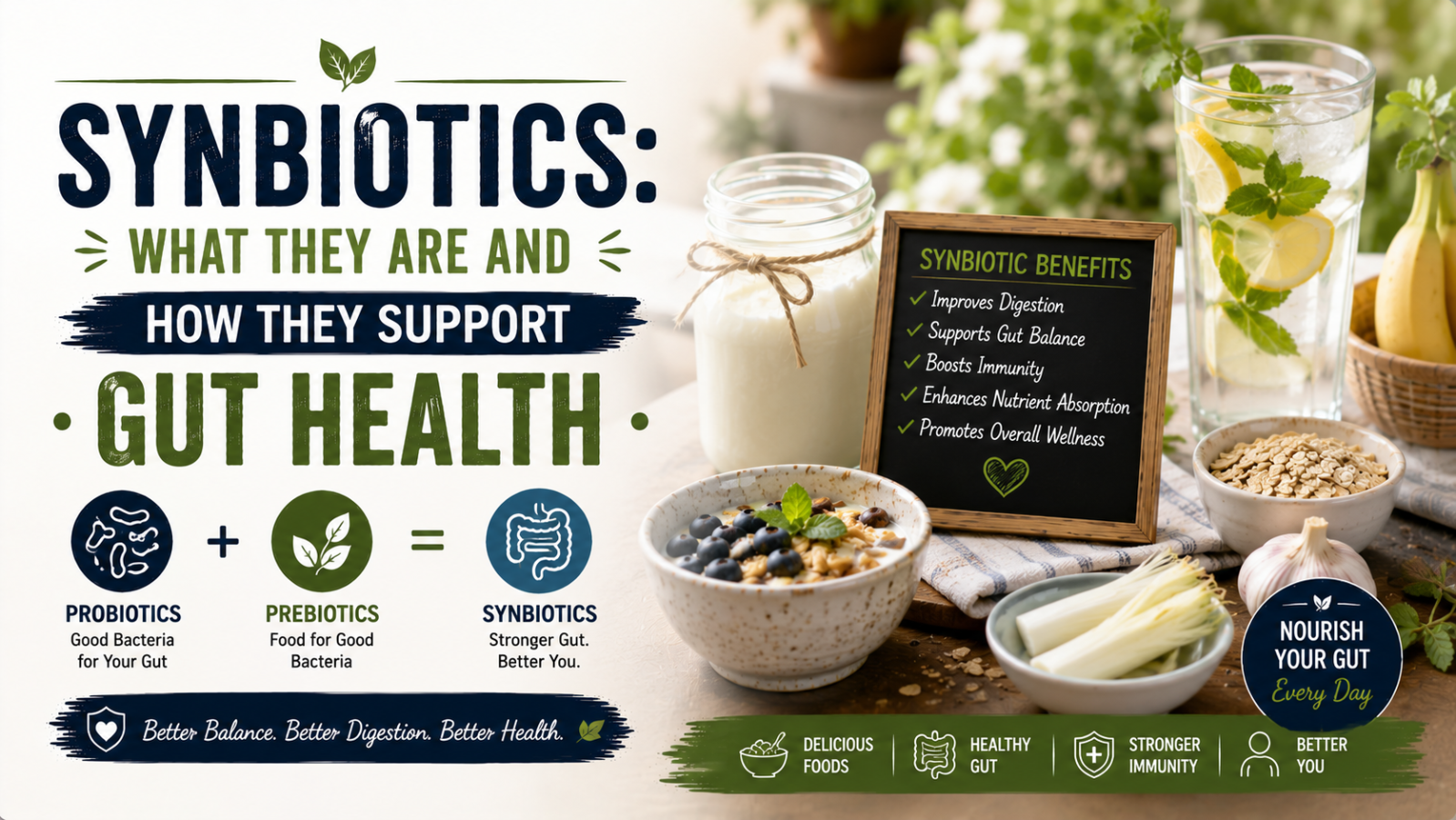
Synbiotics combine probiotics and prebiotics in a way designed to support beneficial microorganisms and the gut environment. The idea sounds complicated, but synbiotics are easier to understand once you separate the two parts and see how they can work together. You can use the Copy Button to save the practical points and meal ideas from this guide.
Quick Answer: What Are Synbiotics?
Synbiotics are combinations of live microorganisms and substances that can be used by beneficial microorganisms. In simple terms, they bring together probiotics and prebiotics.
A probiotic is a live microorganism associated with a health benefit when consumed in an adequate amount. A prebiotic is a substance that certain microorganisms can use in ways linked with health benefits.
Therefore, synbiotics combine these two concepts. However, the exact ingredients and intended effects can differ from one product to another.
Synbiotics Explained in Simple Terms
Think of probiotics and prebiotics as two separate pieces of a larger picture.
Probiotics are live microorganisms. Prebiotics are compounds that can support certain microorganisms by providing substances they can use.
Synbiotics bring them together.
That sounds straightforward, yet the details matter. Simply mixing any probiotic with any fiber doesn’t automatically mean the combination will produce a specific result.
Research on synbiotics looks at particular combinations and their potential effects. Therefore, the ingredients, strains, and prebiotic components can all matter.
For everyday eating, though, the basic concept is useful.
You can think about meals that contain foods with live cultures alongside fiber-rich plant foods.
How Synbiotics Work in the Gut
The digestive system contains a complex community of microorganisms.
Food, medications, lifestyle, and many other factors can influence that environment. Synbiotics are designed around the relationship between live microorganisms and compounds that microorganisms can use.
A probiotic may interact with the digestive environment after you consume it.
Meanwhile, a prebiotic compound can reach the large intestine and be used by certain microorganisms.
The relationship isn’t always as simple as feeding one specific bacterium.
Your gut contains a diverse community, and different microorganisms interact with food compounds in different ways. As a result, researchers continue to study how particular synbiotic combinations affect health.
That’s also why broad promises deserve caution.
No single synbiotic product can completely transform every person’s microbiome.
Synbiotics vs. Probiotics: What’s the Difference?
Probiotics contain live microorganisms.
Synbiotics contain live microorganisms plus a prebiotic component.
That’s the simplest distinction.
For example, a probiotic supplement may contain one or more specific strains. A synbiotic supplement may contain those microorganisms alongside a type of fiber or another substance intended to support beneficial microbial activity.
However, more ingredients don’t automatically mean better results.
A supplement with a long list of bacteria and fibers may look impressive on the label. Still, the important question is what those specific ingredients are and why they were combined.
A targeted product can be easier to understand than one built around vague marketing claims.
Synbiotics vs. Prebiotics
Prebiotics don’t contain live microorganisms.
Instead, they are compounds that certain microorganisms can use.
Synbiotics include both components.
A simple comparison looks like this:
- Probiotics: Live microorganisms associated with specific health benefits.
- Prebiotics: Substances that certain beneficial microorganisms can use.
- Synbiotics: Combinations of probiotics and prebiotics.
- Fermented foods: Foods changed through fermentation, although not all fermented foods qualify as probiotics.
The terminology can feel unnecessarily technical at first.
Once you know the basic differences, product labels become much easier to understand.
Why Synbiotics Matter for Gut Health
Interest in synbiotics comes from growing scientific attention to the relationship between diet and the gut microbiome.
Your digestive system contains a diverse microbial community. These microorganisms interact with the foods and compounds that move through your digestive tract.
Fiber-rich foods can influence that environment.
Meanwhile, certain probiotic microorganisms have been studied for specific health purposes.
Synbiotics bring these ideas together.
Still, they shouldn’t distract from the basics. A supplement can’t replace a diet built around fruits, vegetables, legumes, whole grains, nuts, and seeds.
Health experts generally agree that overall dietary patterns remain important.
For that reason, synbiotics make the most sense as part of a broader approach rather than a shortcut.
Synbiotics and the Gut Microbiome
The gut microbiome changes over time.
Diet is one factor that can influence the microbial environment. However, your microbiome doesn’t behave like a machine that needs a single product to reset it.
Synbiotics may interact with that environment, but the response can vary.
Your usual diet matters. So do factors such as age, medication use, sleep, physical activity, and individual biology.
This is why two people can have different experiences with the same product.
One person may enjoy a synbiotic food or supplement and notice no meaningful changes. Another may experience digestive changes, particularly when increasing certain fibers.
Neither experience automatically proves that a product works or doesn’t work.
The human digestive system is simply complex.
Synbiotics in Foods: A Practical Approach
You don’t need to buy a product labeled “synbiotic” to understand the food concept.
You can combine foods containing live cultures with plant foods that provide useful fibers.
For example, plain yogurt with oats and berries creates a meal containing live cultures and several types of dietary fiber.
Kefir with a banana can offer another simple combination.
You could also pair yogurt with nuts and fruit for breakfast.
These meals aren’t necessarily identical to scientifically formulated synbiotic products. However, they illustrate how probiotics and fiber-rich foods can appear together in an everyday diet.
That distinction is important.
A homemade food combination shouldn’t be marketed as a proven treatment. Still, it can be a practical way to enjoy both categories of food.
Best Food Pairings for Synbiotics
Here are several easy combinations to try.
Yogurt and Oats
Choose yogurt containing live and active cultures, then add oats and fruit.
The result is filling, simple, and easy to customize.
Kefir and Bananas
Kefir has a tangy flavor, while bananas add natural sweetness.
Blend them into a smoothie if drinking plain kefir isn’t your favorite.
Yogurt, Berries, and Nuts
This combination adds several plant foods without requiring complicated preparation.
Try walnuts, almonds, or pumpkin seeds for extra texture.
Fermented Foods and Whole Grains
A meal containing a fermented food alongside whole grains and vegetables can add more dietary variety.
Check the product because not every fermented food contains live microorganisms when consumed.
Yogurt-Based Bean Dip
Plain yogurt can work in savory dips and sauces.
Pair it with beans and vegetables for a simple snack or meal component.
Can Synbiotics Support Digestion?
Certain probiotic and prebiotic combinations have been studied for digestive and other health-related outcomes.
However, results depend on the exact combination being used.
That’s the key point.
You can’t assume that every synbiotic will produce the same effect. A particular probiotic strain combined with a specific prebiotic may have research behind it, while a different combination may not.
Therefore, avoid broad claims.
Synbiotics aren’t guaranteed to eliminate bloating, constipation, or digestive discomfort. These symptoms can have many possible causes.
A realistic approach starts with your overall habits.
Look at your diet, meal patterns, fiber intake, hydration, and other factors before assuming one product holds the answer.
Synbiotics and Short-Chain Fatty Acids
When certain dietary fibers reach the large intestine, gut microorganisms can ferment them.
This process can produce compounds called short-chain fatty acids.
Researchers continue to study how these compounds interact with the gut and the rest of the body.
This is one reason fiber-rich foods receive so much attention in discussions about the microbiome.
However, you don’t need to memorize biochemical pathways to eat well.
The practical takeaway is simpler: regularly eating a variety of plant foods provides your gut microorganisms with different food components.
Synbiotics are related to this broader area of research, but they don’t replace the value of a varied diet.
Are Synbiotic Supplements Necessary?
No, not for everyone.
Some people enjoy fermented foods and naturally eat plenty of fiber-rich plants. Others may choose supplements for personal reasons or specific goals.
A supplement can be convenient, but convenience isn’t the same as necessity.
Before buying one, consider what you’re hoping to achieve.
Are you simply interested in general gut health? If so, improving your regular meals may be a useful first step.
If you’re considering a product for a specific purpose, look closely at the ingredients.
A trustworthy label should clearly identify the probiotic microorganisms and other components.
Be cautious with vague promises about “repairing” or “rebuilding” your gut.
The National Institutes of Health provides educational information about dietary supplements, while major health organizations also emphasize the importance of overall nutrition.
How to Choose a Synbiotic Supplement
Shopping can feel confusing because labels often emphasize impressive numbers and bold promises.
Instead, slow down and check the details.
Identify the Probiotic Strains
Look for clearly identified microorganisms.
Specific strain information can help you understand what the product actually contains.
Check the Prebiotic Ingredient
Find out what the product uses as its prebiotic component.
Different fibers and compounds can have different properties.
Consider Your Goal
Don’t choose a product just because it has the largest number on the package.
Think about why you want to take it.
Follow Storage Directions
Some products require refrigeration, while others remain stable at room temperature.
Proper storage matters because these products may contain live microorganisms.
Ignore Miracle Marketing
Claims that a supplement will detox your body or permanently fix your microbiome should raise questions.
Gut health is rarely that simple.
Can Synbiotics Cause Gas or Bloating?
They can cause digestive changes for some people.
Prebiotic ingredients may be fermented by microorganisms in the large intestine, which can produce gas.
A sudden increase in fiber can also cause bloating.
Therefore, starting gradually may be helpful when adding new high-fiber foods or products to your routine.
If you normally eat very little fiber, don’t immediately add several concentrated fiber products on the same day.
Instead, increase plant foods gradually.
I’ve seen people become frustrated with a perfectly healthy food simply because they changed their diet too quickly. Sometimes the amount and pace of change matter as much as the ingredient itself.
Simple Ways to Build a Gut-Friendly Routine
You don’t need a complicated schedule.
Start with a few basic habits.
Eat More Plant Variety
Rotate fruits, vegetables, beans, whole grains, nuts, and seeds.
Different plants provide different fibers and natural compounds.
Include Fermented Foods You Enjoy
Yogurt and kefir can be easy options for people who enjoy dairy.
Other fermented foods may fit your preferences as well.
Increase Fiber Gradually
Sudden changes can feel uncomfortable.
Instead, add fiber-rich foods step by step.
Keep Meals Balanced
Combine carbohydrates, protein, fats, and plant foods.
A satisfying meal is easier to repeat.
Don’t Chase Perfection
One missed serving of vegetables won’t ruin your gut health.
Your habits across days and weeks matter much more.
A Simple Day Inspired by Synbiotics
Breakfast could include yogurt with oats, berries, and walnuts.
For lunch, try a grain bowl with chickpeas, vegetables, and a yogurt-based dressing.
Dinner might include brown rice, roasted vegetables, and your preferred protein.
This isn’t a synbiotic treatment plan.
Instead, it shows how foods containing live cultures and fiber-rich plant foods can fit naturally into one day.
You can change the ingredients based on your budget and preferences.
That’s what makes a food-first approach easier to maintain.
Frequently Asked Questions About Synbiotics
What are synbiotics?
Synbiotics combine live microorganisms, often called probiotics, with a prebiotic component that can be used by beneficial microorganisms.
Are synbiotics the same as probiotics?
No. Probiotics contain live microorganisms, while synbiotics combine probiotics with prebiotics.
Can synbiotics improve gut health?
Specific synbiotic combinations may have different effects, and researchers continue to study them. Results depend on the ingredients, strains, and individual.
Can I get synbiotics from food?
You can combine foods containing live cultures with fiber-rich plant foods. For example, yogurt with oats and berries provides both categories of food components.
Do synbiotics cause bloating?
Some people may experience gas or bloating, especially when increasing prebiotic fibers quickly. Starting gradually can be more comfortable.
Final Thoughts on Synbiotics
Synbiotics bring together two important gut-health concepts: probiotics and prebiotics. Probiotics are live microorganisms, while prebiotics provide compounds that certain microorganisms can use.
The simplest way to think about synbiotics is not as a miracle solution, but as one interesting part of the much larger relationship between food and your gut.
A varied diet remains the foundation. Eat plenty of plant foods, increase fiber gradually, and include fermented foods if you enjoy them.
If you choose a synbiotic supplement, look beyond the marketing. Check the ingredients, understand your reason for taking it, and keep your expectations realistic.
Finally, use the Copy Button to save this guide on synbiotics and return to the practical tips whenever you’re planning your next gut-friendly meal.

Here’s a short Gutrova-style author biography for Josh Axe:
Josh Axe
Josh Axe is a wellness expert, author, and educator known for his work in nutrition, natural health, and gut wellness. As a contributor to Gutrova, he shares practical insights on digestive health, healthy eating habits, and lifestyle strategies that help readers build a stronger foundation for overall well being. His content focuses on making wellness simple, actionable, and accessible for everyday life.










1 thought on “Synbiotics: What They Are and How They Support Gut Health”