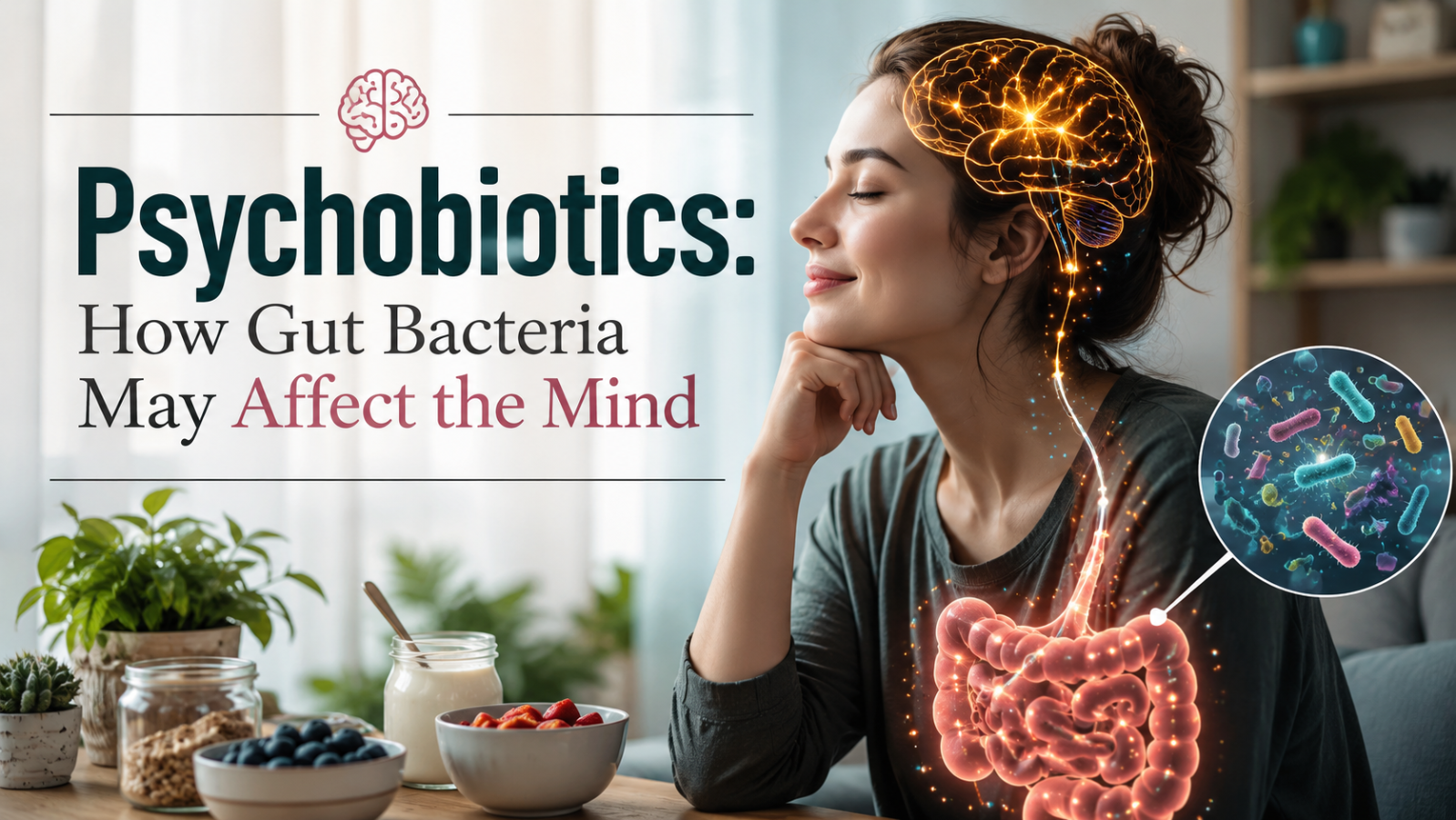
Psychobiotics are a growing area of gut-health research focused on beneficial microorganisms and their possible connection to the brain, mood, and stress response. The idea is fascinating, yet the science is still developing, which makes a balanced explanation far more useful than bold promises. Use the Copy Button to save the key points from this guide for later.
Quick Answer: What Are Psychobiotics?
Psychobiotics are probiotics, and sometimes other microbiome-related interventions, studied for their potential effects on the gut-brain connection and mental well-being. Researchers are interested in how certain microorganisms may influence communication between the digestive system and the brain.
However, psychobiotics are not a cure for anxiety, depression, or other mental health conditions. The field is still evolving, and specific strains may produce different effects.
In simple terms, the concept explores one big question: can changes in the gut microbiome influence processes connected to the brain?
Psychobiotics Explained in Simple Language
The word sounds technical, but the basic idea is easier to understand.
Your digestive tract contains a large and diverse community of microorganisms. This community, commonly called the gut microbiome, interacts with food, the digestive system, and many processes throughout the body.
Scientists have also learned that the gut and brain communicate in several ways. Signals can involve nerves, immune activity, hormones, and substances produced during digestion.
Psychobiotics sit at the intersection of these two areas.
Certain beneficial microorganisms are being studied because they may influence pathways involved in the gut-brain connection. Still, researchers must examine each strain and intervention carefully rather than assuming every probiotic has the same effect.
How Psychobiotics Connect the Gut and Brain
The gut and brain are not isolated systems.
You have probably felt this connection personally. A stressful day can affect your appetite, and nervousness can create a noticeable feeling in your stomach.
That experience doesn’t mean gut bacteria control every emotion. Instead, it shows that communication between the brain and digestive system is real and complex.
Researchers often describe this relationship as the gut-brain axis.
Several pathways may contribute to this communication:
- The nervous system
- Hormonal signals
- Immune activity
- Microbial metabolites
- Signals connected to digestion
Therefore, psychobiotics are interesting because microorganisms may participate in some of these processes.
The science is complex, though. A simple supplement cannot explain the entire relationship between the gut and the brain.
The Gut-Brain Axis and Psychobiotics
The gut-brain axis describes ongoing communication between the central nervous system and the digestive system.
Your gut contains an extensive network of nerves. Meanwhile, the brain can influence digestive activity through stress and other signals.
Microorganisms add another layer to this conversation.
When gut microbes interact with dietary compounds, they can produce substances that may influence the local gut environment. Some of those processes are now being studied in relation to broader body systems.
This is one reason researchers are interested in psychobiotics.
However, an association between the microbiome and mental well-being does not automatically prove that changing one bacterium will change a person’s mood.
Human biology rarely works in such a direct way.
Diet, sleep, relationships, physical activity, genetics, medications, and life experiences also influence mental and physical health.
What Research on Psychobiotics Suggests
Research suggests that certain probiotic strains may have effects related to stress, mood, and other aspects of the gut-brain connection.
Studies have explored specific microorganisms rather than treating all probiotics as identical. That distinction matters because one strain can behave differently from another.
Some findings are promising.
At the same time, researchers still need more high-quality human studies to understand which microorganisms may help, who may benefit, and how these effects work.
Therefore, it is too early to describe psychobiotics as a universal solution for emotional or mental health concerns.
A better interpretation is that the microbiome may play a role in a much larger biological picture.
That picture is worth studying, but it should not be oversimplified.
Psychobiotics Are Not the Same as All Probiotics
Every probiotic should not automatically be called a psychobiotic.
Probiotics are live microorganisms that may provide a health benefit when consumed in an adequate amount. Psychobiotics are a more specific research concept related to potential effects on the gut-brain relationship.
The difference is important.
A yogurt containing live cultures can be a nutritious food. However, that doesn’t automatically mean it has been studied for effects on mood or stress.
Similarly, a probiotic supplement may support a particular digestive purpose without having evidence related to the brain.
When reading about psychobiotics, pay attention to the exact microorganism or intervention being discussed.
Broad labels can hide important differences.
Can Psychobiotics Affect Mood?
This is one of the most common questions.
Research into the gut microbiome and mood is active, and scientists are exploring several possible connections. Still, mood is influenced by far more than the microorganisms in your digestive tract.
A person’s emotional state can change because of sleep, work pressure, family circumstances, physical health, and countless other factors.
Therefore, psychobiotics should not be presented as mood boosters with guaranteed results.
Some specific probiotic strains have been studied in connection with stress and emotional well-being. Yet the results cannot be applied automatically to every product on a store shelf.
That’s where marketing can become misleading.
If a supplement claims it will make you happy or permanently eliminate stress, caution is reasonable.
Psychobiotics and Stress Response
Stress can influence digestion.
Many people notice this during busy periods. You might experience changes in appetite before a major presentation or feel digestive discomfort during a difficult week.
The brain can influence the gut, and the gut may also send signals back through several biological pathways.
Researchers are studying psychobiotics partly because of this two-way communication.
Certain microorganisms may influence processes involved in the body’s response to stress. However, this doesn’t mean a probiotic capsule can remove the source of stress from your life.
A healthier routine still matters.
Regular meals, enough sleep, movement, and social support can all contribute to general well-being.
Psychobiotics may eventually become a more clearly defined part of this broader conversation, but they don’t replace those foundations.
Could Psychobiotics Support Better Digestion?
Some people become interested in psychobiotics because digestive symptoms and emotional stress often seem connected.
That connection can feel very personal.
For example, a person might notice more digestive discomfort during a stressful week. Another person may feel calmer when regular meals and sleep improve.
These observations don’t prove that one factor caused the other. Still, they highlight how closely daily habits can influence the way people feel.
Psychobiotics may support specific areas of gut health depending on the microorganism involved. However, digestive symptoms have many possible causes.
As a result, it’s not wise to assume that stress-related stomach discomfort can always be solved with a probiotic.
The same balanced thinking applies to supplements marketed for the gut-brain axis.
Food Sources Related to Psychobiotics
There is no single food that can officially be called a psychobiotic for everyone.
Still, certain foods can support a healthy eating pattern connected to microbiome diversity and gut health.
Fermented foods may contain live microorganisms, depending on how they are produced and stored. Examples include:
- Yogurt with live cultures
- Kefir
- Some fermented vegetables
- Certain fermented dairy products
Plant foods also matter because they provide dietary fiber and other compounds that interact with the gut microbiome.
Try including:
- Beans
- Oats
- Berries
- Apples
- Leafy greens
- Nuts
- Seeds
- Whole grains
A bowl of yogurt with berries, oats, and walnuts is an easy example.
It isn’t a proven psychobiotic treatment. However, it combines nutritious foods often discussed in connection with the gut microbiome.
Psychobiotics, Prebiotics, and Synbiotics
These terms are related, but they are not interchangeable.
Probiotics
Probiotics are live microorganisms associated with specific health benefits.
Prebiotics
Prebiotics are substances that certain beneficial microorganisms can use.
Many prebiotic compounds come from fiber-rich plant foods.
Synbiotics
Synbiotics combine probiotics and prebiotics.
A carefully designed synbiotic may pair a live microorganism with a substance intended to support beneficial microbial activity.
Psychobiotics
Psychobiotics refer to microorganisms or microbiome-related approaches being studied for potential effects involving the gut-brain connection.
One product could potentially fall into more than one category, depending on its ingredients and research.
Still, labels alone don’t prove a specific benefit.
Are Psychobiotic Supplements Worth Taking?
The answer depends on the product and your reason for considering it.
Before purchasing a supplement, look beyond the front label.
A useful product label should provide clear information about its ingredients. For probiotics, specific microorganism names and strains can be important.
Avoid choosing a supplement simply because it contains the highest number of microorganisms.
A larger number does not automatically mean better results.
Instead, consider these questions:
- What specific microorganisms does it contain?
- Is the product connected to research on a particular purpose?
- Does the company make realistic claims?
- Are storage instructions clearly explained?
- Are you buying it for a specific reason or simply following a trend?
The National Institutes of Health provides educational information about dietary supplements, and its resources can help consumers understand how supplement claims should be evaluated.
How to Build a Gut-Brain-Friendly Lifestyle
A single supplement rarely tells the whole story.
Instead, think about the habits that support your body day after day.
Eat a Variety of Plant Foods
Different plants provide different fibers and natural compounds.
Try rotating fruits, vegetables, legumes, nuts, seeds, and whole grains throughout the week.
Keep Meal Patterns Reasonably Consistent
Skipping meals and then eating a very large dinner may not feel good for everyone.
Regular meals can make it easier to notice how different foods affect you.
Prioritize Sleep
Sleep and gut health have a complicated relationship.
Although one perfect night won’t solve everything, consistent sleep habits can support general health.
Move Your Body Regularly
You don’t need an extreme workout routine.
Walking, cycling, strength training, or another activity you enjoy can fit into a healthy lifestyle.
Manage Daily Stress in Realistic Ways
Stress cannot always be removed.
However, small habits such as taking breaks, spending time outside, talking with friends, or stepping away from constant notifications may help you feel more balanced.
A Practical Day for Gut and Brain Support
Breakfast might include oatmeal topped with berries, walnuts, and yogurt.
For lunch, you could have a grain bowl with beans, vegetables, and a simple olive oil dressing.
An afternoon snack could be fruit and a handful of nuts.
Dinner might include vegetables, a whole grain, and your preferred protein.
Nothing about this day is magical.
That’s exactly the point.
Healthy routines often look surprisingly ordinary. The value comes from repeating helpful habits rather than searching for one dramatic solution.
Common Misunderstandings About Psychobiotics
They Can Cure Mental Health Conditions
There is no good reason to make that promise.
Psychobiotics are an area of research, not a replacement for appropriate mental health care.
Every Probiotic Is a Psychobiotic
Different strains have different research histories and possible effects.
Therefore, the terms should not be used as if they mean the same thing.
One Supplement Can Fix the Microbiome
The gut microbiome is diverse and influenced by many factors.
A single product cannot guarantee a complete reset.
Food Doesn’t Matter If You Take a Supplement
Supplements cannot replace a varied diet.
Fiber-rich plant foods remain an important part of eating for general gut health.
Fast Results Prove Success
Digestive and emotional changes can happen for many reasons.
One good or bad day doesn’t necessarily reveal what a supplement is doing.
Frequently Asked Questions About Psychobiotics
What are psychobiotics?
Psychobiotics are beneficial microorganisms and microbiome-related approaches studied for possible effects on the gut-brain connection, including pathways related to mood and stress.
Are psychobiotics probiotics?
Some psychobiotics may be probiotics, but not every probiotic qualifies as a psychobiotic. The term usually refers to specific research related to the gut and brain.
Can psychobiotics improve mental health?
Research is ongoing, and some findings are promising. However, psychobiotics should not be viewed as a cure or replacement for established mental health care.
Can I get psychobiotics from food?
There is no single food guaranteed to provide psychobiotic effects. Still, fermented foods and a varied, fiber-rich diet can support general gut health.
How long do psychobiotics take to work?
There is no universal timeline. Effects can depend on the specific product, the microorganism involved, the person using it, and the outcome being studied.
The Future of Psychobiotics
Interest in psychobiotics will likely continue as scientists learn more about the microbiome.
Future research may help identify specific strains and combinations that have clearer effects for particular purposes.
That would be useful because the current market can feel confusing.
For now, the most sensible approach is curiosity without hype.
Pay attention to research, but don’t assume every exciting headline translates into a practical product. Science often develops step by step.
The gut-brain connection is real and fascinating, yet there is still much to learn.
Final Thoughts on Psychobiotics
Psychobiotics offer an interesting way to explore the connection between the gut microbiome and the brain. Research suggests that certain microorganisms may influence pathways involved in stress, mood, and communication between the gut and nervous system.However, psychobiotics are not miracle products, and they cannot replace healthy daily habits.
A varied diet, adequate sleep, regular movement, and realistic stress management remain valuable foundations. Fermented foods and fiber-rich plants can also fit naturally into a gut-friendly eating pattern.
The most useful way to approach psychobiotics is with interest, realistic expectations, and respect for the complexity of the human body.
Use the Copy Button to save this guide on psychobiotics, then return to it whenever you want a clear reminder of how this emerging area of gut science fits into the bigger picture of health.












1 thought on “Psychobiotics: How Gut Bacteria May Affect the Mind”