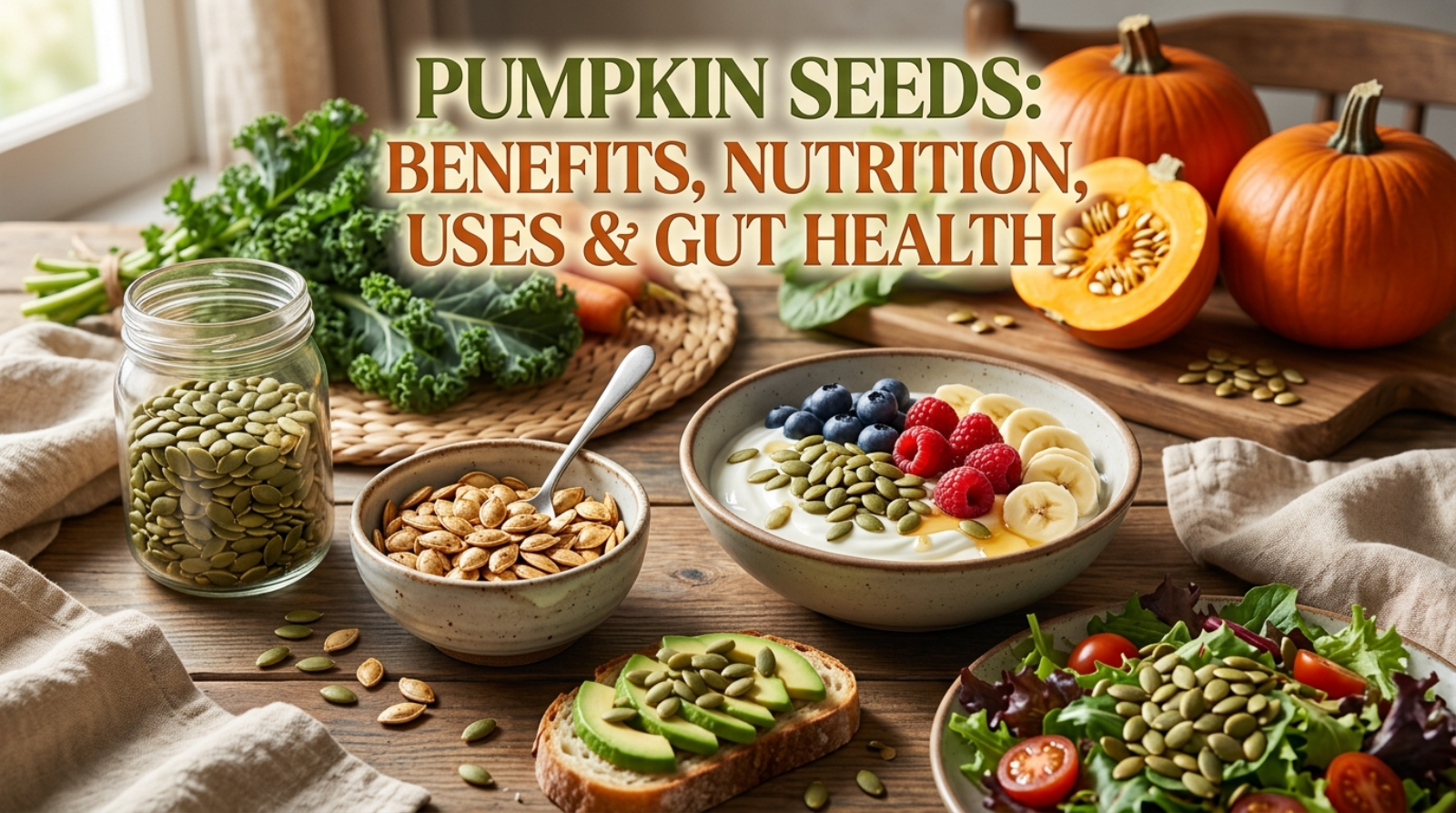
Pumpkin seeds are a simple, nutrient-rich food that can add crunch, plant protein, healthy fats, and minerals to everyday meals. If you’re looking for an easy way to make your meals more satisfying while supporting digestive health, these little seeds are worth keeping in the pantry. Use the Copy Button on this page to instantly copy and share your favorite tips.
Quick Answer: Are Pumpkin Seeds Good for You?
Yes. Pumpkin seeds can be a nutritious addition to a balanced diet because they provide protein, unsaturated fats, fiber, magnesium, zinc, iron, and other nutrients. Their fiber can support regular bowel movements, while their protein and fat can help make meals and snacks more filling.
For gut health, the key is portion size and preparation. A small handful works well for many people. However, eating a large amount at once may cause digestive discomfort, especially if you’re not used to eating much fiber or fat.
Pumpkin Seeds Nutrition at a Glance
A typical serving is about 1 ounce, or a small handful. The exact nutrition varies depending on the variety and preparation, especially if the seeds are roasted with oil or heavily salted.
Pumpkin seeds are particularly useful because several nutrients arrive together rather than in isolation. They contain plant protein, unsaturated fats, fiber, magnesium, phosphorus, zinc, copper, and iron.
They also provide calories in a relatively small serving. Therefore, you don’t need a large bowl to get their nutritional benefits.
Pepitas vs. Whole Pumpkin Seeds
You’ll often see the words “pepitas” and “pumpkin seeds” used interchangeably, but there’s a small difference.
Pepitas are typically the green, shell-free seeds found inside certain pumpkin varieties. Whole pumpkin seeds still have their outer shell attached. Both can be nutritious, although their texture and fiber content differ.
For everyday eating, pepitas are convenient because they’re easy to sprinkle over oatmeal, salads, soups, and yogurt.
Pumpkin Seeds and Gut Health
Your digestive system benefits from a variety of plant foods, and seeds can be one small part of that mix. Pumpkin seeds contain fiber, which helps add bulk to stool and supports normal bowel function.
Fiber also becomes food for microbes in the colon. However, pumpkin seeds aren’t a probiotic food, so they shouldn’t be viewed as a direct source of beneficial live bacteria.
Instead, think of them as one ingredient in a broader gut-friendly eating pattern that includes vegetables, fruits, whole grains, beans, nuts, seeds, and other plant foods.
If your diet has been low in fiber, start gradually. Increasing fiber quickly can lead to gas or bloating, so give your digestive system time to adjust and drink enough fluids.
Pumpkin Seeds Benefits Beyond the Gut
The nutritional profile of pumpkin seeds gives them several potential advantages beyond digestion.
Heart-friendly fats: Most of the fat in pumpkin seeds is unsaturated fat. Replacing some sources of saturated fat with unsaturated fats can fit into a heart-conscious eating pattern.
Plant protein: Pumpkin seeds provide protein without requiring meat or dairy. Add them to a meal alongside beans, whole grains, vegetables, or other protein sources for a more substantial plate.
Magnesium: Pumpkin seeds are a notable food source of magnesium. This mineral is involved in hundreds of processes throughout the body, including normal muscle and nerve function.
Zinc: They also provide zinc, a mineral involved in immune function, wound healing, and other important body processes.
Mineral variety: Copper, phosphorus, and iron are among the other nutrients found in these seeds.
Still, one food doesn’t determine your health. The overall quality and variety of your diet matter much more than adding one “superfood.”
Pumpkin Seeds for Better Snacking
Have you ever eaten a snack and felt hungry again 30 minutes later? Pairing pumpkin seeds with another whole food can make a snack more satisfying.
Try a small handful with an apple, pear, or berries. You can also stir them into plain yogurt with cinnamon and fruit.
For a savory option, sprinkle roasted seeds over hummus or a vegetable bowl. The combination of protein, fat, and fiber can make a simple snack feel much more substantial.
Keep portions reasonable, though. Seeds are nutrient-dense, so a small serving can go a long way.
How to Eat Pumpkin Seeds Every Day
You don’t need complicated recipes to use them. A few tablespoons can change the texture and flavor of an otherwise ordinary meal.
Here are easy ideas:
- Sprinkle them over oatmeal.
- Add them to overnight oats.
- Stir them into plain yogurt.
- Toss them into a green salad.
- Use them as a soup topping.
- Mix them into homemade granola.
- Add them to a smoothie bowl.
- Scatter them over roasted vegetables.
- Fold them into whole-grain muffins.
- Add them to a homemade trail mix.
- Sprinkle them over avocado toast.
- Mix them into cooked quinoa or brown rice.
- Crush them into a crunchy coating for baked vegetables.
- Add them to a homemade energy bite.
- Keep a small container handy for an afternoon snack.
Personally, one of the easiest uses is simply keeping roasted, unsalted seeds near the foods I already eat. That makes it much easier to use them consistently rather than buying an ingredient that sits untouched in the cupboard.
Pumpkin Seeds: Raw, Roasted, or Salted?
The best preparation depends on what you enjoy and what fits your diet.
Raw seeds have a mild flavor and softer texture. Roasting creates a deeper, nuttier flavor and more crunch, which can make them especially appealing as a topping.
Salted varieties are convenient, but check the nutrition label if you’re trying to limit sodium. Some flavored versions can also contain added oils, sugar, or large amounts of salt.
A lightly roasted, unsalted variety is a practical everyday choice. You can then add your own seasonings, such as cinnamon, garlic powder, paprika, or a small pinch of sea salt.
Avoid assuming that “natural” automatically means healthier. Read the ingredient list and choose the version that works best for your overall eating pattern.
Pumpkin Seeds and Weight Management
Because pumpkin seeds contain protein, fat, and fiber, they can make meals more satisfying. That may help you build snacks that keep hunger manageable between meals.
However, they’re also calorie-dense. Eating directly from a large bag makes it surprisingly easy to consume several servings without noticing.
Instead, portion a small amount into a bowl or container. Pair it with fruit, vegetables, yogurt, or another nutrient-rich food.
The goal isn’t to avoid calorie-dense foods. Rather, it’s to use them intentionally. A measured serving can add nutrition and texture without turning a simple snack into a much larger meal.
Can Pumpkin Seeds Cause Bloating?
They can, especially in larger portions or when your digestive system isn’t accustomed to much fiber.
The outer shells of whole seeds contain additional fiber, which can make them harder for some people to digest. Even shelled seeds may cause gas or bloating if you eat a lot at once.
Start with a modest serving and see how you feel. If your digestion is comfortable, you can gradually make them a regular part of your meals.
People with sensitive digestion may also prefer finely chopped seeds or smaller portions. Pay attention to your own response rather than assuming that a food labeled “healthy” will feel good for everyone.
Pumpkin Seeds: Simple Ways to Buy and Store Them
Look for packages with minimal added ingredients. Unsalted or lightly salted seeds give you more control over the final dish.
Check the package for freshness, especially if you’re buying a large bag. Because seeds contain natural oils, they can eventually develop an unpleasant stale or rancid flavor.
Store unopened seeds according to the package instructions. After opening, keep them in an airtight container in a cool, dry place. Refrigeration can also help maintain freshness, particularly if you won’t use the package quickly.
For convenience, buy a size you’ll realistically finish. Fresh seeds that actually get eaten are more useful than a giant bargain bag forgotten in the back of the pantry.
Pumpkin Seeds and a Balanced Gut-Friendly Diet
Pumpkin seeds work best as part of a varied diet rather than as a stand-alone solution for digestive health.
For example, build a breakfast with oats, berries, yogurt, and pumpkin seeds. At lunch, add them to a vegetable and grain bowl. Later, pair a small serving with fruit for a snack.
This approach gives your gut microbiome access to different types of plant compounds and fibers. In addition, eating a broad range of whole foods is generally more useful than focusing heavily on one ingredient.
You can also rotate pumpkin seeds with other nuts and seeds. Chia seeds, flaxseeds, walnuts, almonds, and sunflower seeds each bring a different nutritional profile and texture to meals.
Variety keeps healthy eating interesting, too. That’s important because the best eating pattern is one you can actually enjoy and maintain.
Frequently Asked Questions
Are pumpkin seeds good for your gut?
They can be. Pumpkin seeds provide fiber and other nutrients that can fit into a gut-friendly diet. However, they don’t contain probiotics, and eating excessive amounts may cause gas or bloating in some people.
How many pumpkin seeds should you eat a day?
A small handful, around 1 ounce, is a practical serving for many adults. Your needs can vary based on your overall diet, calorie needs, and digestive tolerance.
Are pumpkin seeds better raw or roasted?
Both can fit into a healthy diet. Roasting adds flavor and crunch, while raw seeds have a milder taste. Choose unsalted or lightly salted varieties if you want to keep sodium lower.
Do pumpkin seeds help with constipation?
Their fiber can support normal bowel regularity. However, increasing fiber gradually and drinking enough fluids are also important. Pumpkin seeds shouldn’t be treated as a guaranteed remedy for constipation.
Can you eat pumpkin seeds every day?
Yes, many people can enjoy them daily as part of a varied diet. Keep portions moderate and choose minimally processed varieties when possible.
Final Thoughts on Pumpkin Seeds
Pumpkin seeds earn their place in a healthy kitchen because they’re easy to use and packed with useful nutrients. They can add protein, unsaturated fats, fiber, magnesium, zinc, and satisfying crunch to everything from breakfast bowls to salads.
For digestive health, start small and focus on variety. Pumpkin seeds can support a nutritious eating pattern, but they work best alongside plenty of vegetables, fruits, whole grains, legumes, and other plant foods.
Save the tips you find most useful with the Copy Button, then try one simple idea this week—such as adding a small handful to oatmeal, yogurt, or a salad.

Here’s a short Gutrova-style author biography for Josh Axe:
Josh Axe
Josh Axe is a wellness expert, author, and educator known for his work in nutrition, natural health, and gut wellness. As a contributor to Gutrova, he shares practical insights on digestive health, healthy eating habits, and lifestyle strategies that help readers build a stronger foundation for overall well being. His content focuses on making wellness simple, actionable, and accessible for everyday life.










1 thought on “Pumpkin Seeds: Benefits, Nutrition, Uses & Gut Health”