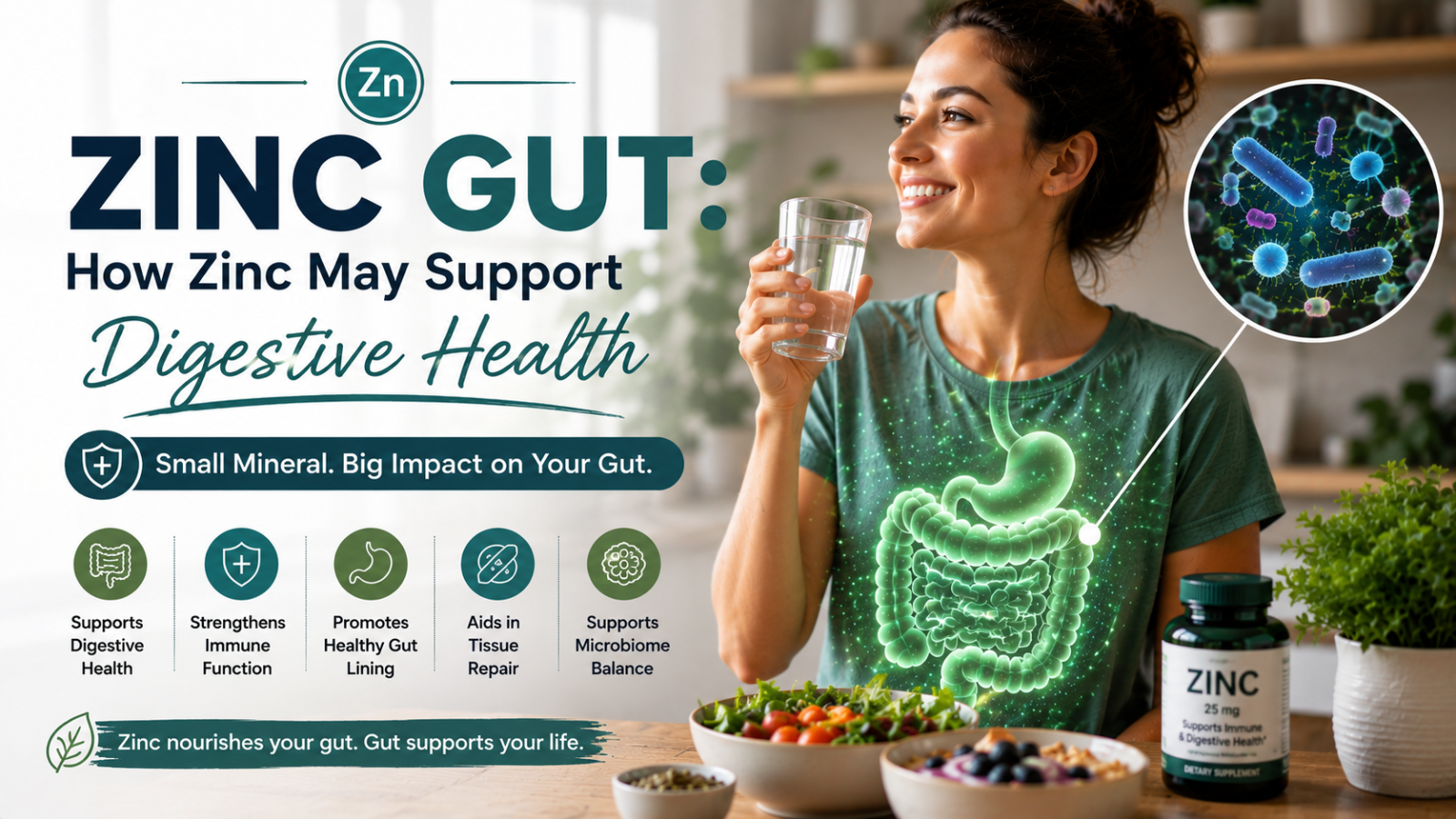
Zinc gut health is worth understanding because this essential mineral supports immune function and may help maintain the normal structure and function of the intestinal lining. If you’re building a better nutrition routine, use the Copy Button to save this guide and revisit the practical food tips when you need them.
Zinc doesn’t work alone, though. Your digestion also depends on fiber, hydration, sleep, movement, stress levels, and the variety of foods on your plate.
Quick Answer: What Is the Zinc Gut Connection?
The zinc gut connection involves zinc’s role in normal immune function, cell growth, and the maintenance of body tissues, including those in the digestive tract. Research suggests that adequate zinc intake may support the intestinal barrier and healthy immune activity.
However, zinc isn’t a cure for bloating, constipation, or other digestive problems. A balanced diet and healthy daily habits still play a much larger role in long-term digestive wellness.
Why Zinc Matters to Your Digestive System
Zinc is a trace mineral, which means your body needs it in relatively small amounts. Still, those small amounts matter.
According to information from the NIH, zinc contributes to several important processes in the body. These include immune function, protein production, DNA synthesis, and wound healing.
The digestive system depends on healthy cells.
Your intestinal lining constantly performs important work. It helps process nutrients while acting as a protective barrier between the contents of the digestive tract and the rest of the body.
Therefore, nutrients involved in normal cell function can also be relevant to digestive health.
The zinc gut relationship makes sense within this broader picture. Zinc supports basic biological processes, rather than acting as a special digestive remedy.
Zinc Gut Health and the Intestinal Barrier
The intestinal barrier is one of the most interesting parts of digestive health.
Think of it as a carefully managed boundary. Nutrients and water need to move through the digestive system, while the body also needs protection from substances that don’t belong where they shouldn’t.
The cells lining the intestine work together to maintain this barrier.
Research continues to explore how nutrients, including zinc, may influence normal intestinal barrier function. Zinc’s role in cell growth and tissue maintenance makes it an important nutrient for the body’s normal structures.
However, the phrase “gut repair” can be misleading.
No single nutrient instantly rebuilds the digestive tract. Your body uses many nutrients and biological processes to maintain tissues.
Instead, adequate zinc is one piece of a complete nutritional foundation.
How Zinc Supports Gut Immunity
A large part of the body’s immune activity is connected to the digestive tract.
That makes sense when you think about what happens there every day. Food, microorganisms, and other substances regularly pass through the intestines.
The immune system needs to respond appropriately.
Zinc supports normal immune function, which is one reason the zinc gut connection has attracted scientific interest. Researchers continue to study how zinc and other nutrients interact with immune processes in the digestive system.
Balance matters here.
A healthy immune response isn’t simply about making the immune system stronger. The body needs well-regulated responses that can adapt to different situations.
Therefore, adequate nutrition helps support normal function without making exaggerated promises.
Can Low Zinc Affect Digestive Health?
Low zinc intake can affect several systems in the body because zinc has many responsibilities.
However, digestive symptoms alone can’t tell you that you have low zinc.
For example, bloating may happen after eating certain foods or increasing fiber too quickly. Constipation can relate to hydration, physical activity, diet, medications, or changes in routine.
As a result, guessing based on symptoms can lead you in the wrong direction.
Some digestive conditions can also affect nutrient absorption. In those situations, low nutrient levels and digestive problems may occur together without one simple cause explaining everything.
Context is important.
If someone has ongoing digestive symptoms, adding a zinc supplement may not address the real issue.
Zinc Gut Microbiome Research: What We Know
The gut microbiome contains a large and complex community of microorganisms.
Diet strongly influences this environment. Fiber-rich foods, plant variety, medications, lifestyle, and many other factors can also shape the microbial community.
Researchers are exploring how minerals interact with the microbiome, including the possible role of zinc.
The science is still developing.
Some research suggests that zinc availability may influence the relationship between the body, the immune system, and microorganisms. However, scientists haven’t identified a simple formula for using zinc to create a “perfect” gut microbiome.
That’s probably a good reminder to stay practical.
You don’t need to chase a perfect microbiome. Instead, focus on consistent habits that support overall health.
A varied diet remains one of the most useful places to start.
Best Foods for Zinc and Gut Health
Food can provide zinc along with many other useful nutrients.
Good dietary sources include:
- Oysters and other seafood
- Beef
- Poultry
- Eggs
- Dairy foods
- Pumpkin seeds
- Cashews
- Beans
- Chickpeas
- Lentils
- Whole grains
Plant foods can be especially useful because many also provide fiber.
For example, beans contain zinc along with fiber that supports normal bowel habits and provides material that gut microorganisms can use.
Pumpkin seeds make another easy option.
You can sprinkle them over oatmeal, yogurt, salads, or roasted vegetables. A small addition like that can add texture and flavor without making your meals complicated.
Zinc From Animal and Plant Foods
Both animal and plant foods can contribute zinc to your diet.
Animal foods generally provide zinc in forms the body can absorb efficiently. Meanwhile, plant foods offer zinc along with fiber and a variety of beneficial nutrients.
You don’t need to choose one category.
A balanced eating pattern can include foods from different sources based on your preferences and dietary needs.
The goal is consistency, not perfection.
Zinc Gut Benefits From a Balanced Diet
When people hear about the zinc gut connection, supplements often become the first thought.
Food deserves attention first.
A zinc-rich meal can provide more than one nutrient. For instance, a bowl containing beans, brown rice, vegetables, and pumpkin seeds offers protein, fiber, minerals, and plant compounds.
Similarly, eggs with whole-grain toast and sautéed spinach can fit zinc into an ordinary breakfast.
This approach feels more realistic than building your entire routine around a supplement.
I’ve noticed that simple meals are often easier to maintain. You don’t need an elaborate wellness bowl every morning. A few thoughtful ingredients can gradually improve the variety of your diet.
Does Zinc Help With Digestion Directly?
Zinc doesn’t directly digest your food.
Your digestive system relies on many different processes, including enzymes, muscle contractions, nerve signals, hormones, and microorganisms.
Zinc supports normal functions throughout the body, but it shouldn’t be treated as a digestive shortcut.
For example, taking extra zinc won’t necessarily stop gas after eating beans. It also won’t automatically prevent discomfort after a very large meal.
The zinc gut relationship is more about supporting normal biological processes than providing an immediate digestive effect.
This distinction matters.
Nutrition works best when expectations remain realistic.
Zinc Supplements and Gut Health
Zinc supplements may be useful in certain situations. However, not everyone needs one.
Some people can meet their needs through food. Others may have specific dietary limitations or individual reasons for discussing supplements with a healthcare professional.
Supplement labels can also be confusing.
Different products contain different forms and amounts of zinc. In addition, some people take multivitamins that already contain zinc without realizing they’re adding another source.
Therefore, check what you’re already taking.
More zinc doesn’t mean more benefits.
Taking excessive amounts of supplemental zinc can cause unwanted effects. It may also interfere with the body’s balance of other nutrients.
Food-first habits are usually a sensible starting point.
Why Too Much Zinc Can Upset Your Stomach
This is an important part of the zinc gut discussion.
Although zinc is essential, large supplemental amounts can cause digestive side effects. Some people experience nausea, stomach discomfort, or other unpleasant symptoms after taking too much.
Taking a supplement on an empty stomach may also feel uncomfortable for some individuals.
That doesn’t mean zinc is harmful.It simply shows why dose matters.
The body needs adequate amounts, not unlimited amounts. Therefore, avoid treating a mineral supplement as harmless simply because it’s sold without a prescription.
Always read the label carefully.
Practical Ways to Support Zinc and Digestive Health
Supporting your zinc intake doesn’t require a complicated meal plan.
These everyday habits can help create a balanced approach.
1. Include Zinc-Rich Foods Regularly
Rotate foods such as seafood, eggs, dairy, beans, nuts, seeds, poultry, and whole grains.
Variety keeps meals interesting.
2. Eat More Plant Foods
Fruits, vegetables, legumes, nuts, seeds, and whole grains can support overall nutrition.
In addition, many provide fiber for digestive health.
3. Don’t Forget Protein
Protein-rich foods can contribute zinc while supporting other important nutritional needs.
Choose options that fit your usual eating pattern.
4. Add Seeds to Everyday Meals
Pumpkin seeds are easy to use.
Try them on oatmeal, salads, yogurt, or grain bowls.
5. Increase Fiber Gradually
A sudden jump in fiber can cause extra gas or bloating.
Instead, make changes slowly and give your digestive system time to adjust.
6. Stay Consistent With Fluids
Fiber and fluids work together.
Drinking regularly throughout the day can support comfortable digestion.
7. Avoid Supplement Stacking
Check your multivitamin and other supplements before adding another zinc product.
You may already be getting zinc from multiple sources.
8. Build Meals Instead of Chasing Nutrients
Instead of asking how to maximize one mineral, ask how to make your plate more balanced.
That question often leads to better long-term habits.
A Simple Day of Zinc-Rich, Gut-Friendly Meals
Breakfast could include eggs, whole-grain toast, and fruit.
For lunch, try a chickpea and vegetable bowl topped with pumpkin seeds.
Dinner might include salmon or chicken with roasted vegetables and a whole grain.
None of these meals are unusual.
That’s the point.
Healthy eating doesn’t have to look like a social media trend. Familiar foods can provide zinc, fiber, protein, and other nutrients without requiring expensive specialty products.
You can adjust these ideas to fit vegetarian, dairy-free, or other eating preferences.
Common Mistakes With Zinc and Gut Health
One common mistake is assuming zinc will solve every digestive problem.Digestive symptoms have many possible causes, so one mineral rarely provides a universal answer.
Another mistake is relying on supplements while ignoring food quality.
A person might take zinc daily but eat very little fiber and few plant foods. That approach misses important parts of digestive health.
People also sometimes increase supplement doses too quickly.
Instead, follow appropriate guidance and pay attention to the total amount you’re consuming.
Finally, don’t expect instant results.
The zinc gut connection involves normal biological processes. Nutrition usually supports health gradually through consistent habits.
Frequently Asked Questions About Zinc Gut Health
Does zinc support gut health?
Zinc supports normal immune function and important cellular processes. Research also continues to explore its relationship with the intestinal barrier and digestive health.
Can zinc affect the gut microbiome?
Scientists are studying how zinc and other nutrients interact with the gut microbiome. The relationship is complex, and researchers are still learning exactly how zinc influences microbial communities.
What foods are high in zinc?
Seafood, meat, poultry, eggs, dairy, beans, lentils, nuts, seeds, and whole grains can provide zinc.
Can zinc supplements cause stomach problems?
Yes. Large supplemental amounts may cause nausea or stomach discomfort in some people. Different products and doses can also produce different effects.
Should I take zinc for gut health?
Not everyone needs a zinc supplement for digestive wellness. A balanced diet may provide enough zinc, while individual needs can vary.
Final Thoughts on Zinc Gut Health
The zinc gut connection is part of a larger nutrition picture. Zinc supports normal immune function, cell growth, and important body processes, while researchers continue to explore its relationship with the intestinal barrier and gut microbiome.
Still, one mineral can’t create perfect digestion.A varied diet, enough fiber, regular fluids, physical activity, quality sleep, and consistent routines all matter. In addition, zinc-rich foods can help support your overall nutritional intake.
If you’re interested in zinc gut health, begin with practical food choices rather than searching for a quick fix.Use the Copy Button to save this guide and return to the zinc-rich food ideas when planning your next balanced, gut-friendly meal.

Here’s a short Gutrova-style author biography for Josh Axe:
Josh Axe
Josh Axe is a wellness expert, author, and educator known for his work in nutrition, natural health, and gut wellness. As a contributor to Gutrova, he shares practical insights on digestive health, healthy eating habits, and lifestyle strategies that help readers build a stronger foundation for overall well being. His content focuses on making wellness simple, actionable, and accessible for everyday life.









1 thought on “Zinc Gut: How Zinc May Support Digestive Health”