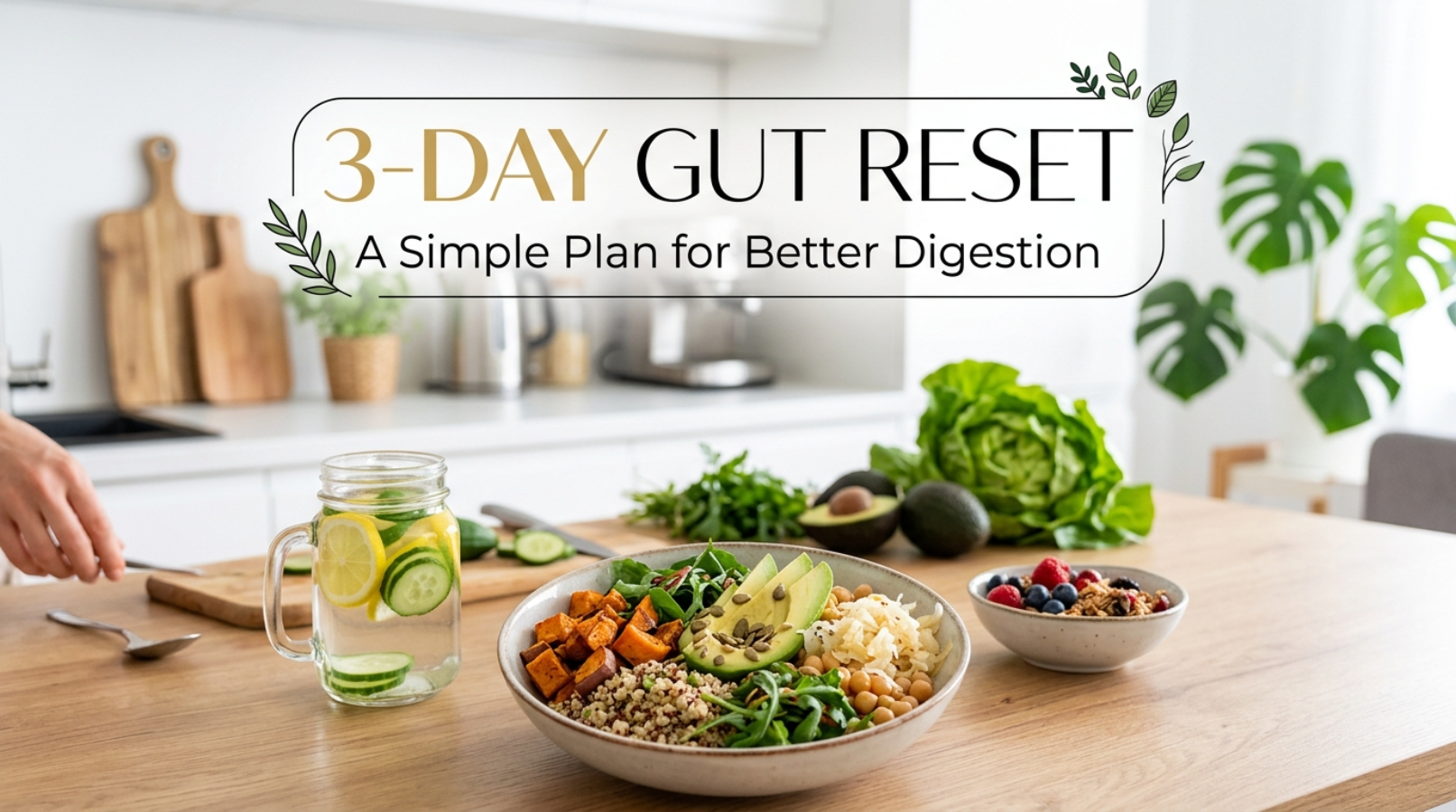
A 3-day gut reset won’t completely transform your microbiome in a weekend, but it can be a great way to get back on track after a period of overeating, travel, or too many processed foods. Research suggests your gut responds surprisingly quickly to changes in diet, hydration, and daily habits, making a short reset a helpful starting point rather than a miracle solution.
I’ve used a simple three-day reset after vacations when my meals were heavy and my sleep schedule was all over the place. I didn’t expect instant results, but I usually noticed less bloating, steadier energy, and a renewed motivation to keep making healthier choices. That’s the real value of a gut reset—it creates momentum for long-term habits.
Quick Answer
A 3-day gut reset is a short-term plan focused on eating fiber-rich whole foods, drinking enough water, limiting ultra-processed foods, prioritizing sleep, and supporting a healthy gut microbiome. While three days won’t completely rebuild your gut bacteria, research suggests even brief improvements in diet and lifestyle can positively influence digestion and encourage healthier eating habits.
What Is a 3-Day Gut Reset?
A 3-day gut reset isn’t a detox, cleanse, or juice fast.
Instead, it’s a structured approach to giving your digestive system a break from habits that may contribute to bloating or discomfort while increasing foods that support beneficial gut bacteria.
The goal isn’t to “flush toxins” from your body. Your liver and kidneys already perform that job naturally.
A realistic gut reset focuses on:
- Eating more fiber-rich foods
- Including fermented foods
- Drinking enough water
- Sleeping consistently
- Moving your body every day
- Reducing highly processed foods
These habits support your gut without relying on restrictive diets or expensive supplements.
Does a 3-Day Gut Reset Really Work?
The answer depends on what you expect.
If you’re hoping to completely repair your gut microbiome in 72 hours, the evidence doesn’t support that claim.
However, research suggests your gut bacteria can begin responding to dietary changes within days. Eating more plant-based foods and reducing highly processed foods may create a healthier environment for beneficial microbes.
Think of a 3-day gut reset as pressing the restart button on your daily routine—not as a permanent solution.
Who Can Benefit From a Gut Reset?
A short gut reset may be helpful if you’ve recently:
- Returned from vacation
- Eaten more processed foods than usual
- Experienced occasional bloating
- Fallen out of healthy eating habits
- Been drinking less water
- Felt sluggish after several days of indulgence
It’s designed for generally healthy adults looking to refresh their routines rather than treat a medical condition.
Preparing Before You Begin
Success starts before Day 1.
Take a few minutes to stock your kitchen with simple, nutrient-dense foods.
Helpful choices include:
Fruits
- Apples
- Blueberries
- Bananas
- Oranges
- Kiwi
Vegetables
- Spinach
- Broccoli
- Carrots
- Bell peppers
- Cucumbers
- Sweet potatoes
Whole Grains
- Oats
- Brown rice
- Quinoa
Protein Sources
- Salmon
- Chicken breast
- Eggs
- Greek yogurt
- Lentils
- Chickpeas
Healthy Fats
- Avocados
- Walnuts
- Almonds
- Olive oil
- Chia seeds
- Flaxseeds
Having these foods ready makes healthy choices much easier over the next three days.
Day 1: Reduce Processed Foods and Add More Fiber
The first day isn’t about eating less.
It’s about eating better.
Start replacing highly processed meals with foods that naturally support your digestive system.
Breakfast
A bowl of oatmeal topped with blueberries, chia seeds, and chopped walnuts provides fiber and healthy fats that help nourish beneficial gut bacteria.
Unsweetened yogurt with live cultures can be added for extra probiotic support.
Mid-Morning Snack
Choose:
- An apple
- A pear
- A handful of almonds
These snacks provide fiber while helping maintain steady energy.
Lunch
Build a colorful plate featuring:
- Grilled chicken or chickpeas
- Mixed greens
- Tomatoes
- Cucumbers
- Bell peppers
- Quinoa
- Olive oil and lemon dressing
The variety of plant foods supports greater microbiome diversity.
Afternoon Hydration
Aim to drink water consistently instead of waiting until you feel thirsty.
Herbal tea can also be a good choice if you enjoy warm beverages.
Dinner
A simple meal of baked salmon, roasted broccoli, and sweet potato delivers fiber, protein, and healthy fats without feeling overly heavy.
Evening Routine
Instead of reaching for sugary desserts or salty snacks, finish your evening with:
- Herbal tea
- A short walk
- Reading instead of scrolling on your phone
- Going to bed at your usual bedtime
Your gut benefits from regular sleep almost as much as it benefits from healthy food.
Day 1 Goals
By the end of the first day, aim to:
- Eat at least five servings of fruits and vegetables.
- Drink plenty of water throughout the day.
- Avoid sugary drinks.
- Skip highly processed snacks.
- Get seven to nine hours of sleep.
These simple actions lay the foundation for the next two days and begin shifting your routine toward healthier long-term habits.
Day 2: Feed Your Gut Microbiome
By the second day, the goal shifts from simply avoiding processed foods to actively nourishing your gut bacteria.
Research suggests that beneficial microbes thrive when they receive a steady supply of dietary fiber from a wide variety of plant foods. Instead of repeating the exact same meals from Day 1, try adding new ingredients to increase diversity.
Breakfast
Prepare plain Greek yogurt with:
- Fresh berries
- Ground flaxseeds
- Pumpkin seeds
- A sprinkle of oats
This combination offers protein, fiber, and live cultures without excessive added sugar.
Mid-Morning Snack
Choose one of these options:
- Carrot sticks with hummus
- A kiwi and a handful of walnuts
- An orange with a few almonds
Simple snacks like these help maintain energy while adding more fiber throughout the day.
Lunch
Build a nourishing grain bowl using:
- Brown rice or quinoa
- Roasted vegetables
- Chickpeas or grilled chicken
- Avocado
- Spinach
- Olive oil and lemon juice
Eating a colorful variety of plants supports greater microbiome diversity.
Afternoon Activity
After lunch, take a 20–30 minute walk.
Light movement supports healthy digestion and may help reduce that sluggish feeling many people experience after eating.
Dinner
Try:
- Baked salmon or tofu
- Steamed asparagus
- Roasted Brussels sprouts
- Brown rice
These foods provide fiber, healthy fats, and important nutrients without relying on heavily processed ingredients.
Evening Routine
Keep the evening simple.
Instead of late-night snacking:
- Drink herbal tea if desired.
- Dim bright lights before bed.
- Put away electronic devices about an hour before sleeping.
- Aim for another consistent bedtime.
Quality sleep supports the gut microbiome just as healthy food does.
Day 2 Goals
By the end of Day 2, try to:
- Eat at least 30 different plant foods across the week (this includes fruits, vegetables, legumes, nuts, seeds, herbs, and whole grains).
- Include one serving of fermented food.
- Drink water regularly throughout the day.
- Stay physically active.
- Prioritize another full night’s sleep.
Remember, consistency matters more than perfection.
Day 3: Build Habits That Last
The third day isn’t the finish line.
It’s the bridge between a short reset and a healthier long-term routine.
By now you may notice:
- Less bloating
- More regular digestion
- Better hydration
- Steadier energy
- Fewer processed food cravings
Everyone’s experience is different, so don’t expect dramatic overnight changes.
Breakfast
A smoothie made with:
- Spinach
- Frozen berries
- Plain kefir or yogurt
- Banana
- Ground flaxseed
This creates an easy, fiber-rich breakfast that supports beneficial gut bacteria.
Mid-Morning Snack
Choose fresh fruit with a small handful of mixed nuts.
Lunch
A hearty vegetable soup with:
- Lentils
- Carrots
- Celery
- Spinach
- Tomatoes
Serve it alongside whole-grain bread for additional fiber.
Afternoon Break
Spend some time outside if possible.
Fresh air, light movement, and stress reduction all contribute to overall wellness.
Dinner
Finish the reset with a balanced meal such as:
- Grilled chicken or baked tofu
- Roasted vegetables
- Quinoa
- Side salad with olive oil vinaigrette
Keep portions satisfying without overeating.
Foods to Prioritize During a 3-Day Gut Reset
Focus on foods that naturally nourish the microbiome.
These include:
High-Fiber Foods
- Oats
- Lentils
- Beans
- Chickpeas
- Apples
- Pears
- Berries
- Broccoli
- Sweet potatoes
Fermented Foods
- Plain yogurt
- Kefir
- Sauerkraut
- Kimchi
- Miso
- Tempeh
Healthy Fats
- Olive oil
- Avocados
- Walnuts
- Chia seeds
- Flaxseeds
Lean Proteins
- Fish
- Chicken
- Eggs
- Tofu
- Greek yogurt
Foods to Limit During Your Reset
You don’t need to eliminate foods forever.
For these three days, simply reduce:
- Sugary drinks
- Candy
- Ultra-processed snacks
- Fast food
- Excess alcohol
- Highly refined grains
- Fried foods
This temporary shift gives your meals a stronger nutritional foundation.
Common Mistakes During a Gut Reset
Expecting Instant Results
Your microbiome changes over time.
Three days can help establish healthier habits, but lasting improvements require consistency.
Eating Too Little
A gut reset isn’t about starvation.
Your body still needs enough calories, protein, healthy fats, and carbohydrates to function well.
Forgetting Hydration
Fiber works best when paired with adequate water intake.
Without enough fluids, increasing fiber too quickly may leave you feeling uncomfortable.
Ignoring Sleep
Late nights can influence digestion and overall well-being.
Treat sleep as an important part of your reset, not an afterthought.
Returning to Old Habits Immediately
The biggest mistake happens after Day 3.
If every healthy habit disappears the next morning, you’ll miss the real benefit of the reset.
Instead, choose two or three habits you genuinely enjoy and continue practicing them every week.
Frequently Asked Questions
Does a 3-day gut reset actually work?
A 3-day gut reset can help you restart healthier eating habits, improve hydration, and increase your intake of fiber-rich foods. While it won’t completely transform your gut microbiome in just three days, research suggests that positive dietary changes can begin influencing gut bacteria within a short period.
What should I eat during a 3-day gut reset?
Focus on whole, minimally processed foods that support digestive health. Good choices include fruits, vegetables, legumes, whole grains, nuts, seeds, fermented foods like yogurt or kefir, and lean proteins. Drinking plenty of water is also an important part of the plan.
Can a 3-day gut reset reduce bloating?
Some people notice less bloating after reducing highly processed foods and increasing fiber and hydration. Results vary from person to person, and occasional bloating can have many different causes, so lasting digestive improvements usually come from maintaining healthy habits beyond the three-day reset.
Should I take probiotics during a gut reset?
Probiotics may complement a healthy diet for some individuals, but they aren’t required for a successful 3-day gut reset. Many people can support their gut microbiome by eating fermented foods alongside a variety of fiber-rich plant foods.
What should I do after completing a 3-day gut reset?
The best approach is to carry your healthy habits forward. Continue eating a diverse range of fruits, vegetables, legumes, and whole grains, stay hydrated, exercise regularly, and maintain a consistent sleep schedule. Long-term consistency has a greater impact on gut health than any short-term reset.
Conclusion
A 3-day gut reset isn’t about detoxes, extreme restrictions, or quick fixes. It’s a practical way to pause unhealthy habits and replace them with simple routines that support your digestive system. Choosing fiber-rich foods, staying hydrated, eating fermented foods, moving your body, and getting enough sleep all help create a healthier environment for your gut microbiome.
Although three days won’t completely reshape your gut bacteria, they can be enough to help you feel lighter, more energized, and more mindful of your daily choices. Think of this reset as the beginning of a healthier lifestyle rather than a finish line.
The biggest benefits come after the reset ends. Keep adding colorful plant foods to your meals, reduce your reliance on ultra-processed foods, and stick with the habits that made you feel your best. Over time, these small, sustainable changes can support better digestion, improved overall wellness, and a healthier gut for the long run.

Here’s a short Gutrova-style author biography for Josh Axe:
Josh Axe
Josh Axe is a wellness expert, author, and educator known for his work in nutrition, natural health, and gut wellness. As a contributor to Gutrova, he shares practical insights on digestive health, healthy eating habits, and lifestyle strategies that help readers build a stronger foundation for overall well being. His content focuses on making wellness simple, actionable, and accessible for everyday life.