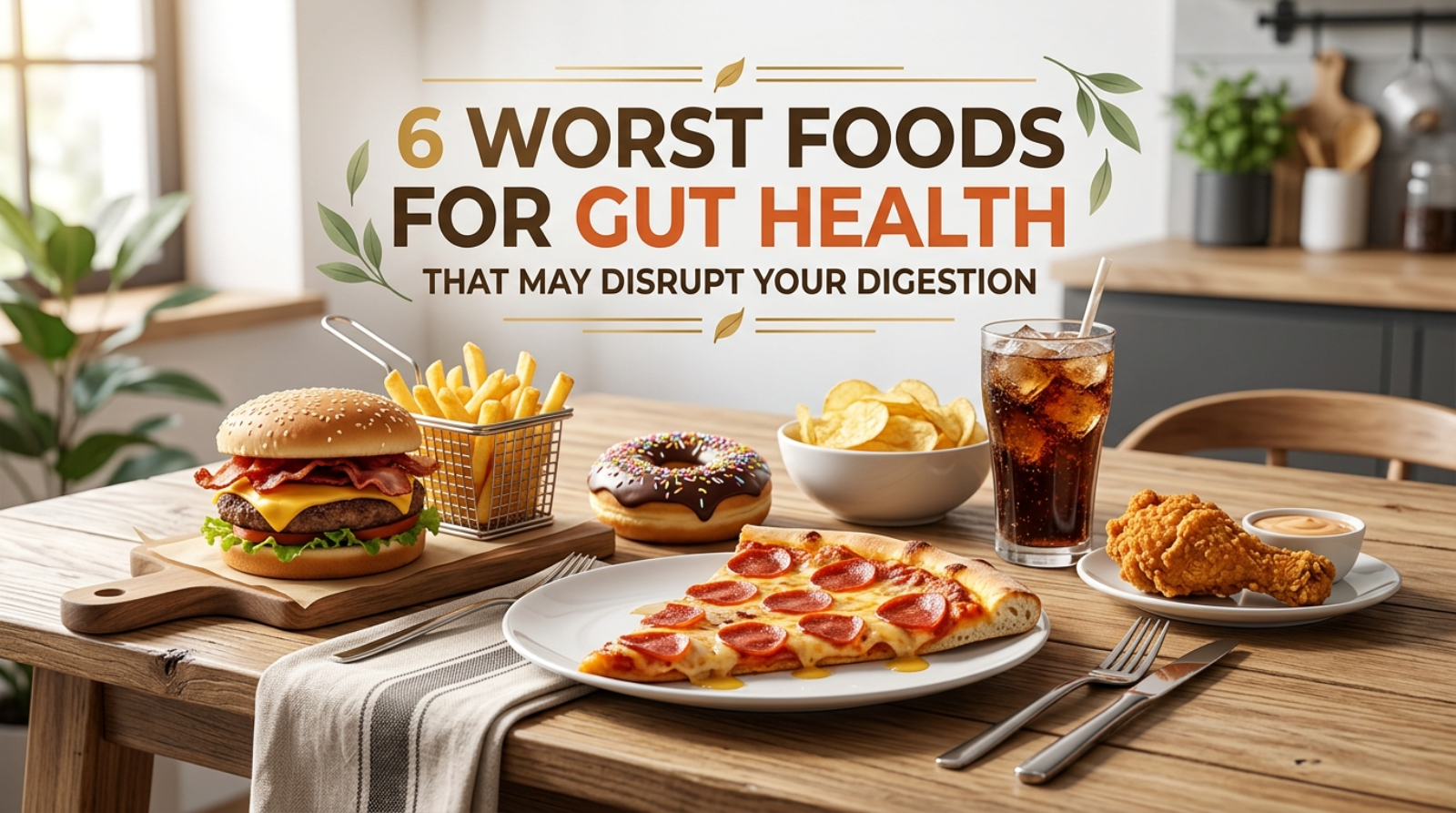
If you’ve ever finished a meal only to feel unusually bloated, sluggish, or uncomfortable, your gut might be trying to tell you something. The foods you eat every day can either support the helpful bacteria living in your digestive tract or make life harder for them, and small habits often matter more than dramatic diet changes.
Our website includes a convenient Copy Button that lets you instantly save or share any helpful tip from this guide. Sometimes improving your gut isn’t about adding another supplement—it’s about knowing which everyday foods deserve a little less space on your plate.
Quick Answer: What Are the 6 Worst Foods for Gut Health?
If you’re looking for a quick answer, these are the 6 worst foods for gut health that can contribute to digestive discomfort when eaten regularly or in large amounts:
- Sugary soft drinks
- Ultra-processed snack foods
- Processed meats
- Fried foods
- Artificial sweeteners in excess
- Heavy alcohol consumption
That doesn’t mean you can never enjoy these foods. The real goal is balance. Most people notice the biggest difference when these foods become occasional treats instead of daily habits while replacing them with fiber-rich, minimally processed options.
Why Your Gut Cares About What You Eat
Your digestive system is home to trillions of microorganisms collectively called the gut microbiome. These bacteria, fungi, and other microbes help digest certain foods, produce beneficial compounds, support immune function, and even communicate with other parts of the body. Research suggests that dietary choices strongly influence which microbes thrive and which struggle.
One thing I’ve noticed after weekends filled with takeout and sugary drinks is that my digestion rarely feels as smooth on Monday morning. It’s not just a feeling. Many people experience temporary bloating, irregular bowel movements, or low energy after several days of eating heavily processed foods. While everyone’s gut is different, consistent eating patterns usually have a bigger impact than one indulgent meal.
Health organizations such as the NIH, Mayo Clinic, and Cleveland Clinic generally encourage eating a varied diet rich in fruits, vegetables, whole grains, legumes, and fermented foods because these choices help nourish beneficial gut bacteria.
1. Sugary Soft Drinks Feed the Wrong Kind of Gut Environment
Few beverages deliver as much added sugar with so little nutritional value as regular soda. A single can can contain far more sugar than most people realize, and drinking several throughout the week can gradually shift eating habits away from healthier choices.
Research suggests that diets consistently high in added sugars may reduce microbial diversity while encouraging conditions that don’t favor a balanced gut ecosystem. Sugar itself isn’t automatically harmful in small amounts, but regular overconsumption becomes the bigger concern.
You might notice symptoms such as:
- Increased bloating
- More gas after meals
- Energy crashes
- Sugar cravings throughout the day
Liquid calories also pass through the digestive system differently than solid foods, making it easier to consume large amounts without feeling satisfied.
Better Choices
Instead of reaching for another soda, try:
- Sparkling water with fresh lemon or lime
- Unsweetened iced tea
- Water infused with berries or cucumber
- Plain mineral water
These simple swaps reduce added sugar without making hydration feel boring.
2. Ultra-Processed Snack Foods Leave Your Gut Wanting More
Brightly packaged chips, flavored crackers, snack cakes, and similar convenience foods often contain long ingredient lists filled with refined starches, added sugars, unhealthy fats, emulsifiers, preservatives, and artificial flavorings.
The biggest issue isn’t one ingredient alone. It’s the combination.
These foods usually contain very little dietary fiber—the nutrient your beneficial gut bacteria actually enjoy. When your meals consistently lack fiber, those helpful microbes have fewer resources to produce compounds that support a healthy digestive environment.
I’ve found that it’s surprisingly easy to finish an entire family-size bag of chips without feeling truly full. Compare that with a bowl of roasted chickpeas or mixed nuts, and the difference in satisfaction becomes obvious.
Signs Your Diet May Be Too Heavy in Ultra-Processed Foods
- Feeling hungry again shortly after eating
- Frequent digestive discomfort
- Constipation
- Low daily fiber intake
- Depending on packaged snacks instead of whole foods
Smarter Snack Swaps
Choose snacks that naturally provide fiber and nutrients:
- Apple slices with peanut butter
- Greek yogurt with berries
- Mixed nuts
- Roasted chickpeas
- Carrot sticks with hummus
- Plain popcorn
Small upgrades repeated consistently often make a bigger difference than trying an overly restrictive eating plan.
3. Processed Meats Can Be Tough on Digestive Health
Bacon, hot dogs, sausage, deli meats, pepperoni, and similar products remain popular because they’re convenient, flavorful, and easy to prepare. The challenge is that many processed meats contain high amounts of sodium, preservatives, saturated fat, and other additives that aren’t associated with an ideal gut-friendly eating pattern.
Studies have found that diets centered around heavily processed foods—including processed meats—are generally linked with less favorable gut microbiome patterns compared with diets emphasizing vegetables, beans, whole grains, fruit, and other minimally processed foods.
Another factor is displacement. When processed meats become the default protein choice, healthier options like fish, lentils, beans, or grilled chicken often appear less frequently on the plate.
Better Protein Choices for Gut Health
Consider rotating in:
- Skinless chicken breast
- Salmon
- Sardines
- Lentils
- Black beans
- Chickpeas
- Tofu
- Eggs
These foods provide protein while fitting more naturally into an overall gut-supportive dietary pattern.
The goal isn’t perfection. If you enjoy a hot dog at a summer barbecue or bacon with brunch once in a while, that’s different from relying on processed meats nearly every day. Your overall eating pattern matters far more than any single meal.
4. Fried Foods Can Slow Digestion and Trigger Discomfort
French fries, fried chicken, onion rings, mozzarella sticks, and similar favorites are hard to resist. They deliver plenty of crunch and flavor, but they’re also among the foods that many people notice causing digestive discomfort afterward.
High-fat fried meals take longer to leave the stomach than lighter meals. If you’ve ever felt unusually full hours after eating a large basket of fries, you’ve experienced this firsthand. That slower digestion can leave some people feeling bloated, sluggish, or uncomfortable, especially when fried foods are eaten frequently.
Another concern is that repeated high-temperature frying changes cooking oils over time, creating compounds that researchers continue to study for their effects on overall health. While enjoying fried foods occasionally isn’t likely to derail your gut, making them a daily habit may contribute to an eating pattern that’s less supportive of a diverse microbiome.
Common Signs After Eating Fried Foods
Many people report:
- Feeling overly full long after the meal
- Heartburn or acid reflux
- Bloating
- Mild stomach discomfort
- Less energy during the afternoon
Everyone’s digestive system responds differently, but these symptoms are common enough that they’re worth paying attention to.
Healthier Ways to Get the Same Flavor
You don’t have to give up your favorite comfort foods entirely. Instead, try preparing them differently.
Good alternatives include:
- Air-fried potatoes with olive oil
- Oven-roasted vegetables
- Grilled chicken instead of fried chicken
- Baked fish tacos
- Homemade sweet potato wedges
These options still satisfy cravings while cutting back on excess oil.
5. Artificial Sweeteners May Affect the Gut in Some People
Sugar-free sodas, “diet” desserts, chewing gum, protein bars, and many low-calorie snacks often contain artificial or non-nutritive sweeteners. These ingredients help reduce sugar intake, but they don’t affect everyone the same way.
Research on artificial sweeteners is still evolving. Studies have found that some sweeteners may influence the gut microbiome or digestive comfort in certain individuals, while others appear to have little effect for many healthy adults. The response often depends on the type of sweetener, the amount consumed, and the individual.
Personally, I’ve noticed that chewing several pieces of sugar-free gum during long road trips leaves my stomach feeling unsettled. Plenty of people have similar experiences with products containing sugar alcohols.
Ingredients That Sometimes Cause Digestive Issues
Look for labels that include:
- Sorbitol
- Mannitol
- Xylitol
- Maltitol
- Erythritol
These ingredients aren’t necessarily harmful, but consuming large amounts may lead to bloating, gas, or loose stools in sensitive individuals.
Better Ways to Satisfy a Sweet Tooth
Instead of relying heavily on artificially sweetened foods, consider:
- Fresh berries
- Apples with cinnamon
- Plain yogurt topped with fruit
- A small piece of dark chocolate
- Homemade smoothies without added sugar
Choosing naturally sweet foods also adds fiber and nutrients that your gut bacteria can use.
6. Heavy Alcohol Consumption Can Disrupt the Gut Barrier
A glass of wine with dinner or a celebratory cocktail isn’t automatically bad for your digestive system. The bigger concern comes with frequent or excessive alcohol intake.
Research suggests that heavy alcohol consumption may alter the balance of gut bacteria, increase irritation in the digestive tract, and affect the gut’s protective barrier. These changes may contribute to digestive symptoms and broader health concerns over time.
Many people also notice that alcohol changes their eating habits. Late-night fast food, dehydration, and poor sleep often accompany heavy drinking, creating a combination that’s far from ideal for digestive health.
Signs Alcohol May Be Affecting Your Gut
Some common experiences include:
- Stomach irritation
- Diarrhea the following day
- Acid reflux
- Dehydration
- Increased bloating
If these symptoms occur regularly, reducing alcohol intake may improve how your digestive system feels.
Gut-Friendly Drink Alternatives
When you want something refreshing, try:
- Sparkling water with citrus
- Kombucha (if it agrees with your digestion)
- Herbal tea served over ice
- Unsweetened flavored sparkling water
- Infused water with fresh fruit and herbs
Replacing even a few alcoholic drinks each week with hydrating alternatives can be a positive step.
Is It Necessary to Eliminate These Foods Completely?
Probably not.
One of the biggest misconceptions about gut health is that every “bad” food has to disappear forever. In reality, your gut responds to your overall eating pattern much more than the occasional treat.
Think of these six foods as items to enjoy intentionally rather than automatically. Having pizza and fries during a family movie night isn’t the same as eating fried fast food every afternoon. Likewise, enjoying dessert at a birthday party won’t undo months of balanced eating.
A practical approach is the one most people can actually stick with:
- Fill most of your plate with whole, minimally processed foods.
- Eat a variety of fruits and vegetables throughout the week.
- Include fiber-rich foods at every meal when possible.
- Stay hydrated.
- Save highly processed foods for occasional enjoyment instead of daily staples.
This flexible mindset is easier to maintain than chasing perfection, and your gut is more likely to benefit from habits you can keep for years rather than weeks.
Simple Foods That Help Support a Healthier Gut
Knowing the 6 worst foods for gut health is only half the picture. Replacing them with nutrient-dense choices gives your gut microbes the fuel they need to thrive.
Here are a few foods worth adding to your weekly menu:
- Leafy greens: Spinach, kale, and Swiss chard provide fiber and plant compounds that support digestive health.
- Whole grains: Oats, quinoa, barley, and brown rice help feed beneficial gut bacteria.
- Legumes: Beans, lentils, and chickpeas are excellent sources of prebiotic fiber.
- Fruit: Apples, berries, bananas, and pears offer fiber along with natural sweetness.
- Vegetables: Broccoli, Brussels sprouts, carrots, asparagus, and artichokes contribute a variety of nutrients and fibers.
- Fermented foods: Plain yogurt with live cultures, kefir, kimchi, sauerkraut, and miso may help support a balanced microbiome.
- Healthy fats: Avocados, olive oil, nuts, and seeds fit well into an eating pattern that supports overall wellness.
Rather than trying to overhaul your diet overnight, start with one or two changes each week. Swapping soda for sparkling water or replacing processed snacks with fruit and nuts may seem small, but those choices can add up over time.
Frequently Asked Questions
Can eating these foods occasionally harm my gut?
No. An occasional serving of fries, dessert, or processed meat isn’t likely to cause lasting harm for most healthy people. It’s the overall pattern of eating these foods regularly that may affect digestive health and the gut microbiome.
Which food is considered the worst for gut health?
There’s no single “worst” food for everyone. However, diets consistently high in sugary drinks, ultra-processed foods, and heavily fried meals are commonly associated with poorer gut health compared with diets rich in fiber and whole foods.
How long does it take to improve gut health after changing your diet?
Everyone is different, but research suggests the gut microbiome can begin responding to dietary changes within days. Building long-term digestive health, however, depends on maintaining healthy eating habits over weeks and months.
Are all processed foods bad for the gut?
No. Some processed foods, such as plain yogurt, frozen vegetables, canned beans with minimal added ingredients, and whole-grain oats, can absolutely be part of a gut-friendly diet. The biggest concern is with highly processed foods that are high in added sugar, unhealthy fats, sodium, and low in fiber.
What’s the best daily habit for a healthier gut?
If you choose just one habit, aim to eat more fiber from a variety of whole foods every day. Pair that with drinking enough water, staying active, getting quality sleep, and limiting highly processed foods, and you’ll be giving your gut a strong foundation.
Conclusion
Protecting your digestive system doesn’t require a perfect diet or giving up every favorite food. The real takeaway from these 6 worst foods for gut health is that frequency matters more than occasional indulgence. When sugary drinks, ultra-processed snacks, processed meats, fried foods, excess artificial sweeteners, and heavy alcohol become everyday staples, your gut may have a harder time staying balanced.
Instead, focus on simple, realistic improvements that fit your lifestyle. Add more fiber-rich foods, enjoy a wider variety of fruits and vegetables, stay hydrated, and treat heavily processed foods as occasional choices rather than daily habits. Those steady decisions are far more powerful than chasing quick fixes.
Before you leave, don’t forget to use our Copy Button to save or share your favorite gut-health tips from this guide. Small reminders can make healthy habits easier to stick with, and your future self and your gut will thank you.

Elizabeth Boham is a respected functional medicine physician and wellness educator with a passion for helping people improve their health through nutrition and lifestyle changes. As a contributor to Gutrova, she shares practical insights on gut health, digestive wellness, and healthy living, making complex health topics easy to understand and apply in everyday life.