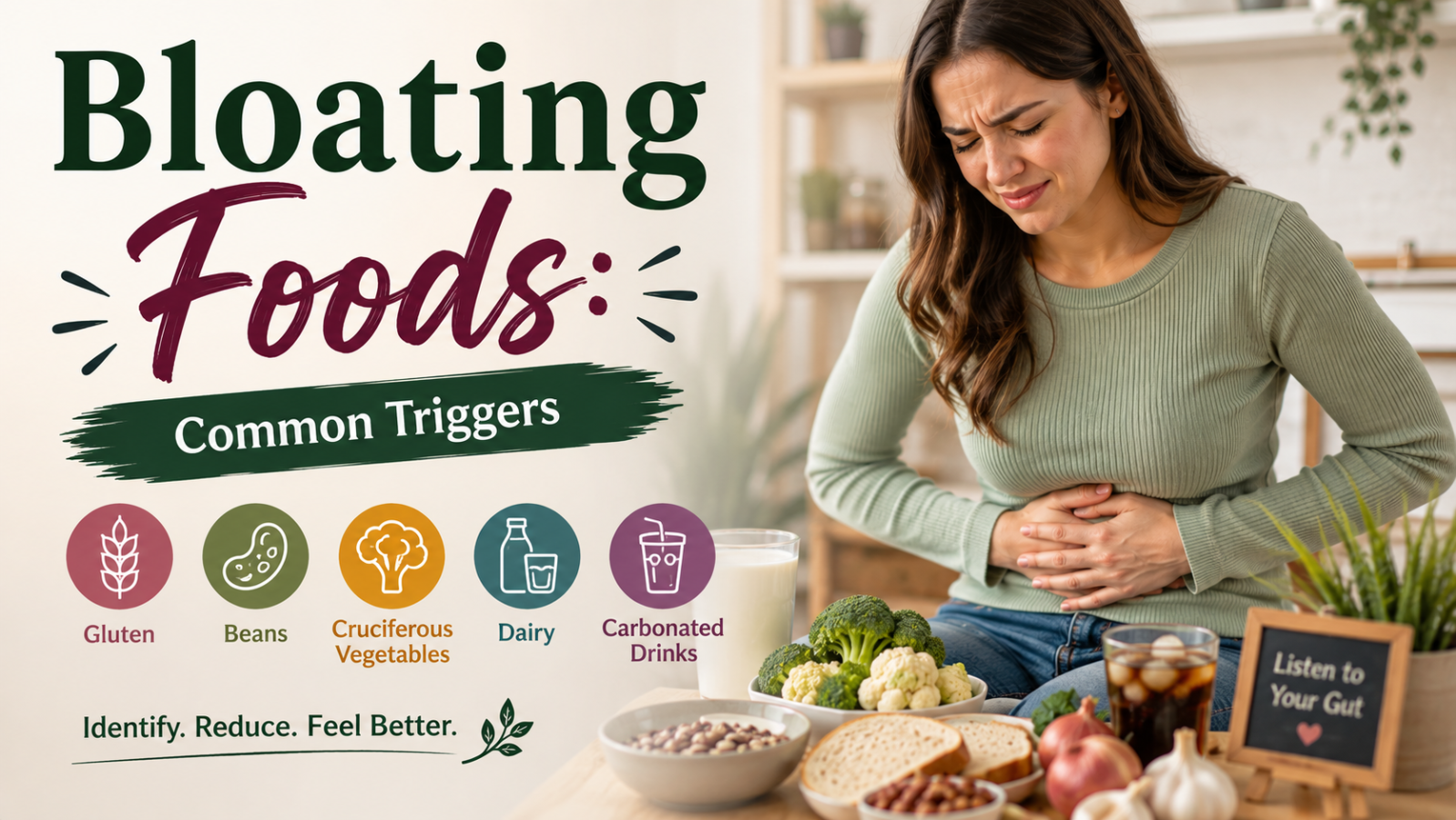
Bloating foods can be surprisingly different from one person to another, which is why finding your personal triggers matters more than following a strict list. Beans, certain vegetables, dairy products, some fruits, carbonated drinks, and sugar-free foods can cause more gas or bloating in sensitive people.
If you’ve ever finished a healthy meal only to feel uncomfortably full afterward, you’re not alone. A big salad, bowl of beans, or large serving of whole grains may be nutritious while still causing temporary digestive discomfort. The goal isn’t to fear these foods, but to understand your body’s response and make thoughtful adjustments.
The Copy Button makes it easy to save or share the practical food tips in this guide for later.
Quick Answer: Which Bloating Foods Cause the Most Problems?
Common bloating foods include beans and lentils, broccoli and other cruciferous vegetables, onions, garlic, some fruits, dairy products containing lactose, whole grains, carbonated drinks, and foods containing sugar alcohols such as sorbitol and xylitol.
However, these foods aren’t automatically unhealthy. Many provide fiber, vitamins, minerals, or other valuable nutrients. The issue is often the amount eaten, individual tolerance, or how quickly the food is introduced into your diet.
Why Certain Bloating Foods Create Gas
Gas is a normal part of digestion. Your large intestine contains bacteria that break down carbohydrates that weren’t fully digested earlier in the digestive tract. During this process, the bacteria can produce gas.
Some foods contain carbohydrates that are more difficult for certain people to digest. As a result, more of those carbohydrates reach the large intestine and may produce additional gas.
That doesn’t mean your gut is unhealthy. In many cases, it simply means your digestive system is sensitive to a particular food or portion size.
Bloating Foods: Beans and Lentils
Beans, peas, and lentils are nutritious sources of plant protein and fiber. Still, they can cause gas because they contain carbohydrates that aren’t completely digested in the small intestine.
If beans leave you feeling inflated, don’t assume you need to give them up permanently. Start with a smaller serving and increase gradually.
Rinsing canned beans and cooking dried beans thoroughly may also make them easier for some people to tolerate. Mayo Clinic notes that preparation can reduce some of the compounds associated with gas production. (Mayo Clinic News Network)
Some foods that cause gas and bloating can be harder to digest or may increase fermentation in the gut. Common examples include beans, lentils, onions, garlic, broccoli, cabbage, carbonated drinks, and some dairy products, especially for people who have lactose intolerance. However, food triggers vary from person to person, so it can help to notice which foods consistently cause discomfort rather than avoiding large groups unnecessarily.
foods to reduce bloating quickly
If you’re looking for foods to reduce bloating quickly, choose simple, easy-to-tolerate options and keep portions moderate. Water-rich foods such as cucumber and melon can support hydration, while ginger may help with digestive comfort for some people. Plain rice, oatmeal, bananas, and cooked vegetables can also be gentler choices when your stomach feels full or uncomfortable. Since bloating triggers differ, pay attention to how your body responds rather than relying on a single food as a quick fix.
Fruits That Cause Gas and Bloating
Some fruits that cause gas and bloating contain fermentable carbohydrates, natural sugars, or high amounts of fiber that can increase gas and digestive discomfort in some people. Apples, pears, cherries, peaches, plums, mangoes, and dried fruits may be harder to tolerate, especially when eaten in large portions. However, this doesn’t mean these fruits are unhealthy or need to be removed from your diet. The goal is to identify your personal triggers while still enjoying a variety of nutrient-rich foods. If you notice bloating after eating certain fruits, try a smaller serving, eat them slowly, and keep a simple food-and-symptom record. This can help you understand which choices fit comfortably into your digestive routine.
Does Brown Rice Cause Bloating?
Does brown rice cause bloating? For some people, it can, mainly because brown rice contains more fiber than white rice. A sudden increase in fiber may lead to extra gas, fullness, or bloating, especially if your digestive system isn’t used to it. However, brown rice is a nutritious whole grain and doesn’t cause bloating for everyone. Starting with a smaller portion, increasing fiber gradually, and drinking enough water may make it easier to tolerate.
Bloating Foods: Broccoli, Cabbage, and More
Cruciferous vegetables such as broccoli, cauliflower, cabbage, kale, and Brussels sprouts can increase gas for some people. These vegetables contain beneficial nutrients and fiber, so avoiding them isn’t necessary for everyone.
Instead, pay attention to portion size.
A large plate of raw vegetables may feel very different from a small serving of cooked vegetables. If raw vegetables consistently cause discomfort, try cooking them and see how your digestion responds.
A simple approach
Try one vegetable at a time rather than eating several potential triggers in one meal. This makes it easier to identify which foods actually bother you.
Bloating Foods: Dairy Products
Milk, ice cream, and other dairy foods containing lactose can cause bloating, gas, diarrhea, or abdominal discomfort in people who have lactose intolerance.
Lactose intolerance happens when the small intestine doesn’t produce enough lactase to digest all the lactose consumed.
If you notice symptoms after dairy, don’t immediately remove every dairy food from your diet. Some people tolerate certain portions or lactose-free options better than others.
For example, you might compare a small amount of yogurt with a glass of milk and observe how your body responds.
Bloating Foods: Onions and Garlic
Onions and garlic add plenty of flavor, but they can also cause digestive symptoms in some sensitive people. They contain fructans, a type of carbohydrate that can ferment in the gut and contribute to gas and bloating. (Mayo Clinic News Network)
This can be especially relevant for people who have irritable bowel syndrome or sensitivity to certain FODMAP carbohydrates.
If onions seem to trigger symptoms, try reducing the portion rather than eliminating every flavorful ingredient from your meals. You may discover that your tolerance depends on quantity.
Bloating Foods: Certain Fruits
Fruit is an important part of a balanced diet, yet some fruits can contribute to gas or bloating in sensitive individuals.
NIDDK lists apples, peaches, pears, and fruit juices among foods that may increase gas symptoms for some people.
Fructose is one reason. Some people have difficulty absorbing larger amounts of fructose, which can lead to digestive symptoms.
Instead of removing fruit completely, try eating smaller portions and keeping track of your response. You may find that one type of fruit causes problems while another feels perfectly comfortable.
Bloating Foods: Carbonated Drinks
Sometimes the culprit isn’t food at all.
Soda, sparkling beverages, beer, and other fizzy drinks can introduce additional gas into the digestive tract. Drinking quickly through a straw or chewing gum can also increase the amount of air you swallow.
If you’re frequently bloated, try replacing carbonated beverages with still water for several days.
It’s a simple experiment, and it may help you determine if carbonation plays a role in your symptoms.
Bloating Foods: Sugar-Free Products
Sugar-free gum, candy, and some low-sugar products may contain sugar alcohols such as sorbitol, mannitol, xylitol, erythritol, or maltitol. These ingredients can cause gas or digestive discomfort in some people.
Check ingredient labels if you regularly experience bloating after eating sugar-free products.
You don’t need to avoid every product containing these ingredients. Instead, notice whether symptoms appear repeatedly after consuming them.
High-Fiber Foods Can Be Tricky
Fiber supports healthy digestion, but suddenly eating much more fiber can cause extra gas and bloating.
This often happens when someone decides to improve their diet and quickly adds large amounts of beans, bran, whole grains, vegetables, and seeds.
The better strategy is gradual.
Increase fiber slowly and give your digestive system time to adapt. Drinking adequate fluids can also support normal bowel function. NIDDK notes that some people experience more gas when they consume too much fiber.
Healthy food doesn’t always mean unlimited portions.
Bloating Foods and High-Fat Meals
Very fatty meals may leave some people feeling unusually full or bloated. Mayo Clinic notes that high-fat foods can increase bloating, partly because fat can slow digestion.
Think about a large restaurant meal loaded with fried foods, creamy sauces, and rich desserts. The discomfort afterward may have less to do with one specific ingredient and more to do with the size and composition of the meal.
Try smaller portions and lighter preparation methods. Grilled, baked, roasted, or steamed foods may feel easier for some people than heavily fried meals.
How to Identify Your Personal Bloating Foods
A food diary can be more useful than a generic “foods to avoid” list.
For one or two weeks, record:
- What you eat and drink
- Approximate portion sizes
- When you eat
- Bloating or gas symptoms
- Bowel changes
- Other noticeable digestive symptoms
Look for repeated patterns instead of reacting to one uncomfortable meal.
For example, if you feel bloated after eating a large serving of beans three times but feel fine after a small serving, portion size may be the important factor.
Likewise, if milk consistently causes symptoms while lactose-free milk doesn’t, lactose may deserve further attention.
NIDDK recommends keeping track of foods, drinks, and gas symptoms because this information can help healthcare professionals or dietitians identify potential triggers.
Don’t Eliminate Every Bloating Food
One of the biggest mistakes people make is creating an unnecessarily restrictive diet.
Many foods associated with gas are also nutritious. Beans provide fiber and plant protein. Cruciferous vegetables provide important nutrients. Whole grains can contribute valuable fiber.
Therefore, the goal should usually be personal tolerance rather than total avoidance.
If symptoms are persistent, a registered dietitian or healthcare professional can help you determine if a structured dietary approach, such as a temporary low-FODMAP plan, is appropriate. NIDDK notes that healthcare professionals may recommend specialized diets for conditions such as IBS or food intolerance. (NIDDK)
Eating Habits Matter Too
Sometimes the food isn’t the whole story.
Eating too quickly, talking while chewing, drinking through a straw, chewing gum, and consuming fizzy drinks can increase swallowed air and contribute to gas symptoms. (NIDDK)
Try slowing down at meals. Sit down, chew thoroughly, and give yourself enough time to finish without rushing.
Smaller meals may also be easier to tolerate than very large meals, particularly if overeating tends to leave you uncomfortable. (NIDDK)
When Bloating Needs More Attention
Occasional bloating is common, but persistent symptoms shouldn’t simply be blamed on food.
Digestive conditions such as lactose intolerance, IBS, celiac disease, constipation, and other gastrointestinal problems can contribute to gas and bloating. (My Clinic)
Talk with a healthcare professional if bloating regularly interferes with your daily life, keeps returning without an obvious reason, or occurs alongside concerning symptoms such as severe abdominal pain, frequent vomiting, blood in the stool, or unexplained weight loss.
Finding the underlying cause is more useful than continually removing foods from your diet.
FAQ About Bloating Foods
What are the most common bloating foods?
Common triggers include beans, lentils, cruciferous vegetables, certain fruits, dairy containing lactose, whole grains, carbonated drinks, and products containing certain sugar alcohols. However, tolerance varies considerably. (NIDDK)
Are high-fiber foods bad for bloating?
Not necessarily. Fiber is important for digestive health, but suddenly increasing your intake can cause more gas. Gradually increasing fiber may be easier to tolerate.
Should I stop eating beans if they cause gas?
Not automatically. Try smaller portions, thorough cooking, and gradual increases first. If beans consistently cause significant symptoms, discuss alternatives with a healthcare professional or dietitian.
Can dairy cause bloating?
Yes. People with lactose intolerance can experience bloating, gas, diarrhea, and abdominal discomfort after consuming lactose-containing foods or drinks. (NIDDK)
Is bloating always caused by food?
No. Food is only one possible factor. Constipation, swallowing air, digestive disorders, food intolerances, and other conditions can also contribute to bloating and gas. (Mayo Clinic)
Final Thoughts on Bloating Foods
Understanding bloating foods doesn’t mean creating a long list of foods you’re afraid to eat. Instead, focus on your own patterns, portion sizes, eating speed, and overall digestive habits.
Start with one small change at a time. If you’ve identified a useful tip from this guide, use the Copy Button to save it and revisit it when planning your meals. With a little observation, you may be able to enjoy a varied diet while making your digestive routine more comfortable.

Here’s a short Gutrova-style author biography for Josh Axe:
Josh Axe
Josh Axe is a wellness expert, author, and educator known for his work in nutrition, natural health, and gut wellness. As a contributor to Gutrova, he shares practical insights on digestive health, healthy eating habits, and lifestyle strategies that help readers build a stronger foundation for overall well being. His content focuses on making wellness simple, actionable, and accessible for everyday life.