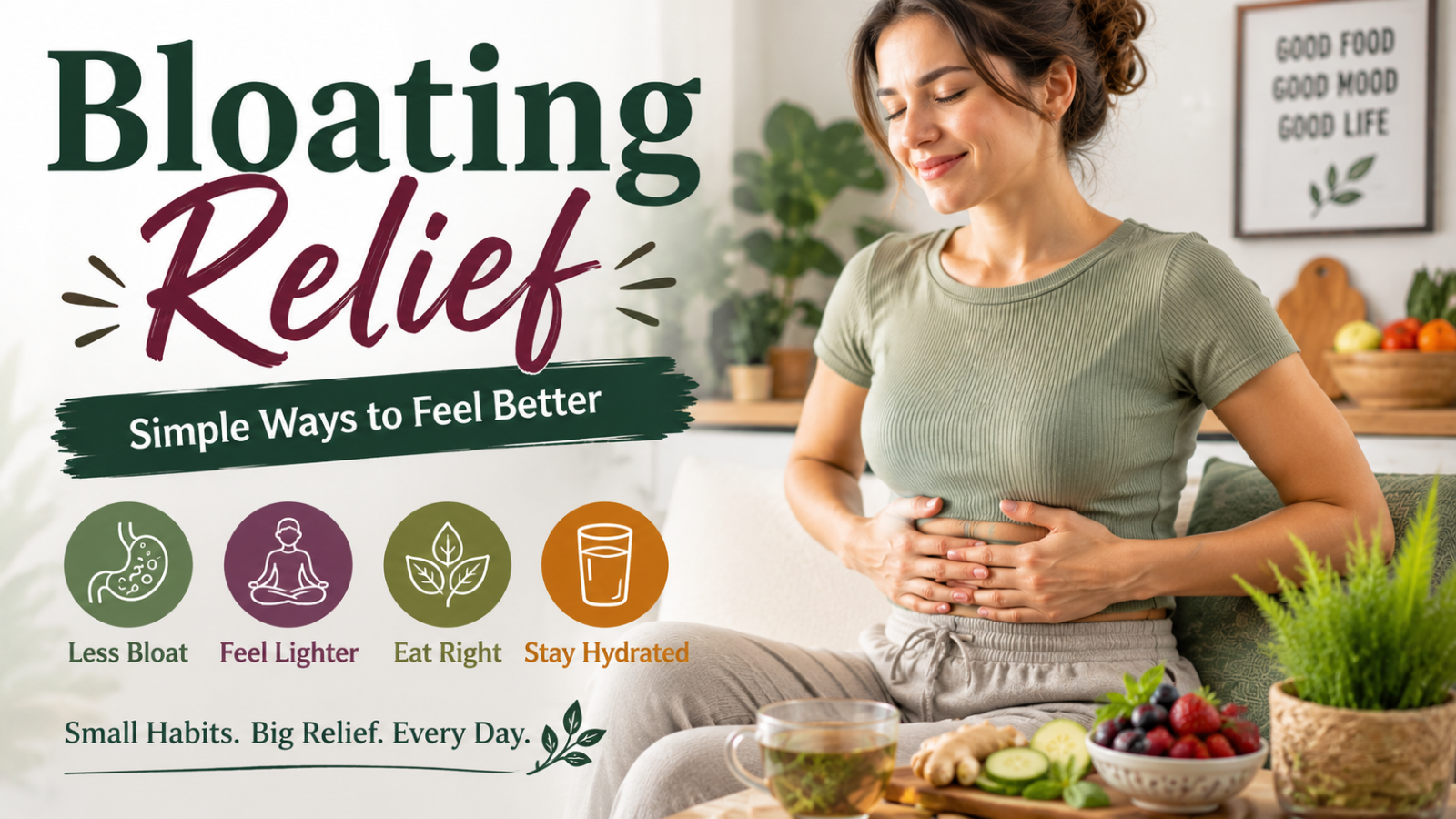
Bloating relief can start with a few simple changes to the way you eat, move, and care for your digestive system. A swollen, tight, or overly full feeling can make an ordinary day uncomfortable, especially after meals. The good news is that small adjustments often make a noticeable difference.
If you’ve ever loosened your waistband after dinner because your stomach suddenly felt twice its normal size, you know how frustrating bloating can be. I’ve found that the most useful approach is to look at the pattern behind the discomfort instead of blaming one food or trying a quick fix every time.
The Copy Button on this article also makes it easy to save or share practical tips you want to try later.
Quick Answer: What Helps With Bloating Relief?
For many people, bloating relief starts with slowing down at meals, drinking enough water, getting regular movement, and noticing foods that repeatedly trigger symptoms. Smaller meals, gradual increases in fiber, and limiting carbonated drinks may also help.
However, the best approach depends on the reason behind the bloating. Gas, constipation, food intolerances, eating habits, and digestive conditions can all contribute.
Bloating Relief Starts With Your Eating Habits
How you eat can matter almost as much as what you eat. Eating quickly, taking large bites, or talking while chewing can cause you to swallow more air, which may contribute to gas and abdominal fullness.
Instead, try slowing down during meals. Put your fork down between bites and give yourself enough time to chew your food thoroughly. This simple habit can make meals feel more comfortable.
Large meals can also leave your stomach feeling stretched. If you regularly feel uncomfortable after dinner, experiment with slightly smaller portions and eat slowly rather than trying to finish everything quickly.
Try these simple meal changes
- Eat at a comfortable pace.
- Chew food thoroughly.
- Avoid rushing through meals.
- Choose smaller portions when large meals trigger discomfort.
- Sit upright while eating.
- Limit frequent gum chewing if it causes extra air swallowing.
- Notice patterns instead of eliminating many foods at once.
Keeping a basic food-and-symptom journal can help. Write down what you ate, roughly how much you had, and how you felt afterward. Patterns often become easier to spot after several days.
Female Bloated Stomach Remedies
Female bloated stomach remedies often start with simple changes that support comfortable digestion. Eating smaller meals, reducing excess salt and carbonated drinks, staying hydrated, and taking a gentle walk can help some women feel less swollen and uncomfortable. Bloating can also fluctuate around the menstrual cycle because hormonal changes may contribute to fluid retention. (My Clinic)
It’s also useful to look for personal food triggers rather than removing large groups of foods unnecessarily. Dairy, certain high-fiber foods, sugar alcohols, and carbonated beverages can cause gas or bloating in some people, while others tolerate them without problems. Keeping a simple food and symptom journal can make recurring patterns easier to recognize. If bloating is persistent, severe, or accompanied by symptoms such as unexplained weight loss, blood in the stool, vomiting, or significant abdominal pain, it’s best to speak with a healthcare professional.
How to Get Unbloated in 5 Minutes
If you’re wondering how to get unbloated in 5 minutes, start with gentle steps rather than expecting the discomfort to disappear instantly. Sit upright, loosen tight clothing, take slow breaths, and try a short, easy walk to encourage normal digestive movement. Avoid gulping drinks or adding more carbonated beverages, since swallowing extra air can worsen gas and bloating.
For quick comfort, gentle movement may be more useful than lying down immediately after eating. However, there’s no guaranteed five-minute fix because bloating can result from gas, constipation, food triggers, or other digestive issues. If the problem happens often or comes with severe pain, vomiting, blood in the stool, or unexplained weight loss, it’s important to seek medical advice.
What Relieves Bloating Fast?
What relieves bloating fast can vary from person to person, but a few gentle steps may provide temporary comfort. Try taking a short walk, sitting upright, eating slowly, and avoiding carbonated drinks that can add extra gas. If constipation contributes to the problem, staying hydrated and maintaining regular movement may also support normal bowel function.
However, fast relief isn’t guaranteed because bloating can have different causes, including excess gas, constipation, food intolerances, or eating large meals. If bloating happens frequently, becomes severe, or occurs with symptoms such as persistent pain, vomiting, blood in the stool, or unexplained weight loss, talk with a healthcare professional to find the underlying cause.
Choose Foods That Support Bloating Relief
There isn’t one universal “anti-bloat” diet. A food that feels perfectly comfortable for one person may cause gas or fullness for another.
Still, a balanced eating pattern can support regular digestion. Fruits, vegetables, whole grains, beans, nuts, seeds, and other fiber-rich foods provide nutrients and support normal bowel function.
Fiber deserves special attention. If you suddenly increase your intake, however, you may notice more gas and bloating. Your digestive system may need time to adjust.
For example, instead of going from very little fiber to a large bowl of beans and raw vegetables, increase fiber gradually. Drink enough fluids as well.
Foods worth including
- Oatmeal
- Bananas
- Berries
- Kiwi
- Cooked vegetables
- Whole grains
- Chia or flaxseed in suitable portions
- Yogurt with live cultures, if tolerated
- Lean proteins
- Nuts and seeds
Cooking vegetables can also make them easier for some people to tolerate. If a large raw salad leaves you uncomfortable, try a smaller serving of cooked vegetables and see how your body responds.
Bloating Relief May Mean Watching Carbonated Drinks
Sparkling water, soda, and other carbonated beverages can add gas to the digestive tract. For some people, that extra gas contributes to burping, pressure, or abdominal fullness.
You don’t necessarily need to avoid carbonation forever. Instead, pay attention to your personal response.
Try replacing one carbonated drink with still water for several days. If your stomach feels less distended, you’ve found a useful clue.
Sweeteners can also bother some people. Certain sugar alcohols, such as sorbitol and mannitol, may cause gas or digestive discomfort when consumed in larger amounts.
Reading ingredient labels can help you identify patterns without unnecessarily restricting your entire diet.
Move Your Body After Meals
You don’t need an intense workout for digestive support. A relaxed walk after eating can be an easy way to add movement to your routine.
Movement can support normal intestinal activity, which may be especially helpful if constipation contributes to your bloated feeling.
Try taking a 10- to 15-minute walk after dinner. Even walking around your home or doing light household tasks is better than immediately settling into a chair for the rest of the evening.
Regular exercise matters, too. Aim for activities you genuinely enjoy, such as walking, cycling, swimming, strength training, or recreational sports.
Consistency beats intensity here. A short daily walk is often easier to maintain than an ambitious workout plan that lasts only a week.
Hydration Can Support Bloating Relief
Water plays an important role in normal digestion and bowel function. Not drinking enough fluids can contribute to harder stools, particularly when your diet contains plenty of fiber.
That doesn’t mean you need to force yourself to drink excessive amounts. Instead, keep water available throughout the day and drink regularly.
You can also get fluids from foods such as:
- Watermelon
- Oranges
- Strawberries
- Cucumbers
- Soups
- Broths
- Yogurt
If constipation and bloating appear together, improving your fluid intake alongside gradual fiber increases may be helpful.
At the same time, pay attention to beverages that seem to make symptoms worse. Some people notice more discomfort after alcohol, fizzy drinks, or very sugary beverages.
Bloating Relief and Constipation
Sometimes what feels like stubborn bloating is closely connected with bowel habits. When stool moves slowly through the digestive tract, abdominal fullness and discomfort may follow.
Regular meals, adequate fluids, movement, and enough dietary fiber can help support normal bowel function.
However, don’t suddenly load your diet with fiber. A dramatic change can increase gas, especially if your current intake is low.
A gentler approach works better for many people. Add one fiber-rich food at a time, give your body several days to adjust, and keep track of how you feel.
If you frequently go several days without a bowel movement or regularly struggle with constipation, it’s worth discussing the pattern with a healthcare professional rather than continually treating the bloating on your own.
Notice Your Personal Food Triggers
Food triggers can be surprisingly individual. Some people notice bloating after large amounts of beans, while others react more strongly to dairy, certain sweeteners, onions, garlic, or very fatty meals.
That doesn’t automatically mean these foods are “bad” for your gut.
Instead, look for repeatable patterns. If the same food causes discomfort every time you eat it, reducing the portion or discussing the issue with a qualified healthcare professional may be more useful than eliminating dozens of foods.
For example, someone who feels uncomfortable after a large serving of ice cream might tolerate a smaller amount of yogurt. Another person may find that dairy consistently causes symptoms and need a different strategy.
Your digestive system isn’t a calculator. Context matters.
Bloating Relief With Better Stress and Sleep Habits
Your digestive system and nervous system constantly communicate. Stress can affect how the gastrointestinal tract functions, and some people notice more digestive symptoms during stressful periods.
That doesn’t mean bloating is “just stress.” Rather, stress can be one piece of a larger picture.
Simple habits may help you create a calmer routine around meals. Take a few slow breaths before eating, step away from your phone, and give yourself time to enjoy your food.
Sleep matters, too. Poor sleep can affect appetite, food choices, and daily routines, which may indirectly influence digestive comfort.
You don’t need a perfect wellness routine. A consistent bedtime, regular meals, and a few minutes of relaxation can be more realistic than trying to overhaul your entire lifestyle.
When Home Strategies Aren’t Enough
Occasional bloating is common, but persistent or severe symptoms deserve attention.
Talk with a healthcare professional if bloating keeps returning, interferes with daily life, or appears alongside symptoms such as unexplained weight loss, persistent vomiting, blood in the stool, severe abdominal pain, fever, or major changes in bowel habits.
A professional can look beyond food choices and consider possible causes such as constipation, food intolerance, irritable bowel syndrome, or other digestive conditions.
That step is important because repeatedly removing foods without understanding the cause can make your diet unnecessarily restrictive.
A Simple Daily Routine for Bloating Relief
You don’t have to change everything at once. Start with a few habits that fit naturally into your day.
Morning: Drink water and have a balanced breakfast at a comfortable pace.
Midday: Eat slowly and include a source of fiber and protein.
Afternoon: Take a short walk instead of sitting for hours without movement.
Evening: Keep dinner portions reasonable and limit foods or drinks you’ve identified as personal triggers.
Before bed: Give yourself time to wind down rather than eating a very large meal right before lying down.
Try this routine consistently for a week or two and keep notes about your symptoms. That information can be much more useful than guessing from one uncomfortable meal.
FAQ About Bloating Relief
What is the fastest way to get bloating relief?
Gentle movement, slowing your breathing, avoiding additional carbonated drinks, and taking a light walk may help some people feel more comfortable. The best option depends on what’s causing the bloating.
Does drinking water help bloating?
It can, particularly when constipation or inadequate fluid intake contributes to digestive discomfort. However, drinking excessive amounts at once isn’t necessary. Regular hydration throughout the day is a better approach.
What foods can make bloating worse?
Common triggers include carbonated drinks, large portions of beans or certain vegetables, high-fat meals, and some sweeteners. Dairy may also cause symptoms in people who have difficulty digesting lactose.
Can walking help with bloating?
Yes, gentle walking may support normal digestive movement and can be particularly useful after a meal. A short walk is a practical place to start.
When should I worry about bloating?
Persistent, severe, or worsening bloating should be evaluated, especially if it occurs with significant pain, vomiting, blood in the stool, unexplained weight loss, fever, or major bowel changes.
Final Thoughts on Bloating Relief
Bloating relief isn’t always about finding one magic food or eliminating everything you enjoy. A calmer approach usually starts with noticing patterns, eating at a comfortable pace, staying hydrated, moving regularly, and supporting healthy bowel habits.
Give your body time to respond to small changes. If you’ve found a useful tip in this guide, use the Copy Button to save it for later and build your routine one habit at a time.