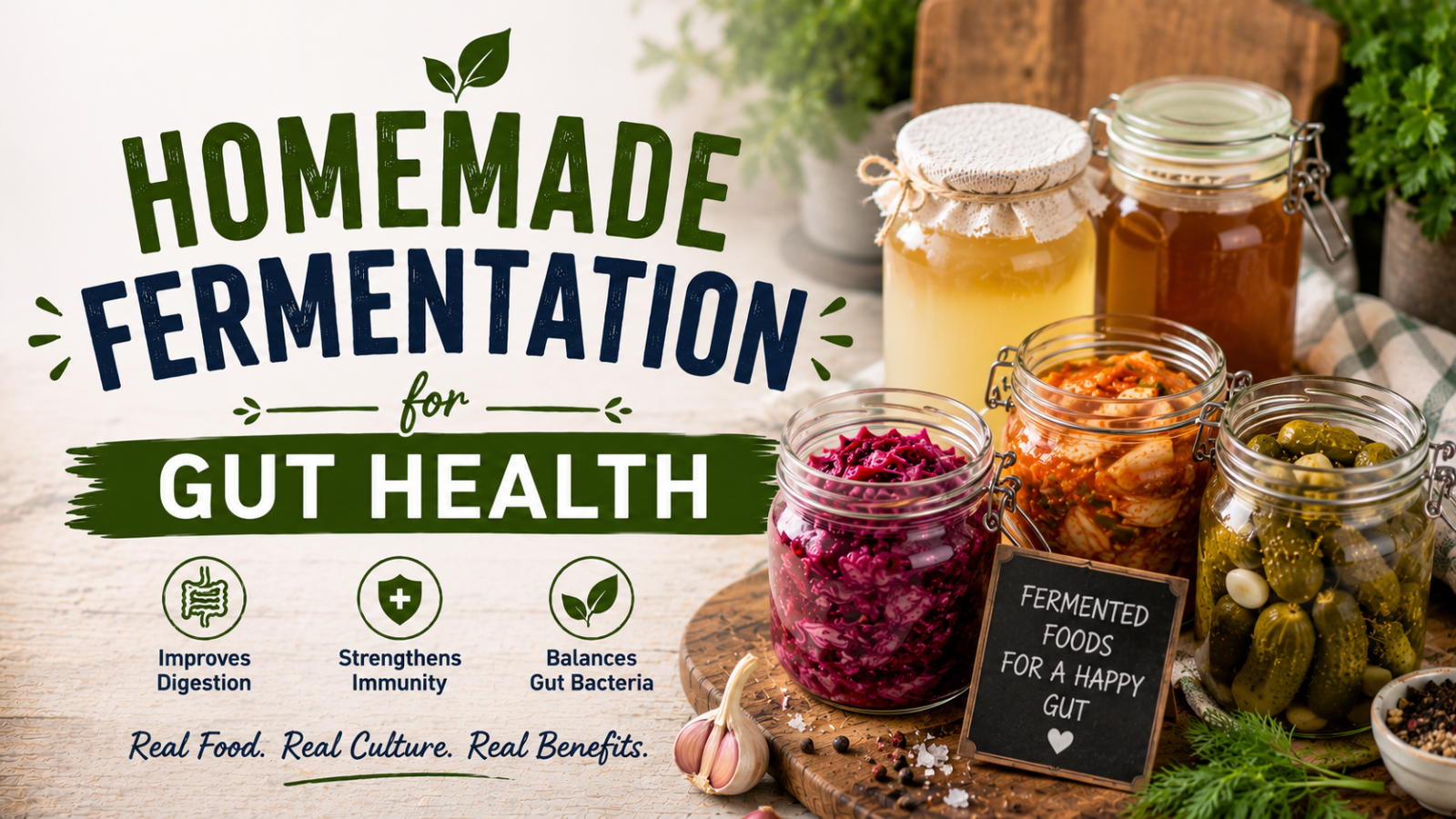
Homemade fermentation is a simple way to transform fresh foods into tangy, flavorful staples while learning an old food preservation technique. From sauerkraut and fermented carrots to cucumber pickles, the process relies on microorganisms that change sugars into acids and other compounds. Research suggests fermented foods may influence the gut microbiome, although the health effects can vary by food and person.
The first batch can feel a little intimidating, especially when a jar starts bubbling on your kitchen counter. However, once you understand the basics, homemade fermentation becomes much easier to manage. You can also use our Copy Button to instantly copy and save your favorite gut health tips or share them with friends and family.
What Is Homemade Fermentation
Homemade fermentation uses microorganisms to transform food under controlled conditions.
One common method for vegetables is lacto fermentation. During this process, naturally occurring lactic acid bacteria convert carbohydrates into lactic acid. That acid changes the flavor and helps create an environment that limits the growth of many undesirable microorganisms. (University of Minnesota Extension)
Fermentation isn’t the same as quick pickling.
A vinegar pickle gets its acidity from added vinegar. A fermented vegetable develops acidity as microorganisms produce acids during fermentation.
That distinction matters if you’re specifically interested in foods containing live microorganisms.
Why Homemade Fermentation Matters for Gut Health
Your gut microbiome contains a huge community of microorganisms that interacts with the food you eat.
Fermented foods can introduce live microorganisms and fermentation derived compounds into the diet. However, researchers are still studying exactly how different fermented foods affect the human microbiome and health. Current evidence is promising but not strong enough to treat fermented foods as a cure for digestive problems.
That’s why I prefer thinking about fermentation as one piece of a bigger dietary picture.
A jar of sauerkraut won’t replace a diet rich in vegetables, fruits, beans, whole grains, nuts, and seeds. Instead, fermented foods can complement those foods.
Fiber is particularly useful because some gut microbes ferment dietary fiber and produce short chain fatty acids. Harvard Health also emphasizes the value of combining fiber rich foods with fermented foods as part of a gut supportive eating pattern. (Harvard Health)
Best Foods for Homemade Fermentation
You don’t need complicated ingredients to get started.
Vegetables are among the easiest foods for beginners because they work well with salt based lacto fermentation.
Good options include:
Homemade Fermentation With Cabbage
Cabbage is one of the classic choices.
Sauerkraut requires shredded cabbage, salt, a suitable fermentation container, and patience. As the cabbage releases liquid, the salt creates a brine that helps support fermentation.
The National Center for Home Food Preservation provides a tested sauerkraut method and recommends appropriate salt levels, temperatures, containers, and fermentation times.
Homemade Fermentation With Carrots
Carrots are another approachable option.
Cut them into sticks and ferment them in a properly prepared brine. Garlic, dill, ginger, or other whole spices can add flavor.
Carrots also bring fiber and natural sweetness to the finished ferment.
Homemade Fermentation With Cucumbers
Fermented cucumbers can develop a crisp, sour flavor.
However, cucumber fermentation requires careful attention to salt, temperature, brine coverage, and recipe instructions. The National Center for Home Food Preservation specifically advises against reducing the required salt in tested fermented pickle recipes because salt affects both safety and texture.
How Homemade Fermentation Works
The basic process sounds complicated until you see what is actually happening.
Fresh vegetables contain water, carbohydrates, and naturally occurring microorganisms. When you create the right conditions, desirable bacteria can multiply and produce lactic acid.
That gradual increase in acidity changes the food.
You may notice bubbles. The smell becomes tangier. The vegetables can develop a pleasantly sour taste.
Temperature matters too. University of Minnesota Extension recommends around 68 to 72 degrees Fahrenheit for vegetable lacto fermentation and notes that temperatures outside the appropriate range can affect fermentation quality.
So, don’t place your fermentation jar next to a hot stove and forget about it.
A stable environment is much easier to manage.
Homemade Fermentation Safety Comes First
Fermentation is a food preservation technique, not simply a jar of vegetables left on the counter.
Clean equipment matters. Fresh produce matters. Proper salt concentration matters. So does maintaining the correct fermentation environment.
University of Minnesota Extension recommends using fresh produce, food grade containers, appropriate salt, and research based recipes for home fermentation. It also recommends keeping fermenting vegetables submerged under brine.
The National Center for Home Food Preservation similarly emphasizes tested recipes and warns against cutting back on the salt used for fermented sauerkraut and pickles.
If you’re new to fermentation, this is one area where improvising isn’t worth the risk.
Keep Vegetables Under the Brine
This simple detail makes a big difference.
Vegetables should remain submerged so they stay in the intended low oxygen environment. The National Center for Home Food Preservation recommends keeping cabbage and cucumbers under the brine during fermentation.
Use an appropriate weight if needed.
If pieces repeatedly float above the brine, adjust the setup rather than ignoring them.
Use a Tested Recipe
Social media is full of creative fermentation ideas.
Some are excellent. Others don’t provide enough information about salt concentration, temperature, acidity, or storage.
For beginners, a tested recipe from a university extension program or the National Center for Home Food Preservation is a much safer starting point. (Earnonic)
Once you’ve learned the fundamentals, you can experiment more thoughtfully.
Homemade Fermentation Mistakes to Avoid
A few common mistakes can ruin an otherwise promising batch.
Using Too Little Salt
Salt isn’t only about taste.
In vegetable fermentation, it helps favor desirable microorganisms while influencing texture and the fermentation environment. Therefore, don’t casually reduce the salt in a tested recipe. (Home Food Preservation)
Letting Vegetables Float
Vegetables sitting above the brine can create problems.
Keep the produce submerged using an appropriate fermentation weight.
Fermenting at the Wrong Temperature
A very warm kitchen can speed fermentation and affect quality.
Meanwhile, a colder environment can slow the process considerably. University of Minnesota Extension recommends 68 to 72 degrees Fahrenheit as an ideal range for vegetable fermentation. (University of Minnesota Extension)
Using Random Containers
Use food grade glass, ceramic, or suitable food grade plastic.
Avoid containers made from reactive metals because fermentation produces acids that can interact with certain metals.
A Simple Homemade Fermentation Routine
You don’t need to ferment five foods at once.
Start with one tested recipe.
Prepare your vegetables carefully, measure the salt accurately, and pack the produce so the brine covers it. Then place the container somewhere suitable and monitor the fermentation.
For sauerkraut, the National Center for Home Food Preservation gives a fermentation period of roughly three to four weeks at 70 to 75 degrees Fahrenheit, although the exact process depends on temperature and recipe.
Once fermentation is complete, refrigeration can slow or stop the fermentation process. University of Minnesota Extension notes that fermented produce can be refrigerated for extended storage when prepared correctly.
How to Add Fermented Foods to Meals
A little can go a long way in terms of flavor.
Try a spoonful of sauerkraut alongside eggs or roasted potatoes. Add fermented carrots to a grain bowl. Use fermented cucumbers with a sandwich.
You can also combine fermented vegetables with fiber rich foods.
For example, try a bowl containing:
- Brown rice.
- Roasted vegetables.
- Black beans.
- Avocado.
- Fermented cabbage.
- Pumpkin seeds.
Now you’re getting much more than fermented food alone.
You’re building a meal around plant diversity, fiber, healthy fats, protein, and fermented ingredients.
Homemade Fermentation and Live Cultures
One reason people become interested in homemade fermentation is the possibility of consuming live microorganisms.
However, not every fermented food contains probiotics in the technical sense.
A probiotic is a specific live microorganism that has demonstrated a health benefit when consumed in an appropriate amount. Fermented foods can contain live microorganisms, but their microbial composition varies substantially.
Harvard Health notes that some commercially fermented foods may lose live microorganisms during processing, including pasteurization. (Harvard Health)
Homemade fermentation can therefore be appealing because you control the ingredients and process. Still, proper food safety remains more important than maximizing live cultures.
Homemade Fermentation and Seasonal Produce
Fermentation can also make seasonal produce more useful.
If you have more cabbage, carrots, cucumbers, or other suitable vegetables than you can eat quickly, fermentation offers another preservation option.
University of Minnesota Extension describes fermentation as a way to preserve fresh produce and extend its usefulness beyond the growing season.
That’s one of the practical benefits I like most about the process.
Instead of watching extra vegetables wilt in the refrigerator, you can turn some of them into something completely different.
Frequently Asked Questions
Is homemade fermentation good for your gut
Homemade fermented foods can provide live microorganisms and fermentation derived compounds. Research suggests fermented foods may influence the gut microbiome, but the effects depend on the food, preparation, amount, and individual.
What is the easiest homemade fermentation for beginners
Sauerkraut is a practical starting point because the ingredient list is short and tested recipes are widely available. Fermented carrots can also be approachable when prepared with a reliable recipe.
How long does homemade fermentation take
The timeline varies with the food and temperature. For example, the National Center for Home Food Preservation gives about three to four weeks for sauerkraut fermented around 70 to 75 degrees Fahrenheit.
Can I reduce the salt in a fermentation recipe
Don’t reduce salt casually. Salt plays an important role in fermented vegetables, so follow a tested recipe and its specified salt amount.
Should fermented vegetables be refrigerated
After fermentation reaches the desired stage, refrigeration can slow or stop further fermentation. Proper storage depends on the specific food and tested method.
Conclusion
Homemade fermentation turns ordinary vegetables into foods with a completely different flavor, texture, and preservation life. It can also add fermented foods to a diet that already includes plenty of fiber rich plants and other nutrient dense choices.
The key is to keep expectations realistic. Fermented foods can support dietary variety, but they aren’t a magic solution for gut health. Research into their effects on the human microbiome continues, and individual responses can differ.
If you want to try homemade fermentation, start small, use a tested recipe, measure ingredients carefully, and treat food safety as part of the recipe rather than an optional extra. Once you find a ferment you genuinely enjoy, add it to meals in simple ways and build the habit naturally.And when you find a tip worth keeping, use the Copy Button to save it instantly or share it with someone who wants to learn homemade fermentation too.

Elizabeth Boham is a respected functional medicine physician and wellness educator with a passion for helping people improve their health through nutrition and lifestyle changes. As a contributor to Gutrova, she shares practical insights on gut health, digestive wellness, and healthy living, making complex health topics easy to understand and apply in everyday life.











1 thought on “Homemade Fermentation for Gut Health”