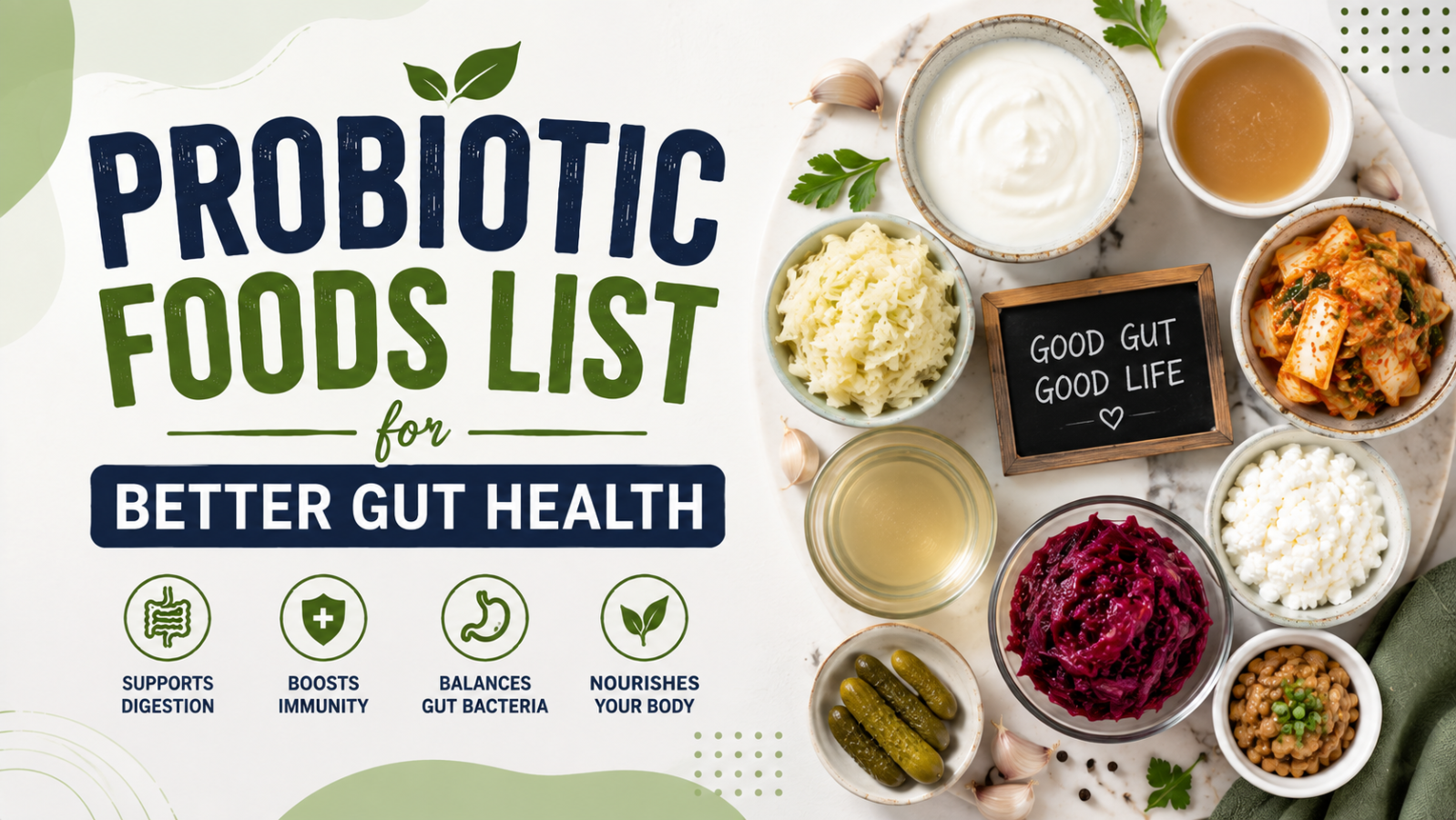
A probiotic foods list can make it easier to add beneficial fermented foods to everyday meals without turning your diet upside down. Yogurt, kefir, fermented vegetables, and some other cultured foods can provide live microorganisms, while many also bring useful nutrients to the table.
If you’ve ever stood in the grocery aisle wondering which fermented foods are actually worth buying, you’re not alone. Our Copy Button makes it simple to copy your favorite gut health tips instantly, save them for later, or share useful ideas with family and friends.
Quick Answer
A useful probiotic foods list includes foods that contain specific live microorganisms with demonstrated health benefits when consumed in adequate amounts. Common fermented foods such as yogurt, kefir, sauerkraut, kimchi, and some fermented vegetables may contain live microorganisms, but not every fermented food technically qualifies as a probiotic.
For everyday gut health, focus on variety rather than one food. Pair fermented foods with fiber rich plants such as beans, lentils, vegetables, fruits, whole grains, nuts, and seeds.
What Makes a Food Probiotic
The word probiotic has a specific meaning in nutrition science.
A probiotic is a live microorganism that provides a health benefit when consumed in an adequate amount. Therefore, simply being fermented doesn’t automatically make a food a probiotic.
For example, some yogurt products contain specific live cultures, while others may undergo processing that reduces or eliminates living microorganisms.
That’s why the label matters.
Look for information about live or active cultures when choosing fermented dairy products. Also consider added sugar, protein, saturated fat, and the overall nutritional quality of the food.
Probiotic Foods List for Everyday Meals
The best choices are foods you can realistically enjoy on a regular basis.
Yogurt
Plain yogurt is one of the easiest options.
It provides protein and calcium, and many varieties contain live cultures. Greek yogurt can also provide a substantial amount of protein, depending on the product.
Try it with berries, oats, walnuts, or chia seeds.
Kefir
Kefir is a fermented milk drink with a tart flavor and thinner consistency than yogurt.
Some varieties contain a mixture of microorganisms. However, product composition can vary, so check the label instead of assuming every bottle provides the same cultures.
Kefir works well in smoothies or alongside breakfast.
Sauerkraut
Traditional sauerkraut is made by fermenting cabbage with salt.
When it remains unpasteurized after fermentation, it may contain live microorganisms. However, some commercially packaged versions undergo processing that changes their microbial content.
Use a small amount alongside eggs, roasted potatoes, grain bowls, or sandwiches.
Kimchi
Kimchi is a traditional Korean fermented vegetable dish that commonly includes cabbage and seasonings.
It can add strong flavor to meals while contributing vegetables and fermentation products.
Because kimchi can be high in sodium, portion size matters for people who need to watch their sodium intake.
Fermented Vegetables
Fermented carrots, cucumbers, radishes, and other vegetables can add variety to your diet.
Their nutritional profile depends on the vegetable, recipe, and fermentation method.
Choose properly prepared products and follow food safety guidance when making them at home.
Probiotic Foods List for Breakfast
Breakfast is an easy place to establish a consistent fermented food habit.
A yogurt bowl takes only a few minutes. Start with plain yogurt, then add berries, oats, ground flaxseed, and walnuts.
Another option is a smoothie made with kefir, banana, berries, and chia seeds.
These combinations are useful because they don’t rely on fermented foods alone. You also get fiber and other nutrients from plant foods.
If your mornings are rushed, prepare the ingredients the night before.
Probiotic Foods List for Lunch
Fermented foods can also fit naturally into lunch.
Add sauerkraut to a turkey sandwich or grain bowl. Kimchi can bring flavor to rice and vegetable dishes. A yogurt based dressing can work with a large salad.
One practical tip is to treat fermented foods as an accent rather than the entire meal.
A spoonful of kimchi alongside a balanced meal may be easier to enjoy consistently than trying to build every dish around fermented ingredients.
Probiotic Foods List for Snacks
Snacks don’t need to come from a package.
Plain yogurt with fruit is a simple option. Kefir can work as a drinkable snack, especially when paired with a handful of nuts.
You can also combine cultured dairy with fiber rich foods to make the snack more satisfying.
For example, try Greek yogurt with raspberries and chia seeds.
The combination gives you protein, fiber, healthy fats, and plant compounds alongside the live cultures that may be present in the yogurt.
Fermented Foods and the Gut Microbiome
Your gut microbiome contains a complex community of microorganisms that interacts with your diet.
Research suggests fermented foods may influence the gut microbiome and other aspects of health. However, scientists are still learning how different foods, microorganisms, and individual dietary patterns affect these outcomes.
That’s an important distinction.
Eating kimchi once doesn’t transform your microbiome overnight. Instead, fermented foods can become one small part of a varied eating pattern.
Fiber matters here, too. Many gut microorganisms use certain types of dietary fiber as fuel.
So, rather than choosing between fermented foods and plant foods, include both.
How to Choose Better Probiotic Foods
The front of a package can be persuasive, but the nutrition facts panel tells you more.
When shopping, check for:
- Live or active culture information.
- Added sugar.
- Protein content.
- Sodium.
- Saturated fat.
- Serving size.
- Ingredients that fit your dietary needs.
Plain yogurt is often a flexible choice because you can control sweetness with fruit, cinnamon, or a small amount of honey.
For fermented vegetables, compare sodium levels if that matters to your diet.
Also remember that refrigerated and shelf stable products can differ in how they are processed. Heat treatment may affect living microorganisms.
Probiotic Foods List for People Who Avoid Dairy
You don’t need dairy to enjoy fermented foods.
Fermented vegetables are naturally dairy free. Kimchi, sauerkraut, fermented carrots, and properly prepared fermented cucumbers are examples.
Some plant based yogurts are also cultured. However, their nutritional profiles vary widely.
Check protein, calcium, added sugar, and culture information before buying.
For someone who avoids dairy, a combination of fermented vegetables and fiber rich plant foods can provide plenty of dietary variety.
Homemade Fermentation Tips
Making fermented vegetables at home can be rewarding, but food safety deserves attention.
Use tested recipes from reliable food preservation resources. Keep vegetables submerged in the appropriate brine, use the specified salt concentration, and maintain suitable fermentation temperatures.
Don’t assume that more fermentation is always better.
If you’re new to the process, start with a simple tested recipe rather than changing the salt level or fermentation conditions on your own.
The goal is a safe, enjoyable food that you can confidently include in your meals.
A Practical Day With Probiotic Foods
Here’s what this can look like without making food complicated.
For breakfast, have plain Greek yogurt with blueberries, oats, and walnuts.
At lunch, add a small serving of sauerkraut to a grain bowl with chicken, vegetables, and beans.
For an afternoon snack, choose kefir with a piece of fruit.
At dinner, serve a small amount of kimchi alongside rice, roasted vegetables, and your preferred protein.
This isn’t a prescription or a perfect menu. It’s simply an example of how fermented foods can appear naturally throughout a normal day.
Common Mistakes to Avoid
One mistake is assuming that every fermented food contains probiotics.
Another is buying heavily sweetened products because the package makes broad wellness claims.
Portion size can matter, too. Fermented vegetables may contain considerable sodium, while flavored dairy products can contain added sugar.
Finally, don’t ignore your own digestive response.
If a particular food repeatedly causes discomfort, try a smaller serving or choose another option. A healthy diet should be sustainable and comfortable enough to fit your routine.
Frequently Asked Questions
What foods are highest in probiotics
Yogurt and kefir made with appropriate live cultures are common dietary sources. Some fermented vegetables may also contain live microorganisms, although their microbial content varies by preparation and processing.
Is Greek yogurt a probiotic food
Some Greek yogurts contain live cultures and can provide probiotic microorganisms. However, not every Greek yogurt product meets the technical definition of a probiotic.
Are fermented vegetables probiotics
Fermented vegetables can contain live microorganisms, but fermented does not automatically mean probiotic. A probiotic requires a specific microorganism and evidence of a health benefit at an appropriate intake.
How often should you eat probiotic foods
There isn’t one universal schedule that works for everyone. Including a variety of fermented foods regularly can be a practical approach, especially when they replace less nutritious choices.
Can probiotic foods improve gut health
They may support aspects of gut health, but the effects vary by food, microorganism, diet, and individual. Fermented foods work best as part of a broader eating pattern rich in plant foods and dietary fiber.
Conclusion
A probiotic foods list is most useful when it helps you make everyday meals more varied, not when it turns gut health into a search for one miracle food. Yogurt, kefir, sauerkraut, kimchi, and other fermented foods can all have a place in a balanced diet.
Start with something you genuinely enjoy. Then pair it with fiber rich foods such as fruits, vegetables, beans, whole grains, nuts, and seeds.
Pay attention to labels, added sugar, sodium, and live culture information. Most of all, focus on consistency and variety instead of chasing complicated rules.
When you find gut health tips that work for your routine, use the Copy Button to save them instantly or share your favorite probiotic foods with someone else.

Here’s a short Gutrova-style author biography for Josh Axe:
Josh Axe
Josh Axe is a wellness expert, author, and educator known for his work in nutrition, natural health, and gut wellness. As a contributor to Gutrova, he shares practical insights on digestive health, healthy eating habits, and lifestyle strategies that help readers build a stronger foundation for overall well being. His content focuses on making wellness simple, actionable, and accessible for everyday life.









1 thought on “Probiotic Foods List for Better Gut Health”