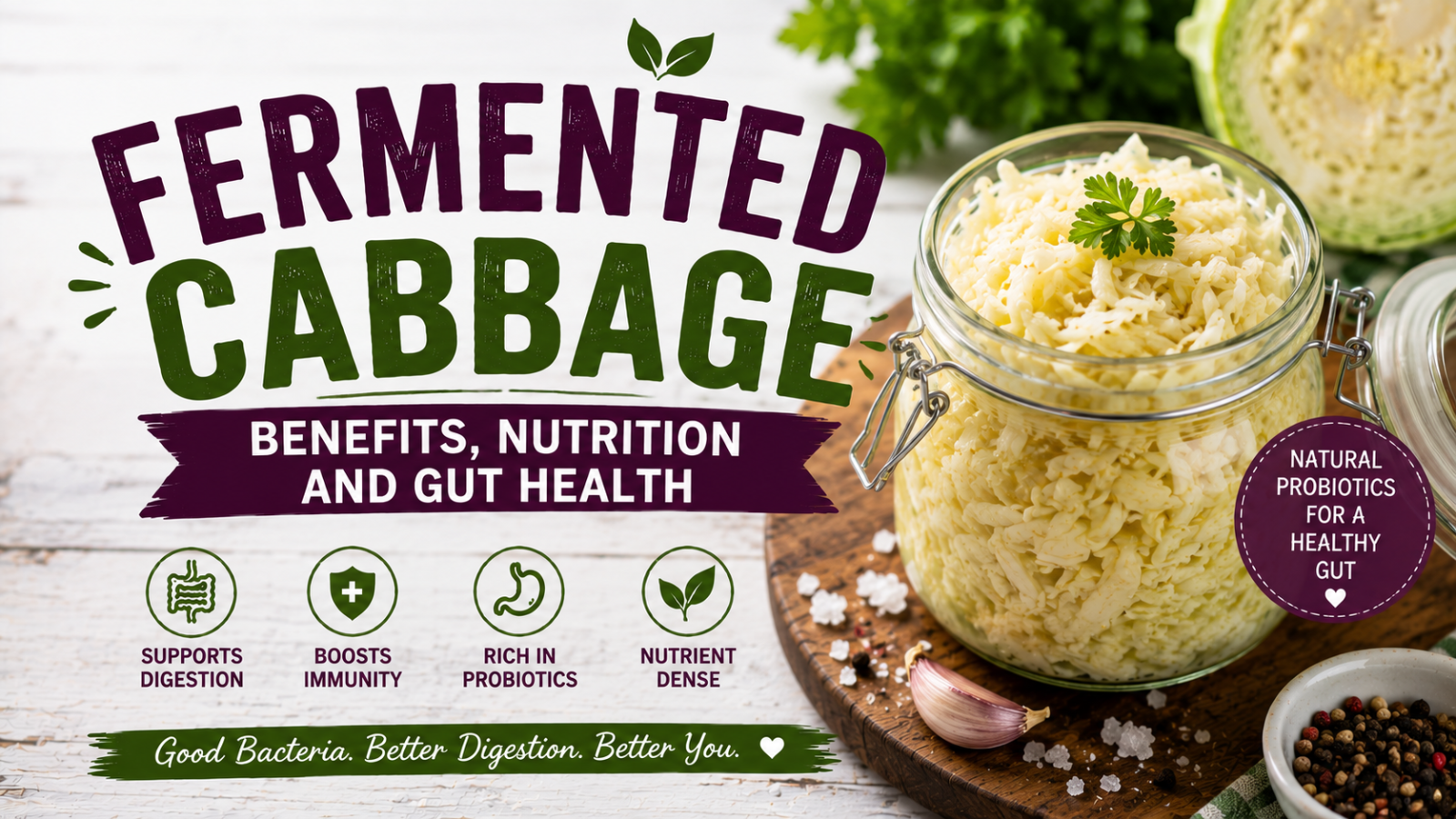
Fermented cabbage is a simple, traditional food that can add beneficial compounds, fiber, and live microorganisms to your diet. It is best known as sauerkraut, although recipes and fermentation methods vary across cultures. If you have ever added a spoonful of tangy cabbage to a sandwich or grain bowl, you already know how much flavor it can bring to an ordinary meal. Our Copy Button also makes it easy to copy your favorite wellness tips and share them with family or friends.
What Is Fermented Cabbage
Fermented cabbage is cabbage that has been preserved through lactic acid fermentation. During the process, naturally occurring microorganisms use carbohydrates in the cabbage and produce acids that create its familiar sour flavor.
Traditional sauerkraut is one of the best-known examples. However, homemade versions can differ greatly in texture, salt level, fermentation time, and flavor.
Fermentation also changes the food itself. The process can make cabbage more acidic while creating compounds that contribute to its distinctive taste.
How Fermentation Works
Fresh cabbage naturally carries microorganisms on its surface. When cabbage is mixed with salt and kept under suitable conditions, certain bacteria can multiply while producing lactic acid.
As acidity increases, the cabbage develops its characteristic tang. The environment also becomes less favorable for many unwanted microorganisms.
The process requires careful preparation and cleanliness. Fermentation isn’t simply leaving vegetables in a jar and hoping for the best.
Fermented Cabbage and Gut Health
One reason fermented cabbage attracts attention is its connection with the gut microbiome. Some traditionally fermented foods can contain live microorganisms, although the exact amount and types can vary by product and preparation.
Fermented cabbage also provides dietary fiber. Fiber reaches the large intestine, where gut microorganisms can use some types as a food source.
Live Cultures Matter
Not every sauerkraut product contains the same live cultures. Heat processing can reduce or eliminate living microorganisms, so a shelf stable product may differ from a refrigerated, unpasteurized option.
Consequently, checking the label can be useful if you’re specifically looking for a fermented food with live cultures. Terms such as refrigerated and unpasteurized can provide helpful clues, but labels still deserve a careful look.
Remember that more live cultures don’t automatically mean better health. Your overall eating pattern matters far more than one food.
Fermented Cabbage Nutrition
Cabbage itself is a nutrient rich vegetable, providing fiber and several vitamins and minerals. Fermentation adds another dimension because it changes the food’s acidity, flavor, and microbial environment.
The nutritional profile depends on the recipe. Added salt is particularly important because many traditional fermented cabbage recipes use salt to create the right fermentation conditions.
Watch the Sodium
This is one detail I always think about when recommending fermented foods. A small serving can be useful, but eating large amounts throughout the day can add considerable sodium to your diet.
Instead, treat fermented cabbage as a flavorful side or topping. A few spoonfuls can add plenty of character without turning the meal into a high sodium dish.
If you’re already eating many packaged foods, consider the total sodium in your daily diet rather than focusing on fermented cabbage alone.
Fermented Cabbage Benefits Beyond Digestion
The potential value of fermented cabbage goes beyond its relationship with digestion. Cabbage contributes plant compounds and fiber, while fermentation produces organic acids and other compounds.
Research on fermented foods continues to explore how these foods may fit into overall dietary patterns. However, it is important to keep expectations realistic.
Fermented cabbage isn’t a cure for digestive problems. It is simply one nutritious food that can complement a varied diet.
A Useful Way to Think About It
Instead of asking whether fermented cabbage is a miracle food, ask how it fits into your regular meals.
For example, a bowl containing beans, whole grains, roasted vegetables, and a small serving of fermented cabbage offers more dietary variety than relying on fermented cabbage alone.
That broader approach supports a healthier eating pattern and gives your gut microbes access to different types of dietary compounds.
How to Eat Fermented Cabbage
The easiest approach is to use fermented cabbage as a condiment. Its sour, salty flavor can make simple meals more interesting without requiring complicated cooking.
Try adding a small serving to scrambled eggs, roasted potatoes, grain bowls, sandwiches, or bean dishes. It can also work alongside grilled chicken or fish.
Easy Meal Ideas
A breakfast bowl can combine eggs, avocado, whole grain toast, and a small amount of fermented cabbage.
For lunch, add it to a turkey sandwich with leafy greens and mustard. The acidity can provide the contrast that makes the sandwich taste brighter.
At dinner, spoon some over roasted potatoes and beans. You can also mix it into a simple grain bowl with brown rice, lentils, vegetables, and a protein source.
If you’re new to fermented foods, start with a modest serving. Your digestive system may respond differently as you increase your intake.
Choosing Fermented Cabbage at the Store
Shopping for fermented cabbage doesn’t need to be complicated. Start by looking at the refrigerated section, especially if you’re interested in products that may retain live cultures.
Read the ingredient list. A simple product may contain cabbage, salt, and seasonings, while other versions can include sugar, vinegar, preservatives, or additional ingredients.
Fresh Versus Shelf Stable
Shelf stable sauerkraut isn’t necessarily a poor choice. It can still provide cabbage, fiber, flavor, and other nutrients.
However, products that have undergone heat processing may not provide the same live microorganisms found in some unheated fermented products.
Therefore, decide what you want from the food before shopping. If you’re mainly looking for a convenient vegetable topping, several options can work.
If live cultures are your priority, pay closer attention to refrigeration, processing, and label information.
Making Fermented Cabbage at Home
Homemade fermentation can be rewarding because you control the ingredients and flavor. It also gives you a better appreciation for how much texture and taste can change during fermentation.
Still, food safety matters. Clean equipment, appropriate salt concentration, suitable storage conditions, and careful handling are essential.
Simple Homemade Approach
A traditional method starts with shredded cabbage and salt. The cabbage gets mixed and massaged until it releases enough liquid to create a brine.
The cabbage should remain submerged beneath the liquid during fermentation. Exposure to air can encourage unwanted growth.
Use clean equipment and follow a tested fermentation recipe rather than guessing salt quantities. After fermentation reaches the desired flavor, refrigerate the finished product according to the recipe’s instructions.
Don’t consume fermented vegetables that develop clearly abnormal odors, unusual colors, or visible mold. When something looks or smells wrong, it’s safer to discard it.
Who May Need to Go Slowly With Fermented Cabbage
Fermented cabbage can be a healthy addition for many people, but it doesn’t agree with every digestive system in the same way.
Some people notice gas, bloating, or digestive discomfort after suddenly increasing fermented foods. That response doesn’t necessarily mean the food is harmful. It may simply mean your current diet has changed quickly.
Start With Small Portions
If you’re new to fermented foods, try a small amount alongside a familiar meal.
For instance, a spoonful with lunch may be easier to tolerate than eating a large serving on an empty stomach.
Give your body time to adjust. Meanwhile, keep the rest of your meals fairly familiar so you can identify what affects your digestion.
People who need to limit sodium should also consider the salt content of fermented cabbage. Product labels can help you compare options.
Fermented Cabbage in a Balanced Gut Friendly Diet
A healthy gut focused diet doesn’t need to revolve around fermented foods. Variety is the bigger picture.
Include vegetables, fruits, whole grains, beans, nuts, seeds, and other fiber rich foods when they fit your dietary needs. Fermented foods can then become one part of that pattern.
Build a Better Gut Friendly Plate
Start with a source of fiber such as beans, lentils, oats, or whole grains.
Next, add colorful vegetables or fruit. Include a protein source and a healthy fat, then use fermented cabbage as a flavorful topping.
This combination gives you more nutritional variety than eating fermented cabbage by itself.
Similarly, rotating different vegetables can expose your gut microbes to a wider range of plant compounds. You don’t need a complicated meal plan to accomplish this.
Fermented Cabbage FAQ
Is fermented cabbage good for gut health.
Fermented cabbage can contribute dietary fiber and, in some products, live microorganisms. Its potential value is best considered as part of a varied diet rather than as a standalone solution for digestive health.
Is sauerkraut the same as fermented cabbage.
Sauerkraut is a common type of fermented cabbage. However, recipes can differ in ingredients, salt levels, fermentation methods, and processing.
Does fermented cabbage contain probiotics.
Some traditionally fermented cabbage products contain live microorganisms that may be considered probiotic organisms when they meet specific scientific criteria. However, not every fermented cabbage product contains the same microorganisms or amounts.
Can fermented cabbage cause bloating.
It can cause bloating or gas in some people, particularly after a sudden increase in fermented foods. Starting with a small serving may be easier for your digestive system.
Is homemade fermented cabbage safe.
Homemade fermentation can be safe when you follow a reliable fermentation method and use proper hygiene, salt concentration, temperature, and storage practices. Don’t eat a batch that shows signs of spoilage or unexpected mold.
How to Add Fermented Cabbage Without Overthinking It
You don’t need to redesign your entire diet to enjoy fermented cabbage. Start with one meal and use a small amount as a topping.
Try it with eggs one day, a sandwich the next, and a grain bowl later in the week. That simple rotation keeps the food interesting without making your diet feel restrictive.
I also find that using fermented cabbage as a condiment makes healthy meals easier to enjoy. Its sharp flavor can wake up beans, grains, potatoes, and vegetables that might otherwise taste a little plain.
Consequently, the best serving size is often the amount that adds flavor while fitting comfortably into your overall diet.
Conclusion
Fermented cabbage is more than a tangy topping. It can provide fiber, contribute nutrients from cabbage, and, in some unheated products, supply live microorganisms associated with traditional fermentation.
The smartest approach is simple. Choose a product that fits your nutrition needs, pay attention to sodium, start with small portions if you’re new to fermented foods, and pair it with a wide variety of plant foods.
Most of all, don’t feel pressured to eat large quantities to support your gut. A small serving of fermented cabbage alongside a diverse, fiber rich diet can be a practical and enjoyable habit.
Save your favorite fermented cabbage ideas, use the Copy Button to instantly copy helpful tips, and share them with someone who wants an easier way to add fermented foods to everyday meals.










1 thought on “Fermented Cabbage Benefits, Nutrition and Gut Health”