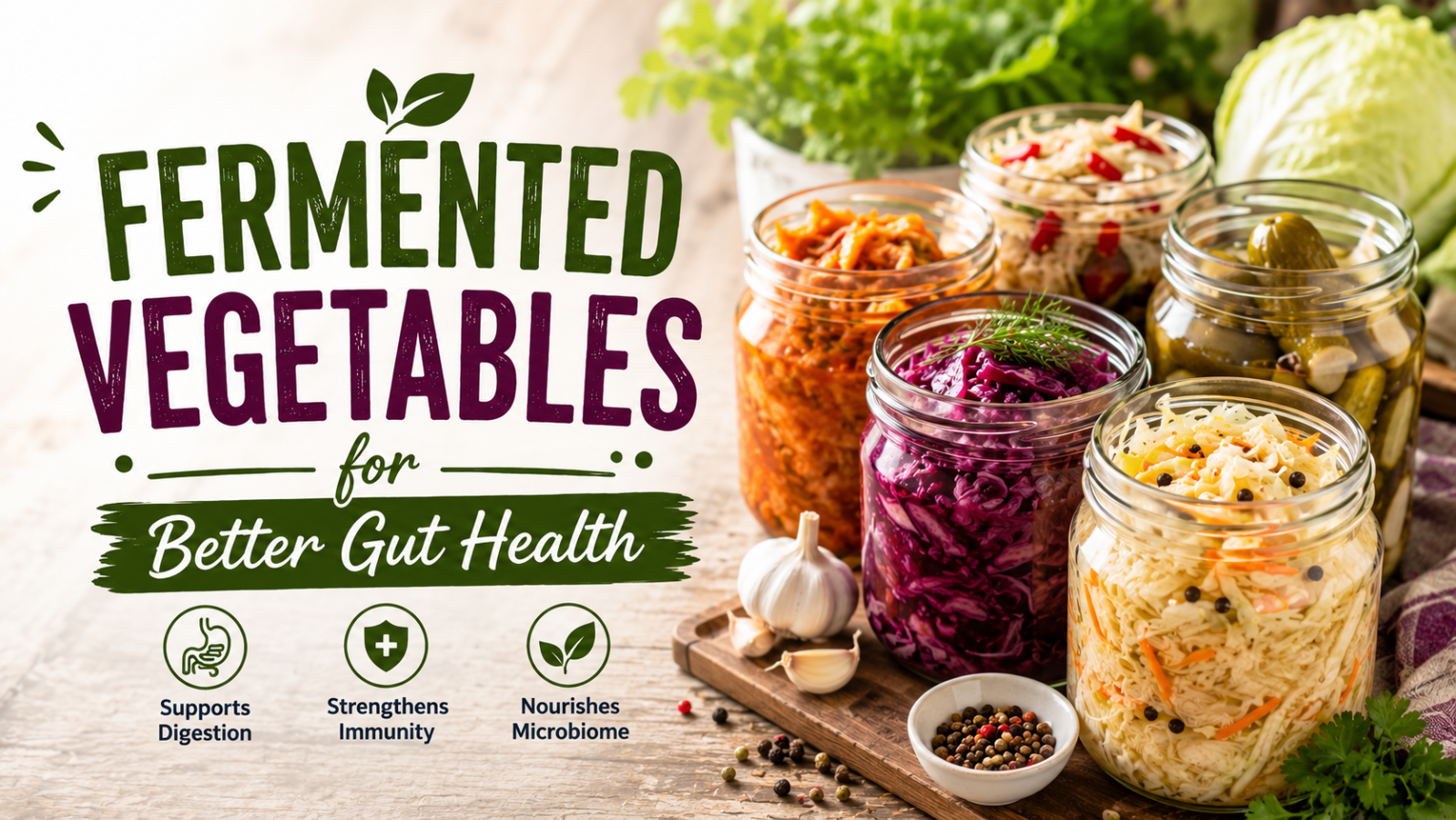
Fermented vegetables can add something special to an everyday meal because they combine nutrient rich plants with a traditional preservation process that relies on beneficial microorganisms. From sauerkraut and kimchi to fermented carrots and radishes, these tangy foods can bring variety to your diet while introducing live microbes in some preparations.
The important detail is that not every fermented vegetable contains live cultures when you eat it. Our Copy Button makes it easy to save helpful gut health tips and instantly copy or share your favorite fermented food ideas with friends and family.
Quick Answer
Fermented vegetables are vegetables preserved through fermentation, usually with salt and beneficial microorganisms that convert naturally occurring carbohydrates into acids and other compounds. Common examples include sauerkraut, kimchi, fermented cucumbers, carrots, radishes, and beets.
Some fermented vegetables contain live microorganisms at the time you eat them, especially products that haven’t been heat treated after fermentation. However, processing and storage can change the final microbial content.
For a simple starting point, choose a small serving of fermented vegetables alongside a balanced meal. If you’re new to them, increase gradually and pay attention to how your digestive system responds.
What Are Fermented Vegetables
Fermentation is an age old food preservation method. During vegetable fermentation, microorganisms use available carbohydrates and produce compounds such as lactic acid.
That acidity changes the flavor and helps create an environment that discourages many unwanted microbes. The result is a tangy food with a different texture and flavor from the original vegetable.
Sauerkraut is fermented cabbage. Kimchi usually combines cabbage or other vegetables with seasonings such as garlic, ginger, and chili. Other vegetables can also undergo fermentation when prepared under suitable conditions.
The process isn’t simply about making food sour. Fermentation can change the characteristics of the food and create compounds that weren’t present in exactly the same form beforehand.
Best Fermented Vegetables to Try
You don’t need to start with the strongest tasting option. There are plenty of choices, so pick something that sounds appealing.
Sauerkraut is one of the simplest introductions because its flavor can range from mild to sharply tangy. Kimchi offers more complexity and heat, while fermented carrots can have a pleasantly crisp texture.
Other possibilities include:
- Fermented cabbage.
- Sauerkraut.
- Kimchi.
- Fermented carrots.
- Fermented radishes.
- Fermented cucumbers.
- Fermented beets.
- Fermented green beans.
- Fermented cauliflower.
- Fermented turnips.
- Fermented peppers.
- Fermented onions.
- Fermented garlic.
- Mixed fermented vegetables.
- Traditional vegetable pickles made through fermentation.
Check the label carefully when buying them. Some products labeled pickled or fermented use vinegar rather than natural fermentation, so they aren’t necessarily the same thing.
Fermented Vegetables and the Gut Microbiome
The gut microbiome is home to a large community of microorganisms that interact with your diet. Fermented foods can introduce microorganisms and fermentation products into the eating pattern.
Research suggests that fermented foods may influence the gut microbiota and other aspects of health. However, fermented foods aren’t a magic solution for an imbalanced diet.
Think of them as one part of a broader pattern. Vegetables, fruits, legumes, whole grains, nuts, seeds, and other minimally processed foods still matter.
I also think flavor deserves more attention here. A spoonful of tangy sauerkraut can make a plain grain bowl much more interesting, which makes healthy meals easier to enjoy repeatedly.
Fermented Vegetables Versus Vinegar Pickles
This distinction causes plenty of confusion.
Traditional fermented vegetables develop their acidity through microbial fermentation. Vinegar pickles become acidic because vinegar provides the acid directly.
Both can be flavorful additions to meals. However, they aren’t interchangeable if you’re specifically looking for a food that may contain live cultures.
Look for wording that indicates the product was fermented and check storage instructions. Refrigerated fermented products may retain live microorganisms, while shelf stable products may have undergone processing that changes their microbial content.
If you’re unsure, read the ingredient list and product description rather than relying only on the front label.
How to Add Fermented Vegetables to Meals
You don’t need to eat a large bowl of fermented vegetables to include them in your diet.
A small spoonful can add acidity and crunch to a meal. Try sauerkraut alongside roasted potatoes, or add kimchi to a rice bowl with vegetables and a protein source.
Other simple combinations include:
- Sauerkraut with a grain bowl.
- Kimchi with brown rice and vegetables.
- Fermented carrots beside hummus.
- Fermented radishes in tacos.
- Kimchi with eggs and whole grain toast.
- Sauerkraut alongside roasted vegetables.
- Fermented beets in a salad.
- Fermented cabbage with lentil bowls.
The flavor can be intense, so start small. You can always add more later.
Fermented Vegetables and Digestive Comfort
Fermented foods don’t affect everyone in exactly the same way. Some people enjoy them regularly, while others notice bloating, gas, or digestive discomfort after larger servings.
If you’re new to fermented vegetables, begin with a small portion. Then observe how you feel over the next several meals.
Some products also contain ingredients that certain people find difficult to tolerate. Kimchi, for example, may contain garlic, onion, or chili, which can be problematic for people who are sensitive to those ingredients.
Salt is another consideration. Fermented vegetables can contain substantial sodium because salt often plays an important role in the fermentation process.
Consequently, portion size matters. A small serving can add flavor without becoming a major part of your daily sodium intake.
Fermented Vegetables for Everyday Nutrition
Fermentation doesn’t turn vegetables into a replacement for fresh produce. Instead, think of fermented vegetables as another way to enjoy plants.
Fresh and cooked vegetables still provide important nutrients and dietary fiber. Fermented vegetables can complement them by adding different flavors and, in some products, live microorganisms.
For example, you might have roasted broccoli and sweet potatoes at dinner, then add a small serving of sauerkraut. Another meal could include a fresh cucumber salad alongside fermented carrots.
This kind of variety is much more practical than trying to make every vegetable fermented.
How to Choose Fermented Vegetables at the Store
Shopping can be confusing because labels don’t always make the fermentation process obvious.
Start by checking the refrigerated section. Some traditionally fermented vegetables need refrigeration to maintain quality and live cultures.
Look at the ingredient list as well. A product made primarily from vegetables, salt, and seasonings may be quite different from one containing vinegar, added sugar, or several preservatives.
Also consider sodium. Fermented vegetables can be salty, so compare labels if you’re eating them regularly.
Finally, choose a flavor you genuinely like. There’s no nutritional advantage to buying a jar that sits untouched in your refrigerator.
Safe Fermentation Practices at Home
Home fermentation can be rewarding, but food safety matters.
Use clean equipment and follow a tested fermentation recipe from a reliable food safety or university extension source. Correct salt concentration, temperature, fermentation time, and storage conditions all matter.
Keep vegetables submerged when the recipe requires it. Watch for unusual colors, foul odors, or visible mold, and don’t taste food that appears spoiled.
Fermentation isn’t a process where more time automatically means better results. Conditions need to remain suitable for the intended microorganisms.
If you’re new to fermentation, start with a small batch and follow established instructions closely rather than improvising the salt ratio.
Fermented Vegetables and Sodium
Salt serves an important purpose in many vegetable fermentation methods. However, that means the finished food can contain more sodium than the fresh vegetable.
This doesn’t make fermented vegetables unhealthy. It simply means they work best as part of an overall balanced diet.
If you enjoy sauerkraut or kimchi daily, use smaller portions and balance them with foods that aren’t heavily salted.
For example, add a tablespoon or two to an otherwise lightly seasoned grain bowl. You get the tangy flavor without needing to add much extra salt elsewhere.
Common Mistakes With Fermented Vegetables
The first mistake is assuming every pickle is fermented. Many are simply preserved in vinegar.
Another is expecting fermented vegetables to fix digestive problems by themselves. Your overall dietary pattern matters much more than one food.
Some people also start with an enormous serving because they assume more will provide greater benefits. That’s unnecessary and may increase digestive discomfort.
Finally, don’t ignore storage instructions. If a product requires refrigeration, keep it refrigerated.
Simple habits make fermented foods easier and safer to enjoy.
Frequently Asked Questions About Fermented Vegetables
Which vegetables can be fermented
Cabbage, carrots, radishes, cucumbers, beets, cauliflower, green beans, peppers, onions, and garlic can all be used in different fermentation preparations.
Are all fermented vegetables probiotic
No. The term probiotic has a specific meaning and doesn’t automatically apply to every fermented food. Some fermented vegetables may contain live microorganisms, but processing and storage can affect what remains in the final product.
Are fermented vegetables good for gut health
They can be part of a gut friendly eating pattern. Fermented foods may introduce live microorganisms and fermentation products, but they work best alongside a varied diet rich in plant foods.
Can fermented vegetables cause bloating
They can for some people. Start with a small serving if you’re new to fermented foods, especially if the product contains ingredients that you already know can bother your digestion.
Are fermented vegetables high in sodium
Many are. Salt commonly plays an important role in vegetable fermentation, so check the nutrition label and keep portions reasonable if you’re watching your sodium intake.
Conclusion
Fermented vegetables can bring bold flavor, variety, and potentially beneficial microorganisms to an already balanced diet. Sauerkraut, kimchi, fermented carrots, radishes, beets, and other options give you plenty of ways to experiment.
Start with a small serving and choose products you genuinely enjoy. Also, remember that fermented vegetables complement fresh and cooked vegetables rather than replacing them.
Pay attention to labels, storage instructions, sodium content, and the difference between true fermentation and vinegar pickling. Those details can make your choices much more informed.
When you find a fermented vegetable combination you love, use the Copy Button to save it and share the idea with someone else. A little tangy cabbage or kimchi on the side may be a small addition, but small food choices can make everyday meals much more interesting.