
Fibermaxxing benefits and side effects have become a popular topic as more people look for simple ways to improve gut health through everyday foods. While eating more fiber can support digestion, nourish your gut microbiome, and help you feel fuller after meals, increasing it too quickly may lead to temporary bloating, gas, or stomach discomfort. Knowing both the advantages and the potential drawbacks can help you build healthier habits that are easier to maintain over the long term.
I was reminded of this after helping a friend improve his eating habits. He swapped sugary snacks for beans, berries, oats, and vegetables almost overnight. Within a few days he was frustrated because he felt bloated and uncomfortable. We slowed the pace, added more water, and let his digestive system adjust. A couple of weeks later, the discomfort faded, and he noticed he felt fuller after meals and had more regular digestion. That experience taught me that fiber isn’t the problem—rushing the process usually is.
Quick Answer
The main fibermaxxing benefits and side effects depend on how you increase your fiber intake. Eating more fiber gradually may support digestive health, feed beneficial gut bacteria, improve bowel regularity, and help you feel full longer. However, increasing fiber too quickly can lead to temporary bloating, gas, abdominal discomfort, or constipation if you aren’t drinking enough water.
The healthiest approach is to increase fiber slowly while eating a wide variety of whole plant foods.
What Is Fibermaxxing?
Fibermaxxing is the practice of intentionally increasing your daily fiber intake by eating more fruits, vegetables, legumes, whole grains, nuts, and seeds. Some people also use fiber supplements, although nutrition experts generally recommend getting most of your fiber from whole foods whenever possible.
Unlike restrictive eating plans that eliminate entire food groups, fibermaxxing focuses on adding nutrient-rich foods to your meals.
That’s one reason it has attracted so much attention. It encourages healthier eating habits without requiring complicated rules.
Why Fiber Is So Important
Dietary fiber is a type of carbohydrate that your body can’t fully digest.
Instead of being absorbed like sugar or starch, fiber moves through your digestive tract where it performs several valuable functions.
Some fibers absorb water and help soften stool. Others become food for the beneficial bacteria living in your intestines.
Research suggests these bacteria produce short-chain fatty acids during fiber fermentation, compounds that help support the intestinal lining and contribute to a healthy gut environment.
Major health organizations—including the National Institutes of Health (NIH), Mayo Clinic, and Cleveland Clinic—continue to recommend eating a variety of fiber-rich foods as part of a healthy dietary pattern.
Fibermaxxing Benefits
Increasing your fiber intake gradually can provide several meaningful health benefits.
1. Supports a Healthier Gut Microbiome
One of the biggest reasons fiber has become so popular is its relationship with the gut microbiome.
Your digestive system contains trillions of bacteria that help digest food, produce beneficial compounds, and interact with your immune system.
Many beneficial bacteria rely on fermentable fibers for nourishment.
Eating a wide variety of fiber-rich foods gives these microbes the fuel they need to thrive.
Rather than relying on a single “superfood,” aim for diversity. Different plant foods provide different types of fiber, which support different bacterial species.
2. Promotes Regular Digestion
Many people notice improvements in bowel regularity after increasing fiber gradually.
Fiber helps add bulk to stool while supporting healthy movement through the digestive tract.
Combined with adequate hydration, this often leads to more predictable digestion.
It’s one of the first improvements people tend to notice.
3. Helps You Feel Full Longer
Fiber slows digestion, which may help meals feel more satisfying.
Think about the difference between eating a glazed doughnut for breakfast versus a bowl of oatmeal topped with berries and walnuts.
The oatmeal usually keeps hunger away much longer because it contains fiber, healthy fats, and protein working together.
Research suggests higher-fiber meals may support healthy weight management by increasing satiety, although fiber alone isn’t a weight-loss solution.
4. Encourages Better Food Choices
One of my favorite things about fibermaxxing has nothing to do with counting grams.
It changes the way people think about meals.
Instead of asking:
“What food should I eliminate?”
they begin asking:
“How can I add another vegetable?”
or
“Could I swap white rice for brown rice?”
That mindset naturally leads to more nutritious meals without feeling restrictive.
5. Supports Heart and Metabolic Health
Many high-fiber foods are also rich in vitamins, minerals, antioxidants, and healthy plant compounds.
Research suggests diets that include adequate fiber may support healthy cholesterol levels, healthy blood sugar regulation, and overall cardiovascular wellness when combined with other healthy lifestyle habits.
That’s another reason whole foods remain the preferred source of fiber.
Common Foods People Eat While Fibermaxxing
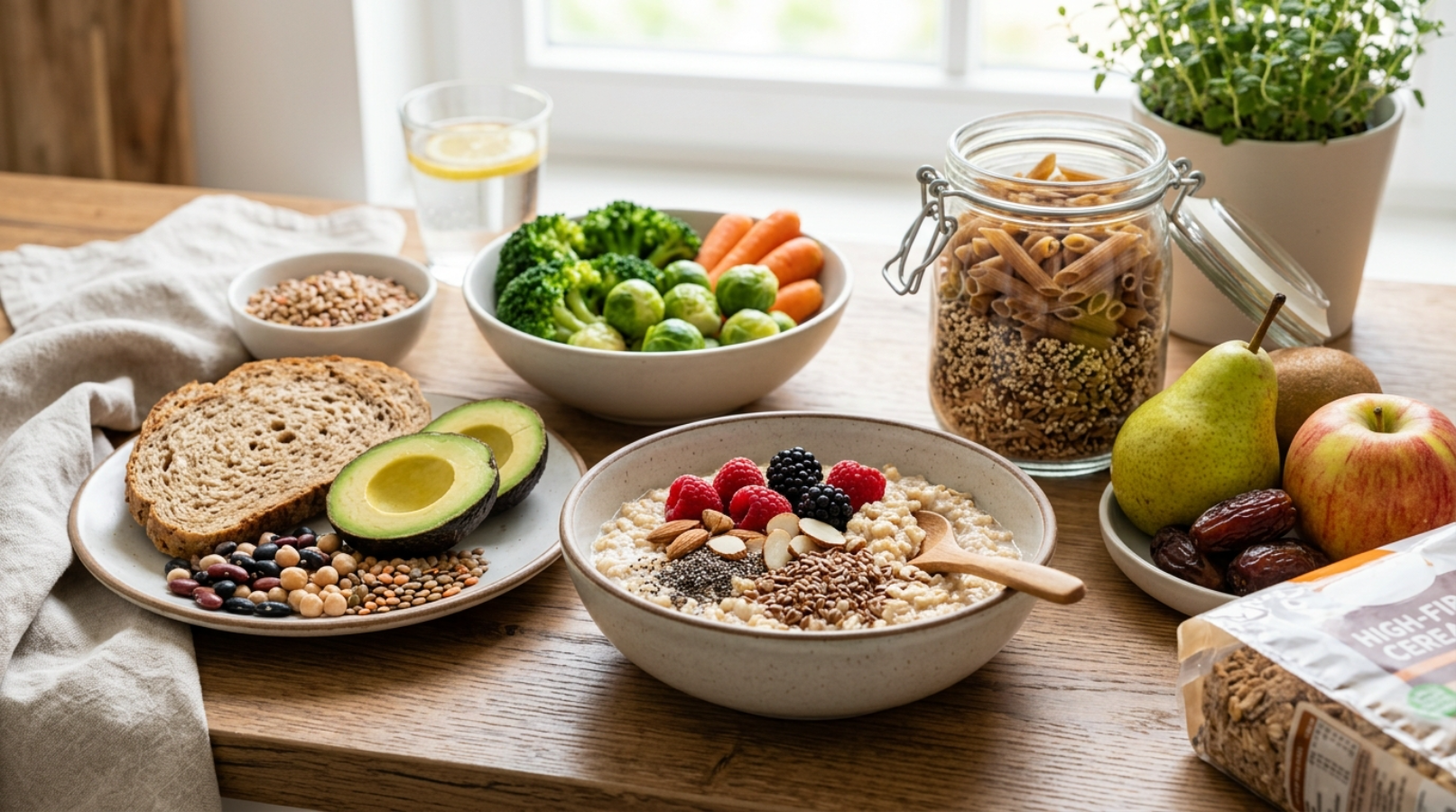
You don’t need specialty products to increase your fiber intake.
Many everyday foods are naturally rich in fiber.
Excellent options include:
Whole Grains
- Oats
- Brown rice
- Quinoa
- Whole wheat bread
- Barley
Legumes
- Lentils
- Black beans
- Chickpeas
- Kidney beans
- Pinto beans
Fruits
- Apples
- Pears
- Raspberries
- Blackberries
- Blueberries
- Oranges
Vegetables
- Broccoli
- Brussels sprouts
- Sweet potatoes
- Spinach
- Carrots
- Green peas
Nuts and Seeds
- Chia seeds
- Ground flaxseed
- Almonds
- Walnuts
- Pumpkin seeds
Eating a variety of these foods throughout the week generally provides greater benefits than relying heavily on just one or two ingredients.
Why Variety Is More Important Than Quantity
Social media often encourages people to compete over who eats the most fiber.
That’s missing the point.
Your gut microbiome benefits from diversity more than extremes.
Think of it like tending a garden.
Planting only tomatoes may produce plenty of tomatoes, but a garden filled with herbs, flowers, vegetables, and fruit attracts a wider range of beneficial insects and creates a healthier ecosystem. Your gut works in a similar way. Different fiber-rich foods nourish different microbial communities, making variety one of the smartest long-term strategies for digestive health.
Potential Side Effects of Fibermaxxing
Fiber offers plenty of health benefits, but eating significantly more of it too quickly can catch your digestive system off guard. Most side effects are temporary and improve as your body adapts.
Bloating
Bloating is probably the most common complaint.
If you’ve ever gone from eating very little fiber to adding oatmeal for breakfast, beans at lunch, and a giant salad for dinner, you’ve probably noticed your stomach feels different. That’s because your gut bacteria suddenly have much more fiber to ferment.
The solution usually isn’t to stop eating fiber—it’s to slow the pace.
Gas
Gas often goes hand in hand with bloating.
As beneficial bacteria break down fermentable fiber, gas is produced naturally. This process is actually a sign that fermentation is taking place, but increasing fiber gradually can make the transition much more comfortable.
Constipation
Many people are surprised to learn that fiber can sometimes make constipation worse.
The problem usually isn’t the fiber itself.
It’s the lack of water.
Fiber absorbs water, so staying hydrated becomes even more important as your intake increases. Drinking fluids consistently throughout the day helps fiber move through the digestive tract more effectively.
Loose Stools
Not everyone experiences constipation.
Some people notice softer stools or more frequent bowel movements while their digestive system adjusts.
These changes are often temporary and settle as fiber intake becomes more consistent.
How to Reduce Side Effects
Fortunately, most fiber-related discomfort is preventable.
Increase Fiber Gradually
Instead of doubling your fiber intake overnight, add one new high-fiber food every few days.
Your digestive system appreciates gradual change.
Drink Plenty of Water
Hydration is just as important as fiber.
Aim to drink water throughout the day instead of trying to catch up in the evening.
Eat a Variety of Fiber Sources
Don’t rely on one food.
Mix together:
- Fruits
- Vegetables
- Whole grains
- Beans
- Lentils
- Nuts
- Seeds
Different fibers support different beneficial bacteria.
Stay Active
A daily walk or other regular movement can also support healthy digestion.
You don’t need intense exercise.
Even moderate activity may help food move more comfortably through the digestive tract.
Who Should Be More Careful With Fibermaxxing?
Although fiber is beneficial for most healthy adults, there are situations where increasing fiber should be done under medical guidance.
Talk with your healthcare provider before making major dietary changes if you have:
- Irritable bowel syndrome (IBS)
- Crohn’s disease
- Ulcerative colitis
- Inflammatory bowel disease (IBD)
- Recent gastrointestinal surgery
- Digestive narrowing or bowel obstruction
- A medically prescribed low-fiber diet
Some people benefit from increasing fiber, while others may temporarily need to limit it during flare-ups.
Whole Foods vs. Fiber Supplements
Fiber supplements can help certain individuals meet their daily fiber goals, but they shouldn’t become the foundation of a healthy eating pattern.
Whole foods offer much more than fiber alone.
For example:
- Apples provide vitamin C and antioxidants.
- Beans supply plant protein, iron, and folate.
- Oats contain beta-glucan along with important vitamins and minerals.
- Berries deliver antioxidants and natural plant compounds.
Whenever possible, let your meals provide most of your daily fiber.
Signs You’re Increasing Fiber the Right Way
A successful fibermaxxing routine usually feels gradual rather than dramatic.
Positive signs may include:
- More regular bowel movements
- Feeling full for longer after meals
- Eating more fruits and vegetables naturally
- Better overall diet quality
- Less reliance on highly processed snacks
If you’re constantly uncomfortable, it’s often a signal to slow down rather than give up altogether.
A Balanced Approach Works Best

Fibermaxxing isn’t about reaching the highest fiber intake on social media.
It’s about building sustainable habits that support your digestive system over time.
Simple changes often work best:
- Replace refined grains with whole grains.
- Add beans to soups and salads.
- Eat fruit instead of sugary snacks.
- Include vegetables with lunch and dinner.
- Rotate different plant foods throughout the week.
These habits are realistic enough to continue long after the latest nutrition trend fades.
Frequently Asked Questions
Is fibermaxxing healthy?
Yes, for most healthy adults. A balanced fibermaxxing approach that emphasizes whole foods and gradual increases in fiber can support digestive health and a healthy gut microbiome. Problems usually arise when people increase fiber too quickly or don’t drink enough water.
How long does it take to notice the benefits of fibermaxxing?
Many people notice improvements in bowel regularity and fullness within a few days to a couple of weeks. Changes to the gut microbiome happen more gradually and depend on maintaining a consistent, fiber-rich eating pattern over time.
Can fibermaxxing help with weight loss?
Fibermaxxing isn’t a weight-loss program, but it may support healthy weight management. Research suggests that high-fiber meals promote fullness, which can make it easier to manage hunger and reduce unnecessary snacking. Long-term results still depend on your overall eating habits and lifestyle.
Can you eat too much fiber?
Yes. Consuming very large amounts of fiber, especially if you increase your intake suddenly, may cause bloating, gas, abdominal discomfort, constipation, or loose stools. Increasing fiber gradually and drinking enough water can help reduce these side effects.
Should I get fiber from food or supplements?
Whole foods are generally the best source of fiber because they also provide vitamins, minerals, antioxidants, and other beneficial plant compounds. Fiber supplements may be helpful for some people who struggle to meet their daily needs, but they should complement a healthy diet rather than replace it.
Final Thoughts
The conversation around fibermaxxing benefits and side effects often focuses on extremes, but the real story is much simpler. Fiber isn’t a miracle nutrient, and it isn’t something to fear. It’s an essential part of a balanced diet that works best when introduced gradually and enjoyed through a wide variety of whole foods.
From my experience, the biggest mistake people make isn’t eating too much fiber forever—it’s trying to transform their diet overnight. I’ve seen people go from barely eating vegetables to filling every meal with beans, bran cereal, and raw salads, only to give up because of temporary bloating. Slowing down almost always makes the transition easier.
Instead of chasing a specific number of grams each day, focus on building meals around foods your gut naturally benefits from. A bowl of oatmeal in the morning, berries with yogurt, lentils in soup, roasted vegetables at dinner, and a handful of nuts for a snack can collectively provide the fiber your digestive system needs without feeling restrictive.
Remember that your gut microbiome thrives on variety as much as quantity. Rotating different fruits, vegetables, legumes, whole grains, nuts, and seeds throughout the week helps nourish a broader range of beneficial bacteria. Those small, repeatable habits often have a greater long-term impact than any viral nutrition trend.
Be patient with the process, stay hydrated, and let your body adapt. A thoughtful, balanced approach to fibermaxxing is far more likely to support lasting digestive wellness than trying to maximize fiber as quickly as possible.