
How much fiber per day for gut health is one of the most common questions people ask when trying to improve digestion naturally. The answer isn’t simply “eat as much fiber as possible.” Your body benefits most from getting the right amount of fiber from a variety of whole foods and increasing your intake gradually if you’re currently eating very little.
A few years ago, I decided to eat healthier by loading every meal with beans, raw vegetables, and high-fiber cereal. It sounded like a great idea, but my stomach had other plans. After slowing down, drinking more water, and adding fiber step by step, my digestion improved without the uncomfortable bloating. That experience reminded me that consistency usually works better than drastic changes.
Quick Answer
For most healthy adults, general nutrition guidelines recommend about 25 grams of fiber per day for women and 38 grams per day for men. After age 50, daily recommendations typically decrease slightly. The healthiest way to reach these goals is by eating a variety of fruits, vegetables, legumes, whole grains, nuts, and seeds instead of relying mainly on fiber supplements.
If you’re currently eating a low-fiber diet, increase your intake gradually and drink plenty of water to help your digestive system adjust comfortably.
Why Fiber Is Essential for Gut Health
Fiber is a carbohydrate that your body can’t completely digest.
Instead of being absorbed into your bloodstream like sugars or starches, fiber moves through your digestive tract, where it supports several important functions. Some types of fiber help keep bowel movements regular, while others become food for the beneficial bacteria living in your intestines.
Research suggests these beneficial bacteria produce short-chain fatty acids when they ferment fiber. These compounds help support the intestinal lining and contribute to a healthy gut environment.
That’s one reason respected organizations such as the National Institutes of Health (NIH), Mayo Clinic, and Cleveland Clinic encourage eating fiber-rich foods as part of a balanced diet.
Recommended Daily Fiber Intake
Although individual needs vary, these recommendations provide a useful starting point.
| Age Group | Recommended Daily Fiber |
|---|---|
| Women (19–50 years) | About 25 grams |
| Men (19–50 years) | About 38 grams |
| Women (51+ years) | About 21 grams |
| Men (51+ years) | About 30 grams |
These numbers aren’t meant to become another daily stress.
Instead, think of them as general goals that help guide healthier food choices.
Is More Fiber Always Better?
Not necessarily.
Many people assume that if 25–38 grams are good, then 60 or 70 grams must be even better.
In reality, your digestive system often responds better to gradual, moderate increases than to extreme changes.
Eating excessive amounts of fiber without enough water may contribute to:
- Bloating
- Gas
- Abdominal discomfort
- Constipation
- Temporary digestive upset
Fiber works best when it’s part of a balanced eating pattern rather than a competition to reach the highest number.
Soluble vs. Insoluble Fiber
Understanding the two primary types of fiber helps explain why eating a variety of foods matters.
Soluble Fiber
Soluble fiber absorbs water and forms a gel-like consistency during digestion.
Research suggests it may help:
- Feed beneficial gut bacteria
- Support healthy cholesterol levels
- Promote fullness after meals
- Help maintain healthy blood sugar levels
Foods rich in soluble fiber include:
- Oats
- Apples
- Pears
- Beans
- Lentils
- Barley
- Chia seeds
- Flaxseed
Insoluble Fiber
Insoluble fiber adds bulk to stool and helps food move through the digestive tract.
Good sources include:
- Whole wheat
- Brown rice
- Broccoli
- Carrots
- Green beans
- Cauliflower
- Leafy greens
- Nuts
- Seeds
Most whole plant foods naturally contain a mixture of both types, which is one reason nutrition experts recommend eating a wide variety of fruits, vegetables, legumes, and whole grains.
The Best High-Fiber Foods for Gut Health
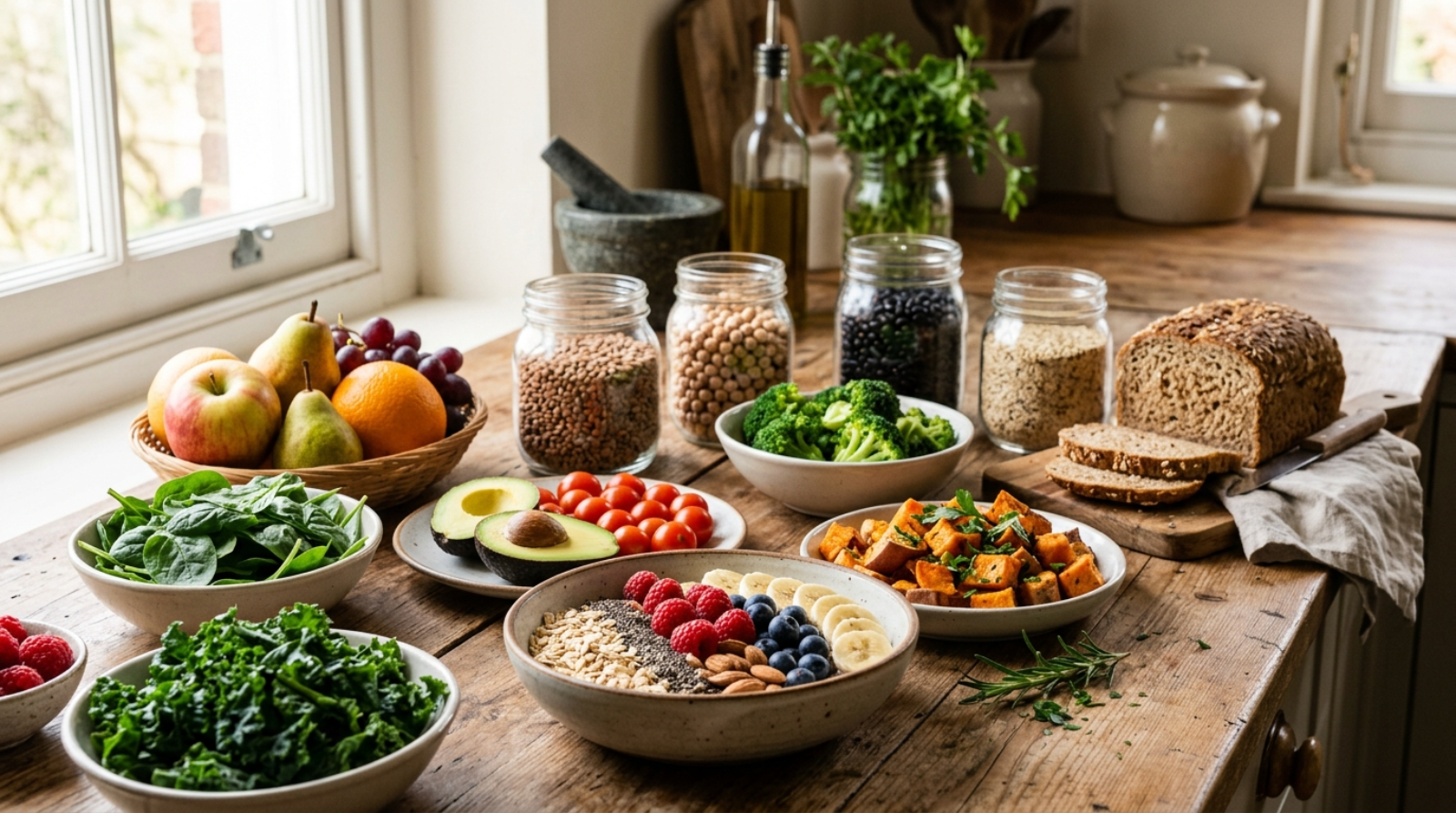
The easiest way to reach your daily fiber goal isn’t through supplements.
It’s through everyday foods.
Legumes
Legumes are among the richest natural sources of dietary fiber.
Excellent choices include:
- Lentils
- Chickpeas
- Black beans
- Kidney beans
- Pinto beans
They’re also rich in plant protein, iron, and several important vitamins and minerals.
Whole Grains
Replacing refined grains with whole grains is one of the simplest dietary upgrades you can make.
Try adding:
- Oatmeal
- Brown rice
- Quinoa
- Barley
- Whole wheat bread
- Whole wheat pasta
These foods provide steady energy while increasing your fiber intake naturally.
Fruits
Fresh fruit makes fiber easy to include throughout the day.
Some excellent options are:
- Apples
- Pears
- Raspberries
- Blackberries
- Blueberries
- Oranges
Whenever possible, eat fruits with their edible skins for extra fiber.
Vegetables
Colorful vegetables provide fiber along with vitamins, minerals, and antioxidants.
Some of the best choices include:
- Broccoli
- Brussels sprouts
- Sweet potatoes
- Spinach
- Kale
- Carrots
- Green peas
The more colorful your plate, the more diverse the fibers reaching your gut microbiome.
Nuts and Seeds: Small Foods That Add Up
Nuts and seeds may not look like major fiber sources, but they can make a noticeable difference over the course of a day. They’re also packed with healthy fats, plant protein, and essential minerals.
Keep these staples on hand:
- Chia seeds
- Ground flaxseed
- Almonds
- Walnuts
- Pistachios
- Pumpkin seeds
I like adding a spoonful of ground flaxseed to oatmeal or yogurt because it’s an easy habit that doesn’t require changing the rest of the meal.
How to Reach Your Daily Fiber Goal
Trying to eat 30 grams of fiber overnight usually doesn’t end well. A better strategy is to spread fiber-rich foods throughout the day.
Breakfast
Start with a bowl of oatmeal topped with blueberries, sliced banana, and a sprinkle of chia seeds.
Morning Snack
Enjoy an apple or pear with a handful of almonds.
Lunch
Choose a whole-grain wrap filled with grilled chicken, spinach, tomatoes, avocado, and black beans.
Afternoon Snack
Try carrot sticks with hummus or plain Greek yogurt topped with raspberries.
Dinner
Serve grilled salmon or tofu with roasted broccoli, sweet potato, and brown rice.
By the end of the day, you’ve increased your fiber intake naturally without making meals feel restrictive.
Signs You May Not Be Eating Enough Fiber

Many people fall well below the recommended daily intake without realizing it.
A low-fiber diet may be associated with:
- Infrequent bowel movements
- Feeling hungry shortly after meals
- Limited fruit and vegetable intake
- Relying heavily on processed foods
- Eating mostly refined grains
These signs don’t always point to a fiber deficiency, but they can be a reason to take a closer look at your eating habits.
Why Increasing Fiber Gradually Matters
One of the biggest mistakes people make is trying to “catch up” in a single day.
I’ve seen friends buy bran cereal, beans, fiber bars, and supplements all at once because they were excited to improve their diet. A few days later, they wondered why they felt bloated.
The digestive system needs time to adapt.
Adding one or two fiber-rich foods every few days is usually much easier than making dramatic changes overnight.
Think of fiber as a long-term habit, not a weekend challenge.
Don’t Forget About Water
Fiber and water work together.
As fiber absorbs water during digestion, staying hydrated helps keep everything moving comfortably through the digestive tract.
Without enough fluids, increasing fiber may actually contribute to constipation instead of preventing it.
A reusable water bottle on your desk or in your bag can be one of the simplest tools for supporting healthy digestion.
Common Mistakes When Increasing Fiber
Even healthy habits can cause problems if they’re taken to extremes.
Depending Only on Fiber Supplements
Supplements can be helpful for some people, but they shouldn’t replace whole foods.
An apple provides much more than fiber.
The same is true for oats, berries, beans, and vegetables, which also supply vitamins, minerals, antioxidants, and beneficial plant compounds.
Eating the Same Foods Every Day
Many people find one healthy breakfast or lunch and repeat it every day.
While there’s nothing wrong with consistency, your gut microbiome benefits from diversity.
Rotate different:
- Fruits
- Vegetables
- Whole grains
- Legumes
- Nuts
- Seeds
The wider the variety, the more diverse the fibers reaching your beneficial gut bacteria.
Ignoring Digestive Symptoms
Some temporary gas or bloating is common when increasing fiber, but persistent or severe digestive symptoms shouldn’t be ignored.
If discomfort continues despite making gradual changes, it’s worth speaking with a healthcare professional.
Who May Need a Different Approach?
Although fiber supports health for most people, there are situations where more isn’t always better.
Talk with your healthcare provider before making major dietary changes if you have:
- Irritable bowel syndrome (IBS)
- Crohn’s disease
- Ulcerative colitis
- Inflammatory bowel disease (IBD)
- Recent gastrointestinal surgery
- A medically prescribed low-fiber diet
During certain digestive flare-ups, your provider may recommend temporarily adjusting fiber intake based on your individual needs.
Building Better Habits Over Time
One thing I’ve learned is that lasting improvements rarely come from dramatic overhauls. They come from small choices repeated consistently.
Swapping white bread for whole-grain bread.
Adding beans to soup.
Choosing fruit instead of cookies for an afternoon snack.
Including an extra serving of vegetables at dinner.
None of those decisions feel life-changing on their own, but together they create an eating pattern that supports both your gut microbiome and your overall health.
Frequently Asked Questions
How much fiber per day for gut health is recommended?
For most healthy adults, general nutrition guidelines recommend about 25 grams of fiber daily for women and 38 grams daily for men. Adults over 50 typically have slightly lower recommendations. Rather than focusing only on the number, aim to eat a variety of fiber-rich whole foods throughout the day.
Can you eat too much fiber?
Yes. Increasing fiber too quickly or consuming large amounts without enough water may lead to temporary bloating, gas, abdominal discomfort, or constipation. Gradually increasing your intake and staying hydrated helps your digestive system adapt more comfortably.
What are the best foods to increase fiber naturally?
Some of the best choices include:
- Oats
- Lentils
- Chickpeas
- Black beans
- Apples
- Pears
- Berries
- Broccoli
- Brussels sprouts
- Sweet potatoes
- Brown rice
- Quinoa
- Chia seeds
- Ground flaxseed
Eating a wide variety of these foods supports both digestive health and your gut microbiome.
Is it better to get fiber from food or supplements?
Whole foods are generally the better option because they provide vitamins, minerals, antioxidants, and other beneficial nutrients alongside fiber. Fiber supplements can be helpful for some people, but they’re usually most effective as an addition to—not a replacement for—a balanced diet.
How long does it take to notice the benefits of eating more fiber?
Some people notice improvements in bowel regularity and fullness within a few days to a couple of weeks. Supporting a healthier gut microbiome takes longer and depends on maintaining a consistent eating pattern that includes a variety of fiber-rich foods.
Final Thoughts
Knowing how much fiber per day for gut health is important, but reaching that goal doesn’t have to feel complicated. Most healthy adults benefit from aiming for the recommended daily intake while focusing on a wide variety of whole, fiber-rich foods instead of chasing the highest possible number.
From my own experience, gradual changes are far more successful than trying to transform your diet overnight. Replacing refined grains with whole grains, adding beans to your favorite meals, choosing fruit for snacks, and filling half your plate with vegetables are simple habits that become easier with time. Those small choices often have a much bigger impact than any short-lived nutrition trend.
Your gut microbiome also benefits from variety. Instead of eating the same foods every day, rotate different fruits, vegetables, legumes, whole grains, nuts, and seeds throughout the week. Each plant food offers unique types of fiber that help nourish different beneficial bacteria, creating a more balanced digestive environment.
Finally, remember that fiber works best alongside healthy hydration and an overall balanced diet. Increase your intake slowly, listen to your body, and focus on consistency rather than perfection. Those steady habits can help support digestive health, improve diet quality, and contribute to long-term wellness.

Elizabeth Boham is a respected functional medicine physician and wellness educator with a passion for helping people improve their health through nutrition and lifestyle changes. As a contributor to Gutrova, she shares practical insights on gut health, digestive wellness, and healthy living, making complex health topics easy to understand and apply in everyday life.