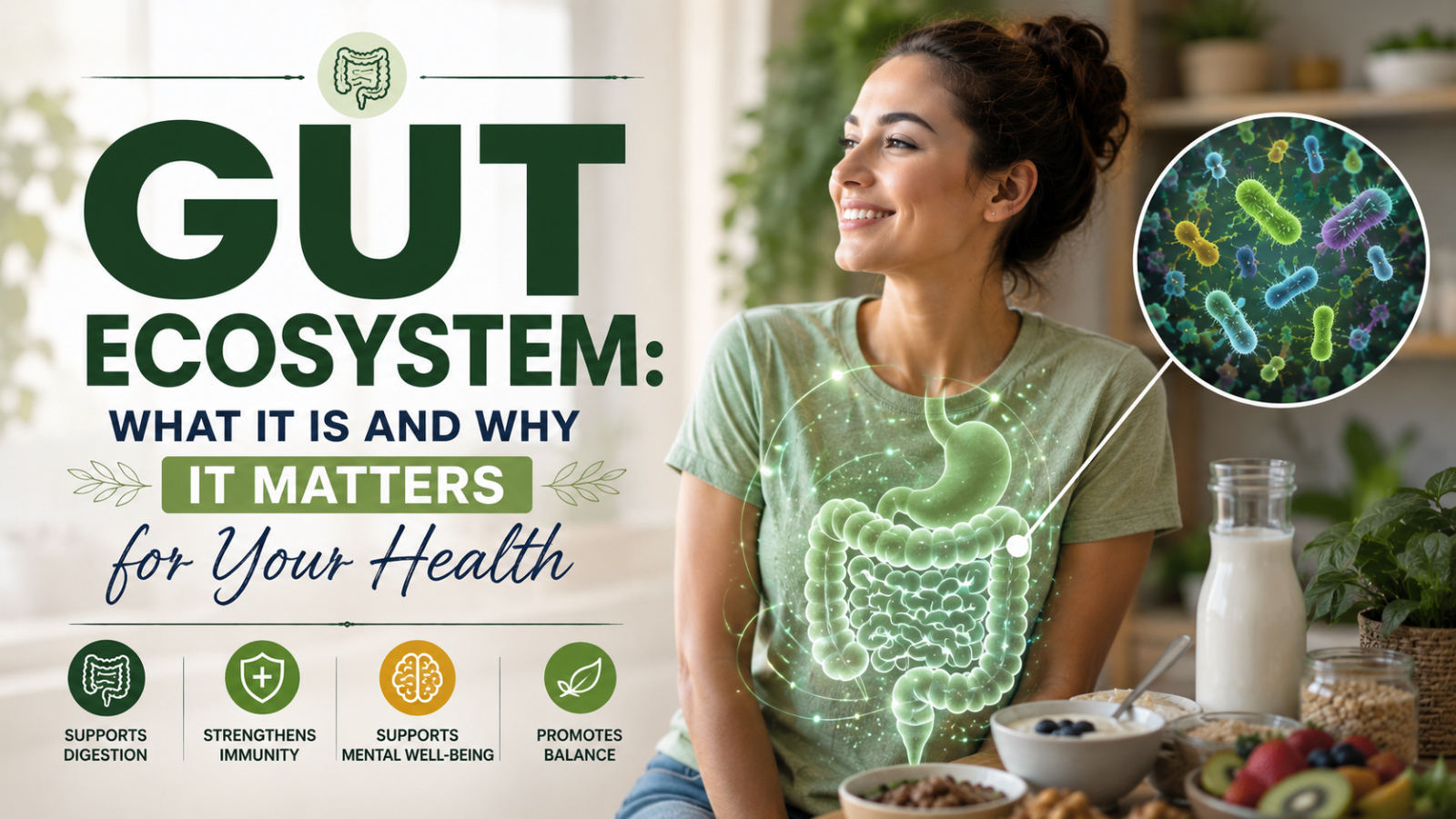
Gut ecosystem is a useful way to describe the busy, living community inside your digestive tract, where microorganisms, food, and your body constantly interact. What you eat, how you live, and even some medications can influence this internal environment over time. Use the Copy Button to save the practical ideas in this guide for those days when you want a simple reminder about supporting your gut.
The topic can sound complicated, especially when words like microbiome and microorganisms enter the conversation. However, the basic concept is easier to understand when you picture the gut as a community rather than a single organ.
Quick Answer: What Is a Gut Ecosystem?
A gut ecosystem is the complex community of microorganisms living in the digestive tract and the environment in which they interact. This community includes bacteria and other microbes that respond to food, lifestyle, medications, and many other factors.
A healthy gut ecosystem is not defined by one perfect collection of microorganisms. Instead, scientists study the diversity, activity, and relationships within the larger microbial community.
Daily habits can influence this environment. Therefore, a varied diet and consistent lifestyle habits may help support the conditions associated with a healthy gut.
What Makes Up the Gut Ecosystem?
The digestive tract contains far more than food moving from one end to the other.
Many microorganisms live in the gastrointestinal tract. Bacteria receive much of the attention, although the broader microbial community also includes other types of organisms.
Together, these microorganisms are commonly discussed as part of the gut microbiome.
The gut ecosystem also includes the physical environment surrounding these organisms. Food components, digestive secretions, intestinal tissues, and other microbes can all influence what happens inside the digestive tract.
That makes the ecosystem dynamic.
It can change over time, sometimes gradually and sometimes more quickly in response to major changes.
For example, a long-term shift in eating habits may affect the materials reaching the gut. Meanwhile, certain medications can influence microbial communities in different ways.
How the Gut Ecosystem Works
A gut ecosystem works through constant interaction.
Food enters the digestive tract and moves through several stages of digestion. Some compounds are absorbed earlier, while others continue toward the large intestine.
Certain dietary components can reach areas where microorganisms interact with them.
Fiber is a familiar example.
Humans cannot fully digest every type of dietary fiber. However, some gut microorganisms can use specific compounds during their normal metabolic processes.
As a result, microbial activity can produce substances that influence the local gut environment.
The process is not as simple as eating one food and immediately changing your microbiome.
Instead, your gut ecosystem responds to a combination of influences over time.
That’s one reason consistent habits tend to matter more than occasional “perfect” meals.
Why the Gut Ecosystem Matters
The gut ecosystem matters because the digestive tract is a biologically active environment.
Microorganisms interact with each other and with materials from your diet. Researchers are studying how these relationships connect with digestion, immune activity, metabolism, and other processes throughout the body.
Still, microbiome science has many unanswered questions.
Research may find associations between certain microbial patterns and aspects of health. However, an association does not always prove that a particular microbe caused a specific outcome.
That distinction is important when reading dramatic headlines.
A product claiming it can completely rebuild your gut ecosystem is usually simplifying a very complicated biological system.
Health experts generally agree that the gut microbiome is influenced by many factors, not one magic ingredient.
The Gut Ecosystem and Microbial Diversity
Diversity is often mentioned when discussing the gut ecosystem.
In everyday terms, diversity refers to the presence of different kinds of microorganisms within a community.
A diverse environment can involve many organisms interacting in different ways.
However, diversity alone does not automatically equal perfect health.
Scientists still need to understand which patterns are most meaningful and why they differ between people.
Two healthy individuals can have different microbial communities.
Therefore, there is no universal “perfect microbiome” that everyone should try to copy.
Rather than chasing a specific bacterial profile, a practical approach focuses on habits that support a varied and nutritious diet.
Plant diversity is one place to start.
Different plant foods provide different types of fiber and naturally occurring compounds. That variety may create a broader range of materials for the microbial community.
How Food Influences the Gut Ecosystem
Food is one of the most direct ways you interact with your gut ecosystem.
Every eating pattern creates a different mix of nutrients and compounds moving through the digestive tract.
For example, a diet containing fruits, vegetables, beans, whole grains, nuts, and seeds provides more variety than a diet built around only a few foods.
This does not mean every meal must contain ten ingredients.
Instead, variety can develop across several days.
One breakfast might include oats and blueberries. Lunch could contain lentils and leafy greens. Dinner might feature roasted vegetables and brown rice.
Those ordinary choices can add up.
I find this approach much easier than trying to eat a different “superfood” every day. Rotating familiar foods keeps meals practical without making grocery shopping feel like a science experiment.
Gut Ecosystem Foods Worth Adding to Your Routine
No single food can create a perfect gut ecosystem.
However, several food groups can contribute to a varied eating pattern.
Fiber-Rich Plant Foods
Fiber-rich foods are important because certain fibers can reach the large intestine and interact with microorganisms.
Good choices include:
- Beans
- Lentils
- Oats
- Whole grains
- Apples
- Berries
- Broccoli
- Leafy greens
- Nuts
- Seeds
Different foods contain different fibers.
Therefore, eating a mixture may be more useful than relying heavily on one “gut health” food.
Fermented Foods
Some fermented foods contain live microorganisms.
Yogurt with live cultures and kefir are common examples. Certain fermented vegetables may also contain live cultures, depending on how they are processed.
Not every fermented food has the same properties.
Reading labels can help you understand what you are buying.
Colorful Fruits and Vegetables
Colorful produce adds more than visual appeal.
Different fruits and vegetables contain different nutrients and naturally occurring plant compounds.
Try alternating your choices.
Choose berries one week, citrus fruit the next, or switch between broccoli, carrots, spinach, and sweet potatoes.
What Can Disrupt the Gut Ecosystem?
The word “disrupt” can make the microbiome sound fragile.
In reality, microbial communities naturally change.
Still, several factors may influence the gut ecosystem.
A Limited Diet
Eating the same small group of foods repeatedly can reduce dietary variety.
Adding more plant foods may provide a wider range of fibers and nutrients.
Certain Medications
Some medications can influence microorganisms.
Antibiotics are a well-known example because they are designed to affect bacteria.
However, antibiotics can be important and sometimes essential treatments. Their potential effects on the gut microbiome should not encourage anyone to avoid medically necessary medication.
Major Lifestyle Changes
Travel, changes in sleep, illness, and stress may influence digestion and the broader gut environment.
Researchers continue to study the relationship between these factors and the microbiome.
Extremely Restrictive Eating
Restrictive diets can reduce food variety.
Unless you have a specific reason to eliminate certain foods, a broader diet can often provide more nutritional variety.
Can Stress Affect the Gut Ecosystem?
Stress and digestion are closely connected.
If you’ve ever felt your stomach tighten before an important meeting or noticed changes in appetite during a difficult week, you’ve experienced part of the relationship between the brain and digestive system.
The gut and brain communicate through several pathways.
Researchers are studying how stress may influence the gut environment and how the gut microbiome may participate in this complex communication.
However, stress does not automatically “destroy” your microbiome.
That kind of language creates unnecessary fear.
Instead, think of stress as one factor among many.
A difficult day is normal. Long-term habits and overall patterns usually provide a more useful picture.
How to Support Your Gut Ecosystem Naturally
Supporting your gut ecosystem does not require a cleanse, expensive test, or highly restrictive diet.
Simple changes are often easier to maintain.
1. Eat More Types of Plants
Try adding variety across the week.
You don’t have to buy unfamiliar foods. Rotate the ones you already enjoy.
2. Increase Fiber Gradually
A sudden jump in fiber may cause gas or bloating for some people.
Instead, increase fiber slowly and give your digestive system time to adjust.
3. Include Whole Foods Often
Whole and minimally processed foods can provide fiber and a range of nutrients.
Still, there is room for convenience foods in a balanced lifestyle.
Perfection is not the goal.
4. Try Fermented Foods You Like
Yogurt, kefir, and other fermented foods may fit naturally into meals.
Choose foods you actually enjoy rather than forcing yourself to follow a trend.
5. Stay Physically Active
Regular movement supports general health and can also support normal digestive function.
A daily walk is a simple starting point.
6. Build a Consistent Sleep Routine
Sleep influences many systems throughout the body.
Therefore, a regular bedtime routine can be a useful part of a broader wellness plan.
Gut Ecosystem vs. Gut Microbiome: What’s the Difference?
These terms are closely related, although they are not exactly identical.
The gut microbiome generally refers to the community of microorganisms and their genetic material.
The gut ecosystem is a broader way to describe those microorganisms and the environment where they live and interact.
Think of a forest.
The plants and animals are part of the community. However, soil, water, weather, and available resources also shape the environment.
Similarly, the gut ecosystem includes the microbial community and the conditions influencing it.
This comparison isn’t perfect, but it helps explain why the microbiome cannot be understood by looking at one bacterium alone.
Context matters.
Do Probiotics Improve the Gut Ecosystem?
Probiotics are live microorganisms associated with specific health benefits when consumed in adequate amounts.
However, all probiotics are not the same.
Different strains may have different effects. Therefore, a result associated with one strain cannot automatically be applied to every probiotic supplement.
Some people also assume that more microorganisms always mean a better product.
That isn’t necessarily true.
The specific microorganism, the amount, product quality, and intended purpose can all matter.
Food-based sources with live cultures can also fit into a varied diet.
Still, no probiotic can guarantee a complete transformation of your gut ecosystem.
Be cautious with products promising to “reset” or “rebuild” your entire microbiome.
A Realistic Day for a Healthy Gut Ecosystem
Gut-friendly eating doesn’t need to look unusual.
Breakfast might be oatmeal with berries and chopped walnuts.
For lunch, try a bean soup with a side salad.
An apple with a small handful of nuts can make a convenient afternoon snack.
At dinner, include roasted vegetables, a whole grain, and a protein you enjoy.
That’s a normal day of food.
There are no complicated rules or expensive powders involved.
Of course, life won’t always look like this. Sometimes breakfast is rushed, lunch comes from a restaurant, and dinner is whatever you can prepare quickly.
A healthy routine needs flexibility.
The goal is to make supportive choices often enough that they become part of your normal life.
Common Myths About the Gut Ecosystem
Myth: You Need to Cleanse Your Gut
Your digestive system already has natural processes for digestion and waste removal.
There is no evidence that a trendy cleanse can “wash out” your entire gut ecosystem and create a perfect microbiome.
Myth: All Bacteria Are Bad
Many bacteria are harmless, while others play useful roles in the body.
The goal is not to remove every microorganism.
Myth: One Food Can Fix Everything
A single food cannot control the entire gut ecosystem.
Instead, long-term dietary patterns are more meaningful.
Myth: Everyone Needs the Same Microbiome
People naturally have different microbial communities.
There is no one-size-fits-all bacterial profile.
Myth: Gut Health Requires a Strict Diet
Strict rules can make eating stressful and difficult to sustain.
A gradual, varied approach is often more realistic.
Practical Mistakes to Avoid
One common mistake is increasing fiber too quickly.
Someone who rarely eats beans and vegetables may feel uncomfortable after suddenly eating large portions.
Slow changes often work better.
Another mistake is becoming obsessed with eliminating foods.
Food variety matters, and unnecessary restrictions can make meals less enjoyable.
Some people also spend heavily on supplements while ignoring everyday habits.
Supplements may have a role in specific situations. However, no capsule can replace a balanced and varied eating pattern.
Finally, don’t expect overnight changes.
The gut ecosystem is dynamic, but meaningful lifestyle habits usually develop over time.
Frequently Asked Questions About Gut Ecosystem
What is a gut ecosystem?
A gut ecosystem is the community of microorganisms in the digestive tract and the surrounding environment where they interact with food, the body, and one another.
How can I improve my gut ecosystem?
Focus on a varied diet with fruits, vegetables, beans, whole grains, nuts, and seeds. Increase fiber gradually and maintain consistent lifestyle habits.
What foods support the gut ecosystem?
Fiber-rich plant foods and some fermented foods can support a varied gut-friendly eating pattern. Examples include beans, oats, berries, vegetables, yogurt with live cultures, and kefir.
Can probiotics change the gut ecosystem?
Certain probiotics may influence the gut environment. However, effects depend on the specific strain and individual, and no probiotic can guarantee a complete microbiome transformation.
How long does it take to support gut health?
There is no universal timeline. The gut environment can respond to dietary changes, but individual biology and long-term habits also influence the process.
Final Thoughts on Your Gut Ecosystem
Your gut ecosystem is a complex, active community shaped by microorganisms, food, and many aspects of daily life. Scientists are still learning how these relationships work, which means dramatic promises should always be viewed with caution.
Fortunately, you don’t need a complicated program to support your gut ecosystem.
Start with familiar foods. Add more plant variety, increase fiber at a comfortable pace, and include fermented foods if you enjoy them. Meanwhile, regular movement, consistent sleep, and manageable routines can support your general well-being.
The most helpful approach is also the most realistic: focus on habits you can repeat.
Use the Copy Button to save this guide on gut ecosystem and return to these simple ideas whenever you want practical inspiration for supporting your digestive health.

Elizabeth Boham is a respected functional medicine physician and wellness educator with a passion for helping people improve their health through nutrition and lifestyle changes. As a contributor to Gutrova, she shares practical insights on gut health, digestive wellness, and healthy living, making complex health topics easy to understand and apply in everyday life.











1 thought on “Gut Ecosystem: What It Is and Why It Matters for Your Health”