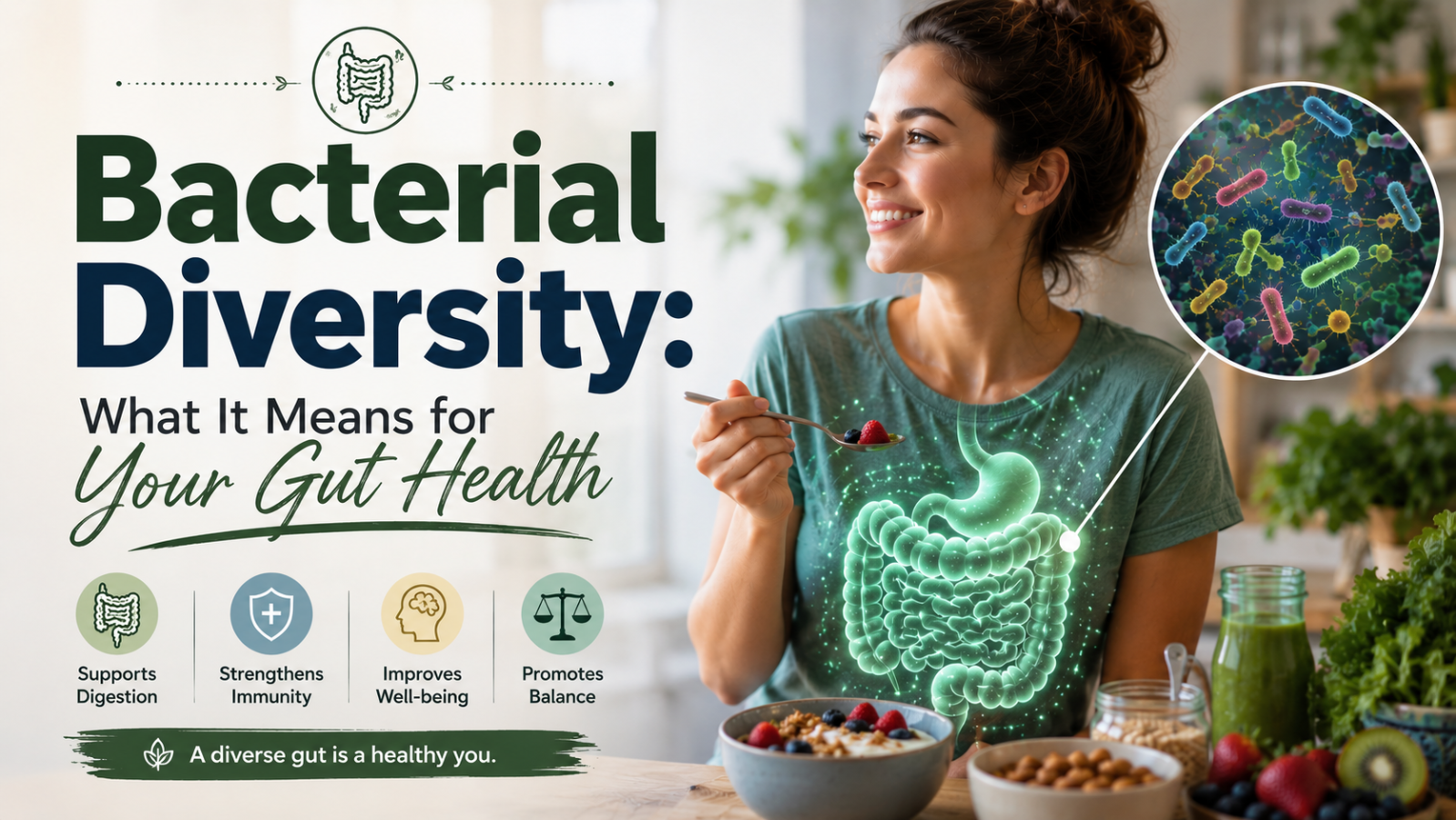
Bacterial diversity refers to the variety of different bacteria living in your gut, and that variety may play an important role in a healthy microbiome. Your gut contains a remarkably complex community, so it makes sense that supporting a wide range of microorganisms starts with everyday habits, especially the foods you eat. Use the Copy Button to save the practical tips in this guide for later.
Quick Answer: What Is Bacterial Diversity?
Bacterial diversity describes the variety of different bacterial species and groups present in an environment, including the human gut. A diverse gut microbiome generally contains many different types of microorganisms rather than only a small number.
Diet, lifestyle, medications, age, and other factors can influence bacterial diversity. Although scientists continue to study the microbiome, eating a varied range of plant foods is widely viewed as one practical way to support a diverse gut environment.
What Does Bacterial Diversity Mean in the Gut?
Your digestive tract is home to a large and active microbial community. Bacteria are only one part of that community, but they receive a great deal of attention because they interact with the food moving through your digestive system.
Bacterial diversity simply describes how varied that bacterial community is.
Imagine a garden with only one type of plant. Now picture another garden filled with flowers, herbs, trees, and vegetables. The second garden has greater variety.
The gut works differently from a garden, of course. Still, the comparison makes the idea easier to understand.
Different bacteria have different abilities. Some microorganisms can interact with certain dietary fibers, while others may use different compounds found in food. Therefore, a varied diet can provide a broader range of materials for the gut ecosystem.
That doesn’t mean every person needs the same microbiome.
There is no single perfect collection of gut bacteria that applies to everyone. Individual microbiomes naturally differ, and researchers are still learning how those differences relate to health.
Why Bacterial Diversity Matters for Gut Health
Scientists are interested in bacterial diversity because a complex microbial community may have a wider range of functions.
Different microorganisms can interact with different food components. In addition, they can interact with one another in ways researchers are still working to understand.
A less varied microbiome isn’t automatically unhealthy.
However, research suggests that diversity is one useful characteristic scientists examine when studying the gut microbiome. The larger picture matters, including which microorganisms are present and what they are doing.
For everyday gut health, this idea has a practical lesson.
Instead of focusing on one “superfood,” try eating a wider range of plant foods across the week.
That approach can be more realistic, too. You don’t need to search for one magical ingredient when your grocery cart can contain many simple foods.
Beans, berries, oats, leafy greens, nuts, seeds, and vegetables all contribute different nutrients and plant compounds.
How Bacterial Diversity Develops
Bacterial diversity doesn’t remain completely fixed throughout life.
Many factors can influence the gut environment over time. Food is one important factor, although it isn’t the only one.
Age can play a role. Daily routines can also matter.
Medication use may affect gut microorganisms, particularly certain medications designed to act against bacteria. Illness, travel, sleep, physical activity, and stress may also influence the broader gut environment.
Therefore, it would be misleading to blame every change in the microbiome on one meal.
Your body responds to patterns.
A single weekend of pizza and takeout probably won’t determine your long-term gut health. Similarly, eating one bowl of broccoli won’t suddenly create a highly diverse microbiome.
Consistency usually matters more than isolated choices.
Bacterial Diversity and the Foods You Eat
Food is one of the most interesting parts of microbiome science because your gut microorganisms encounter compounds from your diet regularly.
Plant foods contain different types of dietary fiber. They also contain naturally occurring compounds that vary from one food to another.
For example, oats aren’t nutritionally identical to lentils.
Blueberries don’t provide the same combination of compounds as spinach. Walnuts, sweet potatoes, apples, and beans also bring something different to the table.
This is one reason dietary variety can be useful.
Instead of eating the same three vegetables every week, rotate your choices.
Try different colors.
Change your grains occasionally.
Add a new bean to a familiar recipe.
Small changes can make eating for bacterial diversity feel much less complicated.
Can Eating More Plants Support Bacterial Diversity?
A plant-rich diet gives you many different fibers and natural compounds.
Those components can travel through the digestive system and interact with the gut environment in different ways.
Health experts generally encourage people to eat a variety of fruits, vegetables, whole grains, legumes, nuts, and seeds. That advice supports nutrition in general, while it may also benefit the microbial community in your gut.
Variety is the important word here.
Eating spinach every day can be part of a healthy diet. However, eating spinach alongside other greens, vegetables, fruits, and legumes provides more dietary variety.
I find this approach easier than counting every gram of every nutrient.
Think about adding rather than restricting.
At the grocery store, pick one fruit you don’t normally buy. Add a different type of bean to your pantry. Choose a new whole grain once in a while.
Those simple habits can gradually expand your usual menu.
Bacterial Diversity and Dietary Fiber
Fiber is a major part of conversations about gut health.
Unlike many easily digested carbohydrates, some types of fiber reach the lower digestive tract. There, microorganisms can interact with them.
Different fibers have different properties.
That’s another reason relying on only one high-fiber food may not provide the same dietary variety as eating many fiber-rich foods.
You might enjoy oats for breakfast.
Later, beans could appear at lunch. A dinner containing vegetables and brown rice adds even more variety.
Nuts, seeds, and fruit can also fit into the picture.
If your current diet is low in fiber, increase it gradually. Suddenly adding large amounts of beans, bran, and fiber supplements can leave some people feeling uncomfortable.
Instead, give your digestive system time to adjust.
Does Fermented Food Affect Bacterial Diversity?
Fermented foods are another interesting part of gut-health discussions.
Foods such as yogurt and kefir may contain live microorganisms, depending on the product and how it was made. However, not every fermented food provides the same microorganisms or remains a source of live cultures when you eat it.
Fermented foods also aren’t identical to probiotics.
A probiotic has a specific scientific definition related to live microorganisms and demonstrated health benefits. Therefore, it’s best not to use the terms interchangeably.
Still, fermented foods can add variety to your diet.
Plain yogurt with berries makes an easy breakfast. Kefir can work in a smoothie. Other fermented foods may fit naturally into meals you already enjoy.
The goal isn’t to force yourself to eat foods you dislike.
A gut-friendly eating pattern should be practical enough to continue.
Simple Ways to Support Bacterial Diversity
You don’t need an expensive test or a complicated meal plan to begin eating a more varied diet.
Try these practical habits instead.
1. Rotate Your Fruits
Don’t buy the same fruit every week.
Alternate between berries, apples, oranges, grapes, pears, and seasonal options.
2. Eat Different Colored Vegetables
Color isn’t a perfect measure of nutrition. However, choosing a range of colors can encourage more variety.
3. Add More Types of Beans
Black beans, chickpeas, lentils, and kidney beans can all work in different meals.
4. Change Your Whole Grains
Oats are great, but try brown rice, barley, quinoa, or whole-grain bread too.
5. Keep Nuts and Seeds Around
Walnuts, almonds, chia seeds, and pumpkin seeds make easy additions to meals and snacks.
6. Try One New Plant Food Regularly
You don’t need to overhaul your kitchen.
One new food at a time is enough.
7. Make Familiar Meals More Varied
Add extra vegetables to soup, tacos, pasta, or grain bowls.
8. Don’t Forget Herbs and Spices
Herbs and spices can add flavor while increasing the variety of plant ingredients in your meals.
Lifestyle Factors That May Influence Bacterial Diversity
Food gets most of the attention, but the gut microbiome exists within a much larger lifestyle picture.
Sleep matters for many aspects of health. Physical activity can also support general well-being.
Meanwhile, chronic stress may influence the body in several ways.
You don’t need a perfect routine.
In fact, chasing perfection can create unnecessary stress around healthy habits. A better goal is building a pattern you can realistically maintain.
Try preparing simple meals more often.
Move your body in ways you enjoy.
Create a consistent sleep routine when possible.
Those habits support your general health, and they may also complement a balanced approach to gut wellness.
Can Antibiotics Affect Bacterial Diversity?
Antibiotics are designed to treat bacterial infections, and they can affect bacteria in the body.
Because of that, researchers study how antibiotic use may influence the gut microbiome.
Antibiotics can be medically important and sometimes essential. Therefore, concerns about the microbiome shouldn’t encourage people to avoid necessary treatment.
Instead, take medications as directed by your healthcare professional.
The important lesson is that gut bacteria exist in a changing environment. Medication is one of many factors that can influence that environment.
After treatment, focus on returning to regular, balanced eating habits rather than chasing dramatic “microbiome reset” products.
Your gut doesn’t need a trendy cleanse.
It benefits more from steady habits and adequate nutrition.
Is More Bacterial Diversity Always Better?
Not necessarily.
This topic needs nuance.
Scientists don’t judge gut health by counting different bacteria alone. The types of microorganisms present, their functions, and the broader health context can also matter.
Therefore, bacterial diversity is not a score you need to maximize.
You don’t need to obsess over getting the highest possible number from a microbiome test.
For most people, the more useful focus is simple: eat a varied diet and maintain healthy daily habits.
The science of the microbiome is still developing.
Researchers continue to learn about the relationships between microorganisms, food, and human health. That’s exciting, but it also means consumers should be cautious about companies making overly confident claims.
A product that promises to completely rebuild your microbiome deserves a skeptical look.
Common Mistakes When Trying to Improve Bacterial Diversity
Good intentions can sometimes lead to uncomfortable or unnecessary changes.
Changing Your Diet Too Quickly
Adding huge amounts of fiber overnight can cause gas or bloating.
Gradual changes are often easier to manage.
Eating Only One “Gut Food”
No single food can do everything.
Dietary variety is more useful than relying on one trendy ingredient.
Buying Supplements Without a Clear Reason
Supplements can have a place for some people. However, a product isn’t automatically necessary because it mentions the microbiome.
Ignoring Foods You Already Enjoy
Healthy eating shouldn’t feel like punishment.
Build variety around foods that fit your culture, budget, and preferences.
Expecting Instant Results
The gut microbiome is complex.
Long-term eating patterns deserve more attention than quick fixes.
A One-Day Example for More Dietary Variety
Breakfast could be oatmeal topped with blueberries, walnuts, and chia seeds.
For lunch, try a salad containing mixed greens, chickpeas, tomatoes, carrots, and a whole-grain side.
Dinner might include salmon or another preferred protein with sweet potatoes, broccoli, and brown rice.
A snack could be plain yogurt with fruit.
This isn’t a strict plan.
It’s simply an example of how many different plant foods can fit into ordinary meals without making cooking difficult.
The next day can look completely different. That variety is part of the appeal.
Frequently Asked Questions About Bacterial Diversity
What is bacterial diversity?
Bacterial diversity refers to the variety of different bacteria present in an environment, including the human gut microbiome.
Why is bacterial diversity important?
Scientists study bacterial diversity because different microorganisms may perform different functions and interact with different components of the diet.
Can food affect bacterial diversity?
Diet can influence the gut environment. Eating a variety of fiber-rich plant foods is one practical way to support dietary diversity.
Do probiotics increase bacterial diversity?
The effects of probiotics depend on the specific microorganisms and the individual. Taking a probiotic doesn’t automatically create a more diverse microbiome.
How can I support bacterial diversity naturally?
Focus on a varied diet that includes fruits, vegetables, legumes, whole grains, nuts, and seeds. Increase fiber gradually and build habits you can maintain.
Bacterial Diversity: The Bigger Picture
Bacterial diversity is a useful concept because it reminds us that the gut microbiome is complex. Your digestive system isn’t home to one “good” bacterium that needs all the attention.
Different microorganisms live together in a changing environment.
That makes dietary variety a practical starting point. Instead of searching for a miracle food, try eating a broader range of plants over time.
Bacterial diversity isn’t something you need to measure obsessively; it’s a reminder that variety can be a valuable part of everyday eating.
Start small. Try a new fruit, rotate your vegetables, add beans to a familiar meal, or switch up your whole grains.
Those changes can make meals more interesting while supporting a varied diet.
Finally, use the Copy Button to save this guide on bacterial diversity and come back to the food ideas whenever you need fresh inspiration for your gut-friendly routine.












2 thoughts on “Bacterial Diversity: What It Means for Your Gut Health”