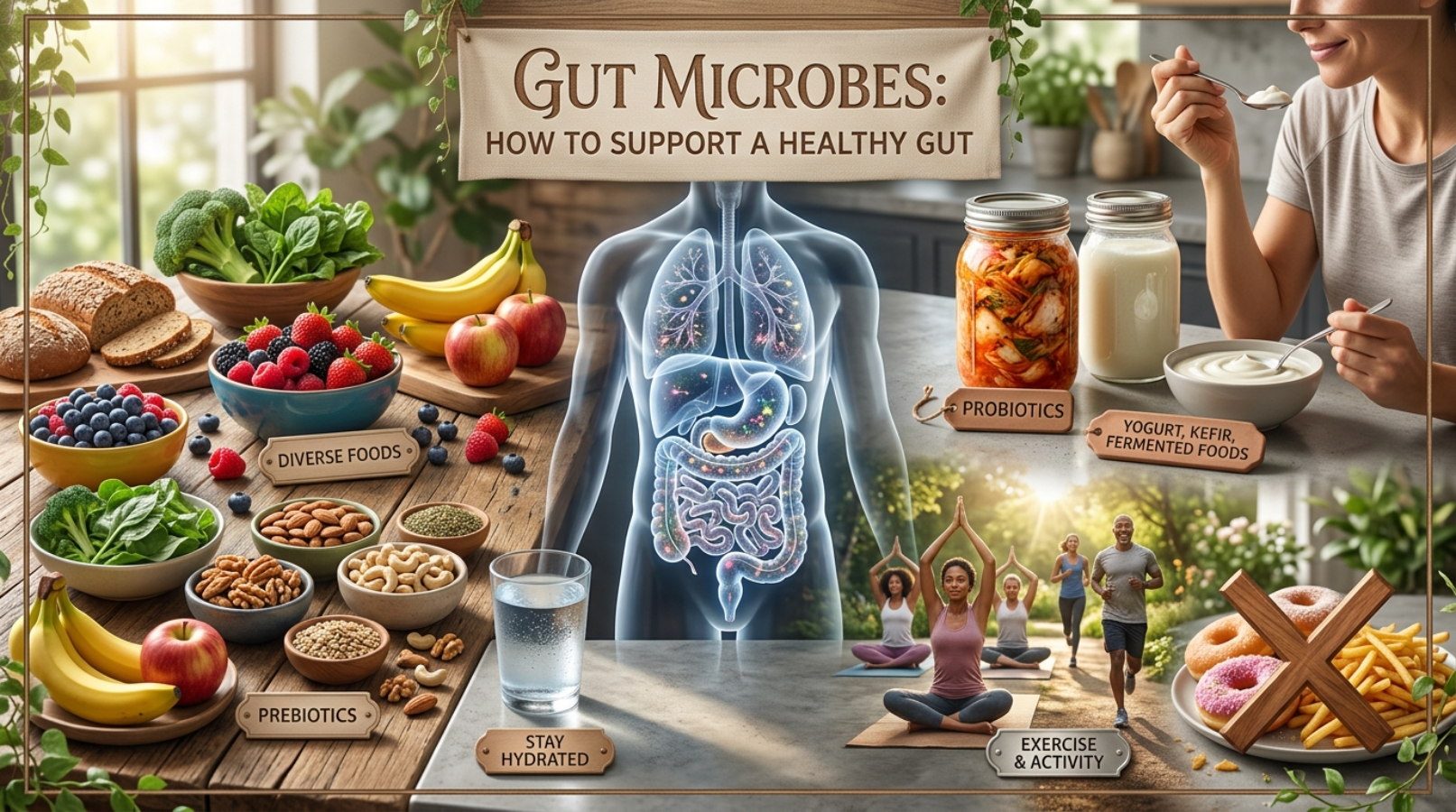
Gut microbes are tiny organisms that help shape digestion, nutrient use, immune function, and the environment inside your digestive tract. The good news is that you don’t need an extreme cleanse or complicated diet to support them.
A few consistent habits—especially eating more diverse plant foods, getting enough fiber, staying active, and choosing fermented foods—can give your gut microbes a better environment to thrive.
Quick Answer: How Do You Support Healthy Gut Microbes?
The most practical approach is to feed your gut microbiome regularly with a variety of fiber-rich plant foods. Beans, oats, vegetables, fruits, nuts, seeds, and whole grains provide different types of fibers that gut microbes can use.
You can also include fermented foods such as yogurt, kefir, kimchi, sauerkraut, or naturally fermented pickles. At the same time, limit highly processed foods that crowd out fiber-rich choices, drink enough fluids, exercise regularly, sleep well, and avoid making drastic dietary changes overnight.
What Are Gut Microbes?
Gut microbes are the bacteria, fungi, viruses, and other microorganisms that live throughout your digestive tract, with a large concentration in the colon. Together, they form a community known as the gut microbiota.
These organisms aren’t simply passengers. They interact with the foods you eat and produce compounds that can influence the intestinal environment. Some also help break down components of food that your own digestive enzymes can’t fully process.
Your gut microbiome is also highly individual. Diet, age, medications, environment, lifestyle, and other factors can influence its makeup. That’s one reason there isn’t a single “perfect” gut microbiome that everyone needs to achieve.
Instead, the goal is to create conditions that support a resilient and diverse microbial community.
Why Gut Microbes Need Variety
Imagine eating the same three foods every day. Your gut microbes would receive a fairly narrow range of nutrients.
Now picture a week filled with beans, berries, oats, leafy greens, carrots, walnuts, lentils, whole grains, and different herbs and vegetables. That’s a much broader menu for your microbial community.
Different microbes use different components of plant foods. Therefore, increasing the variety of whole plant foods can provide a wider range of fibers and other compounds for the microbiome. Harvard Health and Cleveland Clinic both emphasize plant diversity and fiber as important parts of a gut-friendly eating pattern.
You don’t need to count every plant you eat. Instead, look at your week.
Could you add another vegetable? Try a different bean? Swap white bread for whole-grain bread? Toss berries into breakfast?
Small changes add up.
Feed Gut Microbes With More Fiber
Fiber is one of the most useful tools for supporting your gut microbes because many types of fiber reach the colon, where microorganisms can ferment them.
Good options include beans, lentils, oats, barley, vegetables, berries, apples, nuts, seeds, and whole grains. Some plant foods also contain prebiotic compounds that specifically provide fuel for beneficial microbes.
If your current diet is low in fiber, don’t suddenly pile a huge amount onto your plate. Your digestive system may respond with extra gas, bloating, or discomfort.
Instead, increase fiber gradually and drink enough water.
For example, start by adding berries to breakfast. A few days later, add beans to lunch. Then replace a refined grain with a whole-grain option.
That approach is much easier to maintain than an overnight diet makeover.
Add Fermented Foods to Your Routine
Fermented foods can be a simple way to bring beneficial microorganisms into your diet. Common choices include yogurt, kefir, kimchi, sauerkraut, miso, kombucha, and some naturally fermented pickles.
However, not every fermented product contains the same live microorganisms. Processing methods can affect the microbes that remain in the finished food. For yogurt, look for labels mentioning “live and active cultures.”
You don’t need large servings.
Try plain yogurt with berries at breakfast. Add a spoonful of sauerkraut to lunch. Use kimchi with rice and vegetables. Have kefir as part of a smoothie.
The best choice is usually the one you’ll actually enjoy eating regularly.
Give Your Gut Microbes a Plant-Rich Plate
A useful everyday formula is simple: build meals around plants, then add your preferred protein and healthy fats.
For breakfast, you might have oatmeal with berries, chia seeds, and walnuts.
Lunch could be a grain bowl with chickpeas, spinach, carrots, tomatoes, and olive oil.
Dinner might include roasted vegetables, brown rice, and salmon.
Notice what these meals have in common. They aren’t “gut health products.” They’re ordinary foods that happen to provide plenty of fiber and plant compounds.
Research summarized by NIH/NIDDK has also explored how diets designed to provide more fiber and other nutrients for the gut microbiome can alter microbial composition and function.
That’s a much more useful long-term strategy than chasing a single superfood.
Cut Back on Foods That Crowd Out Fiber
You don’t have to eliminate pizza, chips, cookies, or your favorite takeout meal to care for your microbiome.
The bigger issue is what happens when highly processed foods become the foundation of your diet. They can replace foods that naturally provide fiber, vitamins, minerals, and other compounds your gut microbes can use.
Think in terms of balance rather than fear.
If you order takeout on Friday night, add vegetables or a side salad. If breakfast is a pastry, make lunch more fiber-rich. If you snack on crackers, pair them with fruit or nuts.
Those adjustments are realistic. And realistic habits tend to last.
Hydration Matters More Than You Think
Fiber works best as part of an overall healthy eating pattern that includes adequate fluid.
If you’ve ever increased your fiber intake and suddenly felt more bloated or constipated, the problem may have been the speed of the change rather than fiber itself.
Water helps keep stool softer and supports normal digestive function. Cleveland Clinic also recommends staying hydrated as part of a broader approach to digestive health.
Keep water accessible during the day. A bottle on your desk can make the habit almost automatic.
You don’t need to force enormous amounts of water. Instead, drink regularly and pay attention to thirst, activity, heat, and your individual needs.
Don’t Ignore Movement and Sleep
Gut health isn’t only about food.
Regular physical activity supports overall digestive health and can fit naturally into a microbiome-friendly lifestyle. A daily walk after dinner is a particularly easy place to start.
Sleep matters, too. Your body follows daily biological rhythms, and the gut microbiome interacts with those rhythms. That’s another reason a consistent sleep schedule can be a useful part of a broader wellness routine.
I find that simple habits work better when they’re attached to things you already do. A 15-minute walk after dinner feels much easier to maintain than promising yourself an ambitious workout every morning.
The same principle applies to gut health.
Build a Gut Microbe Routine You Can Actually Keep
A long-term routine doesn’t need to contain ten new habits.
Start with three.
Morning: Add one fiber-rich food to breakfast, such as oats, berries, chia seeds, or a banana.
Afternoon: Keep a simple snack available, such as an apple with nuts or carrots with hummus.
Evening: Include at least two different vegetables with dinner and take a short walk afterward.
Once those habits feel normal, add another.
For example, introduce fermented yogurt a few mornings each week. Then experiment with lentils, chickpeas, barley, or a new vegetable.
This gradual approach is especially helpful if your current diet contains little fiber. Your digestive system may need time to adjust.
What About Probiotic Supplements?
Probiotic supplements get plenty of attention, but they’re not automatically necessary for everyone.
Different probiotic products contain different microorganisms and strains. Their effects can also vary depending on the specific product and the reason someone is taking it. Harvard Health notes that supplements don’t have the same regulatory oversight as medications, while Cleveland Clinic recommends discussing probiotic choices with a healthcare professional when appropriate.
For everyday wellness, food is a strong starting point.
Before buying an expensive supplement, look at your basic routine. Are you eating enough plant foods? Are you getting regular sources of fiber? Do fermented foods fit your diet? Are you drinking enough fluids?
Those fundamentals deserve attention first.
A Simple 7-Day Gut Microbes Reset—Without the Fad Diet
You don’t need to “reset” your gut in a few days. Instead, use one week to practice habits you can continue.
Day 1: Add one extra serving of vegetables.
Day 2: Eat oats, barley, or another whole grain.
Day 3: Include beans or lentils in one meal.
Day 4: Try a fermented food such as yogurt, kefir, kimchi, or sauerkraut.
Day 5: Add a new fruit to your routine.
Day 6: Include nuts or seeds with a meal or snack.
Day 7: Take a look at the week and choose three habits to keep.
The last step matters most.
A seven-day challenge only becomes useful if it helps you build something sustainable.
FAQ About Gut Microbes
What foods are best for gut microbes?
There isn’t one best food. A varied diet containing vegetables, fruits, beans, lentils, whole grains, nuts, and seeds gives gut microbes access to different types of plant fibers. Fermented foods can also be included as part of a balanced diet.
How can I increase healthy gut microbes naturally?
Start with more variety in your plant foods. Gradually increase fiber, include fermented foods that you tolerate, stay hydrated, exercise regularly, and limit highly processed foods. These habits support the environment in which a healthy microbiome can thrive.
How long does it take to improve gut microbes?
There isn’t one universal timeline. The microbiome can respond to changes in diet, but your individual response depends on your existing diet, lifestyle, medications, and other factors. Focus on consistent habits rather than expecting a dramatic transformation in a few days.
Are gut microbes the same as probiotics?
No. Gut microbes are the microorganisms living in your digestive system. Probiotics are specific live microorganisms that can provide a health benefit when consumed in adequate amounts. Fermented foods may contain beneficial live microorganisms, but their contents vary.
Can gut microbes affect digestion?
Yes. Gut microbes help process components of food that your digestive system cannot fully break down on its own. Their activity also produces compounds that influence the intestinal environment.
The Bottom Line on Gut Microbes
Healthy gut microbes don’t require perfection. They need a supportive environment, and that environment is shaped by your everyday choices.
Focus on variety. Eat more fiber-rich plants. Include fermented foods when they suit you. Drink enough fluids, move your body, sleep consistently, and make highly processed foods a smaller part of your overall pattern.
The best gut microbiome routine is the one you can still follow six months from now.
If you’re saving these ideas for later, use the Copy Button to quickly copy the tips and turn them into a simple grocery list or weekly wellness routine. Start with one change today, then build from there.