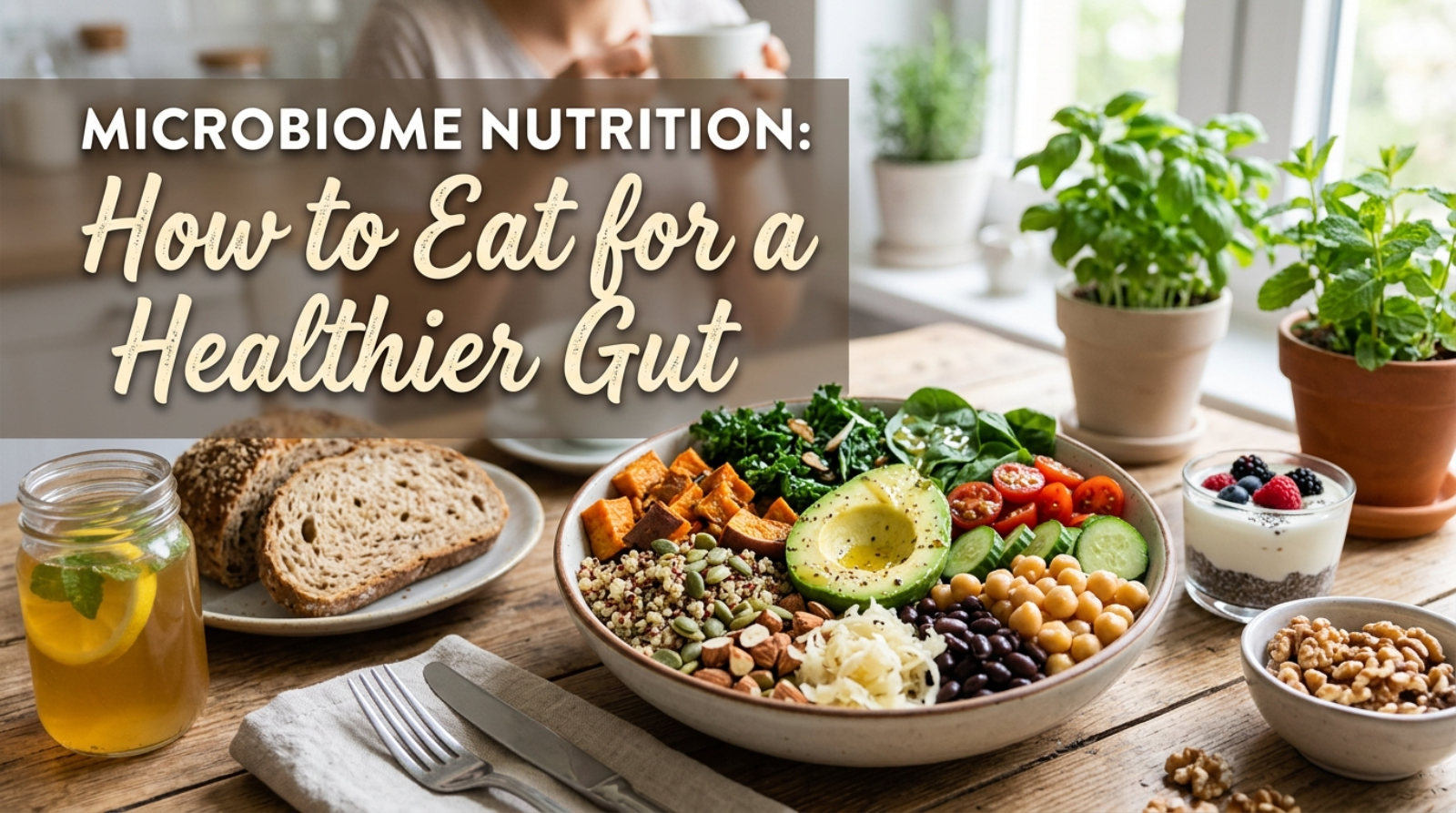
Microbiome nutrition is about choosing foods that nourish the trillions of microorganisms living in your digestive tract. Instead of chasing a perfect diet, the goal is to create a steady food environment where beneficial microbes can thrive.
The simplest place to start is your grocery cart: more plant variety, enough fiber, fermented foods, and fewer highly processed choices can make your everyday diet more microbiome-friendly. Use the Copy Button to save the practical food ideas below and turn them into a routine that fits your normal week.
Quick Answer: What Is Microbiome Nutrition?
Microbiome nutrition is an eating approach that focuses on feeding and supporting the microorganisms in your gut. It emphasizes fiber-rich plant foods, a wide variety of fruits and vegetables, legumes, whole grains, nuts, seeds, and suitable fermented foods.
Rather than focusing on one “superfood,” microbiome nutrition works best through variety and consistency. Fiber provides fuel for many gut microbes, while fermented foods can provide live microorganisms. Research also suggests that diets designed to provide more fiber and other nutrients for the microbiome can change microbial composition and function.
Why Microbiome Nutrition Starts With Variety
Your gut isn’t home to just one type of bacterium. It’s a complex community containing bacteria and other microorganisms, and different microbes can interact with different components of your diet.
That’s why eating the same “healthy” food every day isn’t necessarily the best strategy.
Consider oatmeal. It’s an excellent source of fiber, but your gut doesn’t need oatmeal alone. Add berries one day, sliced banana another, and walnuts or chia seeds on another morning. At lunch, rotate between lentils, chickpeas, vegetables, and whole grains.
Cleveland Clinic explains that different microorganisms use different plant fibers. In turn, their activity produces compounds such as short-chain fatty acids that affect the intestinal environment.
So, think more variety, not more restriction.
Feed Gut Microbes With Fiber
Fiber is one of the most important pieces of microbiome nutrition because certain types reach the colon largely intact. There, gut microbes can ferment them.
Good sources include beans, lentils, oats, barley, berries, apples, vegetables, nuts, seeds, and whole grains. Harvard Health notes that plant foods provide the fiber that helps nourish beneficial gut microbes.
You don’t have to calculate every gram.
Instead, look at your meals and ask a simple question: Where can I add one more plant food?
Put berries on breakfast. Add beans to tacos. Sprinkle seeds over yogurt. Choose brown rice or barley with dinner.
If you’re currently eating little fiber, increase it gradually. A sudden jump can cause gas, bloating, or abdominal discomfort, so give your digestive system time to adjust and drink enough fluids.
Microbiome Nutrition Loves Plant Foods
A plant-rich diet doesn’t mean becoming vegetarian.
It means giving fruits, vegetables, legumes, whole grains, nuts, and seeds a regular place on your plate. These foods supply fiber and a range of other compounds that interact with your gut microbiome.
For example, try this easy lunch:
- Whole-grain wrap
- Hummus
- Spinach
- Tomato
- Shredded carrots
- Grilled chicken
- A piece of fruit
That’s a much more useful microbiome meal than a product marketed specifically as a “gut health” food.
Harvard Health recommends a wide range of plant foods, including fruits, vegetables, beans, whole grains, nuts, and seeds, as part of an eating pattern that supports the microbiome.
Try a “new plant” habit
Here’s a practical trick I like: add one unfamiliar plant food to your grocery cart each week.
Try barley, lentils, kiwi, jicama, edamame, cabbage, or a different type of bean. You don’t need to overhaul your kitchen.
You’re simply expanding the menu.
Over time, that can make variety feel normal rather than like another wellness project.
Bring Fermented Foods Into the Picture
Fermented foods can add another dimension to microbiome nutrition.
Examples include yogurt, kefir, kimchi, sauerkraut, miso, and some naturally fermented pickles. However, fermentation doesn’t automatically mean a food contains live microorganisms. Processing can change what remains in the finished product.
For yogurt, look for “live and active cultures” on the label.
You could have plain yogurt with fruit at breakfast. Add kimchi to a rice bowl. Use sauerkraut alongside a sandwich. Or simply enjoy kefir as a snack.
There’s no need to force a food you dislike.
If fermented cabbage makes you cringe, yogurt may be a much better long-term choice.
Prebiotics Give Gut Microbes Something to Eat
You may have heard the term “probiotic,” but prebiotics deserve attention, too.
Prebiotics are compounds that can be used by microorganisms in the gut. They’re naturally present in foods such as garlic, onions, asparagus, legumes, bananas, and some whole grains.
That creates a useful pairing.
A bowl of plain yogurt provides fermented-food cultures, while berries, oats, or a banana can add fiber. A meal with beans and vegetables provides another combination of plant compounds and fiber.
You don’t need to buy a product labeled “prebiotic” to get these benefits.
Whole foods can do a lot of the work.
Microbiome Nutrition Means Rethinking Processed Foods
You don’t need to ban cookies, fries, frozen pizza, or your favorite restaurant meal.
That’s not realistic for most people, and healthy eating doesn’t require perfection.
The issue is what those foods replace.
If breakfast is usually a pastry, lunch is chips and a sandwich, and dinner comes from a drive-through, you may be missing many of the plant foods and fibers that support your gut microbes.
Cleveland Clinic notes that diets high in processed foods and lower in fiber can create a less favorable environment for the microbiome.
Instead of making a long forbidden-food list, make substitutions.
Add fruit to breakfast. Choose a vegetable side at lunch. Put beans into your dinner. Keep nuts or seeds available for snacks.
Those small changes can shift the overall pattern without making food miserable.
Build Better Meals With a Simple Formula
If you don’t want to think about microbiome nutrition every time you eat, use a basic meal-building formula.
Start with a plant. Add a fiber source. Include protein. Finish with a healthy fat.
For breakfast, try oats with berries, chia seeds, and plain yogurt.
For lunch, make a grain bowl with quinoa, chickpeas, spinach, roasted vegetables, and olive oil.
For dinner, serve salmon with barley, broccoli, and a side of fermented vegetables.
The combinations don’t need to be fancy.
In fact, some of the best gut-friendly meals are remarkably ordinary. A bean-and-vegetable soup with whole-grain toast can be a better everyday choice than an expensive “microbiome” powder.
Give Your Gut Time to Adjust
More fiber isn’t always better when you add it all at once.
Someone who normally eats very little fiber may feel uncomfortable after suddenly eating huge portions of beans, bran cereal, vegetables, and seeds.
That’s not a reason to abandon fiber.
Instead, increase it slowly.
For example, add fruit at breakfast during the first week. Then introduce beans a few times the following week. After that, experiment with another whole grain or vegetable.
Harvard Health recommends easing into higher-fiber eating and drinking plenty of water to reduce digestive discomfort while your body adapts.
Your long-term routine matters much more than a dramatic first week.
What Does a Day of Microbiome Nutrition Look Like?
You don’t need specialty ingredients.
Here’s an ordinary example:
Breakfast: Oatmeal topped with blueberries, walnuts, and chia seeds.
Lunch: Lentil soup with a side salad and whole-grain bread.
Snack: Plain yogurt with sliced banana.
Dinner: Grilled chicken, roasted broccoli, brown rice, and a small serving of sauerkraut.
Drinks: Water throughout the day, with unsweetened tea or coffee if you enjoy them.
Notice the pattern. There’s variety, fiber, plant foods, and a fermented food.
There’s also chicken.
That’s important because microbiome nutrition isn’t about turning every meal into a laboratory experiment. It’s about building a balanced eating pattern that you can actually live with.
Don’t Forget the Rest of Your Lifestyle
Food matters, but it isn’t the entire microbiome story.
Physical activity, sleep, medications, age, environment, and other lifestyle factors can influence the gut microbiome. Cleveland Clinic describes the microbiome as an ecosystem affected by diet and many other exposures.
That means your routine can extend beyond your kitchen.
Take a walk after dinner. Keep a reasonably consistent sleep schedule. Drink fluids regularly. Take medications only as directed by your healthcare professional.
These aren’t flashy strategies.
That’s precisely why they’re useful.
A wellness routine built around ordinary habits has a much better chance of surviving a busy Tuesday than one that requires special powders, elaborate recipes, and strict food rules.
A Practical 7-Day Microbiome Nutrition Plan
Use the following as a starting point rather than a rigid diet.
Day 1: Add berries or another fruit to breakfast.
Day 2: Include beans or lentils with lunch or dinner.
Day 3: Try a whole grain such as oats, barley, brown rice, or quinoa.
Day 4: Add a serving of yogurt, kefir, kimchi, or another suitable fermented food.
Day 5: Eat two different vegetables at dinner.
Day 6: Add nuts or seeds to a meal or snack.
Day 7: Choose three habits from the week that you can realistically continue.
That last step is the most important.
A seven-day challenge isn’t the goal. It’s a way to discover which habits fit your life.
Do You Need Microbiome Supplements?
Not necessarily.
Probiotic and prebiotic supplements can be useful in specific situations, but products differ widely. A supplement isn’t automatically better than food, and probiotic products don’t all contain the same microorganisms or have the same evidence behind them.
Harvard Health notes that probiotic supplements aren’t regulated in the same way as medications and aren’t recommended as an automatic everyday solution for everyone.
For general wellness, start with your diet.
If your meals contain very few plants, a probiotic capsule won’t fix the missing variety. Likewise, adding a supplement doesn’t make an otherwise highly processed diet microbiome-friendly.
Food first is a sensible starting point.
FAQ About Microbiome Nutrition
What is microbiome nutrition?
Microbiome nutrition is an eating approach that focuses on nourishing the microorganisms living in your digestive tract. It emphasizes fiber-rich plant foods, food variety, whole grains, legumes, nuts, seeds, fruits, vegetables, and suitable fermented foods.
What foods support the gut microbiome?
Beans, lentils, vegetables, fruits, whole grains, nuts, and seeds are excellent sources of dietary fiber and other plant compounds. Fermented foods such as yogurt, kefir, kimchi, and naturally fermented sauerkraut can also fit into a microbiome-friendly eating pattern.
How quickly can diet change the microbiome?
The gut microbiome can respond to dietary changes, but there isn’t one universal timeline or outcome for everyone. A controlled human study described by NIDDK found changes in microbial composition, diversity, and function during a diet designed to nourish the microbiome.
That doesn’t mean you need to chase rapid changes. Consistency is the better target.
Is yogurt good for microbiome nutrition?
Yogurt can be a useful choice, especially varieties that contain live and active cultures. Pairing it with fiber-rich foods such as berries, oats, nuts, or seeds can create a more balanced microbiome-friendly meal.
Should I avoid processed foods completely?
No. A sustainable diet doesn’t require perfection. Instead, make minimally processed plant foods the foundation of most meals and let highly processed foods occupy a smaller place in your overall eating pattern.
The Bottom Line on Microbiome Nutrition
Microbiome nutrition doesn’t require a complicated food plan. It starts with feeding your gut microbes well and giving your body a consistent supply of diverse, fiber-rich foods.
Add more plants. Rotate your choices. Include fermented foods you enjoy. Increase fiber gradually. Drink enough fluids. Keep moving. Then repeat those habits week after week.
That’s a much more useful goal than trying to create a “perfect” microbiome.
If you want to keep these ideas handy, use the Copy Button to save the food swaps and seven-day plan. Pick two changes you can start this week, then build your routine from there.
Your gut doesn’t need perfection. It needs consistency.

Elizabeth Boham is a respected functional medicine physician and wellness educator with a passion for helping people improve their health through nutrition and lifestyle changes. As a contributor to Gutrova, she shares practical insights on gut health, digestive wellness, and healthy living, making complex health topics easy to understand and apply in everyday life.