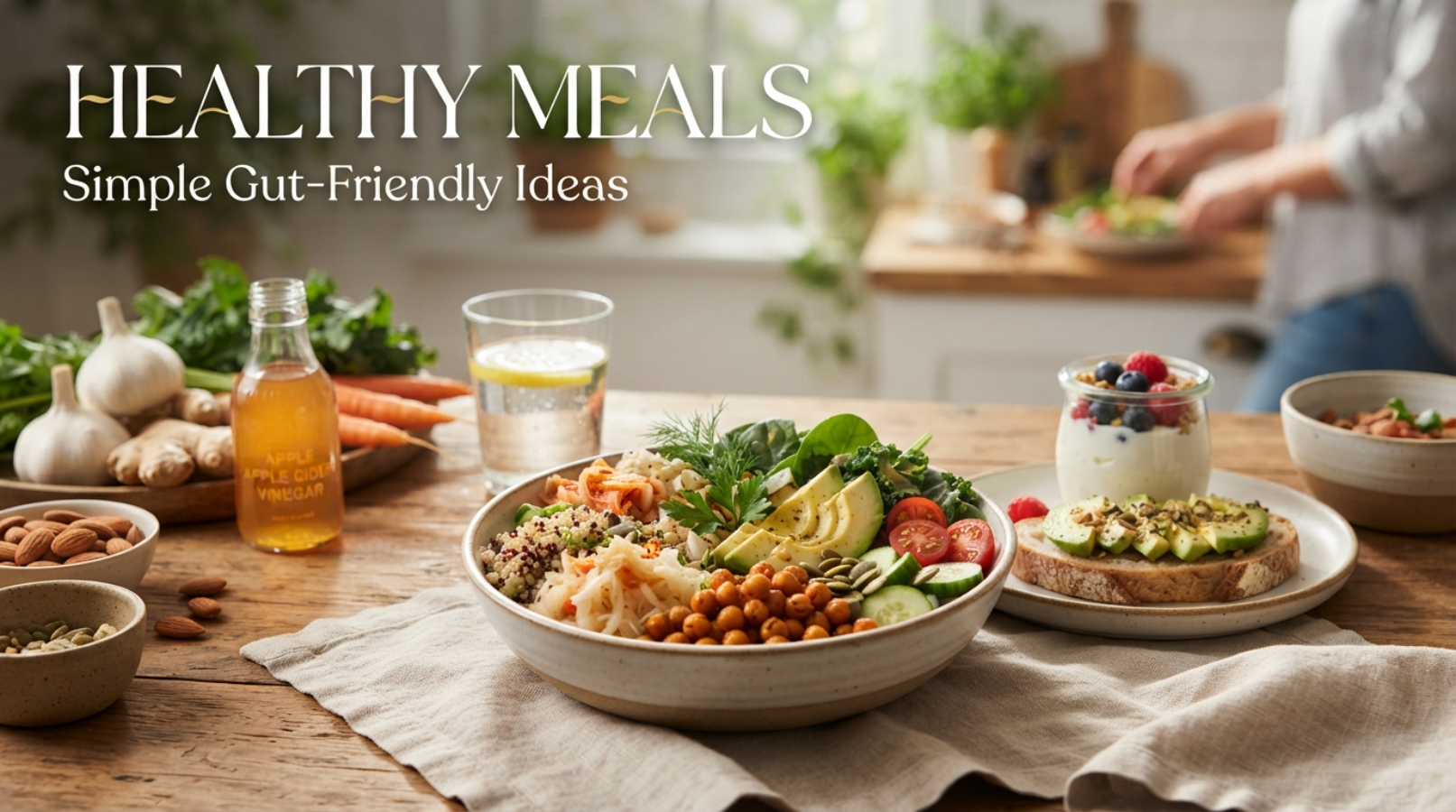
Healthy meals don’t have to be complicated to support your gut. A simple mix of fiber-rich plants, protein, healthy fats, and fluids can make everyday eating more satisfying and digestion-friendly.
I’ve found that the easiest approach is to build meals around foods you already enjoy instead of trying to follow a rigid “perfect” diet. Gutrova’s Copy Button also makes it easy to copy and share the wellness tips you want to keep handy.
Quick Answer: What Makes Healthy Meals Good for Your Gut?
Healthy meals for gut health usually include a variety of plant foods, a source of protein, healthy fats, and enough fluid throughout the day. Fruits, vegetables, whole grains, beans, nuts, seeds, and fermented foods can all fit into a gut-friendly eating pattern.
You don’t need to transform your entire diet overnight. Instead, add more variety gradually and pay attention to how your body responds.
Why Healthy Meals Matter for Digestive Health
Your digestive system does much more than process food. It breaks food down, absorbs nutrients, moves waste through the body, and interacts with the trillions of microbes living in your gut.
That makes the quality and variety of your meals worth considering.
Fiber is especially important. Foods such as oats, beans, berries, pears, vegetables, nuts, seeds, and whole grains provide fiber that supports regular bowel movements and also gives gut microbes material to use. The National Institute of Diabetes and Digestive and Kidney Diseases recommends that adults generally get 22 to 34 grams of fiber per day, depending on age and sex.
However, more fiber isn’t always better when added too quickly. A sudden increase can cause gas or bloating, so gradual changes are usually easier on your digestive system.
Healthy meals also work best alongside enough fluids. Water helps support digestion and can help keep stools softer, particularly when your fiber intake increases.
Build Healthy Meals Around Plant Variety
One of the simplest gut-friendly habits is to stop thinking about a single “superfood” and start thinking about variety.
Different plants provide different types of fiber and nutrients. As a result, rotating your choices throughout the week gives your diet a broader mix of foods for your gut microbes.
Try combining:
- Oatmeal with blueberries, banana, walnuts, and chia seeds
- Brown rice with roasted vegetables and salmon
- Lentil soup with whole-grain toast and a side salad
- Greek yogurt with berries, oats, and pumpkin seeds
- Whole-wheat pasta with spinach, tomatoes, chickpeas, and olive oil
- Baked sweet potato with black beans, avocado, and salsa
You don’t have to eat every item in one day. Instead, think about variety across several meals and several days.
For example, if breakfast includes oats and berries, lunch could bring in beans and leafy greens. Dinner might add broccoli, whole grains, and fish. Small changes can create much more variety without making your grocery list overwhelming.
Healthy Meals Need a Reliable Protein Source
Protein isn’t just for athletes or people trying to build muscle. It also helps make meals more filling and balanced.
Good options include eggs, fish, chicken, turkey, Greek yogurt, cottage cheese, tofu, tempeh, lentils, chickpeas, and other beans.
For a simple plate, start with a protein source and then add vegetables or fruit, a high-fiber carbohydrate, and a small amount of healthy fat.
For example, grilled salmon can sit alongside roasted broccoli, quinoa, and avocado. Another meal could pair chicken with brown rice, carrots, spinach, and olive oil.
Plant proteins can pull double duty because beans and lentils provide both protein and fiber. That makes them especially useful ingredients for healthy meals focused on digestive health.
If beans aren’t a regular part of your diet, start with smaller portions. Your gut may need time to adjust to a larger amount of fiber.
Healthy Meals Can Change With the Seasons
Seasonal eating doesn’t require a strict calendar. It simply gives you a chance to use different foods throughout the year.
In spring, try asparagus, peas, strawberries, leafy greens, and fresh herbs. Summer brings tomatoes, zucchini, berries, peaches, corn, cucumbers, and melons.
As fall arrives, reach for pumpkin, winter squash, apples, pears, sweet potatoes, Brussels sprouts, and hearty greens. During winter, soups and stews make it easier to combine beans, vegetables, whole grains, and lean proteins in one comforting dish.
I especially like this approach after a week of heavy takeout. A warm bowl of lentils, vegetables, and brown rice feels much more satisfying than trying to “make up” for previous meals by eating very little.
The goal isn’t perfection. It’s simply getting back to foods that make you feel nourished and comfortable.
Make Healthy Meals Easier on Busy Days
Healthy eating tends to fall apart when every meal requires a new recipe.
Instead, keep a few basic ingredients ready.
Keep a simple meal formula
Use this combination:
Protein + plant food + high-fiber carbohydrate + healthy fat
For example:
Chicken + broccoli + quinoa + avocado
Or:
Chickpeas + spinach + whole-grain pita + tahini
Or:
Eggs + tomatoes + whole-grain toast + sliced avocado
This formula gives you plenty of flexibility.
You can also cook several ingredients at once. Prepare a batch of brown rice, roast a tray of vegetables, wash some greens, and cook a protein source. Then mix and match those foods for several meals.
That saves time without forcing you to eat the exact same plate every day.
Add Fermented Foods to Healthy Meals
Fermented foods can be another useful part of a varied diet.
Examples include plain yogurt with live cultures, kefir, kimchi, sauerkraut, and some fermented vegetables. Cleveland Clinic notes that fermented foods can contribute beneficial microorganisms to the diet, while fiber-rich plant foods help nourish gut microbes.
You don’t need a large serving.
Try adding a spoonful of sauerkraut to a grain bowl, yogurt to breakfast, or kefir to a smoothie. Small additions can be easier to maintain than suddenly filling your refrigerator with unfamiliar foods.
Also, check labels when buying fermented vegetables. Some packaged varieties are pasteurized after fermentation, so they may not provide the same live cultures as products that retain them.
Healthy Meals Should Include Healthy Fats
Fat has a place on a gut-friendly plate. The key is choosing nutritious sources and using portions that work for you.
Try:
- Avocado
- Extra-virgin olive oil
- Walnuts
- Almonds
- Pumpkin seeds
- Chia seeds
- Ground flaxseed
- Fatty fish such as salmon
For instance, drizzle olive oil over roasted vegetables or add walnuts to oatmeal. These small additions can improve flavor while making a simple meal more satisfying.
Nuts and seeds also provide fiber, so they can contribute to the plant variety that supports a healthy gut environment.
A Simple Day of Healthy Meals
You don’t need complicated recipes to put these ideas into practice.
Breakfast:
Oatmeal topped with blueberries, chia seeds, walnuts, and plain yogurt.
Lunch:
A grain bowl with brown rice, chickpeas, spinach, cucumber, carrots, avocado, and olive oil.
Snack:
An apple with peanut butter or a small serving of yogurt with berries.
Dinner:
Baked salmon with roasted sweet potato and broccoli.
Drink:
Water throughout the day, with additional fluids based on your activity, environment, and personal needs.
This kind of day gives you fiber from several plant sources, protein at multiple meals, healthy fats, and plenty of food variety.
Still, you don’t have to copy the exact menu. Swap foods based on your budget, schedule, season, and preferences.
Common Mistakes With Healthy Meals
Even nutritious foods can become frustrating when you approach them too aggressively.
Adding too much fiber at once
A giant bowl of beans, raw vegetables, bran, and seeds may sound impressive, but your digestive system might not appreciate the sudden change.
Increase fiber gradually and drink enough fluid. NIDDK specifically recommends adding fiber little by little so your body can adjust.
Making every meal raw
Cooked vegetables can be just as useful as raw vegetables. If a large salad leaves you feeling uncomfortable, try roasted carrots, steamed spinach, baked squash, or cooked zucchini instead.
Chasing expensive “gut health” products
You don’t need a refrigerator full of specialty products. Beans, oats, vegetables, fruit, whole grains, nuts, seeds, and plain yogurt can form the foundation of healthy meals without an elaborate shopping list.
Forgetting fluids
Fiber and fluids work together. If you increase high-fiber foods while barely drinking, you may not get the digestive comfort you’re hoping for.
Easy Healthy Meals for Different Seasons
Here are a few simple combinations to keep your menu fresh.
Spring:
Lemon chicken, quinoa, asparagus, peas, and leafy greens.
Summer:
Grilled salmon, corn, tomatoes, cucumber, avocado, and berries.
Fall:
Turkey, roasted sweet potato, Brussels sprouts, quinoa, and pumpkin seeds.
Winter:
Lentil and vegetable soup with whole-grain bread and a side of greens.
These are starting points rather than strict recipes. Change the ingredients based on what’s available and what you enjoy.
That flexibility matters. A meal you can prepare regularly is more useful than an impressive recipe you make once.
FAQ About Healthy Meals and Gut Health
What are the best healthy meals for digestion?
Meals built with fiber-rich plants, protein, healthy fats, and enough fluid are a good starting point. Examples include oatmeal with berries and nuts, lentil soup with whole-grain bread, or salmon with vegetables and quinoa.
Are healthy meals always high in fiber?
Not necessarily. Many nutritious foods contain little fiber, including eggs, fish, poultry, and some dairy products. A balanced meal can combine these foods with fruits, vegetables, whole grains, beans, nuts, or seeds.
How quickly should I increase fiber?
Take it slowly. Adding large amounts of fiber suddenly can cause gas and bloating. NIDDK recommends increasing fiber gradually while drinking enough fluids.
Can healthy meals include fermented foods?
Yes. Yogurt, kefir, kimchi, sauerkraut, and other fermented foods can fit into a varied eating pattern. However, individual tolerance differs, so start with portions that feel comfortable.
What if healthy foods make me bloated?
Look at the amount and timing first. A sudden jump in fiber, large portions, or certain foods may contribute to bloating. Try smaller portions and gradual changes instead of removing every plant food from your diet.
If digestive symptoms keep returning or don’t improve, it’s worth discussing them with a healthcare professional rather than continually restricting your diet.
Conclusion: Keep Healthy Meals Simple
Healthy meals don’t need to be perfect, expensive, or complicated. A better goal is to create a flexible eating pattern built around plant variety, fiber, protein, healthy fats, fermented foods, and enough fluids.
Start with one meal. Add a vegetable, switch to a whole grain, include beans, or top breakfast with fruit and seeds. Then build from there.
Your routine will naturally change with the seasons, your schedule, and your appetite. That’s okay. Consistency comes from making healthy meals practical enough to enjoy again and again.
And when you find a gut-health tip you want to remember, Gutrova’s Copy Button makes it simple to copy and share it for later.
Source basis: The nutrition guidance above is grounded in NIDDK information on fiber, fluids, and digestive health; Mayo Clinic guidance on fiber, hydration, eating pace, activity, and digestion; and Cleveland Clinic guidance on plant variety, fermented foods, and gut microbiome support.
The article deliberately keeps “healthy meals” in the SEO title, meta description, H1, introduction, multiple H2/H3 headings, body copy, FAQ, and conclusion while avoiding forced repetition.

Here’s a short Gutrova-style author biography for Josh Axe:
Josh Axe
Josh Axe is a wellness expert, author, and educator known for his work in nutrition, natural health, and gut wellness. As a contributor to Gutrova, he shares practical insights on digestive health, healthy eating habits, and lifestyle strategies that help readers build a stronger foundation for overall well being. His content focuses on making wellness simple, actionable, and accessible for everyday life.











1 thought on “Healthy Meals: Simple Gut-Friendly Ideas”