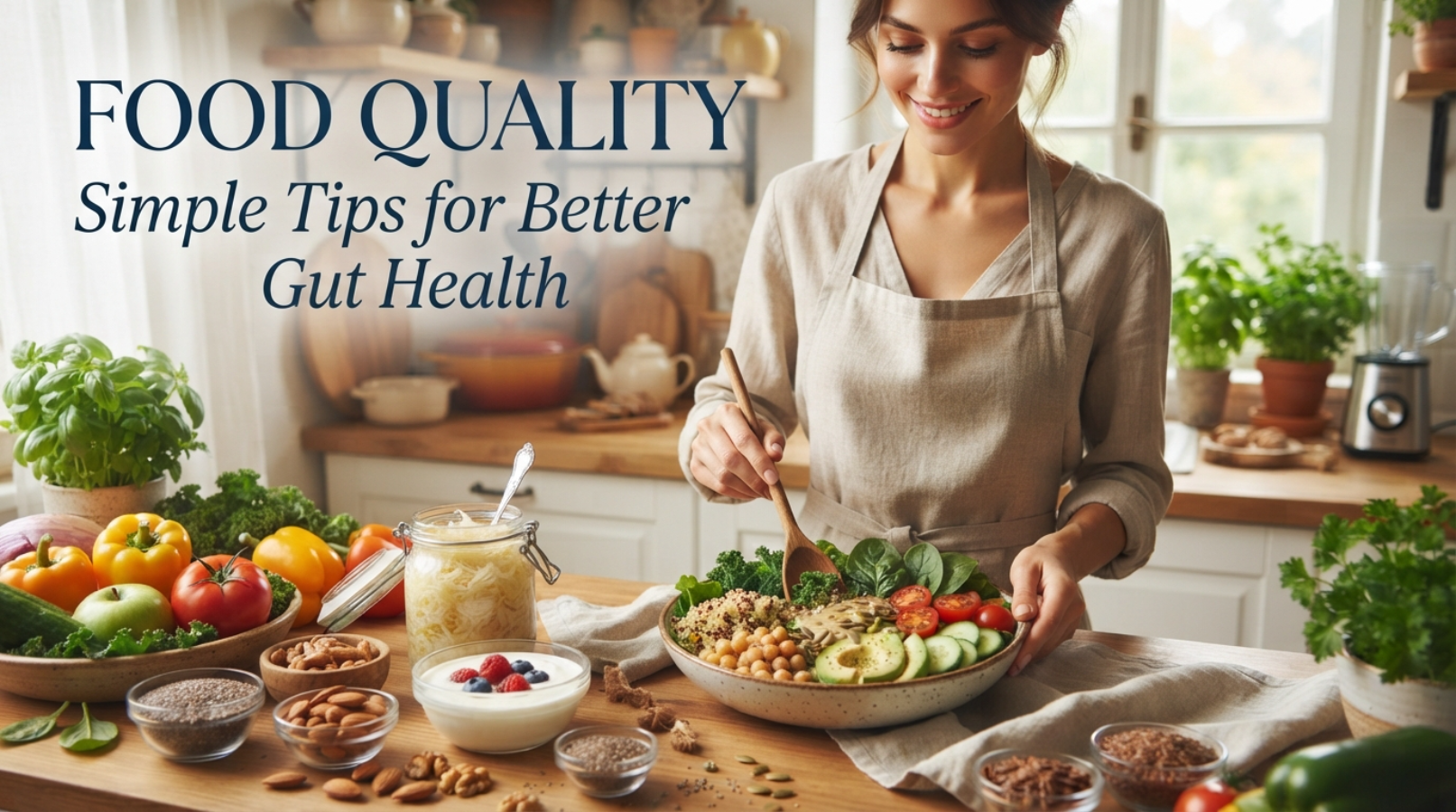
Food quality can shape the way you nourish your body, especially when your meals regularly include whole grains, fruits, vegetables, beans, nuts, seeds, and other minimally processed foods. You don’t need a perfect diet to eat well; instead, small improvements in the foods you choose can make everyday meals more nourishing.
I’ve noticed that food quality becomes much easier to improve when you shop and cook with the season instead of trying to overhaul your entire diet at once. Gutrova’s Copy Button also makes it simple to copy and share the practical gut-health tips you want to remember.
Quick Answer: What Does Food Quality Mean?
Food quality refers to the overall nutritional value and composition of the foods you regularly eat. For gut health, that usually means emphasizing a variety of whole and minimally processed foods that provide fiber, vitamins, minerals, protein, healthy fats, and other useful nutrients.
It doesn’t mean every food must be “clean” or that processed foods are automatically bad. Instead, look at the overall pattern of your diet and how often nourishing foods make up your meals.
Food Quality Starts With Variety
One of the easiest ways to improve food quality is to stop focusing on a single “perfect” food.
Your digestive system benefits from variety. Fruits, vegetables, whole grains, beans, nuts, and seeds provide different types of fiber and nutrients. In addition, many of these foods provide material that gut microbes can use.
Mayo Clinic notes that dietary fiber comes mainly from plant foods, including fruits, vegetables, whole grains, and legumes. Different plant foods provide different forms of fiber, so eating a variety of them can help you get more than one type.
Try rotating your choices during the week:
- Oats and berries at breakfast
- Lentils or beans at lunch
- Leafy greens with dinner
- Apples, pears, or citrus as snacks
- Nuts and seeds added to yogurt or oatmeal
- Whole grains such as brown rice, barley, or whole-wheat pasta
You don’t have to eat a huge assortment in one sitting. Instead, build variety across several days.
That approach feels much more realistic than keeping a long list of foods you “must” eat every day.
Food Quality and Fiber Go Hand in Hand
Fiber is one of the clearest reasons food quality matters for digestive health.
NIDDK states that adults generally need 22 to 34 grams of fiber per day, depending on age and sex. Good sources include whole grains, legumes, fruits, vegetables, and nuts.
However, increasing fiber too quickly can cause gas, bloating, or discomfort. NIDDK recommends adding fiber gradually so your body has time to adjust.
That makes gradual upgrades more practical.
If you normally eat white toast for breakfast, try whole-grain toast a few mornings each week. Add berries to yogurt. Stir lentils into soup. Toss chickpeas into a salad.
Small changes can raise the nutritional value of your meals without making your routine feel completely different.
A simple food quality upgrade
Instead of:
White toast + sweetened cereal
Try:
Whole-grain toast + eggs + berries
Or instead of:
Chips as an afternoon snack
Try:
Apple + handful of almonds
The goal isn’t to make every choice perfect. You’re simply giving your meals more nutritional substance.
Food Quality Changes With the Seasons
Seasonal eating can make food quality easier to improve because it naturally encourages variety.
Spring brings foods such as asparagus, peas, strawberries, leafy greens, radishes, and fresh herbs. These ingredients work well in salads, grain bowls, omelets, and light soups.
Summer offers tomatoes, zucchini, cucumbers, berries, peaches, melons, and corn. A bowl of tomatoes, chickpeas, cucumber, avocado, and herbs can make an easy lunch on a hot day.
Then fall shifts the menu toward apples, pears, pumpkin, sweet potatoes, winter squash, Brussels sprouts, and hearty greens. These foods work beautifully in roasted vegetable dishes, oatmeal, soups, and warm grain bowls.
Winter doesn’t have to mean giving up variety. Frozen vegetables, canned beans, oats, lentils, citrus, root vegetables, and stored apples can still form the foundation of nutritious meals.
The seasonal approach also keeps food interesting. Instead of buying the same produce every week, let what’s available influence your menu.
Food Quality Isn’t the Same as “Never Eat Processed Food”
This distinction matters.
Not every processed food has the same nutritional value. Frozen vegetables, canned beans, plain yogurt, canned fish, and whole-grain bread have all gone through some form of processing, yet they can fit comfortably into a nutritious eating pattern.
The better question is: What does this food contribute to the meal?
A can of no-salt-added beans can provide fiber and protein. Frozen berries can make an easy breakfast addition. Plain canned pumpkin can become part of oatmeal or soup.
On the other hand, foods high in added sugars, refined grains, sodium, or saturated fat may be less helpful when they crowd out more nutrient-rich choices.
Cleveland Clinic recommends emphasizing a plant-rich diet with whole grains, vegetables, fruits, and other fiber-containing foods as part of a gut-friendly lifestyle.
So don’t judge food by the word “processed” alone. Look at the ingredients, nutrients, portion, and place the food has in your overall diet.
Food Quality Matters More Than Fancy Gut-Health Products
Walk through a health-food aisle and you’ll find powders, drinks, bars, capsules, and products promising to support your microbiome.
Some may have a useful place. Still, they don’t have to be the starting point.
A basic grocery list can provide plenty of gut-friendly foods:
Produce:
Berries, apples, pears, leafy greens, broccoli, carrots, tomatoes, squash, and sweet potatoes.
Whole grains:
Oats, barley, brown rice, quinoa, and whole-wheat bread or pasta.
Legumes:
Lentils, chickpeas, black beans, and kidney beans.
Nuts and seeds:
Walnuts, almonds, pumpkin seeds, chia seeds, and ground flaxseed.
Fermented foods:
Plain yogurt, kefir, kimchi, and sauerkraut.
Cleveland Clinic also highlights fermented foods such as yogurt, kimchi, and kombucha as options that can fit into a gut-focused eating pattern.
You don’t need all of them. Pick the foods you actually enjoy and can buy regularly.
Food Quality Gets Easier With a Simple Plate
A complicated nutrition formula isn’t necessary.
Try dividing your plate into a few basic components:
Half: vegetables and/or fruit
Quarter: protein
Quarter: whole grains or another high-fiber carbohydrate
Plus: a source of healthy fat
For example, dinner might include roasted broccoli, baked salmon, brown rice, and avocado.
Another night could be lentil stew with whole-grain bread and a side of greens.
Breakfast can follow the same principle. Oatmeal with berries, walnuts, and plain yogurt provides several useful food groups without requiring much preparation.
This flexible structure helps you create healthy meals from whatever happens to be in the kitchen.
Food Quality and Your Gut Microbiome
Your gut microbiome is made up of a large community of microorganisms living in the digestive tract. What you eat helps shape the environment in which those microbes live.
Fiber is particularly interesting because much of it isn’t digested in the upper digestive tract. Instead, some types reach the colon, where gut microbes can use them. Mayo Clinic describes dietary fiber as an important fuel source for gut microbes.
That gives you another reason to vary your plant foods.
For breakfast, choose oats. At lunch, add beans. Dinner could include broccoli and brown rice. The next day, swap in berries, lentils, spinach, and quinoa.
The goal isn’t to “feed” one specific type of bacteria. Gut ecosystems are complex, and research continues to clarify how diet, lifestyle, medications, and other factors interact with the microbiome.
Still, a varied, plant-rich diet is a sensible foundation.
Food Quality Should Include Protein and Healthy Fats
A gut-friendly diet isn’t just about vegetables and fiber.
Protein helps make meals satisfying and can come from fish, eggs, poultry, yogurt, tofu, tempeh, beans, and lentils.
Healthy fats can come from foods such as avocado, walnuts, seeds, olive oil, and fatty fish.
For example, a bowl with quinoa, chickpeas, roasted vegetables, pumpkin seeds, and olive oil has several different nutritional components working together.
Similarly, salmon with sweet potato, broccoli, and avocado creates a satisfying dinner without requiring a complicated recipe.
Balance matters. You don’t have to eliminate carbohydrates or fat to improve food quality.
Food Quality Includes How You Feel After Eating
Nutrition labels tell you plenty, but your own experience matters too.
Suppose you eat a giant raw salad because you heard it’s the healthiest option. If you end up uncomfortably bloated afterward, that doesn’t mean vegetables are bad for you. It may simply mean the portion, ingredients, or preparation method wasn’t a good fit that day.
Try cooked vegetables instead. Reduce the portion. Add a protein source. Slow down while eating.
Similarly, a large serving of beans may cause more gas if you’re not accustomed to them. Start with a smaller amount and increase gradually.
NIDDK recommends increasing fiber slowly for exactly this reason.
Your goal is not to win a nutrition contest. It’s to build meals that nourish you and fit comfortably into your life.
Food Quality and Hydration Work Together
Water often gets left out of conversations about nutrition.
Yet fluids matter, particularly when you’re increasing fiber. NIDDK recommends drinking plenty of liquids so fiber can work better.
You don’t need an elaborate hydration routine.
Keep water nearby. Drink with meals. Carry a bottle when you’re out. Include water-rich foods such as fruits, vegetables, and soups.
Your fluid needs can change with activity, weather, and other individual factors, so pay attention to thirst and your daily routine.
A Practical Seasonal Food Quality Plan
You can put these ideas together without planning an entirely new diet.
Spring
Try oatmeal with strawberries for breakfast, a chickpea and greens bowl for lunch, and salmon with asparagus for dinner.
Summer
Choose Greek yogurt with berries, a tomato and cucumber grain bowl, and grilled chicken with zucchini and corn.
Fall
Start the day with apple-cinnamon oatmeal. For lunch, try lentil soup. At dinner, serve roasted squash with turkey, quinoa, and greens.
Winter
Use warm foods such as vegetable and bean soup, baked sweet potatoes, oatmeal, roasted carrots, and whole-grain dishes.
The ingredients change, but the basic pattern stays steady: plants, fiber, protein, healthy fats, and variety.
Simple Ways to Improve Food Quality This Week
You don’t need to change everything at once.
Try these small steps:
- Add one extra plant food to breakfast.
Toss berries, banana, chia seeds, or walnuts into your usual meal. - Replace one refined grain.
Try oatmeal, brown rice, barley, or whole-grain bread. - Keep beans available.
Canned beans make quick additions to soups, salads, tacos, and grain bowls. - Buy one seasonal fruit.
Choose something you genuinely enjoy. - Add a vegetable to dinner.
Frozen vegetables count, too. - Keep water nearby.
This becomes especially useful when increasing fiber. - Try one fermented food.
Plain yogurt, kefir, kimchi, or sauerkraut can be an easy starting point.
These changes are small enough to repeat. That’s important because food quality improves through patterns, not one unusually healthy meal.
Common Food Quality Mistakes
Trying to eat perfectly
A nutritious diet doesn’t require perfection. One restaurant meal or dessert won’t undo a generally balanced pattern.
Buying foods you don’t enjoy
If kale sits untouched in the refrigerator every week, choose spinach, cabbage, broccoli, or another vegetable instead.
Changing everything overnight
Suddenly adding large amounts of beans, vegetables, whole grains, and seeds can make your digestive system unhappy. Increase fiber gradually instead.
Ignoring convenience
Frozen vegetables and canned beans can save time. Food quality doesn’t require cooking every ingredient from scratch.
Focusing only on individual foods
No single food determines the quality of your diet. Look at your meals across the week.
FAQ About Food Quality and Gut Health
What does food quality mean for gut health?
Food quality describes the overall nutritional value of the foods you regularly eat. For gut health, emphasize a varied diet with fiber-rich plants, whole grains, legumes, protein sources, healthy fats, and enough fluids.
Is fresh food always better than frozen?
Not necessarily. Frozen fruits and vegetables can be nutritious and convenient. They can also make it easier to keep plant foods available throughout the year.
Can processed foods be part of a healthy diet?
Yes. Processing exists on a wide spectrum. Foods such as frozen vegetables, canned beans, plain yogurt, and whole-grain bread can all fit into nutritious meals.
How can I improve food quality without changing my whole diet?
Start with one meal. Add a fruit to breakfast, include a vegetable at lunch, switch to a whole grain, or add beans to dinner. Small changes are easier to maintain.
Does food quality affect the gut microbiome?
Diet influences the environment in the digestive tract, and fiber-rich plant foods provide material that gut microbes can use. However, the microbiome is complex and is influenced by many factors beyond diet.
Conclusion: Improve Food Quality One Meal at a Time
Food quality doesn’t require strict rules, expensive products, or a completely different kitchen. Instead, focus on more variety, more nourishing plant foods, adequate fiber, satisfying protein, healthy fats, and enough fluids.
Let the seasons make that process easier. Choose berries and tomatoes in summer, apples and squash in fall, hearty vegetables in winter, and fresh greens in spring.
Most importantly, make your choices realistic. The best food quality improvements are the ones you can repeat on an ordinary weeknight.
Start with one small change today. Add a vegetable, choose a whole grain, include beans, or bring a seasonal fruit into your next meal.
Then keep building.
When you find a gut-health tip worth saving, Gutrova’s Copy Button makes it easy to copy and share your favorite wellness ideas for later.
Source basis: The article’s guidance on fiber, fluids, plant foods, whole grains, seasonal variety, fermented foods, and the gut microbiome is supported by NIDDK, Mayo Clinic, and Cleveland Clinic resources.










1 thought on “Food Quality: Simple Tips for Better Gut Health”