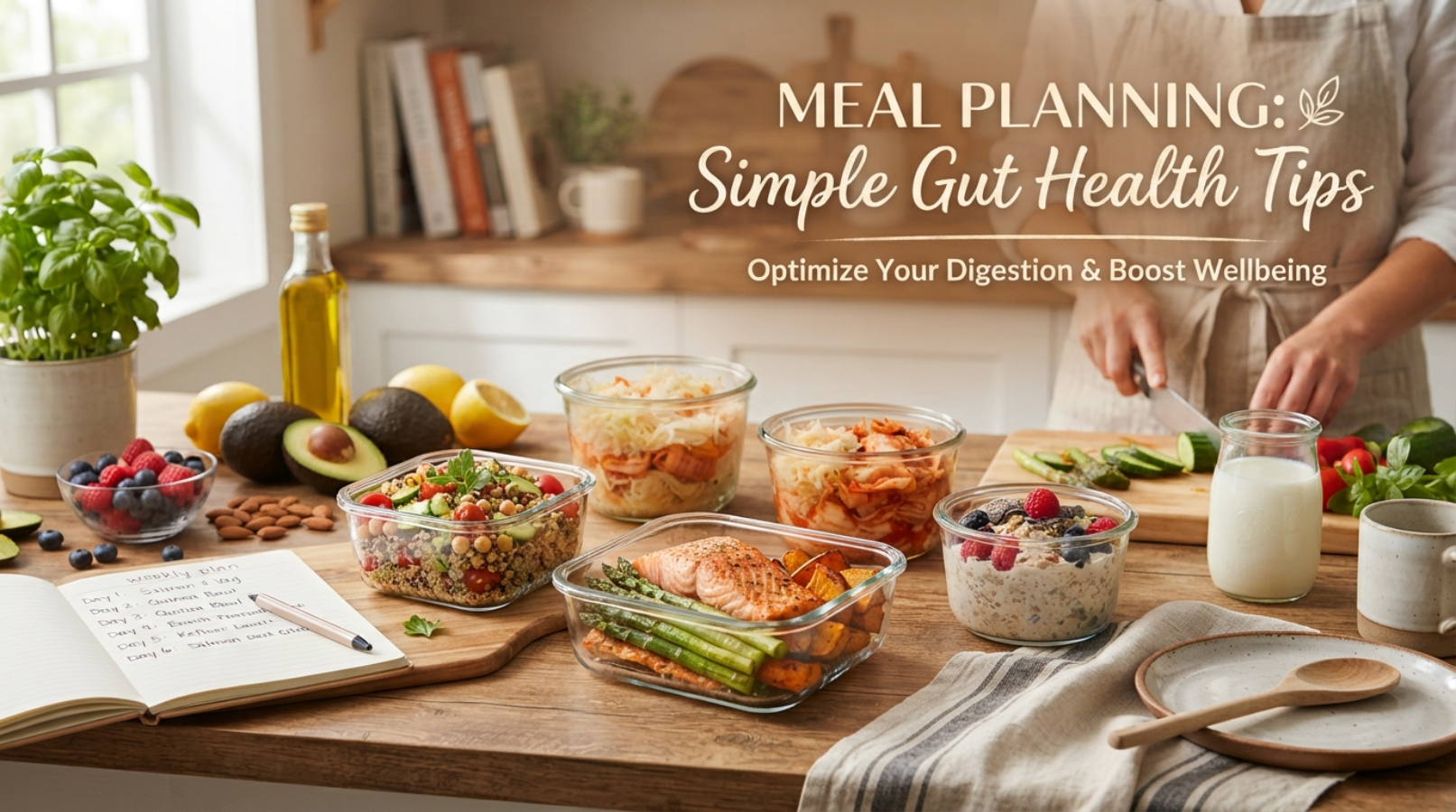
Meal planning can make gut-friendly eating much easier because it gives you a simple structure before hunger, busy schedules, and last-minute takeout take over. Instead of chasing a perfect diet, you can use a few dependable foods and change them with the seasons.
I’ve found that the best plans leave room for real life. Gutrova’s Copy Button also makes it easy to copy and share the wellness tips you want to keep nearby when you’re planning your next grocery trip.
Quick Answer: How Does Meal Planning Support Gut Health?
Meal planning supports gut health by helping you include a regular mix of fiber-rich plants, whole grains, legumes, protein, healthy fats, fermented foods, and fluids throughout the week. It can also reduce the need to rely on highly processed convenience foods when you’re short on time.
The trick is to plan components rather than seven completely different recipes. Prepare a few basics, then combine them in different ways.
Meal Planning Starts With a Flexible Framework
A good plan doesn’t need to look like a spreadsheet.
Instead, start with four basic questions:
What protein will I eat?
Think eggs, fish, chicken, turkey, tofu, tempeh, yogurt, beans, or lentils.
Which plants will I use?
Choose fruits, vegetables, leafy greens, herbs, and other plant foods.
What fiber-rich carbohydrate fits?
Try oats, brown rice, quinoa, barley, potatoes, sweet potatoes, or whole-grain bread.
What healthy fat can finish the meal?
Avocado, nuts, seeds, olive oil, or fatty fish can work well.
This simple framework gives you plenty of room to improvise.
For example, roasted chicken, brown rice, broccoli, and avocado can become a dinner bowl. The next day, the chicken and rice might become a wrap with greens and tomato.
That’s much easier than starting from scratch every evening.
Meal Planning Can Make Fiber Easier to Get
Fiber is one of the most useful nutrients to keep in mind when organizing your meals.
NIDDK says adults generally need 22 to 34 grams of fiber per day, depending on age and sex. Sources include whole grains, legumes, fruits, vegetables, and nuts.
Yet many people don’t struggle because they dislike fiber. They simply don’t have convenient high-fiber foods ready when they’re hungry.
That’s where planning helps.
Keep oatmeal in the pantry. Store canned beans for quick lunches. Wash fruit after grocery shopping. Cook a batch of brown rice or quinoa. Keep frozen vegetables available for evenings when fresh produce isn’t practical.
As a result, the nutritious option becomes the easy option.
Build fiber gradually
Don’t suddenly fill every meal with beans, bran, raw vegetables, and seeds.
A rapid increase in fiber can cause gas, bloating, or abdominal discomfort. NIDDK recommends adding fiber gradually so your digestive system can adjust.
For example, add one extra serving of vegetables to dinner this week. Next week, try beans at lunch a few times.
Small changes are easier to live with.
Meal Planning Around Seasonal Produce
Seasonal meal planning gives you an easy way to keep your food choices varied.
You don’t need to follow a strict seasonal calendar. Simply notice what’s fresh, affordable, and appealing at your local grocery store or farmers market.
Spring meal planning
Spring is a good time for asparagus, peas, strawberries, leafy greens, radishes, carrots, and fresh herbs.
Try a spinach and egg breakfast with strawberries on the side. For lunch, combine chickpeas, quinoa, cucumber, greens, and herbs. Dinner could feature salmon, asparagus, and roasted potatoes.
Summer meal planning
Summer brings tomatoes, zucchini, corn, berries, peaches, cucumbers, and melons.
A cold grain bowl can make an easy lunch. Combine quinoa, chickpeas, tomatoes, cucumber, avocado, and fresh herbs. For dinner, try grilled chicken with zucchini and corn.
Because summer produce often needs little preparation, meal planning can stay especially simple.
Fall meal planning
Fall makes room for apples, pears, pumpkin, sweet potatoes, winter squash, Brussels sprouts, and hearty greens.
Use apples in oatmeal or snacks. Roast squash for grain bowls. Add lentils to soups. Pair sweet potatoes with black beans, avocado, and greens for an easy meatless dinner.
Winter meal planning
Cold weather calls for meals that feel warm and satisfying.
Lentil soup, bean chili, vegetable stew, oatmeal, baked sweet potatoes, and roasted root vegetables are practical choices.
Frozen fruits and vegetables also have a place here. They can help you keep plant foods available when fresh options are limited or expensive.
Meal Planning for a Healthier Gut Microbiome
Your gut microbiome is a community of microorganisms living in your digestive tract. Diet is one factor that helps shape the environment where those microbes live.
Mayo Clinic explains that dietary fiber can serve as fuel for gut microbes.
That gives you a useful reason to include a range of plant foods.
Instead of buying one “gut health” food and eating it every day, rotate your choices.
Monday might bring oats and blueberries. Tuesday could feature lentils and carrots. Wednesday might include barley and broccoli. Later in the week, add chickpeas, apples, walnuts, and sweet potatoes.
The goal isn’t to target one specific bacterium. Gut ecosystems are complex. A varied diet simply gives you a broader mix of fibers and nutrients.
Cleveland Clinic also recommends a plant-rich eating pattern with varied whole foods as part of supporting the gut microbiome.
Meal Planning Should Include Protein
A gut-friendly plan still needs satisfying meals.
Protein helps make meals more substantial, and you can get it from both animal and plant foods.
Consider:
- Eggs
- Salmon
- Chicken
- Turkey
- Greek yogurt
- Cottage cheese
- Tofu
- Tempeh
- Lentils
- Chickpeas
- Black beans
For instance, plan three protein options for the week rather than deciding on seven.
You might buy salmon, chicken, and lentils. Then use each in different meals with changing vegetables, grains, sauces, and herbs.
That creates variety without creating extra work.
Meal Planning With Fermented Foods
Fermented foods can also fit into a seasonal gut-health routine.
Plain yogurt, kefir, kimchi, sauerkraut, miso, and some other fermented foods can be useful additions. Cleveland Clinic includes foods such as yogurt, kimchi, and kombucha among fermented options that can fit into a gut-focused eating pattern.
You don’t need large servings.
Try yogurt with breakfast. Add a small amount of sauerkraut to a grain bowl. Use miso in a soup. Enjoy kefir with fruit.
However, fermented foods aren’t automatically right for everyone. If a particular food causes discomfort, simply choose another option.
Meal planning should make eating easier, not turn your kitchen into a testing laboratory.
A Practical 5-Day Meal Planning Example
Here’s a simple framework you can adjust to your schedule.
Monday
Breakfast: Oatmeal, blueberries, walnuts, and plain yogurt
Lunch: Chicken, brown rice, spinach, carrots, and avocado
Dinner: Salmon, roasted sweet potato, and broccoli
Tuesday
Breakfast: Eggs, whole-grain toast, avocado, and berries
Lunch: Lentil soup with whole-grain bread and a side salad
Dinner: Chicken and vegetable quinoa bowl
Wednesday
Breakfast: Greek yogurt, banana, oats, chia seeds, and pumpkin seeds
Lunch: Chickpea, cucumber, tomato, and quinoa bowl
Dinner: Turkey, roasted squash, brown rice, and greens
Thursday
Breakfast: Oatmeal with apple, cinnamon, walnuts, and yogurt
Lunch: Leftover turkey and vegetable grain bowl
Dinner: Lentil and vegetable stew with whole-grain bread
Friday
Breakfast: Eggs, spinach, whole-grain toast, and fruit
Lunch: Leftover lentils with greens, roasted vegetables, and avocado
Dinner: Baked fish, potatoes, green beans, and a simple salad
Notice what’s happening here.
The meals change, but the ingredients overlap. That’s intentional.
One batch of roasted vegetables can appear in several lunches. Cooked grains can become bowls or side dishes. Leftover chicken can become tomorrow’s lunch instead of another cooking project.
Meal Planning Can Reduce Last-Minute Food Decisions
The hardest time to make a thoughtful food choice is often when you’re already hungry.
That’s when delivery apps look especially appealing.
I’ve had those evenings myself. The refrigerator has food, but nothing is prepared, so ordering takeout feels like the only practical option.
A little preparation changes that.
Keep two or three ready-to-eat components in the refrigerator. Cooked grains, washed greens, hard-boiled eggs, roasted vegetables, or cooked beans can turn into a meal within minutes.
You don’t have to meal prep every meal on Sunday. Even preparing enough food for two or three busy days can make a noticeable difference in your routine.
Meal Planning Doesn’t Mean Eating the Same Food Every Day
This is where many plans become boring.
Instead of preparing identical containers, cook ingredients separately.
For example:
Roasted vegetables can become:
- A grain bowl
- A taco filling
- An omelet addition
- A side dish
Cooked chicken can become:
- A salad topping
- A grain bowl
- A whole-grain wrap
- A soup ingredient
Brown rice can become:
- A salmon bowl
- A bean-and-vegetable dinner
- A stuffed pepper filling
This approach gives you variety without requiring a different recipe every night.
Meal Planning and Hydration
Don’t plan your food and forget your drinks.
Fluids are especially relevant when you’re increasing fiber. NIDDK recommends drinking enough liquids to help fiber work properly.
Water is an easy default.
Keep a reusable bottle at your desk or in your bag. Include soups, fruit, and vegetables that contribute fluid as part of your meals. Your needs can also change with activity, heat, and other individual factors.
Instead of trying to catch up at night, make drinking fluids part of your normal daytime routine.
Common Meal Planning Mistakes
Planning too many complicated recipes
Seven new recipes can make meal prep feel like a second job.
Choose two or three main recipes and rely on simple ingredient combinations for the rest.
Buying too much fresh produce
It’s frustrating to throw away wilted greens.
Buy realistic amounts. Frozen vegetables can fill gaps, and sturdy produce such as carrots, apples, cabbage, and squash often lasts longer.
Increasing fiber too quickly
A week of suddenly eating huge salads, beans, bran cereal, and seeds can leave you uncomfortable.
Increase fiber gradually instead.
Forgetting leftovers
Leftovers aren’t boring when you give them a new purpose.
Turn roasted vegetables into a breakfast omelet. Add leftover chicken to soup. Use cooked grains as the base for a quick lunch bowl.
Making the plan too rigid
Life happens.
If Tuesday’s dinner changes because you worked late, move that meal to Wednesday. A useful plan should bend without falling apart.
Simple Meal Planning Tips for Busy Weeks
Before grocery shopping, check what you already have.
Then choose:
2–3 proteins
Chicken, salmon, eggs, tofu, beans, or lentils.
3–5 vegetables
Mix fresh and frozen options.
2–3 fruits
Pick foods you actually enjoy.
1–2 whole grains
Oats, brown rice, quinoa, barley, or whole-grain bread.
2 healthy fats
Avocado, olive oil, nuts, or seeds.
1 fermented food
Yogurt, kefir, kimchi, or sauerkraut.
From there, build meals using what you bought.
This method keeps grocery shopping focused and reduces the temptation to buy ingredients for recipes you’ll never make.
FAQ About Meal Planning for Gut Health
Is meal planning good for gut health?
Yes. Meal planning can make it easier to regularly include fiber-rich plants, whole grains, legumes, protein, healthy fats, fermented foods, and fluids. It can also reduce reliance on last-minute convenience meals.
How often should I meal plan?
Once a week works well for many people, but you don’t need a rigid schedule. Some people prefer planning three or four days at a time, especially when their work or family schedule changes often.
Should I meal prep all my food at once?
Not necessarily. Preparing a few ingredients can be enough. Cook grains, roast vegetables, prepare a protein, and wash produce. Then combine them differently during the week.
How can I add more fiber through meal planning?
Keep fiber-rich staples ready. Oats, beans, lentils, whole grains, berries, apples, vegetables, nuts, and seeds are practical choices. Increase fiber gradually and drink enough fluids.
Can meal planning help with seasonal eating?
Absolutely. Seasonal produce gives you an easy way to change your fruits and vegetables throughout the year. It also keeps your meals from becoming repetitive.
Conclusion: Make Meal Planning Work for Real Life
Meal planning doesn’t have to mean spending an entire Sunday cooking dozens of containers. A better approach is to prepare a few useful ingredients, rotate your plant foods, include satisfying protein, and let the seasons change your menu.
Start small. Pick two proteins, several vegetables, a couple of fruits, and one or two whole grains for the coming week. Then mix those ingredients into meals that actually fit your schedule.
As your routine becomes easier, you can add fermented foods, new seasonal produce, or different whole grains. The goal is steady variety, not dietary perfection.
Good meal planning should leave you feeling prepared rather than restricted. When you find a gut-health tip or meal idea you want to keep, Gutrova’s Copy Button makes it easy to copy and share it for later.
Source basis: The article’s fiber, fluid, gradual-fiber-increase, plant-food, microbiome, and fermented-food guidance is supported by NIDDK, Mayo Clinic, and Cleveland Clinic sources.

Elizabeth Boham is a respected functional medicine physician and wellness educator with a passion for helping people improve their health through nutrition and lifestyle changes. As a contributor to Gutrova, she shares practical insights on gut health, digestive wellness, and healthy living, making complex health topics easy to understand and apply in everyday life.











2 thoughts on “Meal Planning: Simple Gut Health Tips”