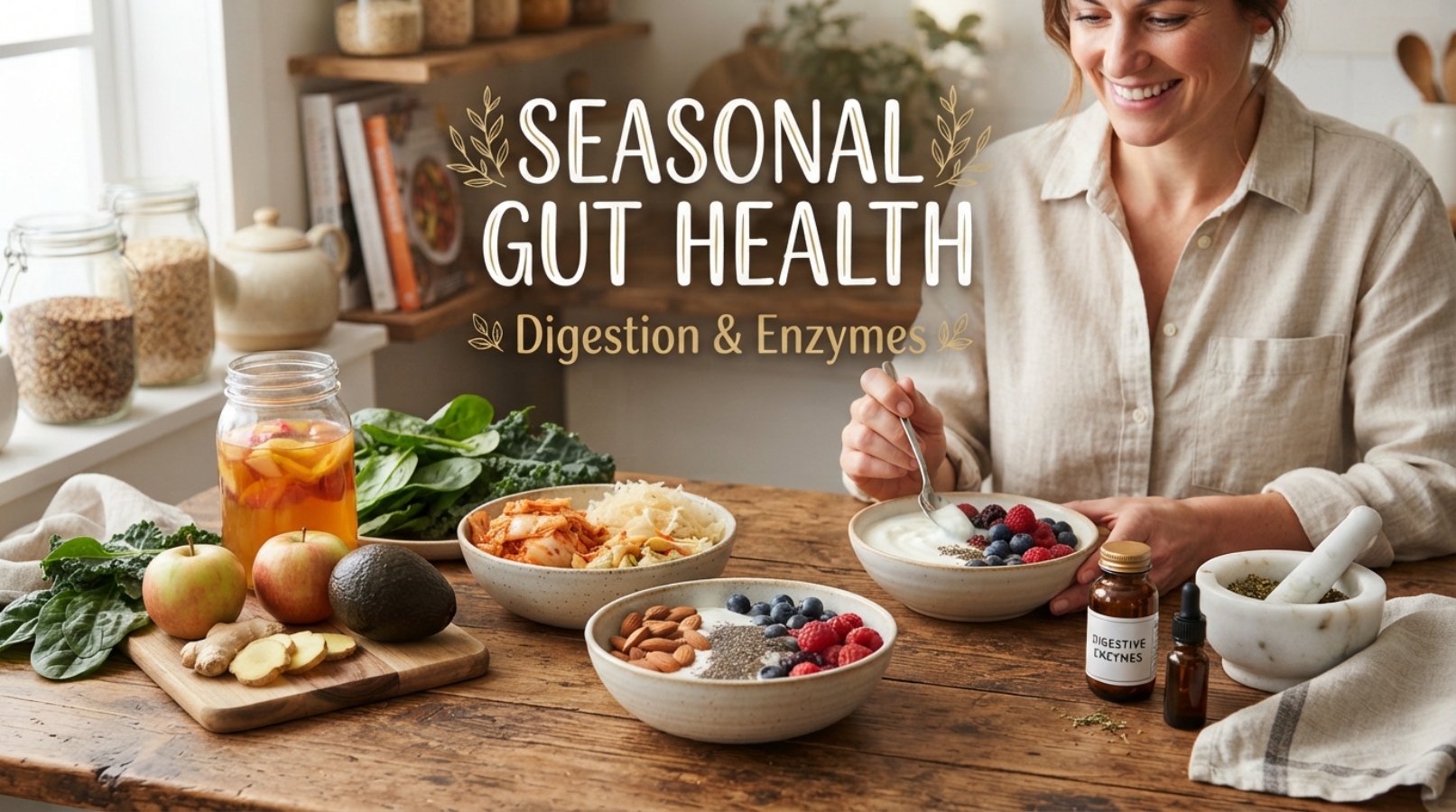
Seasonal Gut Health starts with understanding how digestion and enzymes work together to turn food into nutrients your body can use. Your digestive system handles this process every day, while your meals, activity, hydration, and routines can shift with the seasons. Gutrova’s Copy Button also lets you quickly save or share the practical tips you find most useful.
Quick Answer: What Are Digestion and Enzymes?
Digestion is the process your body uses to break food into smaller components so it can absorb and use nutrients. Digestive enzymes are proteins that help break down carbohydrates, proteins, and fats into smaller molecules during this process. Your mouth, stomach, pancreas, and small intestine all contribute digestive juices and enzymes.
Seasonal changes don’t switch your digestive enzymes on or off. However, your eating patterns can change throughout the year. Larger holiday meals, summer cookouts, travel, changes in fiber intake, and different activity levels can all make your usual digestive routine feel different.
Seasonal Gut Health Begins With the Digestive Process
Digestion starts before food reaches your stomach.
When you chew, your teeth physically break food into smaller pieces. At the same time, saliva moistens food and contains an enzyme that begins breaking down starches. After you swallow, muscle contractions called peristalsis move food through your digestive tract.
Once food reaches the stomach, stomach muscles mix it with digestive juices. Stomach acid and enzymes begin breaking down food, particularly proteins.
The small intestine then takes over much of the work. Digestive juices from the pancreas and small intestine combine with bile from the liver to continue breaking down carbohydrates, proteins, and fats. Most nutrient absorption happens in the small intestine.
That process is remarkably coordinated.
You don’t have to consciously tell your pancreas to release enzymes after every meal. Your digestive system uses nerves and hormones to help coordinate the timing of digestive juices, movement, and nutrient absorption.
Seasonal Gut Health and the Main Digestive Enzymes
Different enzymes work on different parts of food. Think of them as specialized helpers rather than one universal “digestion enzyme.”
Amylase Helps Break Down Carbohydrates
Amylase begins working in your mouth and continues as carbohydrate digestion progresses through the digestive tract.
It helps break down starches into smaller sugars that your body can process.
That’s one reason digestion doesn’t begin when food reaches your stomach. It starts with the first bite.
Proteases Work on Protein
Proteases help break proteins into smaller components called amino acids.
Protein-rich foods such as eggs, fish, poultry, meat, dairy, beans, lentils, nuts, and seeds all require protein digestion before the body can use their amino acids.
The stomach and pancreas contribute enzymes involved in protein digestion.
Lipase Helps Digest Fat
Lipase helps break dietary fats into smaller components.
Fat digestion also involves bile, which the liver produces. The gallbladder stores bile between meals and releases it into the small intestine when needed.
This matters during seasonal eating because richer meals often appear around holidays, celebrations, vacations, and cookouts. A large meal contains more than one nutrient, so your digestive system coordinates several processes at once.
Seasonal Gut Health Doesn’t Require “Boosting” Enzymes
The phrase “digestive enzyme boost” appears frequently in wellness marketing. It can make digestion sound like something healthy people need to increase artificially.
For most people, that’s not how digestion works.
Your body naturally produces digestive enzymes in several parts of the digestive system. Cleveland Clinic notes that people without certain chronic health conditions can usually get the enzymes they need from their normal digestive system.
So, instead of constantly trying to increase enzymes, focus on habits that support a balanced eating routine.
Eat slowly when you can. Chew food thoroughly. Drink enough fluids. Include a variety of foods. Stay active.
Those basics are far more practical than chasing a new supplement every season.
Seasonal Gut Health and Food Choices
Your digestive system doesn’t need a completely different menu in spring, summer, fall, and winter.
However, seasonal foods can make it easier to add variety.
Spring
Spring produce can bring fresh color and texture to meals.
Try leafy greens, peas, asparagus, strawberries, radishes, carrots, and fresh herbs. Add them to omelets, salads, grain bowls, soups, or simple side dishes.
For example, a breakfast of eggs with spinach and whole-grain toast gives you a straightforward mix of protein, carbohydrates, and plant foods.
Summer
Summer often means lighter meals, outdoor eating, travel, and more time in the heat.
Hydration becomes especially practical. Water is the simplest choice, while water-rich foods such as watermelon, cucumbers, berries, tomatoes, oranges, and peaches can also fit into meals and snacks.
At a cookout, you don’t need to skip the burger or grilled foods. Instead, add vegetables, beans, corn, fruit, or a whole-grain side.
Fall
Fall naturally lends itself to soups, stews, oats, beans, lentils, squash, apples, pears, and sweet potatoes.
These foods can make satisfying meals while adding fiber and other nutrients.
One easy option is a lentil and vegetable soup. Make enough for several meals, then change the flavor with herbs, lemon, or spices.
Winter
Winter can bring heavier meals, holiday gatherings, travel, and less outdoor activity.
Keep simple foods available so your routine doesn’t depend entirely on takeout. Frozen vegetables, oats, beans, whole grains, nuts, seeds, fruit, and plain yogurt are useful staples.
You can still enjoy holiday meals. The goal is to return to your normal eating pattern afterward rather than trying to “detox” the next day.
Seasonal Gut Health and Fiber
Fiber is different from carbohydrates that digestive enzymes completely break down.
Some fibers pass through the upper digestive tract without being fully digested. Once they reach the large intestine, gut bacteria can interact with certain types of fiber. NIDDK explains that bacteria in the large intestine help break down remaining nutrients.
That makes fiber an important part of the bigger digestive picture.
Good sources include:
- Beans and lentils
- Oats
- Whole grains
- Berries
- Pears
- Apples
- Vegetables
- Nuts
- Seeds
However, suddenly adding a large amount of fiber can cause gas or bloating for some people.
A gradual approach usually makes more sense. Add one or two fiber-rich foods to your usual meals instead of changing your entire diet overnight.
Seasonal Gut Health and Fermented Foods
Fermented foods often appear in gut-health conversations because some contain live microorganisms.
Examples include yogurt, kefir, kimchi, sauerkraut, and certain fermented vegetables.
Still, fermentation alone doesn’t guarantee that a food contains live cultures when you eat it. Processing methods can affect the microorganisms that remain in a finished product.
For that reason, check the label if you’re specifically looking for live or active cultures.
You also don’t need a refrigerator full of fermented foods. A serving of yogurt with breakfast or a small amount of fermented vegetables alongside lunch can be an easy starting point.
Seasonal Gut Health: What Your Daily Routine Can Change
Digestion isn’t only about food chemistry.
Your daily routine also affects how regularly you eat, move, sleep, and use the bathroom.
Eat Without Rushing
Have you ever finished a meal and realized you barely noticed eating it?
I’ve found that slowing down even slightly can make meals feel more enjoyable. Sit down when possible, chew your food well, and give yourself a few minutes without rushing.
This isn’t about turning every meal into a formal mindfulness exercise. It’s simply about giving eating some attention.
Keep Moving
Physical activity supports normal digestive function and can help maintain regular bowel habits.
A short walk after dinner is a practical choice. During colder months, indoor walking, stairs, stretching, or a home workout can keep the habit alive.
You don’t need a perfect exercise routine to avoid spending the entire day sitting.
Keep Hydration Steady
Fluid needs can change with weather, activity, and individual circumstances.
Summer heat may make hydration more obvious. In winter, however, people sometimes drink less because they aren’t sweating as much.
Keep water within reach throughout the day rather than trying to catch up all at once.
Digestion and Enzymes: Do You Need Supplements?
This is where a little caution helps.
Digestive enzyme supplements are marketed for everything from occasional bloating to general digestive support. Yet taking an enzyme supplement isn’t automatically necessary just because you sometimes feel uncomfortable after eating.
Some people have genuine problems producing or using specific digestive enzymes. For example, exocrine pancreatic insufficiency occurs when the small intestine can’t digest food completely because of problems with pancreatic digestive enzymes.
In those situations, doctors may prescribe pancreatic enzyme replacement therapy, often taken with meals or snacks.
That’s very different from casually adding an over-the-counter enzyme product to an otherwise healthy routine.
If you repeatedly experience digestive problems, it’s more useful to understand the cause than to assume you need more enzymes.
Seasonal Gut Health and Your Personal Patterns
Digestive comfort isn’t identical for everyone.
A huge bowl of beans may be perfectly comfortable for one person and cause noticeable gas for another. The same can happen with dairy, very rich meals, spicy foods, artificial sweeteners, or large portions.
That doesn’t automatically make a particular food unhealthy.
Instead, look for patterns.
Try keeping a simple record for several days:
Food: What did you eat?
Portion: Was it a small, average, or large meal?
Timing: When did you eat?
Symptoms: How did you feel afterward?
Routine: Did travel, stress, poor sleep, or unusual activity occur?
Patterns are much more useful than judging one meal.
For people with conditions such as IBS, dietary changes can affect symptoms differently, so an individualized approach may be appropriate.
A Simple Seasonal Gut Health Meal Formula
You don’t need a complicated meal plan.
Instead, build most meals around four pieces:
1. A protein source
Eggs, fish, poultry, tofu, beans, lentils, yogurt, or another protein you enjoy.
2. A fiber-rich plant food
Vegetables, fruit, beans, whole grains, nuts, or seeds.
3. A satisfying carbohydrate
Potatoes, oats, rice, whole grains, fruit, or another carbohydrate that works for you.
4. A source of healthy fat
Avocado, nuts, seeds, olive oil, or other unsaturated fat sources.
Then adjust the ingredients according to the season.
A summer plate might include tomatoes, berries, cucumbers, and grilled foods. A winter version could feature roasted squash, potatoes, lentils, and warm vegetables.
The structure stays familiar while the ingredients change.
Common Digestion and Enzymes Mistakes to Avoid
Assuming Every Digestive Problem Means Low Enzymes
Bloating, gas, fullness, or changes in bowel habits can have many possible causes.
Don’t automatically assume an enzyme deficiency.
Taking Supplements Without a Clear Reason
More enzymes aren’t necessarily better. Supplements can be useful in specific medical conditions, but that doesn’t mean everyone needs them.
Eating Very Large Meals Because You “Skipped” Earlier Meals
A packed schedule can lead to extreme hunger later.
Instead, try keeping simple meals or snacks available so you don’t arrive at dinner starving.
Changing Fiber Too Quickly
A sudden increase can leave some people uncomfortable. Build gradually and give your digestive system time to adjust.
Turning Seasonal Eating Into a Strict Diet
Seasonal food should add variety, not create another set of food rules.
Enjoy the foods you like. Keep the basics steady.
Seasonal Gut Health FAQ
What do digestive enzymes do?
Digestive enzymes help break down carbohydrates, proteins, and fats into smaller components that your body can absorb and use. They are produced in several parts of the digestive system, including the mouth, stomach, pancreas, and small intestine.
Does Seasonal Gut Health change how enzymes work?
The basic digestive process remains the same throughout the year. However, seasonal changes in meal size, food choices, hydration, travel, activity, and daily routines can affect how your digestion feels.
Can food naturally provide digestive enzymes?
Some foods contain enzymes, but eating a food with an enzyme doesn’t mean that enzyme will simply remain active throughout your digestive tract. Your body already produces digestive enzymes as part of normal digestion.
Should everyone take digestive enzyme supplements?
No. Most healthy people naturally produce the enzymes needed to digest their food. Enzyme supplements may have a role in specific medical conditions, such as exocrine pancreatic insufficiency, under medical guidance.
Why do I sometimes feel different after seasonal meals?
Portion size, food composition, hydration, activity, travel, and changes in routine can all affect digestive comfort. Instead of blaming one ingredient immediately, look for repeated patterns.
Final Thoughts on Seasonal Gut Health
Seasonal Gut Health isn’t about forcing your digestive system to work harder or constantly searching for ways to “boost” digestion and enzymes. Your body already has a sophisticated system for breaking down food, absorbing nutrients, and moving waste through the digestive tract.
Support that system with practical habits: eat a varied diet, include fiber-rich foods, drink enough fluids, stay active, slow down at meals, and allow your seasonal menu to change naturally.
And if you discover a tip that fits your routine, use Gutrova’s Copy Button save or share it. The best gut-health habits are often the simple ones you can comfortably repeat from one season to the next.
The article’s core digestive-science claims are based on NIH/NIDDK information about the digestive tract, stomach acid, pancreatic enzymes, bile, nutrient absorption, and the role of gut bacteria, with additional enzyme guidance from Cleveland Clinic. NIDDK also distinguishes ordinary digestion from conditions such as exocrine pancreatic insufficiency, where pancreatic enzyme replacement may be medically appropriate.
This version uses Seasonal Gut Health as the exact SEO keyword while treating digestion and enzymes as the core subject and supporting semantic phrase, so the article remains natural rather than forcing two competing primary keywords.










1 thought on “Seasonal Gut Health: Digestion and Enzymes”