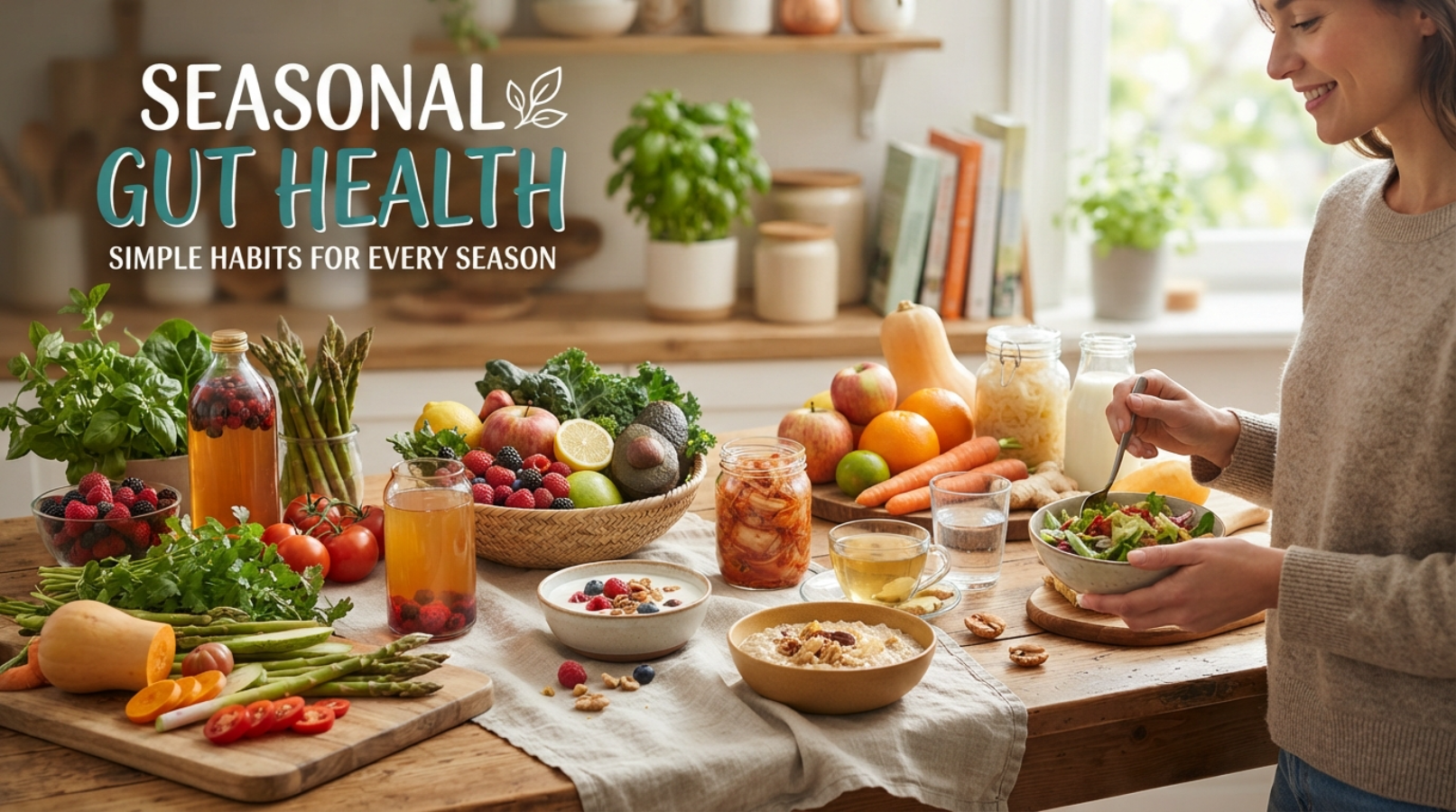
Seasonal Gut Health can be surprisingly simple when you focus on the everyday habits that support digestion all year.
Your meals, hydration, activity, sleep, and daily routine may shift as the weather changes, but you don’t need a completely different diet every few months. Gutrova’s Copy Button makes it easy to save or share the tips that fit your routine.
Quick Answer: What Is Seasonal Gut Health?
Seasonal Gut Health means adapting everyday eating and lifestyle habits as the seasons change while keeping the basics consistent. That includes eating a varied diet with fiber-rich foods, drinking enough fluids, staying active, getting adequate sleep, and paying attention to foods that agree with you.
The goal isn’t to chase seasonal “superfoods” or follow a complicated gut reset. Instead, use seasonal produce and simple routine changes to keep your meals varied and your habits practical.
Why Seasonal Gut Health Starts With Food Quality
A change in season can change what’s available at the grocery store, what you feel like eating, and how much time you spend outdoors. Those changes can be useful opportunities to add variety to your diet.
Food quality doesn’t mean every meal has to be perfect. A more useful approach is to look at the overall pattern.
For example, a breakfast of oats, berries, nuts, and yogurt provides several different foods in one bowl. At lunch, you might have a grain bowl with vegetables and beans. Then, dinner could be roasted vegetables with potatoes and a protein source.
That kind of variety gives you more opportunities to eat fiber-rich foods and different nutrients.
Harvard Health highlights fiber-rich foods such as legumes, whole grains, vegetables, berries, nuts, and seeds as important parts of a diet that supports gut health.
Seasonal Gut Health in Spring: Add Fresh Variety
Spring can be a good time to refresh your grocery list.
Look for foods such as:
- Leafy greens
- Peas
- Asparagus
- Strawberries
- Radishes
- Carrots
- Fresh herbs
- Broccoli
You don’t need to turn every meal into a giant salad. Instead, add spring produce to foods you already enjoy.
Try spinach in scrambled eggs, peas in a grain bowl, strawberries with plain yogurt, or roasted asparagus alongside dinner.
A Simple Spring Meal
For breakfast, try oatmeal topped with strawberries and walnuts.
At lunch, make a chicken, chickpea, or tofu bowl with greens and whole grains. Then, keep dinner simple with roasted vegetables, a baked potato, and your preferred protein.
The point is variety, not perfection.
Seasonal Gut Health in Summer: Hydration Matters
Summer brings heat, outdoor activities, travel, cookouts, and sometimes a noticeable change in appetite.
Hydration deserves extra attention during hot weather and physical activity. Water can support normal digestion and help prevent dehydration, while fluids also work with fiber to help keep stool softer.
Keep a water bottle nearby instead of waiting until you’re very thirsty.
Summer foods can help, too. Water-rich choices such as watermelon, berries, cucumbers, tomatoes, peaches, oranges, and leafy greens can fit easily into meals and snacks.
Don’t Forget Fiber During Cookout Season
Summer eating can sometimes become a rotation of burgers, chips, desserts, and sugary drinks.
You don’t have to avoid those foods. Instead, add fiber-rich choices around them.
A grilled meal could include corn, beans, a vegetable salad, fruit, or a whole-grain side. That small change can make the meal more varied without taking the fun out of summer eating.
Seasonal Gut Health in Fall: Lean Into Comfort Foods
Fall is when many people naturally reach for warm, hearty meals.
That’s not a problem. In fact, soups, stews, roasted vegetables, oats, beans, lentils, and whole grains can make excellent cool-weather staples.
Try adding:
- Pumpkin
- Sweet potatoes
- Apples
- Pears
- Winter squash
- Lentils
- Black beans
- Oats
- Brussels sprouts
One of my favorite practical approaches is to make a large pot of vegetable-and-lentil soup. It gives you an easy lunch for several days, and you can change the flavor with herbs, spices, or a squeeze of lemon.
Build a Better Fall Bowl
Start with a whole grain such as quinoa or brown rice. Add roasted squash, greens, chickpeas, pumpkin seeds, and a simple dressing.
It’s warm, filling, and easy to adjust based on what’s already in your kitchen.
Seasonal Gut Health in Winter: Keep the Basics Going
Winter can disrupt even a well-established routine.
Cold weather may mean less outdoor activity. Holiday meals may become larger. Travel can change your eating schedule. And shorter days can affect your usual sleep and activity patterns.
NIDDK notes that changes in routine, travel, food intake, hydration, and physical activity can affect bowel habits and may contribute to constipation. (NIDDK)
So, rather than trying to “fix” everything after the holidays, keep a few basics in place.
Keep water available. Eat fruits and vegetables regularly. Include beans, oats, whole grains, nuts, and seeds when they work for you. Also, find indoor ways to move when outdoor walks aren’t appealing.
Seasonal Gut Health Needs Enough Fiber
Fiber deserves attention in every season.
NIDDK states that adults generally need about 22 to 34 grams of fiber a day, depending on age and sex. However, your needs and tolerance can vary. NIDDK also recommends increasing fiber gradually because a sudden increase can cause gas or bloating.
A practical way to increase fiber is to add one source at a time.
For example:
Breakfast: oats and berries
Lunch: beans or lentils
Snack: pear with nuts
Dinner: vegetables and a whole grain
Dessert: fruit with yogurt
You don’t need to count every gram to build a fiber-rich eating pattern.
If your current diet contains very little fiber, start slowly. Drink enough fluids as you increase it, too.
Seasonal Gut Health and Fermented Foods
Fermented foods can add variety to meals throughout the year.
Common choices include:
- Yogurt
- Kefir
- Sauerkraut
- Kimchi
- Miso
- Some fermented vegetables
However, fermentation doesn’t automatically mean a product contains live cultures. Some foods undergo additional processing that can reduce or eliminate living microorganisms. Checking the label for live or active cultures can help when that’s what you’re looking for.
Start with familiar foods.
For example, add plain yogurt to breakfast or use a small serving of fermented vegetables with lunch. You don’t need to eat several fermented foods every day to have a varied diet.
Seasonal Gut Health Isn’t Just About Food
Your digestive routine involves more than what’s on your plate.
Keep Moving
Regular physical activity can support bowel regularity. NIDDK includes physical activity among the lifestyle steps that may help prevent or relieve constipation.
That doesn’t mean you need an intense workout every day.
A brisk walk, bike ride, workout, swim, or short movement break can all help you stay active. During winter, walking indoors, climbing stairs, or doing a home workout can keep the habit going.
Protect Your Sleep
Sleep also belongs in a gut-health routine.
Harvard Health includes adequate sleep, stress management, hydration, and physical activity among practical habits associated with gut health.
Try to keep your sleep and wake times reasonably consistent, even when your seasonal schedule changes.
Make Meals Less Rushed
Eating quickly between errands isn’t always avoidable. Still, slowing down when you can may make meals feel more comfortable and enjoyable.
Sit down. Put the phone aside for a few minutes. Chew your food instead of treating lunch like another task on your to-do list.
Small changes count.
Seasonal Gut Health and Your Personal Food Patterns
Not everyone responds to the same foods in the same way.
That’s particularly important for people who notice recurring digestive symptoms after certain meals. NIDDK notes that dietary changes can affect people with IBS differently, and individualized approaches may be appropriate.
For example, one person may enjoy a large bean salad without trouble, while another may feel uncomfortable after the same meal.
That doesn’t automatically mean beans are “bad for the gut.” It may simply mean portion size, preparation, overall diet, or individual tolerance matters.
If you’re trying to understand your own pattern, keep a simple food and symptom journal for a short period. Record the meal, portion, timing, and how you felt afterward.
Look for repeated patterns rather than judging one meal.
A Seasonal Gut Health Grocery Formula
Instead of creating a completely new shopping list every season, use a simple formula.
Pick:
- 2–3 fruits
- 3–5 vegetables
- 1–2 whole grains
- 1–2 beans or lentils
- Nuts or seeds
- A protein source
- A fermented food you enjoy
- Easy hydration options
Then rotate the specific foods as seasons change.
For example, strawberries and leafy greens might take center stage in spring. In fall, apples, pears, squash, and sweet potatoes can take their place.
This approach makes food quality easier to manage because you’re building variety into the grocery trip itself.
What a Realistic Day of Seasonal Gut Health Looks Like
Here’s a simple example without turning it into a strict meal plan.
Morning:
Oatmeal with berries, chia seeds, and yogurt.
Mid-morning:
Water and a piece of fruit.
Lunch:
A grain bowl with chickpeas, greens, roasted vegetables, and avocado.
Afternoon:
A handful of nuts and another glass of water.
Dinner:
Roasted seasonal vegetables, a potato or whole grain, and a protein source.
After dinner:
A relaxed walk.
Evening:
A consistent wind-down routine before bed.
You can change almost everything in this example and still keep the basic structure.
That’s the point.
Common Seasonal Gut Health Mistakes
Changing Too Much at Once
A sudden diet overhaul can be difficult to maintain. It may also make it harder to figure out which change affected your digestion.
Instead, make one or two adjustments at a time.
Increasing Fiber Too Quickly
More fiber isn’t always better when you add it too fast. Gradual increases can give your digestive system time to adjust.
Forgetting Water
A fiber-rich diet and adequate fluid intake work together. If you’re eating more fiber, pay attention to hydration as well.
Treating Seasonal Foods as Magic Ingredients
Pumpkin, berries, leafy greens, fermented foods, and other seasonal choices can be nutritious additions. Still, no single food needs to carry your entire gut-health routine.
Variety matters more than hype.
Becoming Too Restrictive
A healthy diet should leave room for enjoyment.
If pizza night with friends happens once in a while, you don’t need to compensate by skipping meals the next day. Return to your usual routine instead.
Seasonal Gut Health FAQ
What is the best season for gut health?
There isn’t one “best” season for gut health. Each season offers different foods and lifestyle opportunities. The useful goal is to maintain consistent basics while taking advantage of seasonal variety.
Does seasonal eating improve digestion?
Seasonal eating can make it easier to add variety to your diet, but the season itself doesn’t guarantee better digestion. Focus on fiber-rich foods, adequate fluids, overall food quality, and foods you tolerate well.
How much fiber should I eat each day?
NIDDK says adults generally need 22 to 34 grams of fiber daily, depending on age and sex. Increase fiber gradually and drink enough fluids.
Are fermented foods good for Seasonal Gut Health?
Fermented foods can be part of a varied diet. However, not all fermented foods contain live cultures, so check labels if live and active cultures are important to you. (Harvard Health)
Can travel affect digestion?
Yes. Changes in routine, diet, hydration, activity, and bathroom habits during travel can affect bowel patterns. Keeping meals, fluids, movement, and bathroom routines reasonably consistent may help.
Final Thoughts on Seasonal Gut Health
Seasonal Gut Health doesn’t require a new diet every few months. Instead, build a reliable foundation around food quality, fiber-rich foods, hydration, movement, sleep, and meals that fit your life.
Then let the seasons add variety.
Choose berries and fresh greens in warmer months, enjoy soups and squash when the weather cools, and keep simple staples available all year. Most of all, pay attention to your own digestive patterns rather than chasing every new gut-health trend.
When you find a tip that genuinely fits your routine, use Gutrova’s Copy Button to save or share it. A few practical habits repeated consistently can be much easier to live with than an elaborate seasonal plan.
The health guidance in the article is supported primarily by NIH/NIDDK resources on fiber, hydration, physical activity, constipation, and individualized dietary approaches, plus Harvard Health guidance on fiber, fermented foods, sleep, stress, and physical activity.
This version uses Seasonal Gut Health as the exact SEO target and keeps food quality naturally integrated as a supporting concept, rather than creating awkward keyword repetition.












1 thought on “Seasonal Gut Health: Simple Habits for Every Season”