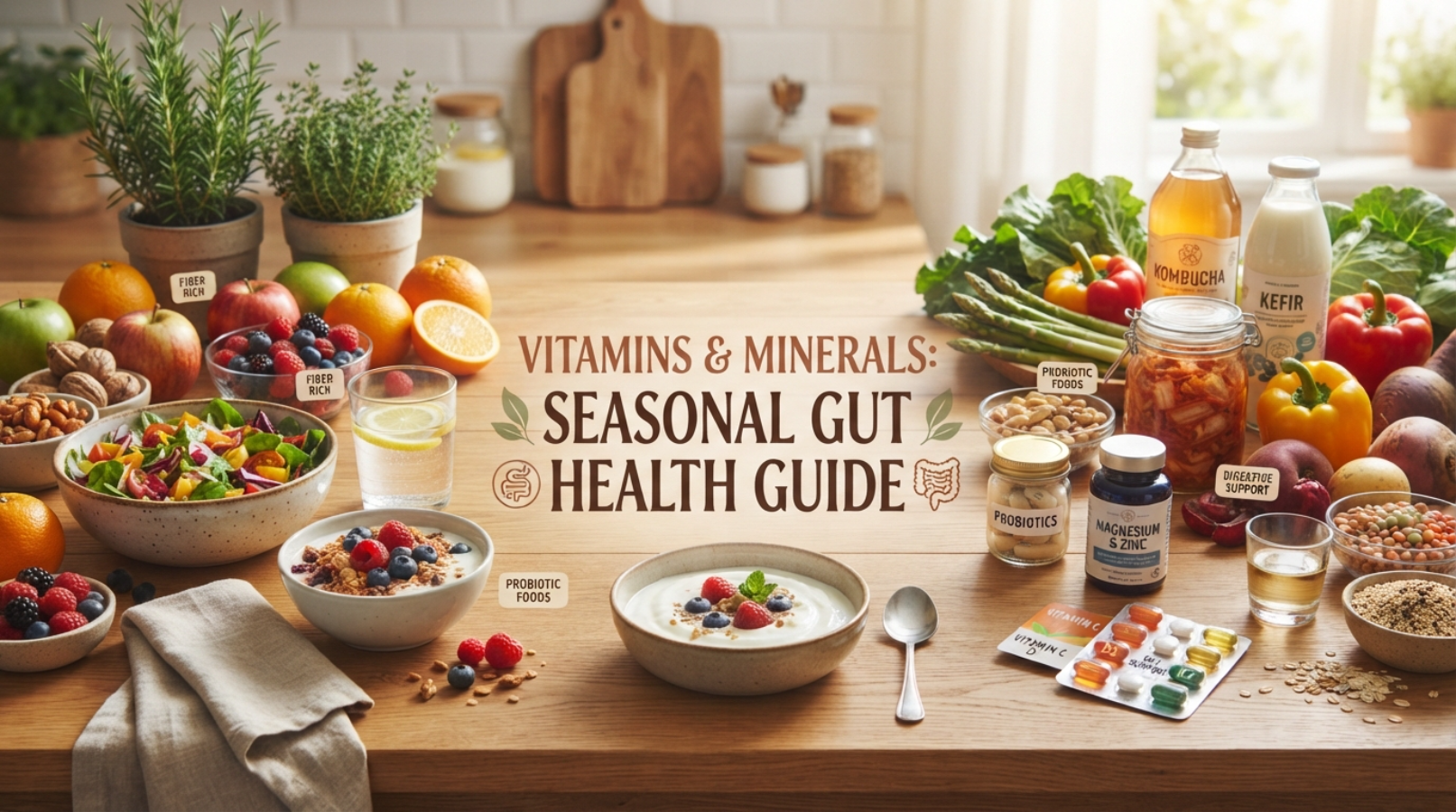
Vitamins & Minerals are part of the nutrition your body needs to keep everyday systems working properly, and seasonal foods can make getting them from meals more enjoyable. Instead of chasing individual nutrients, focus on food quality, variety, and meals built from colorful produce, whole grains, legumes, nuts, seeds, and suitable protein sources. With Gutrova’s Copy Button, you can also save or share the seasonal food ideas that make sense for your next grocery trip.
Quick Answer: How Do Vitamins & Minerals Fit Into Gut Health?
Vitamins and minerals support many basic functions throughout the body, while a varied diet also supplies fiber and other plant compounds that are important for digestive health. Good food sources include fruits, vegetables, beans, lentils, whole grains, nuts, seeds, dairy or fortified alternatives, seafood, eggs, and other nutrient-rich foods.
Seasonal eating can help you rotate these foods throughout the year. For example, berries and leafy greens may feature heavily in summer meals, while winter brings foods such as citrus, cabbage, sweet potatoes, beans, and squash.
The goal isn’t to collect every nutrient separately. Instead, build meals with a variety of foods so your diet provides many nutrients at once. Harvard Health notes that a broad, healthy diet is generally the best starting point for meeting vitamin and mineral needs.
Why Vitamins & Minerals Matter to Your Daily Diet
Vitamins and minerals are micronutrients, meaning your body needs them in smaller amounts than carbohydrates, protein, and fat.
They still matter.
Vitamin C, for example, plays several roles in normal body function. Calcium supports bones and teeth. Iron helps with oxygen transport. Magnesium participates in many body processes. Potassium is important for normal muscle and nerve function.
At the same time, these nutrients don’t work in isolation. Foods that contain vitamins and minerals can also provide fiber, protein, healthy fats, and other plant compounds.
That is one reason food quality matters.
Mayo Clinic recommends a varied eating pattern that includes fruits, vegetables, whole grains, legumes, nuts, seeds, lean protein, dairy or suitable alternatives, and healthy fats. It also emphasizes choosing foods that fit your tastes, lifestyle, and budget.
So, rather than asking, “Which vitamin should I take?” a more useful first question may be, “What does my usual plate look like?”
Vitamins & Minerals in Spring Foods
Spring offers plenty of opportunities to bring fresh produce back into regular meals.
Depending on what grows locally and what your grocery store carries, consider:
- Spinach
- Asparagus
- Peas
- Strawberries
- Broccoli
- Radishes
- Carrots
- Fresh herbs
- Avocados
- Plain yogurt
Leafy greens can provide several micronutrients while also contributing fiber. Broccoli is another flexible choice that works in stir-fries, grain bowls, soups, and roasted vegetable dishes.
Strawberries add vitamin C along with other plant compounds. Meanwhile, yogurt can contribute nutrients such as calcium and, depending on the product, live cultures.
Try a spring breakfast of plain yogurt, strawberries, oats, and walnuts. For lunch, add spinach and chickpeas to a grain bowl. Then use asparagus or peas alongside dinner.
Nothing needs to be complicated.
Vitamins & Minerals in Summer Produce
Summer makes it easier to add color to your meals.
Good options include:
- Tomatoes
- Bell peppers
- Berries
- Peaches
- Melons
- Zucchini
- Cucumbers
- Corn
- Leafy greens
- Avocados
- Beans
Color isn’t a perfect measure of nutrition, but it can be a useful reminder to vary your produce.
For example, tomatoes and peppers can add vitamin C and other plant compounds. Leafy greens provide several vitamins and minerals. Avocado contributes nutrients along with unsaturated fat.
Summer fruit can also make snacks easier. Keep berries, peaches, or melon ready to eat instead of relying entirely on packaged snacks.
During hot weather, don’t forget fluids. Water is a simple choice, particularly during outdoor activity.
A Simple Summer Plate
Try a bowl with quinoa, black beans, tomatoes, corn, cucumber, avocado, and fresh herbs.
You get plant variety, fiber, carbohydrates, protein, and healthy fats in one meal. You can also swap ingredients based on what’s available.
That’s the beauty of seasonal eating. The structure stays familiar while the ingredients change.
Vitamins & Minerals in Fall Favorites
Fall brings foods that work well in warm, comforting meals.
Look for:
- Pumpkin
- Sweet potatoes
- Winter squash
- Apples
- Pears
- Broccoli
- Brussels sprouts
- Cauliflower
- Spinach
- Lentils
- Oats
- Walnuts
- Pumpkin seeds
Sweet potatoes and winter squash are especially useful in fall cooking. They can become soups, roasted sides, grain-bowl toppings, or simple mashed dishes.
Pumpkin seeds are another easy addition. Sprinkle them over oatmeal, yogurt, salads, or roasted vegetables.
Whole grains deserve attention, too. Harvard Health identifies foods such as whole grains, beans, nuts, fruits, and vegetables as useful sources of vitamins, minerals, fiber, and other beneficial compounds.
For breakfast, try oats with diced apple, pumpkin seeds, walnuts, and cinnamon. It’s an easy way to combine several food groups without needing a complicated recipe.
Vitamins & Minerals in Winter Foods
Winter can challenge fresh-produce variety, but your options are broader than you might think.
Frozen vegetables and fruit can remain useful. So can canned beans, lentils, potatoes, cabbage, carrots, citrus fruit, oats, and whole grains.
Keep these foods in rotation:
- Oranges and other citrus
- Frozen berries
- Cabbage
- Carrots
- Sweet potatoes
- Broccoli
- Lentils
- Beans
- Oats
- Brown rice
- Walnuts
- Pumpkin seeds
- Plain yogurt
Citrus fruits are well known for vitamin C. Sweet potatoes and leafy greens can contribute vitamin A-related carotenoids, while nuts and seeds provide minerals and healthy fats.
Harvard Health’s food-source guide highlights many everyday foods as sources of vitamins and minerals, including carrots and sweet potatoes for vitamin A, citrus and peppers for vitamin C, nuts and seeds for vitamin E, and legumes and whole grains for several minerals.
A warm lentil soup with carrots, cabbage, tomatoes, and whole-grain bread can therefore be much more than a comforting winter meal. It can also bring several nutrient sources together.
Vitamins & Minerals That Pair Naturally With Fiber
Gut health isn’t just about micronutrients.
Fiber deserves a place in the conversation because many fiber-rich foods also provide vitamins, minerals, and other useful compounds.
Think about beans.
They provide fiber and can also contribute minerals such as iron and magnesium. Leafy greens offer fiber along with several micronutrients. Nuts and seeds contribute fiber, minerals, healthy fats, and other nutrients.
This overlap makes food-based nutrition practical.
You don’t need to build one meal around vitamin C, another around magnesium, and a third around potassium. Instead, eat a varied selection of foods and let those nutrients overlap naturally.
Harvard Health notes that diets emphasizing fruits, vegetables, legumes, whole grains, nuts, and seeds can provide a broad range of vitamins, minerals, fiber, and plant compounds.
A Simple Way to Build a Nutrient-Rich Plate
When I’m planning a meal, I find it easier to think about food groups rather than individual nutrients.
Start with a vegetable or fruit.
Then add a fiber-rich carbohydrate such as beans, oats, potatoes, brown rice, barley, or another whole grain.
Next, choose a protein.
Finally, add a source of healthy fat when appropriate.
For example:
Breakfast: oatmeal + berries + walnuts + plain yogurt
Lunch: brown rice + chickpeas + spinach + avocado
Dinner: roasted sweet potato + broccoli + salmon + olive oil
Snack: apple + peanut butter
This doesn’t guarantee that you’ve met every nutrient target. However, it creates a strong foundation for a varied diet.
The same principle works across seasons. Simply change the produce.
Vitamins & Minerals From Ordinary Grocery Foods
You don’t need a specialty grocery store to improve food quality.
A typical grocery trip can provide plenty of useful options:
Produce: apples, oranges, berries, carrots, broccoli, spinach, peppers, cabbage, sweet potatoes
Whole grains: oats, barley, brown rice, whole-grain bread, whole-grain pasta
Legumes: lentils, chickpeas, black beans, kidney beans
Protein: eggs, fish, poultry, tofu, yogurt
Nuts and seeds: walnuts, almonds, pumpkin seeds, chia seeds
Healthy fats: avocado, olive oil, nuts, seeds
Frozen and canned foods can fit, too.
Frozen vegetables can make weeknight meals easier. Canned beans can save cooking time. Fortified foods can provide certain nutrients as well.
In fact, Mayo Clinic specifically recommends choosing foods that you can find in your local grocery store rather than making healthy eating depend on specialty products.
That’s a useful rule for real life.
Do You Need Vitamin and Mineral Supplements?
Supplements can have a place in nutrition, but they aren’t automatically better than food.
Harvard Health’s current guidance emphasizes getting vitamins and minerals from food as the starting point for most people. It also notes that supplements may be useful in certain situations, such as a confirmed deficiency or circumstances that make it difficult to obtain a nutrient through food.
The key is to avoid treating supplements like a substitute for a varied diet.
High doses can also be inappropriate for some nutrients. That’s particularly relevant for fat-soluble vitamins, which the body can store.
So, if you’re considering a high-dose supplement, it’s sensible to discuss it with a healthcare professional who knows your individual circumstances.
Vitamins & Minerals: Fresh Versus Frozen
Fresh produce often gets more attention, but frozen foods deserve a place in a practical kitchen.
Frozen vegetables can help you keep produce available during busy weeks. Frozen berries work well in oatmeal, smoothies, yogurt bowls, and sauces.
The important question is how the food fits into your overall diet.
For example, I’d rather see someone regularly eating frozen broccoli than repeatedly buying fresh broccoli that spoils before it gets cooked.
Convenience can support food quality when it helps you eat nutritious foods consistently.
How Cooking Can Fit Into Seasonal Nutrition
Cooking doesn’t have to become a weekend project.
Try batch-preparing one or two ingredients.
Roast a tray of vegetables. Cook a pot of lentils. Prepare a container of brown rice. Wash fruit before putting it away.
Then combine those foods in different ways.
Roasted vegetables can go into wraps, bowls, omelets, and soups. Lentils can become a salad topping one day and part of a stew the next.
This approach also makes seasonal eating easier because you can prepare what’s available and use it across several meals.
A One-Day Seasonal Example
Here’s how a simple day could come together.
Breakfast: oats with strawberries, chia seeds, walnuts, and plain yogurt.
Lunch: chickpea and spinach bowl with brown rice, cucumber, tomatoes, and avocado.
Snack: orange and a handful of almonds.
Dinner: roasted sweet potato, broccoli, grilled salmon, and a simple side salad.
Drink: water throughout the day.
This is only an example, not a required menu.
Your meals may look completely different based on your preferences, culture, budget, and digestion. That’s fine. The useful part is the variety of food groups.
Common Vitamins & Minerals Mistakes
Chasing one nutrient
It’s easy to hear about magnesium, vitamin D, vitamin C, or another nutrient and assume you need to focus on it alone.
However, your body needs many micronutrients.
A broad eating pattern is usually more practical than building your entire diet around one nutrient.
Treating supplements like food replacements
A supplement can provide a specific nutrient, but it doesn’t replace the fiber, protein, healthy fats, and plant compounds found in many whole foods.
Buying expensive “health” products
Price isn’t a reliable measure of nutritional value.
Beans, oats, potatoes, carrots, cabbage, eggs, and frozen vegetables can all be useful foods.
Forgetting variety
Eating the same “healthy” meal every day isn’t necessary.
Rotate your produce, grains, legumes, nuts, and protein sources instead.
FAQ About Vitamins & Minerals and Gut Health
Which foods are rich in Vitamins & Minerals?
Many everyday foods provide multiple micronutrients. Fruits, vegetables, legumes, whole grains, nuts, seeds, dairy foods or fortified alternatives, seafood, eggs, and lean proteins are useful examples.
Can seasonal foods provide enough vitamins and minerals?
A varied diet can provide many essential nutrients, and seasonal foods are simply one way to keep that variety interesting. Availability changes throughout the year, so frozen and canned foods can also help fill gaps.
Are Vitamins & Minerals important for digestion?
They support many normal body functions, but gut health also depends on other parts of your diet, including fiber, fluids, and overall food variety. No single vitamin or mineral guarantees better digestion.
Are supplements better than getting nutrients from food?
For most people, food is the preferred starting point. However, supplements can be appropriate in certain situations, including confirmed deficiencies or specific dietary needs.
How can I improve my food quality without changing everything?
Start small. Add one more vegetable, switch one refined grain to a whole-grain option, keep fruit available for snacks, or add beans to a meal you already enjoy.
Vitamins & Minerals Are Part of a Bigger Food Picture
Vitamins & Minerals matter, but they don’t need to turn grocery shopping into a math exercise. Seasonal fruits, vegetables, legumes, whole grains, nuts, seeds, dairy or fortified alternatives, and protein foods can work together to provide a broad range of nutrients.
As the seasons change, let your shopping list change with them. Use fresh produce when it’s convenient, frozen foods when they’re practical, and pantry staples when they make meals easier.
Most of all, focus on food quality as a pattern rather than a single ingredient. A varied plate usually gives you more nutritional value than chasing one “perfect” food or supplement.
If you spot tips you want to keep, use the Gutrova Copy Button to save or share your favorite seasonal Vitamins & Minerals ideas. Small changes in the foods you regularly buy can make a healthy eating routine much easier to maintain.
The article’s nutrition claims are grounded primarily in Harvard Health and Mayo Clinic guidance on micronutrients, food sources, dietary variety, and obtaining nutrients from food.

Elizabeth Boham is a respected functional medicine physician and wellness educator with a passion for helping people improve their health through nutrition and lifestyle changes. As a contributor to Gutrova, she shares practical insights on gut health, digestive wellness, and healthy living, making complex health topics easy to understand and apply in everyday life.











1 thought on “Vitamins & Minerals: Seasonal Gut Health Guide”