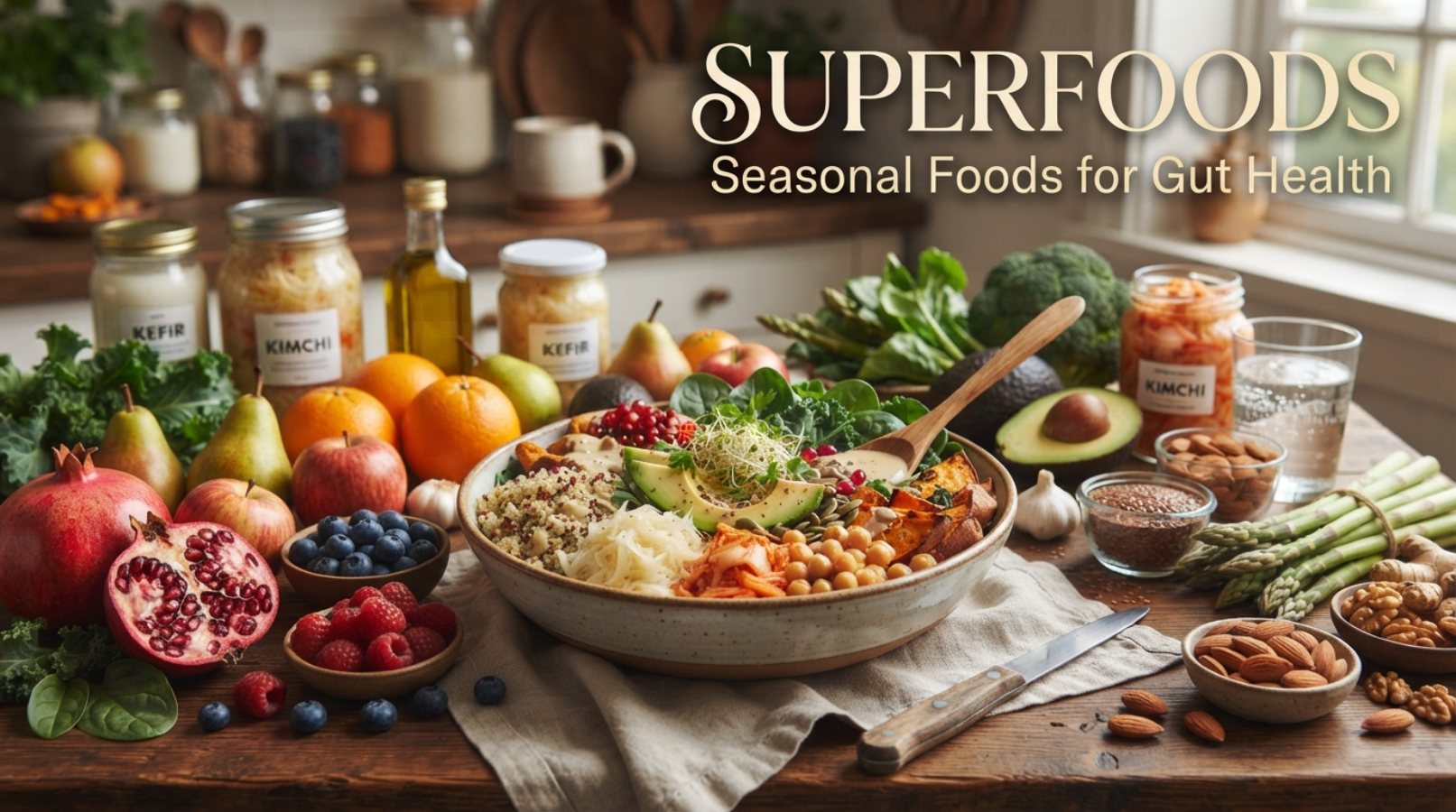
For this version, I’m using the latest target keyword, “Superfoods,” as the primary keyphrase. I’ve kept food quality as a supporting topic so the article still fits the Seasonal Gut Health cluster without forcing two competing primary keywords
Superfoods can make seasonal eating more interesting while adding fiber, plant variety, and useful nutrients to everyday meals.
You don’t need expensive powders or unusual ingredients to build better food quality; many helpful choices are simple foods already sitting in your grocery store. With Gutrova’s Copy Button, you can also save or share the tips that make sense for your next grocery trip.
Quick Answer: Which Superfoods Support Gut Health?
The most practical Superfoods for gut health are fiber-rich foods such as berries, apples, leafy greens, broccoli, beans, lentils, oats, whole grains, nuts, seeds, and sweet potatoes. Fermented foods such as plain yogurt, kefir, sauerkraut, and kimchi can also fit into a varied eating pattern.
The bigger idea is variety. Instead of relying on one food, combine different fruits, vegetables, legumes, whole grains, nuts, and seeds throughout the week. These foods provide fiber and other nutrients, while fiber can also provide fuel for microbes in the gut.
Seasonal eating gives you an easy way to rotate those choices. As produce changes through the year, your meals can change with it.
Why Superfoods Don’t Need a Fancy Label
The word “superfood” sounds impressive, but it isn’t a formal nutrition category.
That matters because marketing can make healthy eating seem complicated. You may see powders, extracts, imported berries, and specialty drinks promoted as essential for wellness. Yet many ordinary foods provide the same types of nutrients that make a balanced diet useful.
Oats are a good example. So are beans, berries, walnuts, broccoli, apples, and sweet potatoes.
Mayo Clinic recommends a varied eating pattern that includes fruits, vegetables, whole grains, legumes, nuts, seeds, lean proteins, and healthy fats. It also emphasizes choosing foods that fit your tastes, lifestyle, and budget.
That makes food quality much more practical. You don’t have to buy the most expensive item on the shelf. You need foods that you will actually eat.
Superfoods for Spring
Spring can be a great time to bring more fresh produce into your meals.
Depending on what’s available in your area, look for:
- Spinach
- Asparagus
- Peas
- Strawberries
- Radishes
- Carrots
- Broccoli
- Fresh herbs
- Avocados
- Plain yogurt
Leafy greens are especially flexible. Toss spinach into eggs, blend it into a smoothie, or add a handful to a grain bowl.
Strawberries work well with oatmeal and yogurt. Peas can go into rice, pasta, soup, or a simple vegetable side.
You don’t need to create a completely new spring menu. Instead, add one seasonal food to meals you already make.
A Simple Spring Plate
Try whole-grain toast with avocado and eggs for breakfast.
For lunch, combine quinoa, spinach, chickpeas, cucumber, and a simple olive-oil dressing. At dinner, serve roasted asparagus with potatoes and fish, chicken, tofu, or another protein you enjoy.
The meal doesn’t need to look perfect. It just needs to work in your kitchen.
Superfoods for Summer
Summer brings plenty of foods that require very little preparation.
Try adding:
- Blueberries
- Strawberries
- Raspberries
- Peaches
- Melons
- Tomatoes
- Cucumbers
- Zucchini
- Bell peppers
- Corn
- Avocados
- Beans
Berries are particularly easy to use. Add them to plain yogurt, oatmeal, overnight oats, or a simple snack.
Meanwhile, tomatoes, cucumber, peppers, and beans can become a quick lunch with very little cooking. Add a whole grain and a protein source, and you have a satisfying meal.
Hydration deserves attention during hot weather as well. Water is a simple choice, especially when you’re spending time outdoors or exercising.
I often find that summer meals work best when they’re uncomplicated. A bowl of fruit, a handful of nuts, and a quick vegetable-based meal can be more realistic than preparing elaborate recipes every day.
Superfoods for Fall
Fall brings foods that are naturally suited to roasting, baking, and slow cooking.
Look for:
- Apples
- Pears
- Pumpkin
- Sweet potatoes
- Winter squash
- Brussels sprouts
- Broccoli
- Cauliflower
- Oats
- Barley
- Lentils
- Walnuts
- Pumpkin seeds
Sweet potatoes are particularly versatile. Roast them, mash them, add them to grain bowls, or use them as a base for beans and vegetables.
Oats and barley are also useful whole grains. Mayo Clinic notes that whole grains provide fiber, vitamins, minerals, and other nutrients.
For breakfast, try warm oats with chopped apple, walnuts, cinnamon, and pumpkin seeds. It takes only a few minutes, yet it can make a cold morning feel much more satisfying.
Superfoods for Winter
Winter produce doesn’t have to be limited to whatever happens to look fresh that day.
Frozen vegetables and fruit can be extremely useful. Canned beans, lentils, oats, carrots, cabbage, potatoes, citrus fruits, and whole grains can also support simple winter meals.
Keep a few reliable staples available:
- Frozen berries
- Frozen broccoli
- Canned chickpeas
- Lentils
- Oats
- Brown rice
- Whole-grain pasta
- Sweet potatoes
- Cabbage
- Carrots
- Oranges
- Walnuts
- Pumpkin seeds
Beans and lentils are especially handy for soups and stews. Add vegetables, herbs, and a whole grain, and you can create a filling meal from inexpensive pantry staples.
NIDDK lists whole grains, legumes, fruits, vegetables, and nuts as good sources of fiber. Adults generally need 22 to 34 grams of fiber a day depending on age and sex, although individual needs can vary.
If you’re increasing fiber, do it gradually. NIDDK also recommends drinking plenty of liquids so fiber can work effectively.
Superfoods and the Gut Microbiome
One reason plant foods matter is their fiber content.
Your body doesn’t fully digest many types of fiber. Instead, some reaches the large intestine, where gut microbes can use it. Harvard Health describes fruits, vegetables, beans, whole grains, nuts, and seeds as important sources of fiber that can help support the gut microbiome.
That’s one reason variety is more useful than chasing a single “best” food.
Imagine eating broccoli every day and rarely choosing anything else. Broccoli is nutritious, but your overall diet would offer more variety if you also ate berries, beans, oats, carrots, apples, seeds, and other plant foods.
A simple rotation might look like this:
Monday: oats, berries, lentils, broccoli
Tuesday: apples, chickpeas, spinach, sweet potatoes
Wednesday: pears, beans, carrots, barley
Thursday: bananas, peas, cabbage, whole-grain pasta
Friday: berries, avocado, black beans, Brussels sprouts
You don’t need to copy this schedule. The point is to keep your plant choices moving.
Superfoods Rich in Fiber
Fiber deserves special attention because it supports normal bowel function and also plays a role in the gut microbiome.
Useful choices include:
Fruits
Berries, pears, apples with the skin, oranges, and bananas can all contribute fiber.
Vegetables
Broccoli, carrots, peas, leafy greens, sweet potatoes, and Brussels sprouts are practical options.
Legumes
Lentils, chickpeas, black beans, kidney beans, and peas can add substantial fiber to meals.
Whole grains
Oats, barley, brown rice, whole-wheat bread, and whole-grain pasta can replace refined grain choices.
Nuts and seeds
Walnuts, almonds, chia seeds, flaxseeds, and pumpkin seeds can add fiber along with other nutrients.
NIDDK recommends increasing fiber gradually rather than making a sudden jump.
That’s worth remembering if your current diet is relatively low in fiber. A huge bowl of beans, vegetables, bran, and seeds overnight may sound healthy, but your digestive system may prefer a slower transition.
Superfoods and Fermented Foods
Fermented foods can add another dimension to a varied diet.
Some options include:
- Plain yogurt
- Kefir
- Sauerkraut
- Kimchi
- Miso
- Tempeh
- Certain fermented vegetables
Harvard Health discusses yogurt and fermented foods as potential sources of beneficial microorganisms and notes that fermentation and processing can affect the microorganisms present in a finished food.
So don’t assume that every product labeled “fermented” works in exactly the same way.
Start with foods you enjoy. A serving of plain yogurt at breakfast or a small amount of sauerkraut alongside dinner may be easier to incorporate than buying several unfamiliar products at once.
And if a particular fermented food doesn’t agree with you, there’s no reason to force it.
Superfoods for an Easy Breakfast
Breakfast is an easy place to build a more varied meal.
Try:
Berry oatmeal: oats + berries + chia seeds + walnuts
Yogurt bowl: plain yogurt + banana + oats + pumpkin seeds
Avocado toast: whole-grain toast + avocado + egg + spinach
Simple smoothie: berries + banana + plain yogurt + spinach
These combinations aren’t magic recipes. They simply combine several useful food groups in one meal.
You can also adjust them based on what’s in season. Use strawberries in spring, peaches in summer, apples in fall, and citrus or frozen berries during winter.
That keeps the same basic meal interesting throughout the year.
Superfoods for Lunch and Dinner
A useful formula is:
Vegetable or fruit + fiber-rich carbohydrate + protein + healthy fat.
For example:
- Brown rice + broccoli + salmon + avocado
- Lentils + carrots + whole-grain bread + olive oil
- Chickpeas + tomatoes + cucumber + quinoa
- Sweet potato + black beans + spinach + avocado
- Whole-grain pasta + vegetables + chicken + olive oil
This approach gives you plenty of room to personalize your meals.
If you don’t eat fish, use beans, tofu, eggs, chicken, or another protein you enjoy. Similarly, if brown rice isn’t your favorite, try oats, barley, quinoa, potatoes, or whole-grain pasta.
Healthy eating becomes easier when you build around foods you actually like.
How Superfoods Fit Into Better Food Quality
Food quality isn’t just about individual ingredients.
Consider two meals.
The first is a bowl of whole grains, beans, vegetables, avocado, and a simple dressing. The second is a highly processed snack marketed with one “superfood” ingredient.
The second product may contain a nutritious ingredient. However, that doesn’t automatically make the entire food nutritionally comparable to a balanced meal.
Harvard Health notes that a variety of minimally processed plant foods can support a healthier gut environment, while the overall dietary pattern matters more than one isolated ingredient.
That’s a useful shopping mindset.
Instead of asking, “Does this contain a Superfood?” ask:
What else is in this food?
Will it help me build a balanced meal?
How often will I realistically eat it?
Does it fit my budget and routine?
Those questions can tell you much more than a marketing claim.
A Practical Seasonal Superfoods Grocery List
You don’t need to fill your cart with every food mentioned in this article.
Start with a few basics.
Pick 2–3 fruits: berries, apples, oranges, pears, bananas, or seasonal favorites.
Pick 3–5 vegetables: spinach, broccoli, carrots, peppers, cabbage, tomatoes, or what’s fresh locally.
Choose 1–2 whole grains: oats, brown rice, barley, or whole-grain pasta.
Add legumes: chickpeas, black beans, lentils, or another favorite.
Add nuts or seeds: walnuts, almonds, chia, flax, or pumpkin seeds.
Choose protein: eggs, fish, poultry, tofu, yogurt, or another suitable option.
Add one fermented food: plain yogurt, kefir, sauerkraut, or kimchi if you enjoy it.
Frozen vegetables and canned beans are completely reasonable choices. They can save time, reduce waste, and make it easier to keep nutritious staples around.
Common Superfood Mistakes
Focusing on one food
No single ingredient supplies everything your body needs. Variety matters more.
Buying foods you won’t use
A trendy ingredient has little practical value if it sits untouched in the pantry.
Increasing fiber too quickly
Suddenly adding large amounts of fiber can cause digestive discomfort. Increase it gradually instead.
Assuming expensive means better
Mayo Clinic recommends choosing foods that fit your tastes, lifestyle, and budget.Ignoring personal tolerance
Some people tolerate certain beans, dairy foods, fruits, or high-fiber vegetables better than others. Your meals should work for your own digestion.
FAQ About Superfoods and Gut Health
What are the best Superfoods for gut health?
Useful choices include fruits, vegetables, beans, lentils, oats, whole grains, nuts, and seeds. Fermented foods can also fit into a varied diet.
Do Superfoods improve digestion?
Many foods called Superfoods provide fiber and other nutrients that support normal digestive function. However, no single food guarantees a specific digestive result.
Are frozen fruits and vegetables good choices?
Yes. Frozen produce can be a convenient way to add fruits and vegetables to meals, especially when fresh options are expensive or unavailable.
Should I eat Superfoods every day?
You don’t need the same foods every day. Instead, aim for variety across your meals and throughout the week.
Can high-fiber Superfoods cause bloating?
They can for some people, particularly after a sudden increase in fiber. Gradually adding fiber and drinking enough fluids may make the transition easier.
Superfoods Are About Variety, Not Hype
Superfoods can have a useful place in a seasonal gut-health routine, but they don’t need to be complicated. Berries, beans, oats, broccoli, apples, nuts, seeds, sweet potatoes, and other everyday foods can contribute to a varied eating pattern.
As the seasons change, rotate your produce and keep dependable pantry staples nearby. Fresh, frozen, canned, and shelf-stable foods can all have a place in a practical kitchen.
Most of all, think about the pattern rather than one impressive ingredient. Better food quality comes from the meals you regularly build, not from chasing a perfect Superfood.
If you find a tip worth keeping, use the Gutrova Copy Button to save or share your favorite Superfoods and seasonal gut-health ideas for your next meal or grocery trip.
The nutrition guidance in this article is supported by NIDDK, Harvard Health, and Mayo Clinic sources covering fiber, plant-food variety, whole grains, fermented foods, and practical healthy eating patterns.











1 thought on “Superfoods: Seasonal Foods for Gut Health”