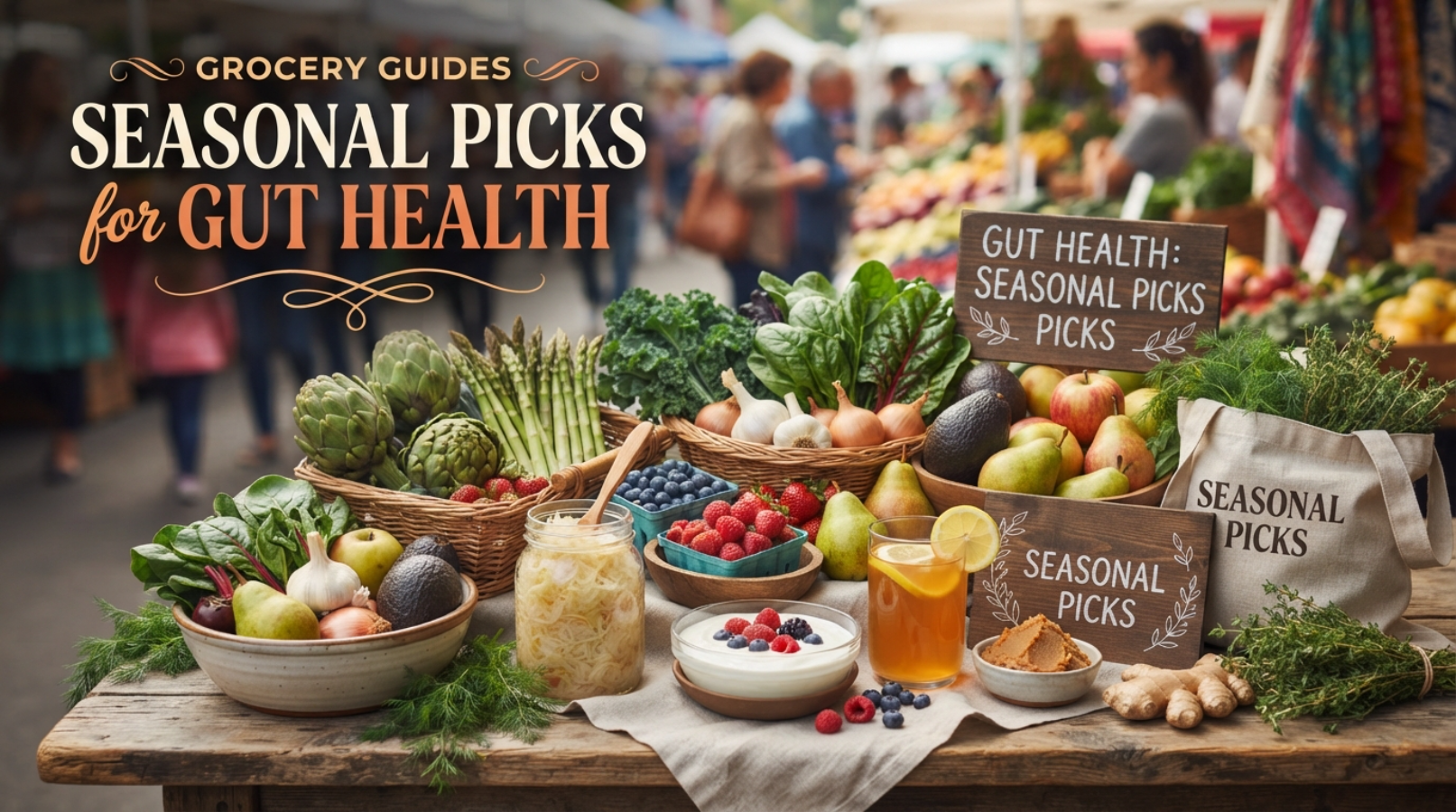
Grocery Guides can make seasonal shopping much easier when you want better food quality without turning every trip to the store into a nutrition project.
A few simple choices can help you bring home more fiber-rich plants, whole grains, nourishing proteins, and foods that fit your gut comfortably. At Gutrova, our Copy Button also makes it easy to copy and share the grocery tips you want to keep handy.
Quick Answer: What Should You Buy for Gut Health?
The simplest approach is to build your cart around a mix of vegetables, fruits, beans, whole grains, nuts, seeds, nourishing proteins, and suitable fermented foods. Then add seasonal produce based on what looks fresh, tastes good, fits your budget, and works for your digestion.
For example, a practical gut-friendly grocery cart might include:
- Oats or another whole grain
- Beans, lentils, or chickpeas
- Leafy greens
- Broccoli, carrots, or another favorite vegetable
- Apples, berries, pears, or seasonal fruit
- Nuts and seeds
- Plain yogurt or kefir if tolerated
- Eggs, fish, poultry, tofu, or another protein
- Olive oil
- Herbs and simple seasonings
- Water or unsweetened drinks
You don’t need every item on the list. Instead, aim for variety across the week.
Why Grocery Guides Matter for Food Quality
Food quality isn’t about finding a perfect food aisle or buying the most expensive package. It usually comes down to what makes up most of your meals.
Mayo Clinic recommends an eating pattern that includes a variety of fruits, vegetables, whole grains, legumes, nuts, seeds, lean proteins, and healthy fats. It also emphasizes choosing foods that fit your tastes, lifestyle, and budget rather than relying on specialty products.
That idea is useful when shopping for gut health because a cart filled with different plant foods gives you more ways to add fiber and nutrients to everyday meals.
I find this easier than thinking in terms of “good” and “bad” foods. A bag of frozen vegetables can be a smart purchase. So can canned beans, plain oats, or frozen berries. Convenience doesn’t automatically mean poor food quality.
Start With What You Actually Eat
Before heading to the store, think about three meals you regularly make.
Maybe breakfast is oatmeal. Lunch could be a turkey sandwich and vegetables. Dinner might be rice, beans, roasted vegetables, and chicken.
Now shop for those meals.
This small step prevents the common mistake of buying a refrigerator full of impressive-looking ingredients that never become dinner.
Grocery Guides for Spring
Spring is a good time to bring more fresh color and variety into your meals.
Depending on your local store and growing season, look for:
- Spinach and other leafy greens
- Asparagus
- Peas
- Strawberries
- Radishes
- Carrots
- Fresh herbs
- Spring onions
- Plain yogurt
- Oats and whole-grain bread
You don’t have to buy everything fresh. Frozen peas and berries can be just as practical for busy households.
For breakfast, try oats topped with strawberries, chia seeds, and plain yogurt. At lunch, add spinach and peas to a grain bowl. Dinner could be roasted asparagus with potatoes and a simple protein.
The goal isn’t to create a “spring diet.” It’s simply to use seasonal variety as a reason to rotate your usual foods.
Grocery Guides for Summer
Summer shopping can be especially easy because many fruits and vegetables work well as snacks, salads, sides, and quick meals.
Consider adding:
- Berries
- Peaches
- Melons
- Tomatoes
- Cucumbers
- Zucchini
- Bell peppers
- Corn
- Leafy greens
- Avocado
- Beans
- Plain yogurt or kefir
Hydration also deserves attention during warmer months. Keep water easy to reach, especially if you’re spending time outdoors or increasing physical activity.
For a quick summer meal, combine tomatoes, cucumber, chickpeas, herbs, olive oil, and a whole grain. Add grilled chicken, fish, tofu, or another protein if you like.
It’s simple, but it covers several useful food groups without requiring much cooking.
Grocery Guides for Fall
Fall shopping brings plenty of foods that work beautifully in warm, satisfying meals.
Look for:
- Apples
- Pears
- Pumpkin
- Sweet potatoes
- Winter squash
- Broccoli
- Cauliflower
- Brussels sprouts
- Oats
- Barley
- Lentils
- Walnuts
- Pumpkin seeds
A bowl of oatmeal with apple, cinnamon, walnuts, and seeds can make an easy breakfast. For dinner, roast squash and Brussels sprouts alongside lentils or another protein.
Whole grains can also be useful here. Mayo Clinic notes that whole grains provide fiber, vitamins, minerals, and other nutrients, while refined grains have much of their fiber removed during processing.
So when you have the choice, look for whole-grain versions of foods you already enjoy.
Grocery Guides for Winter
Winter doesn’t mean your grocery cart has to become boring.
Frozen vegetables and fruits can help when fresh options are limited or expensive. Canned beans, lentils, oats, potatoes, carrots, cabbage, citrus fruits, and whole grains can also form the foundation of practical winter meals.
Try keeping these basics available:
- Frozen berries
- Frozen broccoli or mixed vegetables
- Cabbage
- Carrots
- Sweet potatoes
- Citrus fruit
- Apples
- Beans and lentils
- Oats
- Brown or wild rice
- Whole-grain pasta
- Nuts and seeds
- Plain yogurt
Soups are especially useful in winter. Combine beans or lentils with vegetables, whole grains, herbs, and a protein source for a filling meal.
If you’re increasing fiber, do it gradually and drink enough fluid. NIDDK notes that adults generally need about 22 to 34 grams of fiber per day depending on age and sex, and increasing fiber slowly can help your body adjust.
Grocery Guides for Fiber-Rich Foods
Fiber deserves a permanent place on your grocery list because it supports normal bowel function and also serves as fuel for certain gut microbes.
Good choices include:
Fruits: berries, pears, apples with the skin, oranges, and bananas.
Vegetables: broccoli, carrots, peas, leafy greens, sweet potatoes, and Brussels sprouts.
Legumes: lentils, black beans, chickpeas, kidney beans, and peas.
Whole grains: oats, barley, brown rice, whole-wheat bread, and whole-grain pasta.
Nuts and seeds: almonds, walnuts, chia seeds, flaxseeds, and pumpkin seeds.
NIDDK lists whole grains, legumes, fruits, vegetables, and nuts among useful sources of dietary fiber.
Harvard Health also notes that fiber acts as a prebiotic, helping provide food for beneficial bacteria in the gut.
However, more isn’t automatically better. A sudden jump in fiber can leave some people feeling gassy or uncomfortable. Build up slowly instead of trying to overhaul your diet in one weekend.
Grocery Guides for Fermented Foods
Fermented foods can add another useful option to your grocery cart.
Depending on your preferences and tolerance, look for:
- Plain yogurt with live cultures
- Kefir
- Sauerkraut
- Kimchi
- Miso
- Tempeh
- Naturally fermented vegetables
One important shopping detail gets overlooked: not every product labeled “fermented” contains live microorganisms at the time you eat it. Processing and heating can affect live cultures.
For that reason, check the label and storage instructions rather than assuming every fermented product provides the same thing.
Also, you don’t need fermented foods at every meal. A small serving that fits comfortably into your normal eating pattern can be enough to add variety.
How to Read a Grocery Label Without Overthinking It
Food labels can make a simple shopping trip feel complicated.
Start with the ingredient list.
For bread, cereal, crackers, or pasta, look for whole grains when you want more fiber. A package saying “multigrain” doesn’t automatically mean the product is made mostly from whole grains. Harvard Health recommends checking the ingredient list rather than relying only on marketing language on the front of the package.
Next, look at the nutrition facts panel.
Pay attention to:
- Fiber
- Added sugars
- Sodium
- Protein
- Serving size
You don’t need to reject a food because it contains sugar, sodium, or refined grains. Instead, consider how often it appears in your meals and what you’re pairing it with.
For example, whole-grain toast with eggs, avocado, and fruit creates a very different meal pattern from eating several slices of sweetened bread alone.
A Simple Grocery Cart Formula
When I’m trying to keep grocery shopping practical, I like using a simple formula:
2–3 fruits + 3–5 vegetables + 1–2 whole grains + 2 legumes or plant proteins + 1–2 other protein sources + nuts or seeds + one fermented food.
You can adjust that formula to your household.
For instance, one weekly cart might include berries, apples, spinach, broccoli, sweet potatoes, oats, brown rice, chickpeas, lentils, eggs, chicken, walnuts, and plain yogurt.
Another family might choose bananas, oranges, cabbage, carrots, frozen peas, whole-grain pasta, black beans, tofu, fish, pumpkin seeds, and kefir.
Both can work.
That’s the point. Good grocery shopping doesn’t have to look identical from one kitchen to another.
What About Packaged and Convenience Foods?
You don’t need to avoid every packaged food to support gut health.
Canned beans can save time. Frozen vegetables can reduce food waste. Prewashed greens can make salads easier. A plain frozen vegetable blend can turn into dinner in minutes.
The bigger issue is the overall pattern.
Mayo Clinic recommends emphasizing nutrient-rich foods while keeping highly processed choices in moderation.
A practical approach is to pair convenience foods with minimally processed foods.
Try canned beans with frozen vegetables and brown rice. Add fresh fruit to a packaged yogurt. Pair a prepared soup with a side salad and whole-grain toast.
Small combinations can improve the quality of an ordinary meal without making your routine harder.
A One-Day Grocery Guide Example
Here’s what a simple day could look like using one basic grocery haul.
Breakfast: Oatmeal with berries, walnuts, and plain yogurt.
Lunch: Whole-grain wrap with chicken, spinach, avocado, and sliced vegetables.
Snack: Apple with peanut butter.
Dinner: Lentil and vegetable soup with whole-grain bread.
Drink: Water throughout the day, with unsweetened tea if desired.
This isn’t a required menu. It’s simply an example of how several grocery staples can come together.
If beans, dairy, high-fiber foods, or particular fruits bother your digestion, choose alternatives that you tolerate better. NIDDK notes that dietary changes can affect people with digestive conditions differently, so individual tolerance matters.
A Better Grocery Routine Starts Before the Store
A little preparation can make food quality easier to maintain.
Before shopping:
- Check your refrigerator and pantry.
- Pick two breakfasts and three dinners.
- Choose a few fruits and vegetables.
- Add one or two fiber-rich staples.
- Pick convenient foods you’ll genuinely use.
- Write a short list.
- Shop with your meals in mind.
This approach also helps reduce impulse purchases.
You don’t need to spend an hour planning every meal. Even ten minutes can make the next few days easier.
FAQ About Grocery Guides and Gut Health
What foods should I buy first for gut health?
Start with foods you already enjoy that provide fiber and nutrients. Fruits, vegetables, legumes, whole grains, nuts, seeds, and suitable protein sources are practical foundations.
Are frozen vegetables good for gut health?
Yes. Frozen vegetables can be a convenient way to add vegetables to meals, especially when fresh produce isn’t available or doesn’t fit your budget.
Do I need to buy organic foods for better gut health?
Not necessarily. A varied diet that fits your budget and eating habits matters more than turning every grocery purchase into a premium-food shopping trip.
How can I increase fiber without feeling bloated?
Increase fiber gradually and drink enough fluid. NIDDK specifically recommends adding fiber little by little so your body has time to adjust.
What’s one easy grocery swap for better food quality?
Try replacing one refined-grain staple with a whole-grain version you actually enjoy. For example, choose oatmeal instead of a low-fiber breakfast option or whole-grain bread instead of regular white bread.
Grocery Guides Can Keep Seasonal Eating Simple
The best Grocery Guides aren’t about filling your cart with trendy products. They’re about making everyday meals easier to build with foods that provide fiber, variety, nutrients, and flavors you enjoy.
As the seasons change, rotate your produce, keep reliable pantry staples nearby, and use frozen or canned options when they make life easier. Most of all, choose foods that fit your routine instead of creating a complicated diet you’ll abandon after a week.
If a tip in this guide is worth saving, use the Gutrova Copy Button to copy and share it for your next grocery trip. A few practical choices at the store can make healthy eating feel much more manageable.
The nutrition guidance above is grounded in current information from NIDDK, Harvard Health, and Mayo Clinic, including guidance on fiber, hydration, whole grains, food variety, and practical healthy eating patterns.
This version also deliberately treats Grocery Guides as the primary keyphrase while using food quality, seasonal produce, fiber-rich foods, whole grains, fermented foods, gut health, healthy eating, and grocery shopping as supporting semantic terms.

Here’s a short Gutrova-style author biography for Josh Axe:
Josh Axe
Josh Axe is a wellness expert, author, and educator known for his work in nutrition, natural health, and gut wellness. As a contributor to Gutrova, he shares practical insights on digestive health, healthy eating habits, and lifestyle strategies that help readers build a stronger foundation for overall well being. His content focuses on making wellness simple, actionable, and accessible for everyday life.











1 thought on “Grocery Guides: Seasonal Picks for Gut Health”