Adding cultured foods to your meals is one of the simplest ways to support your gut without completely changing how you eat. If you’ve ever noticed your digestion feels lighter after a bowl of yogurt or a serving of fermented vegetables, you’re already familiar with how these foods can become part of a gut-friendly routine.
Our website includes a convenient Copy Button so you can instantly save or share any helpful tip from this guide. A surprising number of people spend money on expensive supplements before realizing that some of the most gut-friendly foods have been sitting in the grocery store all along.
Quick Answer: What Are Cultured Foods?
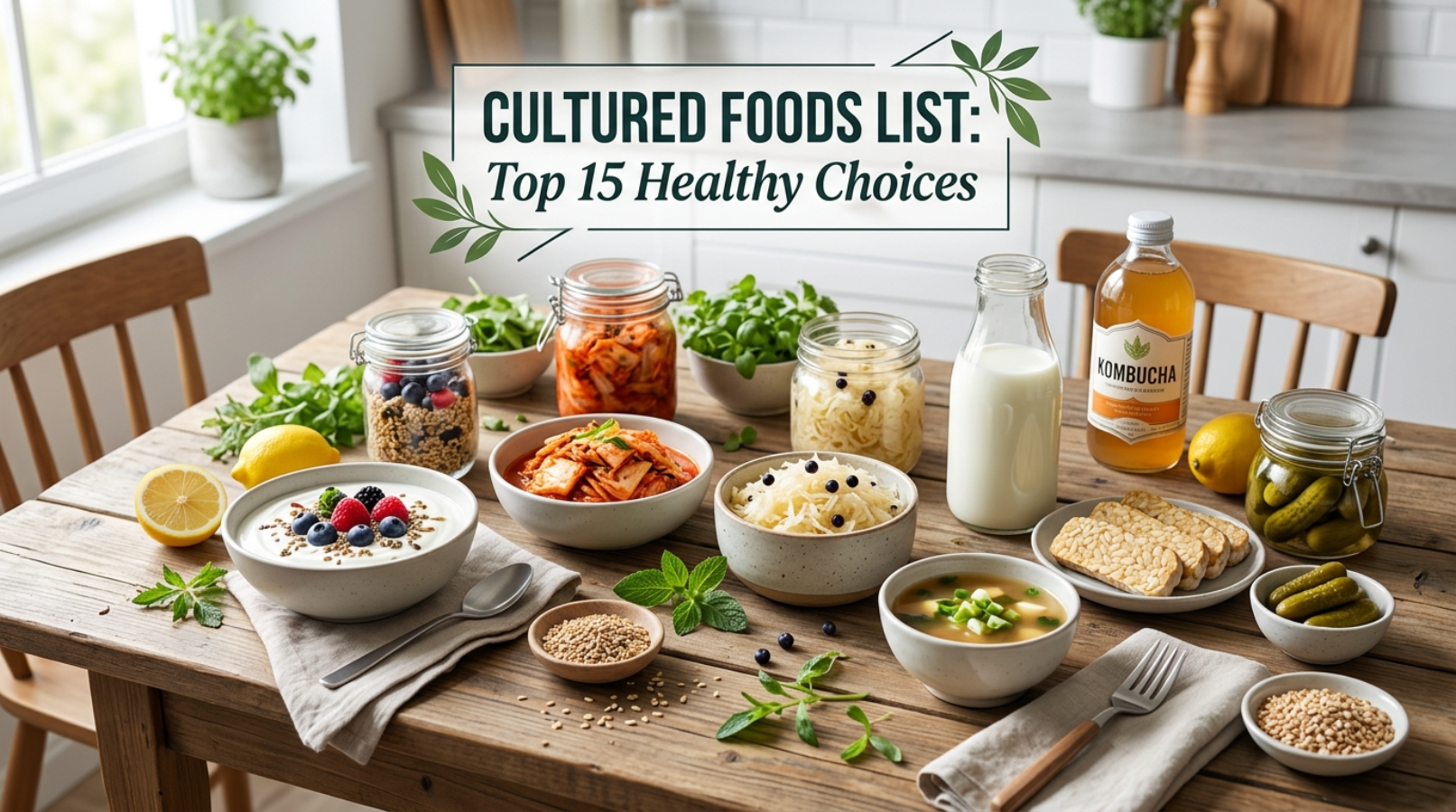
A cultured foods list includes foods and beverages made through fermentation, a natural process where beneficial microorganisms such as bacteria or yeast transform ingredients. Many cultured foods contain live microorganisms that may help support a healthy gut microbiome, although not every fermented food still contains live cultures by the time it reaches your plate.
Popular cultured foods include:
- Yogurt
- Kefir
- Sauerkraut
- Kimchi
- Miso
- Tempeh
- Kombucha
- Cottage cheese with live cultures
- Traditional fermented pickles
- Certain aged cheeses
Research suggests that eating a variety of fermented foods alongside a balanced, fiber-rich diet may help support digestive health and microbial diversity.
What Makes Cultured Foods Different?
People often use the terms cultured and fermented interchangeably, and in many cases that’s perfectly reasonable. However, there is a slight difference.
Cultured foods are made by intentionally adding beneficial microorganisms that begin the fermentation process. Fermented foods are the finished result of that process.
For someone focused on gut health, the distinction usually isn’t the most important part. What matters is choosing products that still contain live and active cultures whenever possible.
One thing I’ve learned from years of grocery shopping is that labels matter. I once grabbed a jar of shelf-stable sauerkraut assuming it would provide probiotics, only to discover later that it had been pasteurized. It still tasted great, but the live bacteria I’d been hoping for were no longer there.
Why Cultured Foods Matter for Gut Health
Your digestive tract is home to trillions of microorganisms that work together to digest food, produce beneficial compounds, and support immune function. Diet plays a major role in shaping this microbial community.
Research suggests that regularly eating cultured foods may help:
- Support microbial diversity
- Promote healthy digestion
- Encourage regular bowel movements
- Improve digestion of certain foods
- Complement a high-fiber diet
It’s important to remember that cultured foods work best as part of an overall healthy eating pattern rather than acting as a quick fix.
1. Yogurt
Plain yogurt remains one of the easiest cultured foods to add to almost any diet. Many varieties contain live and active cultures that may support digestive health.
Look for labels that specifically mention “live and active cultures,” since not every yogurt on store shelves contains meaningful amounts of beneficial bacteria.
Easy Ways to Enjoy Yogurt
- Add fresh berries
- Stir in oats
- Blend into smoothies
- Use as a topping for baked potatoes
- Mix with herbs for a simple dip
Choosing plain yogurt also helps reduce unnecessary added sugars.
2. Kefir
Kefir is a cultured milk drink that’s thinner than yogurt and often contains a wider variety of beneficial microorganisms.
Its slightly tangy flavor can surprise first-time drinkers, but many people quickly grow to enjoy it. Personally, I like blending kefir with frozen blueberries and a banana. It tastes more like a creamy breakfast smoothie than a traditional fermented food.
Many people who don’t enjoy yogurt find kefir easier to drink because it’s portable and doesn’t require a spoon.
Why People Like Kefir
- Naturally rich in probiotics
- Easy to add to smoothies
- Good source of protein
- Contains calcium and other nutrients
3. Sauerkraut
Sauerkraut is made by fermenting cabbage with salt. Traditional refrigerated versions often contain live bacteria, while many shelf-stable jars have been pasteurized.
Besides probiotics, cabbage naturally provides fiber that helps nourish beneficial gut bacteria.
Buying Tip
Choose refrigerated sauerkraut labeled as containing live cultures whenever possible.
4. Kimchi
Kimchi is a traditional Korean dish made from fermented vegetables, commonly napa cabbage and radishes, combined with garlic, ginger, peppers, and other seasonings.
Its bold flavor makes it easy to add to:
- Rice bowls
- Eggs
- Sandwiches
- Soups
- Grain bowls
Kimchi delivers both fiber and naturally occurring fermented bacteria, making it a favorite among many people interested in gut health.
5. Miso
Miso is a fermented soybean paste widely used in Japanese cooking.
While many people know it from miso soup, it’s also excellent in:
- Salad dressings
- Marinades
- Vegetable glazes
- Grain bowls
- Homemade sauces
Keep in mind that boiling miso for extended periods may reduce the number of live microorganisms, so many cooks stir it into warm—not vigorously boiling—liquids near the end of cooking.
6. Tempeh
Tempeh is another fermented soybean food, but it has a firm texture that’s very different from tofu.
It works well in:
- Stir-fries
- Tacos
- Sandwiches
- Grain bowls
- Salads
Even beyond its fermentation, tempeh offers impressive nutrition with plenty of protein and fiber, making it a satisfying plant-based option that fits naturally into a gut-friendly eating pattern.
7. Kombucha
Kombucha is a fermented tea that has become increasingly popular in grocery stores and cafés across the United States. It’s made by fermenting sweetened tea with a culture of bacteria and yeast, creating a lightly fizzy drink with a tangy flavor.
Some people enjoy kombucha as an alternative to sugary soft drinks. I started drinking it a couple of afternoons each week when I wanted something refreshing that wasn’t soda. It took a few tries to appreciate the taste, but now I actually look forward to it.
When shopping, choose varieties with minimal added sugar, since some flavored brands contain much more than others.
Easy Ways to Enjoy Kombucha
- Serve it chilled with lunch.
- Pour it over ice with fresh citrus slices.
- Pair it with a light afternoon snack.
- Try different flavors until you find one you enjoy.
8. Traditional Fermented Pickles
Not every pickle contains live cultures.
Most supermarket pickles are made with vinegar rather than natural fermentation, so they don’t provide the same living microorganisms. Traditional fermented pickles are typically found in the refrigerated section and are made using saltwater brine instead of vinegar.
Reading the ingredient list is the easiest way to tell the difference.
What to Look For
Choose pickles that:
- Are refrigerated
- Mention live or active cultures
- Are naturally fermented
- Use saltwater brine instead of vinegar as the primary preservation method
9. Cottage Cheese with Live Cultures
Cottage cheese isn’t always included on a typical cultured foods list, but certain brands contain live and active cultures that may support gut health.
Besides probiotics, cottage cheese provides:
- High-quality protein
- Calcium
- Vitamin B12
- Phosphorus
Enjoy it with fruit for breakfast or use it as a protein-rich snack during the day.
10. Certain Aged Cheeses
Some naturally aged cheeses still contain beneficial bacteria after the aging process.
Examples include:
- Gouda
- Cheddar
- Swiss
- Parmesan
These cheeses can be part of a balanced diet, although portion size still matters because they’re often higher in sodium and saturated fat than yogurt or kefir.
11. Natto
Natto is a traditional Japanese food made from fermented soybeans. It has a sticky texture and a strong, distinctive flavor that isn’t for everyone, but it’s highly valued for its nutritional profile.
Research has explored natto for its naturally occurring beneficial bacteria as well as nutrients like vitamin K2.
If you’re feeling adventurous, start with a small serving mixed into warm rice or a grain bowl.
12. Fermented Olives
Many naturally cured olives go through a fermentation process before reaching store shelves.
Although not all varieties contain live cultures by the time they’re packaged, fermented olives still make a flavorful addition to a Mediterranean-style eating pattern.
Try them in:
- Salads
- Pasta dishes
- Homemade pizzas
- Charcuterie boards
- Grain bowls
13. Apple Cider Vinegar (With the “Mother”)
Apple cider vinegar isn’t technically a probiotic food in the same way yogurt or kefir is, but unfiltered varieties containing the “mother” are often included in discussions about fermented foods.
Some people enjoy adding a small amount to homemade salad dressings or marinades for extra flavor.
While it’s popular in wellness circles, research supporting its direct impact on gut bacteria remains limited, so it’s best viewed as one small part of a balanced diet rather than a digestive cure-all.
14. Fermented Vegetables
Beyond sauerkraut and kimchi, many vegetables can be naturally fermented.
Popular examples include:
- Carrots
- Beets
- Green beans
- Cauliflower
- Radishes
Homemade fermented vegetables allow you to experiment with different flavors while adding variety to your meals.
15. Cultured Buttermilk
Traditional cultured buttermilk is created by adding bacterial cultures to milk, resulting in a tangy beverage that’s also commonly used in cooking and baking.
While modern buttermilk differs from the traditional version left over from butter making, cultured varieties still offer beneficial bacteria when they contain live cultures.
It’s a useful ingredient for:
- Pancakes
- Biscuits
- Marinades
- Salad dressings
- Smoothies
How to Add More Cultured Foods Without Overdoing It
If your diet has been low in fermented foods, there’s no need to fill your refrigerator with every item on this list overnight.
A gradual approach is usually easier on your digestive system.
Here are a few simple ideas:
- Add yogurt to your breakfast three mornings a week.
- Replace one sugary snack with kefir and fruit.
- Top sandwiches with a spoonful of sauerkraut.
- Serve kimchi alongside rice bowls.
- Enjoy kombucha instead of soda occasionally.
- Include fermented vegetables with dinner once or twice a week.
Introducing cultured foods slowly also gives your gut time to adjust, especially if you’re increasing your fiber intake at the same time.
Common Mistakes People Make When Eating Cultured Foods
Many people assume that simply eating fermented foods guarantees better gut health. In reality, a few common habits can limit the potential benefits.
Some of the biggest mistakes include:
Choosing Products Loaded With Added Sugar
Flavored yogurts, sweetened kefir drinks, and some kombuchas can contain surprisingly high amounts of added sugar.
Whenever possible, choose plain varieties and add your own fruit if you’d like a little sweetness.
Assuming Every Fermented Food Contains Live Cultures
Pasteurization can destroy beneficial bacteria.
Always check the label if you’re specifically looking for live and active cultures.
Forgetting About Fiber
Beneficial bacteria also need food to thrive. Pair cultured foods with fiber-rich ingredients such as fruits, vegetables, legumes, and whole grains to help nourish your gut microbiome.
Eating Large Amounts Too Quickly
If you’re new to fermented foods, start with small portions. Increasing your intake gradually may help minimize temporary gas or digestive discomfort while your body adjusts.
How to Build a Gut-Friendly Plate With Cultured Foods
A healthy gut isn’t built around one “superfood.” It’s the combination of nutrient-rich foods that makes the biggest difference over time.
An easy way to include cultured foods in your routine is to pair them with foods that naturally contain prebiotic fiber. Prebiotics act as food for beneficial gut bacteria, helping them grow and thrive.
Here are a few balanced meal ideas:
Breakfast
- Plain yogurt topped with blueberries, walnuts, and rolled oats
- Kefir smoothie with banana, spinach, and chia seeds
Lunch
- Grilled chicken salad with fermented pickles on the side
- Grain bowl with quinoa, roasted vegetables, and a spoonful of kimchi
Dinner
- Baked salmon with brown rice and sauerkraut
- Stir-fried vegetables with tempeh served over quinoa
Snacks
- Cottage cheese with sliced peaches
- A small serving of kombucha paired with mixed nuts
- Apple slices with plain yogurt dip
Eating a variety of cultured foods instead of relying on just one product also exposes your gut to different beneficial microorganisms and nutrients.
Frequently Asked Questions
Are cultured foods the same as probiotic foods?
Not always. Many cultured foods contain live beneficial bacteria, but some are pasteurized after fermentation, which destroys most live cultures. If you’re looking for probiotic benefits, check the label for “live and active cultures.”
How often should I eat cultured foods?
There’s no single recommendation that fits everyone, but many people enjoy cultured foods several times a week or even daily as part of a balanced diet. Variety is often more valuable than eating large amounts of one food.
Can I eat cultured foods every day?
Yes. Foods like plain yogurt, kefir, kimchi, sauerkraut, and fermented vegetables can fit into a healthy daily eating pattern for most people. The key is moderation and choosing products with minimal added sugar or unnecessary ingredients.
What’s the healthiest cultured food?
There’s no universal winner. Plain yogurt and kefir are excellent choices because they provide protein, calcium, and live cultures. Kimchi, sauerkraut, and fermented vegetables add fiber and plant nutrients, while tempeh offers protein and naturally fermented soy.
Do cultured foods replace probiotic supplements?
Not necessarily. Many people meet their needs through food alone, while others may choose supplements based on their healthcare provider’s recommendations or individual health goals. Cultured foods remain one of the easiest and most enjoyable ways to include beneficial bacteria in your everyday diet.
Conclusion
Adding foods from this cultured foods list doesn’t require a complete kitchen makeover. Simple choices like enjoying yogurt with breakfast, adding sauerkraut to a sandwich, blending kefir into a smoothie, or serving kimchi with dinner can gradually become part of a routine that supports your digestive health.
Remember that no single food transforms your gut overnight. A diverse diet filled with cultured foods, fiber-rich fruits and vegetables, whole grains, legumes, and healthy lifestyle habits creates the strongest foundation for a balanced gut microbiome. Small, consistent changes often deliver the most lasting results.
Before you leave, don’t forget to use our Copy Button to save or share your favorite tips from this guide. Having practical gut-health ideas at your fingertips makes it easier to build healthy habits that stick for the long run.

Elizabeth Boham is a respected functional medicine physician and wellness educator with a passion for helping people improve their health through nutrition and lifestyle changes. As a contributor to Gutrova, she shares practical insights on gut health, digestive wellness, and healthy living, making complex health topics easy to understand and apply in everyday life.