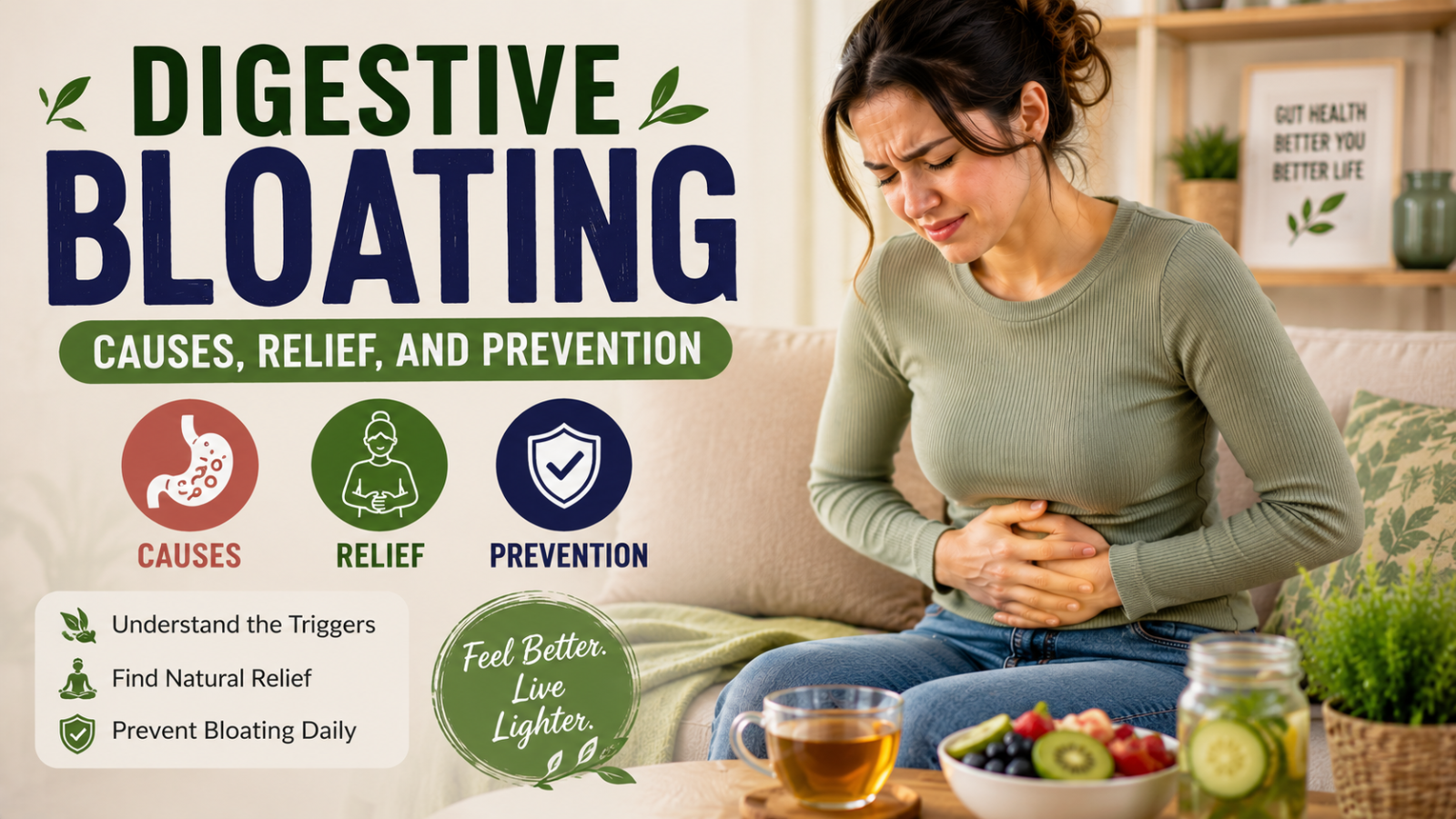
Digestive bloating can make your stomach feel unusually full, tight, swollen, or uncomfortable, even after a normal meal. It may show up after eating too quickly, drinking fizzy beverages, becoming constipated, or eating foods that your body doesn’t tolerate well. If you’ve ever felt fine in the morning but noticeably uncomfortable by evening, you’re not alone.
The good news is that simple habits can often make a difference. Use the Copy Button to save practical tips you want to remember, then make one change at a time so you can figure out what works best for your digestion.
Quick Answer: What Causes Digestive Bloating?
Digestive bloating can result from gas, swallowed air, constipation, large meals, food intolerances, or changes in how the digestive tract handles certain carbohydrates. Eating quickly and consuming carbonated beverages can also increase the feeling of abdominal fullness.
For occasional symptoms, eating smaller meals, slowing down while eating, drinking enough water, staying active, and identifying personal food triggers may help. However, frequent or severe bloating deserves attention because an underlying digestive problem may sometimes be involved.
What Does Digestive Bloating Feel Like?
Bloating isn’t exactly the same for everyone. Some people notice visible abdominal swelling, while others mainly feel pressure or fullness.
You might describe it as:
- A tight or stretched stomach
- Increased abdominal pressure
- Feeling unusually full after eating
- More burping or passing gas
- Clothes feeling tighter around the waist
- A noticeably swollen abdomen
Interestingly, the amount of gas in your digestive tract doesn’t always match how severe bloating feels. Some people are particularly sensitive to normal digestive changes.
That means two people can eat the same meal and experience very different symptoms.
Common Causes of Digestive Bloating
Several everyday factors can contribute to bloating. Finding the likely cause is often more useful than simply cutting out random foods.
Eating Too Quickly
When you rush through a meal, you may swallow more air. Fast eating can also make it easier to eat beyond comfortable fullness.
Instead, slow down and give yourself time to chew. You don’t need a perfect eating routine. Even putting your fork down between bites can help.
Large Meals
A very large meal naturally puts more volume in your digestive system. Heavy restaurant meals, holiday dinners, and late-night snacks can be particularly noticeable.
Try smaller portions first. If you’re still hungry, you can always eat more.
Constipation
Constipation is a common reason people feel unusually full or swollen. When stool moves slowly through the digestive tract, abdominal pressure and gas can become more noticeable.
Increasing fiber gradually, drinking enough fluids, and staying physically active can support regular bowel movements.
Swallowing Extra Air
Chewing gum, drinking through straws, eating rapidly, and consuming fizzy beverages can increase the amount of air you swallow.
If you regularly feel bloated after drinking soda or sparkling beverages, try switching to still water and see if your symptoms change.
Foods Linked With Digestive Bloating
Certain foods are more likely to cause gas or bloating in sensitive people. That doesn’t make them unhealthy. It simply means your digestive system may respond differently to them.
Common examples include:
- Beans and lentils
- Onions and garlic
- Broccoli and cabbage
- Apples and pears
- Some dairy products
- Dried fruit
- Carbonated drinks
- Sugar-free products containing sugar alcohols
Some of these foods contain fermentable carbohydrates. Gut bacteria break down these carbohydrates, which can produce gas.
However, tolerance varies. You may be able to eat a small serving of beans comfortably but feel bloated after a much larger portion.
Can Fiber Cause Digestive Bloating?
Fiber supports healthy digestion, but suddenly increasing your intake can lead to extra gas and bloating.
For example, someone who normally eats very little fiber might suddenly add oatmeal, beans, whole grains, vegetables, and several servings of fruit. That’s a big change for the digestive system.
Instead, increase fiber gradually. Drink enough water as you do so, and give your body time to adjust.
You don’t need to fear fiber because of temporary bloating. The goal is to find a comfortable amount and build your intake steadily.
How to Ease Digestive Bloating Naturally
If you’re already uncomfortable, a few simple steps may help.
Take a Gentle Walk
Walking after a meal is an easy habit that can encourage movement throughout the digestive system. You don’t need a long workout.
Even a relaxed walk around the neighborhood can be a reasonable place to start.
Drink Water
Adequate hydration supports normal digestion and bowel function. It may be especially helpful when constipation contributes to abdominal fullness.
Sip water throughout the day rather than drinking a huge amount at once.
Try Smaller Meals
If large meals consistently leave you uncomfortable, experiment with smaller portions.
For example, instead of one enormous dinner, you might eat a moderate meal and have a small snack later if you’re genuinely hungry.
Eat More Slowly
Give your body time to register the meal. Slower eating can also reduce the amount of air you swallow.
This is one of those small changes that sounds almost too simple, yet it’s practical enough to use every day.
Digestive Bloating and Food Intolerances
Sometimes bloating appears because your body has difficulty digesting or absorbing a particular food component.
Lactose is one example. People with lactose intolerance may experience gas, bloating, abdominal discomfort, or diarrhea after consuming dairy products containing lactose.
Certain carbohydrates can also cause problems for sensitive people. That’s why a food diary can be useful.
Write down what you eat, approximate portions, and when symptoms appear. After several days, patterns may become easier to recognize.
Don’t assume that every uncomfortable meal means you have an intolerance, though. Persistent symptoms should be evaluated rather than diagnosed through trial and error alone.
A Simple Daily Routine for Less Bloating
You don’t need a complicated digestive routine.
Start your morning with water and a balanced breakfast that you tolerate well. During the day, eat at a comfortable pace and avoid consistently oversized portions.
Next, include fiber-rich foods gradually and stay active. A short walk after one or two meals can be easier to maintain than an ambitious exercise plan.
In the evening, pay attention to foods that repeatedly cause discomfort. If you notice the same pattern several times, write it down.
I’ve found that practical routines tend to work better than dramatic dietary changes. Small habits give you a clearer idea of what actually affects your digestion.
What Not to Do When You’re Bloated
When your stomach feels swollen, it can be tempting to try several remedies at once. That often makes it harder to figure out what’s helping.
Avoid suddenly removing dozens of foods from your diet. Likewise, don’t dramatically increase fiber overnight just because you want to improve digestion.
It’s also wise to avoid relying on extreme “detox” routines or promises of an instant stomach reset. Your digestive system already has natural processes for breaking down food and moving waste through the body.
Instead, keep things simple and consistent.
When Digestive Bloating Should Be Checked
Occasional bloating is common, particularly after a large meal or a food that doesn’t agree with you.
However, persistent or severe symptoms deserve professional attention. Speak with a healthcare professional if bloating keeps returning, becomes increasingly uncomfortable, or affects your normal activities.
Seek prompt medical attention for bloating accompanied by symptoms such as significant abdominal pain, persistent vomiting, blood in the stool, unexplained weight loss, fever, or major changes in bowel habits.
These symptoms don’t automatically point to a serious condition. They simply shouldn’t be dismissed as ordinary gas.
FAQ About Digestive Bloating
What is the most common cause of digestive bloating?
Common contributors include swallowed air, large meals, constipation, carbonated drinks, and fermentable carbohydrates. Food intolerances and digestive conditions can also contribute.
Can drinking water help with digestive bloating?
Adequate hydration can support normal digestion and bowel movements. If constipation plays a role, staying hydrated may be particularly useful.
Does walking help with bloating?
Gentle walking may support normal digestive movement and can be a practical way to feel less sluggish after eating.
Should I stop eating fiber if it makes me bloated?
Not necessarily. A sudden increase in fiber can cause temporary gas and bloating. Instead, increase fiber gradually and maintain adequate fluid intake.
Why do I feel bloated every day?
Daily bloating can have many possible causes, including constipation, food intolerance, eating habits, or digestive disorders. If it persists, discuss the pattern with a healthcare professional.
Final Thoughts
Digestive bloating can be frustrating, but you don’t necessarily need a restrictive diet or complicated routine to address it. Start with manageable habits such as slower meals, moderate portions, adequate hydration, regular movement, and gradual fiber increases.
Most importantly, pay attention to patterns. Your own food and symptom history can reveal useful clues about what makes you feel comfortable or uncomfortable. Use the Copy Button to save the tips that fit your routine, and introduce changes gradually so you can see what actually helps.

Here’s a short Gutrova-style author biography for Josh Axe:
Josh Axe
Josh Axe is a wellness expert, author, and educator known for his work in nutrition, natural health, and gut wellness. As a contributor to Gutrova, he shares practical insights on digestive health, healthy eating habits, and lifestyle strategies that help readers build a stronger foundation for overall well being. His content focuses on making wellness simple, actionable, and accessible for everyday life.











1 thought on “Digestive Bloating: Causes, Relief, and Prevention”