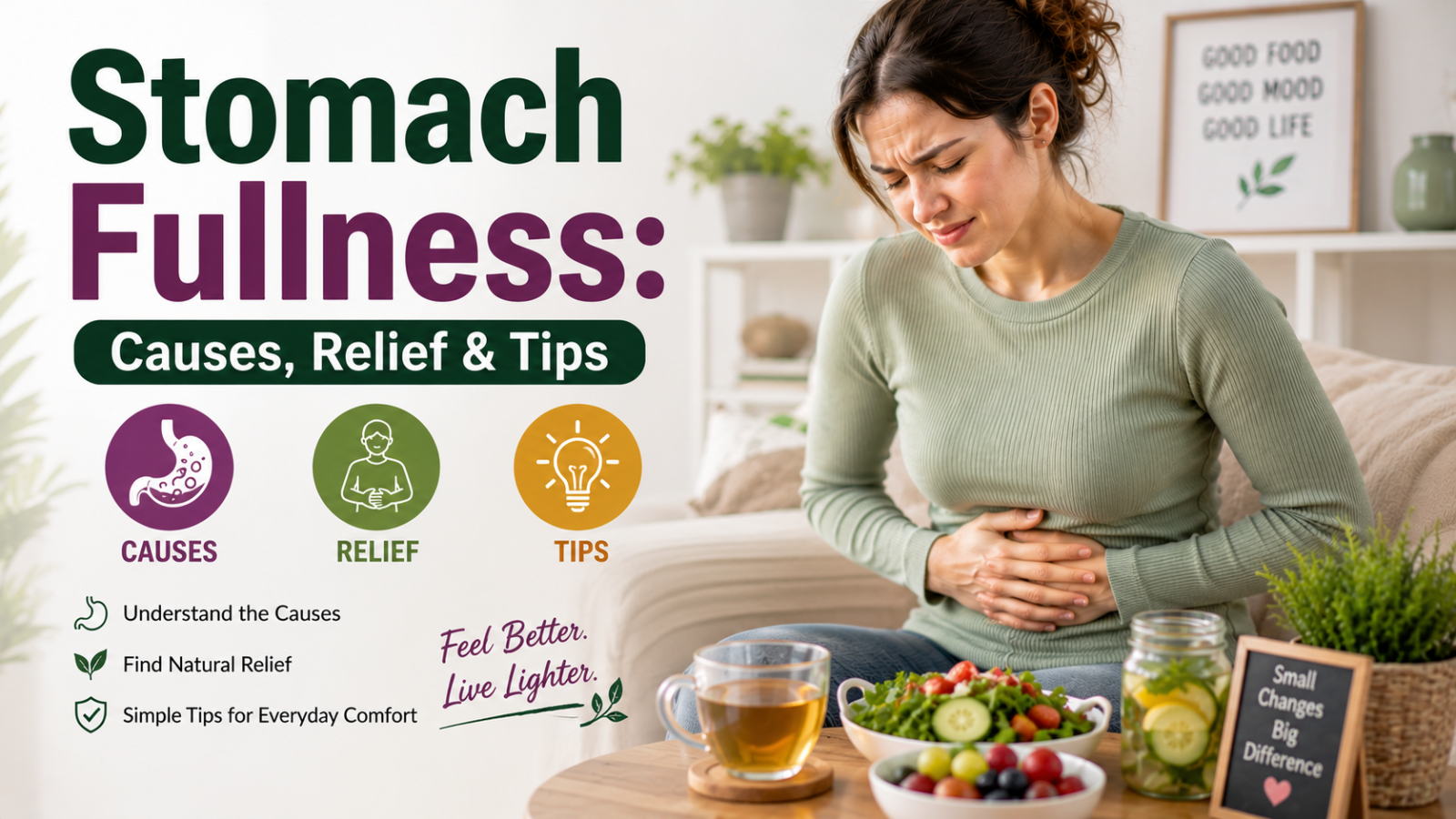
Stomach fullness can happen after a large meal, but it may also show up after eating a normal portion and leave you uncomfortable for hours. If that heavy, overly full feeling keeps returning, paying attention to your eating habits and other digestive symptoms can help you spot possible triggers. Our Copy Button also makes it easy to save and share the practical tips you find most useful.
What Does Stomach Fullness Feel Like?
Stomach fullness is the sensation that your stomach still feels heavy, stretched, or satisfied long after eating. For some people, it comes with bloating, belching, gas, or mild abdominal discomfort.
Occasional fullness is usually linked to something simple, such as eating too quickly or having a larger meal than usual. However, frequent or persistent fullness can sometimes occur alongside digestive conditions that deserve closer attention.
Common Causes of Stomach Fullness
Several everyday habits can make your stomach feel fuller than expected. Fortunately, identifying your pattern may help you make small changes without drastically changing your diet.
Eating Too Quickly
When you rush through a meal, you may eat more before your body has time to register that you’re satisfied. You may also swallow more air, which can contribute to bloating and discomfort.
Try slowing down and putting your fork down between bites. A calmer meal can make it easier to notice when you’re comfortably full.
Large or Heavy Meals
A very large meal naturally takes longer to digest. Foods high in fat can also slow stomach emptying, which may leave you feeling full for longer.
For example, a large restaurant dinner followed by dessert may feel much heavier than a smaller meal eaten at home. Portion size matters, even when the foods themselves are nutritious.
Gas and Bloating
Sometimes what feels like stomach fullness is partly related to gas. Carbonated drinks, certain high-fiber foods, beans, onions, and some fruits can increase gas for people who are sensitive to them.
That doesn’t mean you need to eliminate these foods. Instead, notice which foods seem to affect you and how much you eat at one time.
How Digestion Can Affect Stomach Fullness
Your digestive system has to move food from the stomach into the small intestine before digestion can continue. If this process slows, you may experience fullness for longer than expected.
Stress, meal size, food composition, and certain digestive problems can all influence how comfortable you feel after eating. Therefore, the timing of your symptoms can be useful information.
If fullness happens mainly after large meals, portion size may play a role. If it appears after small meals or happens frequently, it’s worth discussing the pattern with a healthcare professional.
Foods That May Increase Stomach Fullness
Not every food affects everyone in the same way. Still, certain meals commonly feel heavier because they contain substantial amounts of fat, fiber, protein, or volume.
Fried foods and rich sauces can take longer to digest. Meanwhile, very large servings of vegetables, beans, or whole grains can cause temporary fullness and gas in some people.
Carbonated beverages may also make your abdomen feel distended because they introduce gas into the digestive tract. Similarly, sugar alcohols found in some sugar-free foods can cause gas or digestive discomfort in sensitive people.
The goal isn’t to label these foods as “bad.” Instead, try adjusting portions and noticing how your body responds.
Simple Ways to Ease Stomach Fullness
If you’re uncomfortably full after a meal, a few gentle habits may help.
Take a Short Walk
A relaxed walk after eating can encourage normal digestive movement and may feel more comfortable than lying down immediately.
You don’t need an intense workout. Even a few minutes of easy movement can be a practical choice after a heavy meal.
Sip Water
Staying hydrated supports normal digestion. However, drinking a very large amount of fluid at once may make an already-full stomach feel even more uncomfortable.
Sip water throughout the day rather than trying to catch up all at once.
Avoid Lying Down Right Away
If you’ve just eaten a large meal, staying upright for a while may be more comfortable. This can be especially useful if fullness comes with heartburn or a sensation of food coming back up.
Give Your Next Meal Some Space
You don’t have to eat simply because the clock says it’s time. If you’re still comfortably full, waiting until your appetite returns may help prevent piling another meal on top of an already heavy feeling.
Could Constipation Cause Stomach Fullness?
Yes, constipation can contribute to abdominal pressure, bloating, and a sense of fullness. When stool moves slowly through the digestive tract, you may feel more uncomfortable around the abdomen.
If you’re also having fewer bowel movements than usual, hard stools, or difficulty passing stool, consider your fiber, fluid, and activity habits. Increase fiber gradually rather than suddenly, since a rapid increase can temporarily worsen gas and bloating.
Foods such as oats, fruits, vegetables, beans, and whole grains can provide fiber. However, individual tolerance varies, so gradual changes are often easier on the digestive system.
Stomach Fullness After Small Meals
Feeling full after eating only a small amount is different from feeling comfortably satisfied after a large meal. If this happens repeatedly, don’t simply assume that you’re eating too much.
Keep track of when the sensation occurs, what you ate, how quickly you ate, and whether you noticed nausea, pain, reflux, bloating, or changes in bowel habits. This information can give a healthcare professional a clearer picture of what’s happening.
Persistent early fullness can have several possible causes, so the right approach depends on the rest of your symptoms.
A Practical Meal Routine to Try
Sometimes the simplest changes are the easiest to maintain. Here’s a realistic routine you can test for several meals:
- Start with a moderate portion rather than filling your plate excessively.
- Eat slowly and chew thoroughly.
- Limit carbonated drinks with the meal if they make you feel bloated.
- Stay upright after eating.
- Take a gentle walk if you feel comfortable.
- Notice how you feel one to three hours later.
- Write down foods that repeatedly cause discomfort.
I find that tracking the pattern is often more useful than blaming one particular food. A food that causes fullness one day may not be the real culprit if the portion, meal timing, stress level, or eating speed was completely different.
When Stomach Fullness Should Be Checked
Occasional fullness after a big meal isn’t usually surprising. However, persistent or unexplained symptoms deserve more attention.
Contact a healthcare professional if fullness keeps happening, becomes severe, or occurs alongside symptoms such as persistent abdominal pain, repeated vomiting, unexplained weight loss, difficulty swallowing, blood in the stool, black stools, or significant changes in bowel habits.
You should also seek prompt medical care for severe or sudden abdominal symptoms, especially when they occur with other concerning symptoms.
FAQ About Stomach Fullness
Why do I feel full even after eating a small amount?
Several factors can contribute to early fullness, including digestive problems, meal composition, stress, or slowed movement of food through the stomach. If it happens regularly, discuss it with a healthcare professional.
Can bloating feel like stomach fullness?
Yes. Gas and abdominal distension can create pressure that feels similar to being overly full. Paying attention to whether the sensation changes after passing gas or having a bowel movement can provide useful clues.
Does eating too fast cause fullness?
It can. Fast eating may lead to larger portions and more swallowed air. Slowing down gives you more time to recognize comfortable fullness.
What should I eat when my stomach feels too full?
Choose a smaller, simple meal when you’re hungry again rather than immediately adding another heavy meal. Individual tolerance matters, so foods that feel comfortable for you are the best starting point.
When should I worry about frequent fullness?
If stomach fullness is persistent, occurs after small meals, or comes with pain, vomiting, unexplained weight loss, bleeding, or other unusual symptoms, talk with a healthcare professional.
Final Thoughts on Stomach Fullness
Stomach fullness isn’t always a sign that something is wrong. Often, meal size, eating speed, gas, constipation, or rich foods can explain the sensation. Still, recurring stomach fullness deserves attention when it doesn’t match what you’ve eaten or comes with other digestive changes.
Start with practical steps: eat at a comfortable pace, adjust portions, stay hydrated, move gently after meals, and keep track of patterns. You can also use the Copy Button to save the tips that fit your routine and revisit them when you need them.

Here’s a short Gutrova-style author biography for Josh Axe:
Josh Axe
Josh Axe is a wellness expert, author, and educator known for his work in nutrition, natural health, and gut wellness. As a contributor to Gutrova, he shares practical insights on digestive health, healthy eating habits, and lifestyle strategies that help readers build a stronger foundation for overall well being. His content focuses on making wellness simple, actionable, and accessible for everyday life.