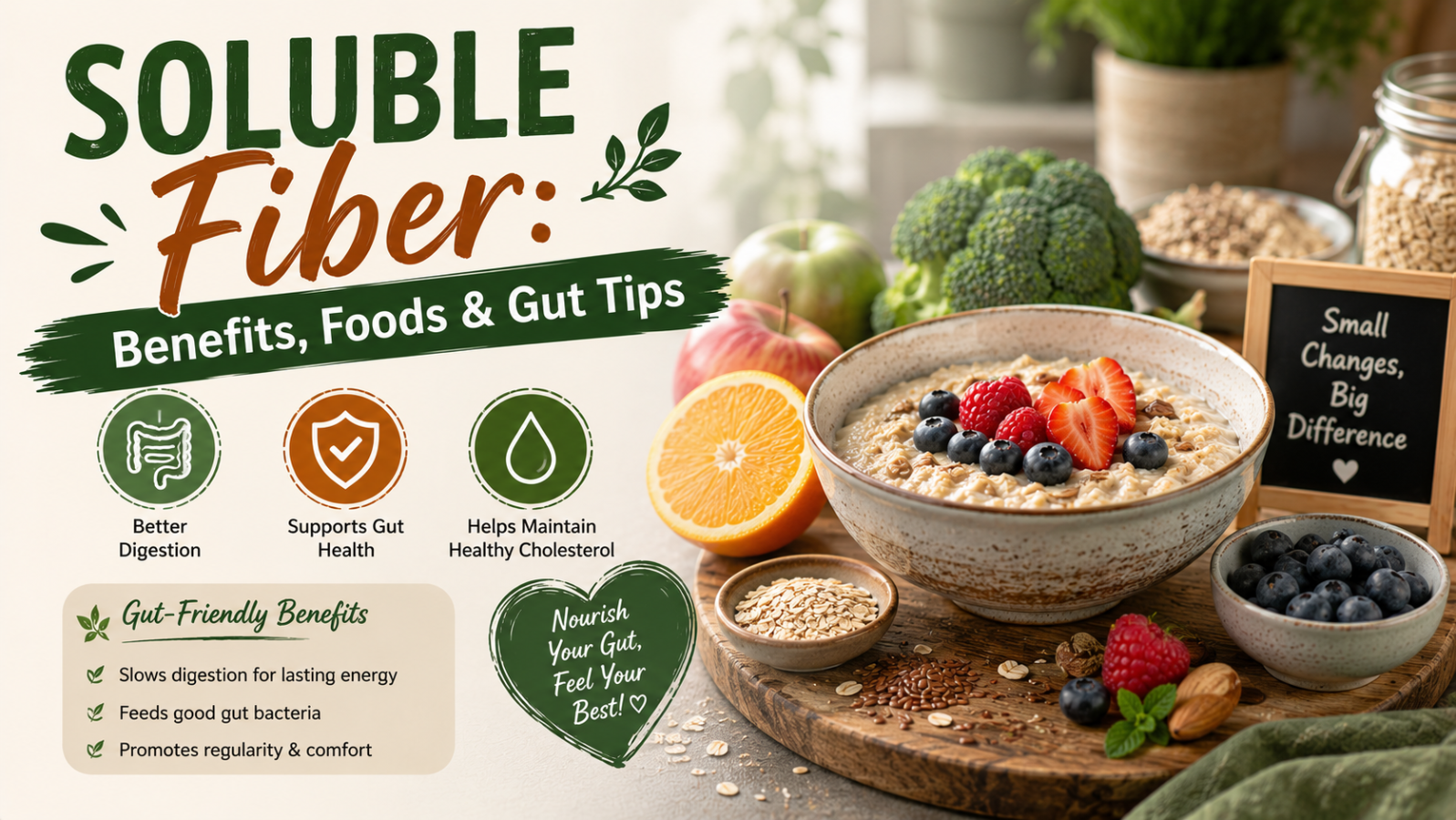
Soluble fiber can be a helpful part of a balanced diet, especially when you’re trying to support regular digestion and a healthier gut. Soluble fiber absorbs water and forms a soft, gel-like material in the digestive tract, which can influence bowel movements, digestion, and blood sugar response. If you’re building better gut habits, the Copy Button makes it easy to save the practical food ideas and tips you want to remember.
Quick Answer: What Is Soluble Fiber?
Soluble fiber is a type of dietary fiber that dissolves or disperses in water and forms a gel-like substance during digestion. It occurs naturally in foods such as oats, barley, beans, lentils, apples, citrus fruits, chia seeds, and some vegetables.
Unlike fiber that mainly adds bulk to stool, soluble fiber can slow digestion and serve as a food source for some beneficial gut bacteria. However, adding too much too quickly may cause gas or bloating.
How Soluble Fiber Supports Digestion
Soluble fiber works differently from many other carbohydrates. Instead of being fully broken down and absorbed in the small intestine, some soluble fiber reaches the colon, where gut microbes can ferment it.
That fermentation produces compounds that can support the gut environment. As a result, soluble fiber can be useful for people looking to improve overall digestive health.
It also absorbs water. Therefore, it can help create softer, more formed stools and support regular bowel habits.
Soluble Fiber vs. Insoluble Fiber
Both types of fiber matter, but they behave differently in the digestive tract.
Soluble fiber mixes with water and can form a gel-like substance. Foods such as oats, beans, apples, and barley are common sources.
Insoluble fiber doesn’t dissolve in water. Instead, it adds bulk to stool and helps food and waste move through the digestive system. Whole grains, nuts, seeds, and many vegetable skins provide insoluble fiber.
Most high-fiber foods contain a combination of both. So, you don’t need to choose one type and ignore the other.
Why the Difference Matters
If you’re prone to bloating, suddenly eating large amounts of any fiber can cause discomfort. However, soluble fiber may be easier for some people to tolerate when introduced gradually.
Your personal response matters more than simply following a list of “good” and “bad” foods.
Best Soluble Fiber Foods to Try
You don’t need specialty products to get more soluble fiber. Everyday foods can provide plenty.
Oats
Oats are one of the easiest choices. They contain beta-glucan, a type of soluble fiber that has been widely studied for its role in heart and metabolic health.
Try oatmeal topped with berries or sliced banana for a simple breakfast.
Barley
Barley contains beta-glucan as well. You can add cooked barley to soups, grain bowls, or salads.
If you’re not used to eating much fiber, start with a modest serving.
Beans and Lentils
Beans and lentils provide fiber along with plant-based protein and other nutrients. They can be particularly useful in soups, chili, and grain-based meals.
However, they can also increase gas in some people. Start with smaller portions and increase gradually.
Apples and Citrus Fruits
Apples, oranges, and other fruits contain soluble fiber along with vitamins and plant compounds.
Keeping the edible skin on an apple adds additional fiber, although some people with sensitive digestion may find certain fruits more comfortable in smaller portions.
Chia Seeds
Chia seeds absorb liquid and become gel-like. Add a small amount to oatmeal, yogurt, or a smoothie, then increase gradually if your digestion handles them well.
Because chia absorbs water, make sure your overall fluid intake is adequate.
Can Soluble Fiber Cause Bloating?
Yes. Although soluble fiber can support digestive health, increasing it rapidly may lead to gas, bloating, or abdominal discomfort.
This happens because some soluble fibers are fermented by gut bacteria. During that process, gas can form.
That doesn’t mean you should avoid fiber. Instead, increase your intake slowly and give your digestive system time to adjust.
For example, adding a small serving of oats at breakfast may be easier than suddenly eating large amounts of beans, lentils, bran, and high-fiber vegetables in the same day.
How to Add Soluble Fiber Without More Gas
A gradual approach usually makes more sense than trying to overhaul your diet overnight.
Start with one fiber-rich food at a time. Keep portions moderate, drink enough fluids, and pay attention to how your body responds.
You can also spread fiber throughout the day rather than eating most of it in one meal. For example, have oatmeal at breakfast, an apple as a snack, and lentils with dinner.
If bloating appears, don’t immediately blame the entire category of fiber. Look at the portion, the specific food, and what else you ate that day.
Soluble Fiber and Gut Health
Your gut contains trillions of microorganisms that interact with the food components reaching the colon. Certain fibers can be fermented by these microbes, making fiber an important part of a gut-supportive eating pattern.
Soluble fiber is particularly interesting because some varieties act as fermentable substrates for gut bacteria.
Still, there isn’t one perfect fiber food for everyone. A diverse diet that includes different plant foods can provide a broader mix of fibers and other beneficial compounds.
A Simple Gut-Friendly Combination
Instead of relying on one food, build variety into your meals.
Try oatmeal with fruit in the morning. Later, add vegetables to lunch and include lentils or beans in a moderate portion at dinner.
Over time, this approach can increase fiber intake without making every meal feel like a major dietary change.
Soluble Fiber and Constipation
Soluble fiber can help support bowel regularity by absorbing water and contributing to stool consistency. However, fiber works best as part of an overall routine.
Fluids, regular physical activity, and consistent meal habits also matter. If you’re constipated, suddenly consuming a huge amount of fiber may make you feel more bloated instead of better.
Increase fiber gradually and give your body time to respond.
If constipation continues despite lifestyle changes, or you notice blood in your stool, severe pain, vomiting, or unexplained weight loss, speak with a healthcare professional.
Soluble Fiber for Blood Sugar and Cholesterol
Soluble fiber has benefits that extend beyond digestion. Some types can slow the movement of food through the digestive tract, which may affect how quickly carbohydrates are absorbed.
Certain soluble fibers, particularly beta-glucan, can also help support healthy cholesterol levels when consumed as part of an overall heart-healthy diet.
That doesn’t make oatmeal or beans a treatment on their own. Instead, think of them as useful pieces of a broader eating pattern that includes vegetables, fruits, whole grains, nuts, seeds, and other minimally processed foods.
A Practical Soluble Fiber Meal Plan
Adding soluble fiber doesn’t have to complicate your meals.
Breakfast: Oatmeal with berries and a small amount of chia seeds.
Lunch: Vegetable soup with lentils and a whole-grain side.
Snack: An orange, apple, or another fruit you tolerate well.
Dinner: Barley with roasted vegetables and a protein source.
If that sounds like a major jump from your current diet, start smaller. Even one additional fiber-rich food each day can be a practical first step.
I generally prefer this gradual approach because it makes it easier to identify what works for your digestion. If a particular food causes discomfort, you can adjust the portion instead of abandoning fiber altogether.
How Much Soluble Fiber Do You Need?
There isn’t a single daily target specifically for soluble fiber that fits everyone. General fiber needs depend on factors such as age, sex, and overall calorie intake.
Rather than counting every gram of soluble fiber, focus on eating a variety of plant foods regularly.
Oats, barley, beans, lentils, fruits, vegetables, nuts, and seeds can all contribute to your total fiber intake. In addition, drinking enough water can make a higher-fiber eating pattern easier to tolerate.
Common Mistakes When Increasing Fiber
One of the biggest mistakes is changing too much at once.
Someone who normally eats little fiber may suddenly start drinking a high-fiber smoothie, eating a large bowl of oatmeal, adding beans to lunch, and taking a fiber supplement. That sounds healthy on paper, but the digestive system may not appreciate the sudden change.
Another mistake is forgetting fluids. Fiber and hydration work together, so don’t increase fiber while ignoring your water intake.
Finally, don’t assume that every digestive symptom means you need less fiber. Persistent symptoms may have other causes and deserve proper evaluation.
FAQ About Soluble Fiber
Is soluble fiber good for gut health?
Yes. Soluble fiber can support digestion and provide fermentable material for certain gut microbes. Different fibers affect the gut in different ways, so variety is valuable.
What foods are highest in soluble fiber?
Oats, barley, beans, lentils, apples, citrus fruits, chia seeds, and some vegetables are useful sources. The exact amount varies by food and serving size.
Can soluble fiber make you gassy?
It can, especially if you increase your intake quickly. Gut bacteria ferment some soluble fibers, and that process can produce gas. Gradually increasing fiber may improve tolerance.
Is soluble fiber good for constipation?
It can help support regular bowel movements by absorbing water and affecting stool consistency. However, persistent constipation may require a closer look at diet, hydration, medications, and other factors.
Should I take a soluble fiber supplement?
Not necessarily. Many people can get plenty of fiber from food. A supplement may be useful in some situations, but it’s best to choose one based on your individual needs and discuss regular use with a healthcare professional if you’re unsure.
Final Thoughts on Soluble Fiber
Soluble fiber is a useful part of a balanced, gut-friendly diet. It can support bowel regularity, interact with beneficial gut microbes, and contribute to heart and metabolic health.
The key is to increase it gradually rather than making a dramatic overnight change. Choose foods you enjoy, vary your plant sources, drink enough fluids, and pay attention to how your digestion responds.
If you’re trying to build better habits, save this guide with the Copy Button so you can quickly revisit the soluble fiber foods and digestion tips that work best for you.