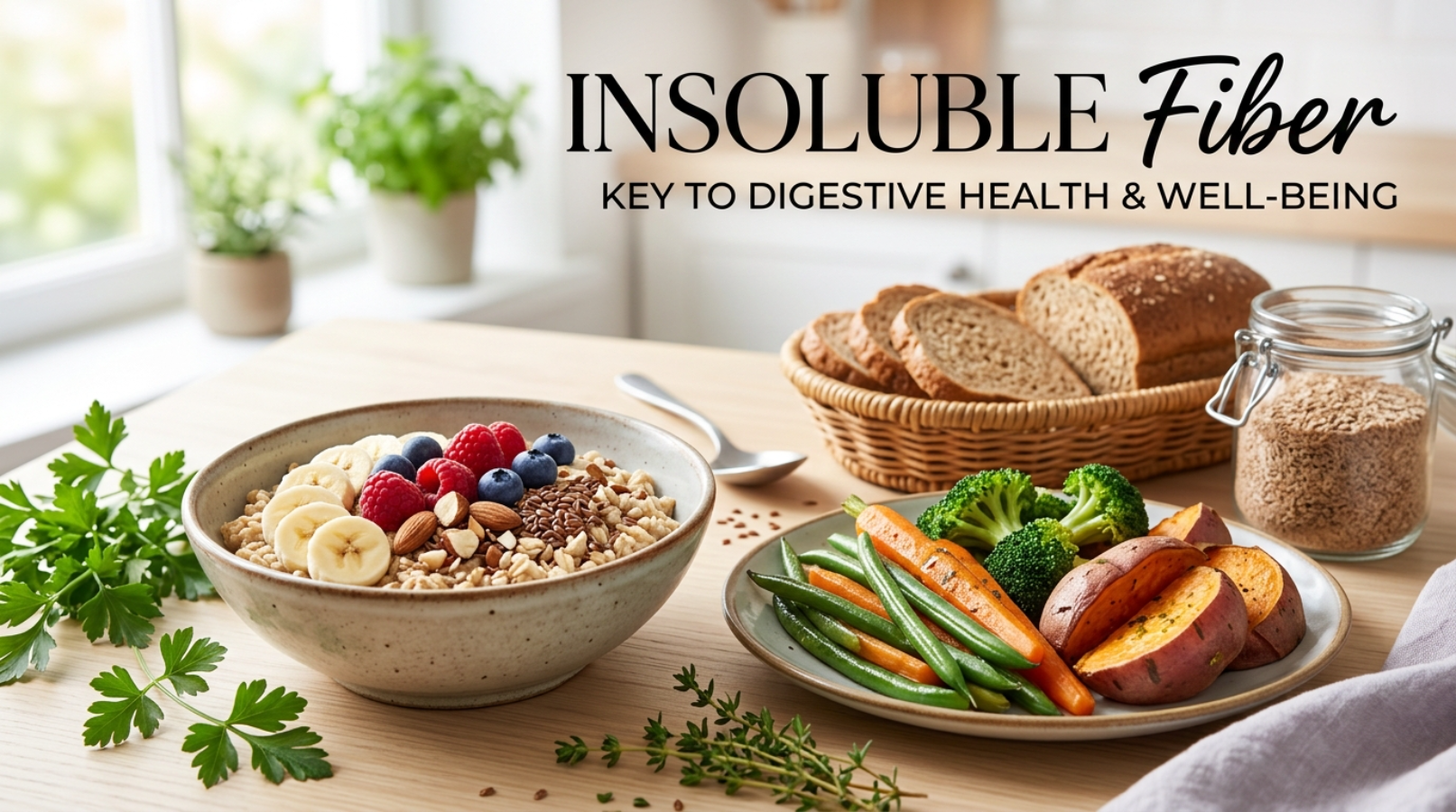
Insoluble fiber is the part of plant food that doesn’t dissolve in water and helps add bulk to stool, making it easier for waste to move through the digestive tract. It’s found in foods such as whole grains, vegetables, nuts, seeds, and some fruit skins. (Harvard Health)
If your diet has been light on fiber, adding more can make a noticeable difference in bowel regularity. However, increasing fiber too quickly can also leave some people feeling gassy or bloated. That’s why the goal isn’t simply to eat more, but to build your intake gradually and choose foods your digestive system handles well.
What Is Insoluble Fiber?
Insoluble fiber doesn’t dissolve in water. Instead, it helps increase stool bulk and can support normal movement through the intestines. (National Institutes of Health)
Think of it as the rougher, more structural part of many plant foods. Wheat bran, whole-grain products, carrots, green beans, and some vegetable skins are common sources.
Unlike some soluble fibers, insoluble fiber generally isn’t broken down extensively by gut bacteria. Its main digestive role involves adding physical bulk to stool.
How Insoluble Fiber Supports Digestion
One of the most useful benefits of insoluble fiber is its effect on bowel regularity. By adding bulk to stool, it can help waste move through the digestive tract more efficiently.
This can be particularly helpful for people who don’t get enough fiber from their normal diet. Still, fiber works best as part of an overall eating pattern that includes adequate fluids and a variety of plant foods.
For example, adding vegetables to lunch and choosing a whole-grain side at dinner can gradually increase your daily intake without turning every meal into a high-fiber meal.
Insoluble Fiber vs. Soluble Fiber
The difference between soluble and insoluble fiber is mainly how they interact with water and the digestive system.
Soluble fiber mixes with water and can form a gel-like substance. It is found in foods such as oats, beans, peas, some fruits, and barley. Some soluble fibers are also fermented by gut microbes.
Insoluble fiber doesn’t dissolve in water. It primarily adds bulk to stool and supports digestive regularity. Whole grains and many vegetables provide this type of fiber.
The two aren’t competing nutrients. In fact, many plant foods contain a mixture of both. For that reason, focusing on a varied, fiber-rich diet is usually more practical than trying to separate every food by fiber type.
Best Insoluble Fiber Foods
You don’t need specialty products to get insoluble fiber. Plenty of everyday foods can provide it.
Whole Grains
Whole-wheat bread, whole-grain cereals, wheat bran, and other whole-grain foods can contribute significant amounts of insoluble fiber.
When shopping, look for products that list a whole grain near the beginning of the ingredient list. Brown rice also contains fiber, although its fiber composition isn’t exclusively insoluble.
Vegetables
Many vegetables provide insoluble fiber along with vitamins, minerals, and other plant compounds.
Good choices include:
- Carrots
- Green beans
- Cauliflower
- Broccoli
- Potatoes with the skin
- Zucchini
- Cabbage
- Leafy greens
Cooking vegetables can make them easier for some people to tolerate. So, if a large raw salad leaves you uncomfortable, try lightly cooked vegetables instead.
Nuts and Seeds
Almonds, peanuts, sunflower seeds, pumpkin seeds, and other nuts and seeds contribute dietary fiber.
They’re also easy to add to meals. Sprinkle a small amount over oatmeal, yogurt, or a salad rather than making a sudden jump to large portions.
Fruits and Vegetable Skins
Some of the fiber in fruits and vegetables is concentrated in or near the skin. Apples, pears, potatoes, and several other plant foods can contribute fiber when eaten with their edible skins.
However, individual tolerance matters. If certain fruit skins seem to trigger digestive discomfort, peeled fruit may be easier to handle.
Can Insoluble Fiber Help With Constipation?
Yes, insoluble fiber can support regular bowel movements by increasing stool bulk. NIH notes that insoluble fiber is often used to help prevent or relieve constipation.
However, simply adding large amounts of bran or raw vegetables isn’t always the best approach. A sudden increase can cause gas, abdominal discomfort, or bloating.
Instead, increase fiber gradually. Drink enough fluids throughout the day, and give your digestive system time to adjust.
If constipation continues despite dietary changes, it’s worth discussing the problem with a healthcare professional rather than continually adding more fiber.
How Much Fiber Should You Eat?
Fiber needs vary by age, sex, and overall calorie intake. For adults, the Dietary Guidelines for Americans recommend roughly 22 to 34 grams of total fiber per day, depending on age and sex.
That target refers to total dietary fiber, not insoluble fiber alone.
You don’t need to calculate the exact amount of each fiber type at every meal. Instead, build meals around vegetables, fruits, legumes, nuts, seeds, and whole grains.
A simple day might look like this:
Breakfast: oatmeal topped with berries and nuts
Lunch: whole-grain sandwich with vegetables
Snack: an apple or pear
Dinner: brown rice, roasted vegetables, and beans
That approach naturally brings several types of fiber into your diet.
Why Too Much Insoluble Fiber Can Cause Bloating
More fiber isn’t always better when you increase it too quickly.
Someone who normally eats very little fiber may suddenly start eating bran cereal, large salads, beans, and several servings of vegetables each day. The result can be extra gas, abdominal fullness, or bloating.
The problem isn’t necessarily that fiber is unhealthy. Your digestive system may simply need time to adapt.
Research also shows that responses to different fibers can vary from person to person. Fiber type, dose, and individual gut microbiome characteristics can all influence how someone responds. (National Institutes of Health)
I’ve found that practical changes work better than trying to overhaul an entire diet overnight. A modest serving added consistently is often easier to tolerate than a dramatic fiber increase.
How to Increase Insoluble Fiber Without Discomfort
Start with one change at a time.
For example, replace white bread with whole-wheat bread at lunch. After your body adjusts, add another fiber-rich food.
A few other strategies can help:
- Increase portions gradually.
- Drink fluids regularly.
- Chew food thoroughly.
- Choose cooked vegetables if raw vegetables cause discomfort.
- Spread fiber across several meals.
- Keep some variety in your fiber sources.
- Avoid suddenly adding large amounts of fiber supplements.
Also, pay attention to your own response. A food can be nutritious and still not agree with you in large amounts.
Insoluble Fiber and Gut Health
Fiber does more than influence bowel movements. Dietary fiber interacts with the microorganisms living in the digestive tract, although different fibers can have different effects.
This is one reason a varied diet matters.
Instead of relying heavily on one fiber source, rotate whole grains, vegetables, fruits, beans, nuts, and seeds. That gives your diet a broader mix of plant compounds and fiber types.
At the same time, don’t assume that every high-fiber food will improve digestive symptoms for everyone. People with conditions such as IBS may respond differently to certain foods and fiber sources. NIDDK notes that soluble fiber may be more helpful for some people with IBS symptoms than insoluble fiber.
A Simple High-Fiber Meal Plan
You can make your meals more fiber-friendly without making them complicated.
Morning: Oatmeal with berries and a small handful of almonds.
Midday: Whole-grain toast with eggs, avocado, and cooked vegetables.
Afternoon: Fresh fruit with a handful of nuts.
Evening: Brown rice or another whole grain with roasted vegetables and a protein source.
The important part is consistency. You don’t need a perfect meal plan to get more fiber.
When Should You Talk With a Doctor?
Occasional constipation or mild digestive changes can happen when you change your diet. However, persistent or severe digestive symptoms deserve attention.
Talk with a healthcare professional if you experience ongoing constipation, significant abdominal pain, unexplained weight loss, blood in your stool, persistent vomiting, or major changes in bowel habits.
Also, if increasing fiber repeatedly makes your symptoms worse, don’t assume you simply need even more fiber. A healthcare professional or registered dietitian can help identify a more appropriate approach.
FAQ About Insoluble Fiber
Is insoluble fiber good for constipation?
It can help because it adds bulk to stool and supports movement through the digestive tract. However, increase it gradually and maintain adequate fluid intake.
What foods are highest in insoluble fiber?
Whole grains, wheat bran, many vegetables, nuts, seeds, and some fruit skins are useful sources. Many foods contain both soluble and insoluble fiber.
Can insoluble fiber cause gas?
Yes. A sudden increase in fiber can cause gas and bloating, particularly if your usual diet contains little fiber. Gradual increases are generally easier to tolerate.
Is insoluble fiber better than soluble fiber?
Neither is universally better. They behave differently in the digestive system and can provide different benefits. A varied diet usually provides both.
Should I take an insoluble fiber supplement?
Not necessarily. Whole foods are a good starting point. If you’re considering a fiber supplement, especially if you have ongoing digestive symptoms or take medications, discuss the choice with a healthcare professional.
The Bottom Line on Insoluble Fiber
Insoluble fiber plays an important role in digestive regularity by adding bulk to stool and helping waste move through the digestive tract. Whole grains, vegetables, nuts, seeds, and fruit skins can all contribute to your daily intake.
The easiest approach is to increase fiber gradually instead of making a dramatic change overnight. Pay attention to hydration and your body’s response, and aim for variety rather than relying on one food.
If you’re sharing this guide with family or friends, the Copy Button makes it easy to save and share the practical tips that work best for your routine.

Elizabeth Boham is a respected functional medicine physician and wellness educator with a passion for helping people improve their health through nutrition and lifestyle changes. As a contributor to Gutrova, she shares practical insights on gut health, digestive wellness, and healthy living, making complex health topics easy to understand and apply in everyday life.