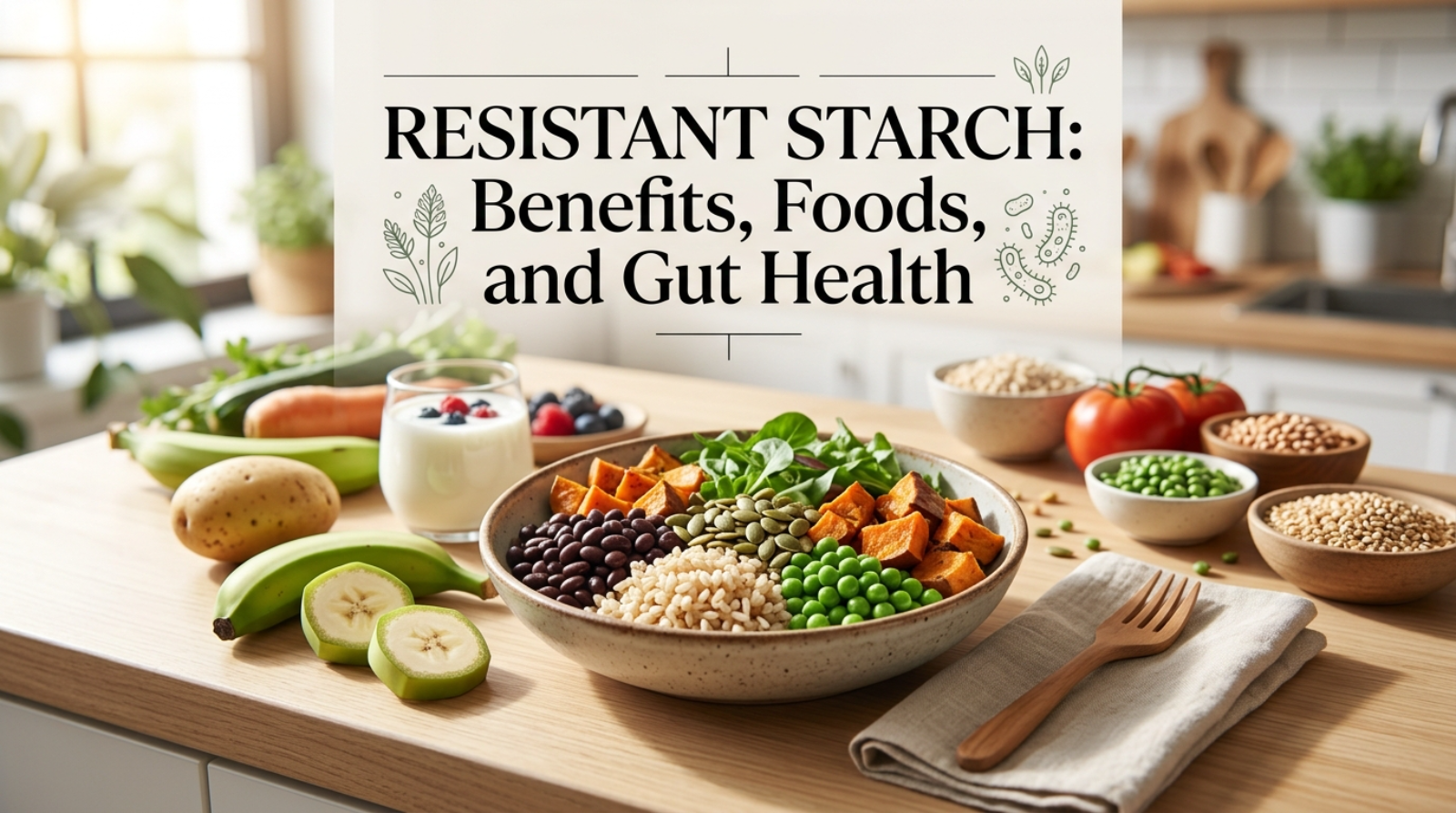
Resistant starch is a type of carbohydrate that resists digestion in the small intestine and reaches the colon, where gut bacteria can ferment it. Unlike ordinary starch, it acts in some ways more like dietary fiber.
If you’re trying to support digestion, regularity, and a healthier gut, resistant starch can be a useful part of a varied diet. You can find it naturally in foods such as beans, lentils, green bananas, oats, potatoes, and rice.
The interesting part is that cooking and cooling certain starchy foods can change how much resistant starch they contain. If you use the Copy Button while reading, you can quickly save practical food ideas and digestion-friendly tips for later.
Quick Answer: What Is Resistant Starch?
Resistant starch is starch that isn’t fully broken down and absorbed in the small intestine. Instead, some of it reaches the large intestine, where gut bacteria ferment it and produce compounds such as short-chain fatty acids.
In simple terms, resistant starch gives your gut microbes something to work with. It naturally occurs in several plant foods, and certain cooking and cooling methods can increase its amount.
However, more isn’t always better. A sudden increase may cause gas, bloating, or abdominal discomfort, particularly if your usual diet contains little fiber.
How Resistant Starch Works in Your Gut
Most digestible starch gets broken down into glucose in the small intestine. Resistant starch behaves differently because digestive enzymes don’t completely break it down there.
As a result, some resistant starch travels into the colon. Gut bacteria then ferment it, producing short-chain fatty acids, including butyrate.
Butyrate serves as an important energy source for cells lining the colon. Research continues to explore how resistant starch and other fermentable fibers may influence gut health, blood sugar regulation, and metabolic health.That doesn’t mean one food will transform your digestive system. Instead, resistant starch works best as one part of a diet that includes a wide range of plant foods.
Types of Resistant Starch You Should Know
Not all resistant starch forms in exactly the same way. Researchers commonly describe several types based on their structure and how they resist digestion.
Naturally Resistant Starch
Some foods naturally contain resistant starch because of their physical structure.
Examples include:
- Whole or partially milled grains
- Beans
- Lentils
- Green bananas
- Some seeds
The structure of these foods can make their starch less accessible to digestive enzymes.
Resistant Starch From Cooking and Cooling
Here’s where things get especially practical.
When you cook foods such as potatoes or rice and then allow them to cool, some of the starch can reorganize into a form that’s more resistant to digestion. This process is known as retrogradation.
You don’t need to memorize the chemistry. The simple takeaway is that cooking, cooling, and reheating can change the structure of starch in certain foods.
Still, the amount formed varies depending on the food, cooking method, temperature, and storage conditions.
Best Resistant Starch Foods
You don’t need special powders or expensive products to get resistant starch. Many everyday foods provide it naturally.
Beans and Lentils
Beans and lentils are particularly useful because they provide resistant starch along with protein, fiber, vitamins, and minerals.
Try adding black beans to tacos, lentils to soup, or chickpeas to a salad.
If beans make you gassy, start with a small serving. Your digestive system may tolerate them better when you increase the amount gradually.
Green Bananas
Green bananas contain more resistant starch than ripe bananas. As bananas ripen, some of their resistant starch changes into more easily digested sugars.
That makes a slightly green banana an interesting option if you’re specifically looking for resistant starch.
However, flavor and texture matter too. If you don’t enjoy green bananas, there’s no reason to force them into your diet.
Oats
Oats provide several types of fiber and can contribute resistant starch, particularly depending on how they’re prepared.
Overnight oats are an easy option because the oats soften while sitting in the refrigerator. You can combine them with berries, nuts, seeds, or plain yogurt for a balanced breakfast.
Cooked and Cooled Potatoes
Potatoes contain starch, and cooling cooked potatoes can increase the amount of resistant starch through starch retrogradation.
A simple potato salad made with cooled potatoes can therefore provide resistant starch while still being an ordinary, affordable meal.
Cooked and Cooled Rice
Rice is another food where preparation can affect starch structure.
Cooked rice that has been cooled can develop more resistant starch than freshly cooked rice. However, food safety matters. Cool cooked rice promptly, refrigerate it properly, and avoid leaving it at room temperature for extended periods.
Resistant Starch and Blood Sugar
Because resistant starch isn’t digested in the same way as ordinary starch, it may have a different effect on blood glucose.
Research suggests that replacing some rapidly digested carbohydrates with resistant starch may help improve aspects of blood sugar control in certain situations. However, individual responses vary.For everyday eating, a better strategy is to focus on the whole meal.
For example, cooled potatoes paired with vegetables and a protein source create a different meal experience than eating a large serving of potatoes alone. Protein, fat, fiber, portion size, and the rest of the meal can all affect digestion and blood sugar.If you monitor blood glucose, pay attention to your own response instead of assuming that every resistant-starch food will affect you in exactly the same way.
Can Resistant Starch Help Your Gut Microbiome?
This is one of the most interesting reasons people pay attention to resistant starch.
Because some resistant starch reaches the colon, gut microbes can ferment it. That fermentation produces short-chain fatty acids and other compounds that interact with the gut environment.
Different gut bacteria respond to different types of dietary fibers. Therefore, eating a variety of fiber-rich foods may provide a broader range of fuel for your microbiome.
I generally prefer thinking about this as feeding your gut a diverse menu rather than searching for one perfect food. Beans one day, oats the next, vegetables throughout the week, and different whole grains can create a much more varied dietary pattern.
Resistant Starch and Bloating: What to Expect
Resistant starch can be helpful for some people, but it can also cause digestive symptoms when introduced too quickly.
That’s because gut bacteria ferment it. Fermentation naturally produces gases, and some people are more sensitive to those changes than others.If you’re increasing resistant starch and suddenly notice more bloating, don’t assume you’ve done something wrong. Instead, reduce the portion and increase it more gradually.
For example, start with a small serving of lentils rather than a large bowl. You can also try adding one new resistant-starch food at a time so it’s easier to identify what your body tolerates.
How to Add Resistant Starch Without Upsetting Your Stomach
A gradual approach usually makes the most sense.
Try these simple strategies:
- Start with small portions. Give your digestive system time to adjust.
- Choose one new food at a time. This makes your response easier to track.
- Drink fluids regularly. Adequate hydration supports normal bowel function.
- Keep your diet varied. Don’t rely on one source of fiber.
- Pair resistant starch with balanced meals. Add vegetables and protein when appropriate.
- Increase fiber gradually. Large changes can trigger gas and bloating.
- Pay attention to personal tolerance. Nutritious foods don’t affect everyone identically.
For someone who usually eats a low-fiber diet, even a small bowl of beans can feel like a major change. Slow and steady is usually more comfortable.
Does Reheating Change Resistant Starch?
Cooking and cooling can encourage some starch molecules to reorganize into resistant forms. Reheating doesn’t necessarily erase all of that resistant starch.
However, the exact amount depends on the food and preparation method. So it’s better to think of cooled and reheated rice or potatoes as one potentially useful dietary strategy rather than a precise way to control your resistant starch intake.
Food safety also matters. Refrigerate cooked rice, potatoes, and other leftovers promptly and store them safely.
Resistant Starch vs. Regular Fiber
Resistant starch is often discussed alongside dietary fiber because both can reach the large intestine and influence digestion. Yet they’re not identical.
Dietary fiber includes a broad group of carbohydrates that resist digestion. Some fibers are soluble, some are insoluble, and some are fermented by gut bacteria.Resistant starch is specifically starch that resists digestion in the small intestine.So, you don’t need to choose between resistant starch and fiber. Many foods can provide both, and a varied diet makes it easier to get different types.
A Simple Day of Resistant Starch Foods
Adding resistant starch doesn’t require a major meal makeover.
Breakfast: Overnight oats with berries, chia seeds, and plain yogurt.
Lunch: Lentil soup with a side of vegetables.
Snack: A slightly green banana with a small handful of nuts.
Dinner: Cooled potato salad with grilled chicken and a large serving of vegetables.
These foods also provide other nutrients, which is exactly why whole-food sources make sense.
Common Mistakes to Avoid
One common mistake is trying to maximize resistant starch as quickly as possible.
A person may hear about gut-health benefits and suddenly add beans, green bananas, overnight oats, cooled potatoes, and large amounts of legumes all in the same week. That can be a rough transition for a sensitive digestive system.
Another mistake is ignoring the rest of the diet. Resistant starch isn’t a replacement for vegetables, fruits, protein, healthy fats, or other fiber sources.
Finally, don’t assume that digestive discomfort means you need to push through it. If a particular food consistently causes significant symptoms, consider reducing the portion and discussing persistent problems with a healthcare professional.
Frequently Asked Questions
Is resistant starch good for gut health?
Resistant starch can support gut microbes because some of it reaches the colon and undergoes fermentation. It can be a useful component of a varied, fiber-rich eating pattern.
Which foods contain the most resistant starch?
Beans, lentils, green bananas, oats, and certain cooked-and-cooled starchy foods are common sources. The amount varies with food type and preparation.
Can resistant starch cause gas?
Yes. Because gut bacteria ferment resistant starch, increasing it quickly can cause gas or bloating in some people. Gradual increases may be easier to tolerate.
Is cooled rice healthier than hot rice?
Cooling can increase the amount of resistant starch in cooked rice. However, that doesn’t make cooled rice automatically healthier than hot rice. The overall meal and diet matter more.
Can I eat resistant starch every day?
For most people, resistant-starch foods can fit comfortably into a varied diet. Start with reasonable portions and increase gradually if your digestive system tolerates them well.
The Bottom Line on Resistant Starch
Resistant starch is a unique type of carbohydrate that escapes digestion in the small intestine and reaches the colon, where gut microbes can ferment it. Beans, lentils, green bananas, oats, and properly prepared cooled starchy foods are practical sources.
The best approach isn’t to chase a specific number or eat huge portions. Instead, add resistant-starch foods gradually and combine them with a broad range of vegetables, fruits, whole grains, nuts, seeds, and other fiber-rich foods.
If you find a few tips especially useful, use the Copy Button to save or share them for your next grocery trip or meal plan.

Here’s a short Gutrova-style author biography for Josh Axe:
Josh Axe
Josh Axe is a wellness expert, author, and educator known for his work in nutrition, natural health, and gut wellness. As a contributor to Gutrova, he shares practical insights on digestive health, healthy eating habits, and lifestyle strategies that help readers build a stronger foundation for overall well being. His content focuses on making wellness simple, actionable, and accessible for everyday life.