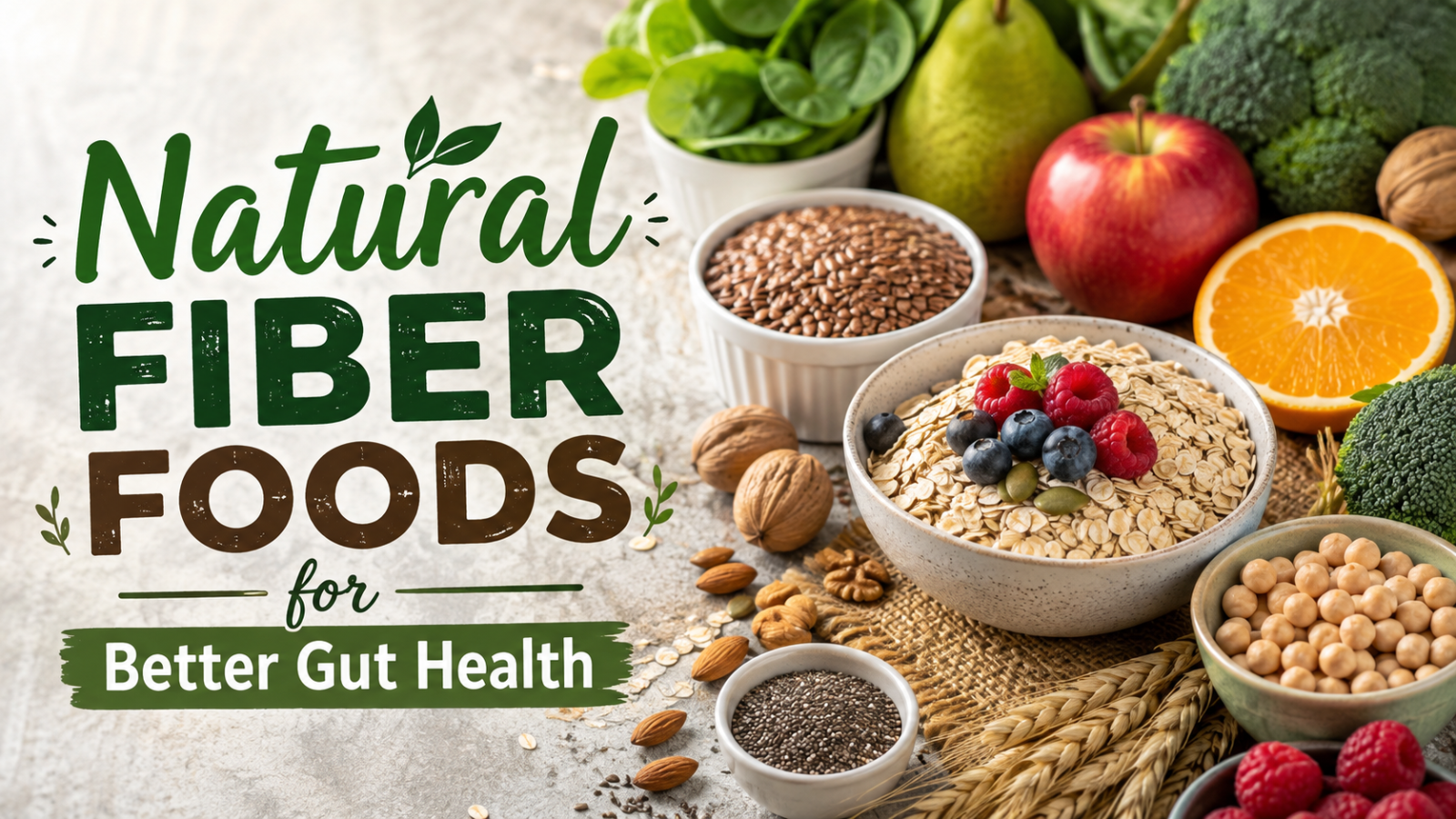
Natural fiber is found in everyday plant foods such as beans, berries, vegetables, whole grains, nuts, and seeds, and it can play an important role in digestive health. The real trick isn’t simply eating as much fiber as possible. It’s choosing a variety of foods and increasing your intake at a pace your body can handle.
If you’ve ever added a giant serving of beans or raw vegetables to your plate and regretted it later, you’re not alone. Our Copy Button makes it easy to save useful gut health tips and instantly copy or share the ideas you want to remember.
Quick Answer
Natural fiber is dietary fiber that occurs naturally in plant foods. Good sources include beans, lentils, fruits, vegetables, oats, barley, whole grains, nuts, and seeds.
Different fibers behave differently in the digestive tract. Some add bulk to stool, some absorb water, and some are fermented by gut microbes.
For most people, the best approach is to eat a wide variety of plant foods and increase fiber gradually. Drinking fluids regularly can also make a higher fiber diet more comfortable.
What Is Natural Fiber and Why Does It Matter
Natural fiber is the part of plant foods that your body doesn’t fully digest. Instead, it travels through the digestive tract and can influence stool consistency, bowel regularity, and the activity of gut microbes.
Some fibers are fermented by bacteria in the colon. This process can produce short chain fatty acids, which researchers continue to study for their role in intestinal and metabolic health.
That’s one reason variety matters. A plate containing beans, vegetables, whole grains, fruit, nuts, and seeds gives you a broader mix of fibers than relying on a single food.
Fiber also makes meals more satisfying. A bowl of oatmeal with berries and walnuts, for example, can feel much more substantial than a breakfast built mostly around refined grains.
Best Natural Fiber Foods to Add to Your Kitchen
You don’t need specialty products to eat more fiber. In fact, many excellent choices are inexpensive and easy to find at a regular grocery store.
Beans and lentils are especially useful because they provide both fiber and plant protein. Fruits, vegetables, whole grains, nuts, and seeds add even more variety.
Try keeping several of these foods available:
- Oatmeal for breakfast.
- Black beans for tacos and grain bowls.
- Lentils for soups and stews.
- Chickpeas for salads and hummus.
- Raspberries and blackberries for snacks.
- Apples and pears for portable fruit.
- Sweet potatoes for easy side dishes.
- Broccoli for roasted or steamed meals.
- Green peas for pasta, rice, and soups.
- Chia seeds for oatmeal and yogurt.
- Ground flaxseed for smoothies.
- Almonds and walnuts for snacks.
- Barley for soups and grain bowls.
- Whole grain bread for sandwiches.
- Brown rice for bowls and stir fries.
You don’t have to eat all of these in one day. Rotate them throughout the week instead.
Natural Fiber and the Gut Microbiome
Your gut microbiome contains a large community of microorganisms that interact with the food reaching your digestive tract. Certain types of fiber become fuel for these microbes.
Research suggests that a diverse diet rich in plant foods can help support a diverse gut microbiome. However, that doesn’t mean one food can transform your gut overnight.
Think about variety instead. You might have oats and berries in the morning, a chickpea salad at lunch, and roasted vegetables with dinner.
That approach is easier to maintain, too. Personally, I find that rotating foods works better than trying to force one supposedly perfect ingredient into every meal.
Natural Fiber for Regular Digestion
Fiber can support normal bowel movements by influencing stool bulk and consistency. However, the effect depends on the type of fiber, your overall diet, fluid intake, and individual digestive habits.
Insoluble fiber is found in foods such as many vegetables, whole grains, nuts, and seeds. It adds bulk to stool and can help support normal movement through the digestive tract.
Soluble fiber behaves differently. Oats, beans, lentils, apples, and some other foods contain soluble fibers that interact with water and can form a gel like substance.
Fortunately, you don’t need to calculate the exact ratio of each type. A varied diet naturally provides a mixture.
Natural Fiber at Breakfast
Breakfast can be an easy place to improve your fiber intake without changing your entire routine.
Oatmeal topped with berries, chia seeds, and walnuts is one simple combination. If you prefer toast, choose a whole grain option and add avocado alongside a piece of fruit.
For a cold breakfast, try plain yogurt with berries, oats, and ground flaxseed. Overnight oats can also work well when mornings are rushed.
The key is convenience. Keep your favorite fiber rich ingredients somewhere visible so they’re easy to reach before you head out the door.
Natural Fiber for Lunch and Dinner
Lunch doesn’t have to mean a complicated salad. A grain bowl with brown rice, black beans, vegetables, avocado, and a simple dressing can provide a satisfying combination of plant foods.
Similarly, a sandwich made with whole grain bread can become more fiber friendly when you add lettuce, tomato, cucumber, or other vegetables. Pair it with fruit instead of a highly processed snack.
Dinner offers even more flexibility. Try a baked sweet potato with lentils and roasted vegetables, or add beans and vegetables to tacos.
Soups are another practical choice. Lentil soup, split pea soup, and vegetable barley soup can bring several plant foods together in one comforting meal.
Increasing Natural Fiber Without Uncomfortable Bloating
This is where many people make an avoidable mistake. They hear that fiber is beneficial, then suddenly add huge portions of beans, bran cereal, vegetables, seeds, and whole grains.
The result can be gas, bloating, abdominal discomfort, or changes in bowel habits.
Instead, increase fiber gradually. Add one new food or increase one serving at a time, then give your digestive system a chance to adjust.
Spread fiber across your meals rather than eating most of it at dinner. Also, drink fluids regularly throughout the day.
If one food consistently causes discomfort, you don’t have to abandon fiber altogether. Try a smaller serving or choose another source.
Natural Fiber for Busy Days
Healthy eating becomes harder when convenience disappears. Fortunately, many natural fiber foods require almost no preparation.
Keep apples, pears, oranges, nuts, or berries available for quick snacks. Frozen vegetables can also save time because they can go directly into soups, stir fries, pasta dishes, and rice bowls.
Canned beans are another useful shortcut. Rinse them before adding them to tacos, salads, soups, or grain bowls.
For breakfast, overnight oats can be prepared the night before. As a result, you can start the morning with a fiber rich meal even when your schedule is packed.
Natural Fiber Versus Fiber Supplements
Fiber supplements can have a place in some people’s diets, but whole foods offer benefits beyond their fiber content.
Fruits and vegetables provide vitamins, minerals, and plant compounds. Beans and lentils also provide protein and minerals, while nuts and seeds contribute healthy fats and other nutrients.
Therefore, whole plant foods are a useful foundation for most fiber focused eating patterns.
A supplement can be convenient in certain circumstances, but it shouldn’t become a substitute for dietary variety. If your meals contain very few plant foods, gradually adding whole foods can broaden your overall nutrition.
Natural Fiber for Different Eating Styles
One advantage of natural fiber is that it doesn’t require a specific eating style. You can eat meat, fish, eggs, or dairy and still build a fiber rich diet.
For example, someone might enjoy grilled chicken with lentils and roasted vegetables. Another person might prefer a vegetarian bowl with chickpeas, quinoa, greens, and avocado.
Plant based eaters have plenty of choices, including beans, peas, lentils, whole grains, fruits, vegetables, nuts, and seeds.
Family meals can stay familiar, too. Add black beans to tacos, serve fruit with breakfast, or mix extra vegetables into pasta sauce rather than completely changing everyone’s favorite foods.
The goal is flexibility, not dietary perfection.
Common Natural Fiber Mistakes to Avoid
Adding fiber too quickly is probably the mistake people notice first. Your digestive system may need time to adapt to a substantial change.
Another common issue is relying on one food. Eating bran cereal every morning doesn’t provide the same variety as rotating fruits, vegetables, legumes, whole grains, nuts, and seeds.
Skipping fluids can also make a higher fiber intake less comfortable. Instead, drink regularly throughout the day and pay attention to your body’s normal thirst signals.
Finally, don’t assume that every digestive symptom means you need to eliminate fiber. Sometimes the portion is simply too large, or the change happened too quickly.
Small adjustments can make a surprisingly big difference.
How to Build a Simple Natural Fiber Routine
Start with one meal instead of trying to redesign your entire diet.
For breakfast, add fruit and seeds to oatmeal. At lunch, choose a whole grain and add beans or vegetables. At dinner, make vegetables or legumes a regular part of the plate.
Then look at your snacks. An apple with nut butter, berries with yogurt, or a small handful of nuts can be more useful than reaching for a highly refined snack every afternoon.
After a week or two, look at what feels easy and what doesn’t. Keep the habits that fit naturally into your life.
That’s the part many nutrition plans overlook. A theoretically perfect diet isn’t very useful if you can’t stick with it.
Frequently Asked Questions About Natural Fiber
What foods have the most natural fiber
Beans, lentils, peas, berries, pears, oats, barley, whole grains, nuts, seeds, and many vegetables are excellent sources. Eating several types throughout the week can provide greater dietary variety.
Is natural fiber better than added fiber
Whole plant foods provide fiber alongside vitamins, minerals, and other beneficial compounds. Added fiber can still be useful, but whole foods offer broader nutritional value.
Can natural fiber cause gas
Yes. Some fermentable fibers can increase gas, especially when you suddenly increase your intake. Gradual changes and smaller portions may improve comfort.
How much natural fiber do adults need
General nutrition guidance commonly places adult fiber needs in the range of about 25 to 38 grams per day, although individual needs vary with factors such as age and sex. Your usual diet and digestive tolerance also matter.
What is the easiest way to eat more natural fiber
Add one plant food to each meal. Fruit at breakfast, beans or vegetables at lunch, and a vegetable or whole grain at dinner can gradually raise your intake without requiring major changes.
Conclusion
Natural fiber doesn’t require an expensive diet, complicated recipes, or a collection of supplements. Beans, lentils, berries, vegetables, oats, whole grains, nuts, and seeds can all become part of ordinary meals.
Start slowly if your current intake is low. Add variety, drink fluids regularly, and pay attention to how your body responds.
Most of all, make fiber practical. A bowl of oatmeal before work, an apple in your bag, beans in a quick dinner, or frozen vegetables in the freezer can turn good intentions into habits.
When you find tips that work for you, use the Copy Button to save and share your favorites. Your natural fiber routine doesn’t need to be perfect. It simply needs to be realistic enough to keep going.