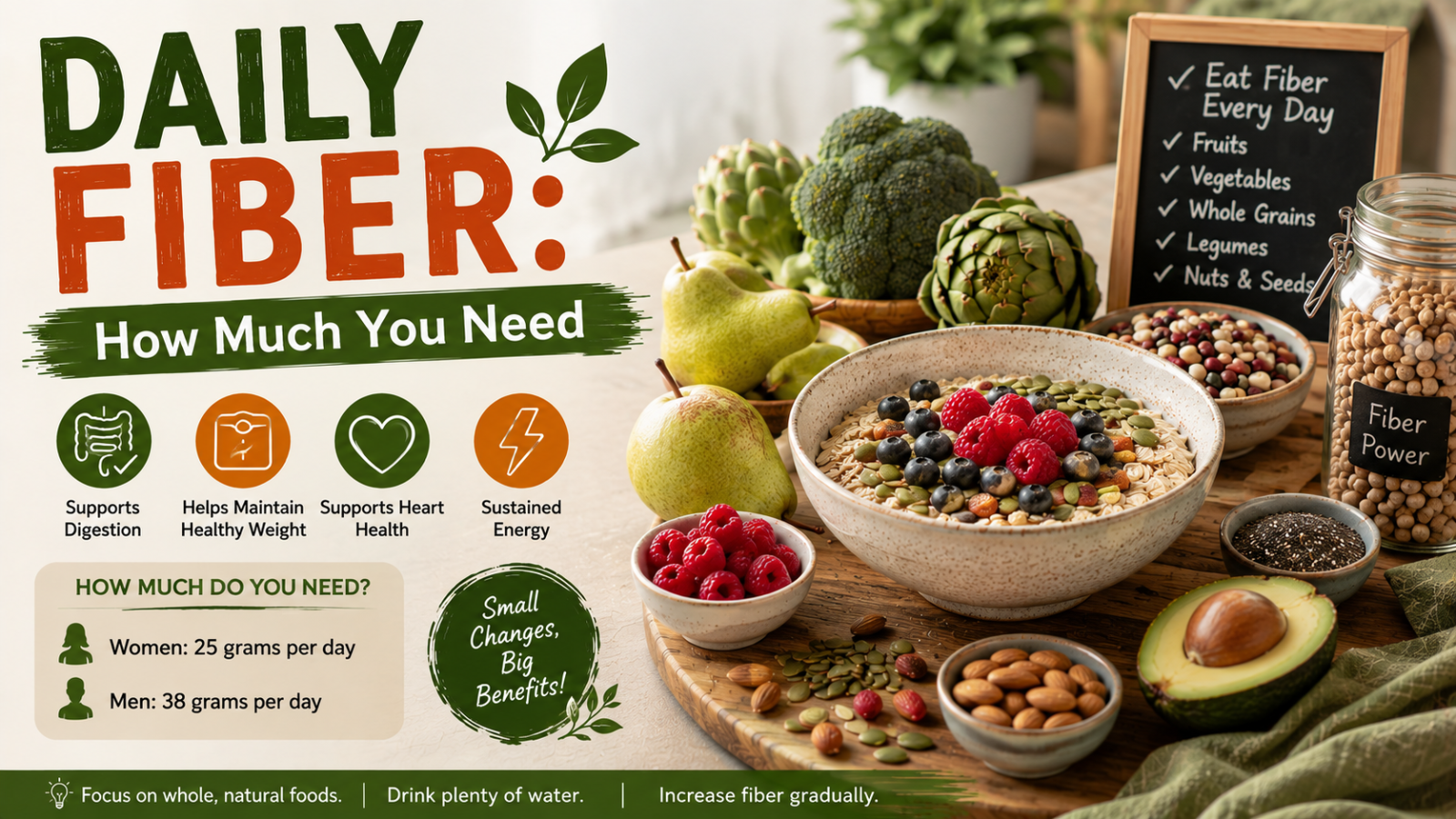
Daily fiber is one of the simplest ways to support regular digestion, bowel health, and a more diverse gut microbiome. Yet many people struggle to get enough from everyday meals, especially when busy schedules lead to more refined grains and fewer fruits, vegetables, beans, and whole grains.
The good news is that reaching your fiber goal doesn’t require a dramatic diet overhaul. You can build daily fiber into familiar meals gradually, using foods you already enjoy. Use the Copy Button on helpful tips in this article so you can save or share them easily.
Quick Answer: How Much Daily Fiber Do You Need?
Most adults need roughly 22 to 34 grams of fiber per day, depending on age and sex, according to the National Institute of Diabetes and Digestive and Kidney Diseases. Mayo Clinic guidance gives more specific age- and sex-based targets, including 25 grams for women age 50 or younger and 38 grams for men in that age group. (NIDDK)
Rather than trying to reach your target overnight, increase fiber slowly and drink enough fluids. This approach can make the transition easier because a sudden increase may cause gas, bloating, or abdominal discomfort. (Mayo Clinic News Network)
Why Daily Fiber Matters for Digestion
Fiber passes through much of the digestive tract without being fully broken down. Instead, different types of fiber perform different jobs along the way.
Soluble fiber absorbs water and can form a gel-like substance. Insoluble fiber adds bulk to stool and helps material move through the digestive system. Many plant foods contain both types, so eating a varied diet is a practical way to get them together. (The Nutrition Source)
Fiber also matters beyond bowel movements. Certain fibers are fermented by gut microbes, producing short-chain fatty acids that are part of the communication between the gut and the rest of the body. (The Nutrition Source)
That doesn’t mean more is always better. If your current diet contains very little fiber, suddenly adding several large servings of beans, bran, and vegetables can leave you feeling worse instead of better.
Best Foods for Daily Fiber
You don’t need specialty powders or expensive products to increase your intake. Whole plant foods provide plenty of useful options.
Start With Berries and Other Fruits
Raspberries, blackberries, pears, apples with their skins, oranges, and other fruits can contribute fiber while adding natural sweetness to meals.
For example, add berries to oatmeal in the morning or keep an apple nearby for an afternoon snack. Keeping the edible skin on certain fruits can also increase the amount of fiber you get.
Add Beans and Lentils
Beans, chickpeas, and lentils are especially useful because they provide fiber along with plant protein and other nutrients.
Try adding lentils to soup, chickpeas to a salad, or black beans to a rice bowl. If beans tend to cause gas, begin with a smaller serving and increase it gradually.
Choose Whole Grains
Oatmeal, barley, quinoa, whole-wheat bread, and brown rice can make it easier to build fiber into meals without changing your entire eating pattern.
For instance, replacing white rice with brown rice a few times a week can be a simple first step. You can also mix whole-grain and refined grains at first if a complete switch feels too drastic.
Don’t Forget Nuts and Seeds
Almonds, peanuts, chia seeds, flaxseeds, and other nuts and seeds provide fiber in relatively small portions.
Sprinkle chia or ground flax into oatmeal or yogurt. Alternatively, add nuts to a salad for extra texture and staying power.
Harvard’s Nutrition Source identifies whole grains, fruits, vegetables, legumes, nuts, and seeds as important sources of dietary fiber. (The Nutrition Source)
Daily Fiber From Breakfast to Dinner
One of the easiest ways to reach your goal is to stop thinking about fiber as a single number you must hit at night.
Instead, spread it across the day.
A simple breakfast might include oatmeal topped with berries and chia seeds. Lunch could feature a whole-grain wrap with vegetables and beans. Then, dinner might include roasted vegetables, lentils, or brown rice.
This approach feels much more manageable than trying to eat a huge bowl of vegetables at one meal.
Here’s another practical example:
- Breakfast: Oatmeal, berries, and chia seeds
- Lunch: Lentil soup with a whole-grain slice of bread
- Snack: Apple with a small handful of almonds
- Dinner: Brown rice, roasted vegetables, and beans
The exact fiber total will depend on portions and brands, but the pattern gives your diet several opportunities to supply fiber.
How to Increase Daily Fiber Without Feeling Bloated
This is where many people go wrong.
They hear that fiber is good for digestion, so they immediately add large amounts of bran cereal, beans, vegetables, and fiber supplements. A few days later, they’re dealing with extra gas and bloating.
Your digestive system needs time to adjust. Mayo Clinic specifically recommends increasing fiber gradually because a rapid increase can trigger abdominal discomfort, gas, and bloating. (Mayo Clinic News Network)
Try these practical changes instead:
- Add one extra fruit each day.
- Choose oatmeal instead of a low-fiber breakfast cereal.
- Add a small serving of beans to lunch.
- Swap one refined grain for a whole grain.
- Sprinkle seeds into meals.
- Increase vegetable portions slowly.
- Drink fluids consistently throughout the day.
- Give your body several days to adjust before adding much more.
If you notice that one particular high-fiber food repeatedly causes discomfort, don’t assume every fiber source will affect you the same way.
Daily Fiber and Water Work Together
Fiber and fluids have a close relationship, particularly when you’re increasing fiber to support regular bowel movements.
NIDDK recommends drinking plenty of liquids when increasing fiber because fluids can help fiber work better and contribute to softer stools. (NIDDK)
You don’t need to obsess over one exact amount of water. Instead, drink regularly throughout the day and pay attention to your thirst and usual hydration needs.
For example, if you suddenly add more oatmeal, beans, vegetables, and whole grains but barely change your fluid intake, your digestive system may not appreciate the adjustment.
Soluble and Insoluble Fiber Have Different Roles
Not all fiber behaves the same way.
Soluble fiber dissolves in water and can form a gel-like substance. Oats, beans, apples, carrots, and some other plant foods provide soluble fiber.
Insoluble fiber doesn’t dissolve in water. It adds bulk to stool and supports movement through the digestive tract. Whole grains, vegetables, nuts, and some fruit skins contain insoluble fiber. (The Nutrition Source)
There’s no need to obsess over getting an exact amount of each type. Eating a broad mix of plant foods naturally provides different fibers.
Can Daily Fiber Cause Gas?
Yes, especially when you increase your intake quickly.
Some fibers are fermented by gut bacteria. That process can produce gas, and people with sensitive digestive systems may notice bloating when they suddenly eat more fermentable foods.
I find this is one of the most useful things to explain when discussing fiber: temporary digestive discomfort doesn’t automatically mean that a high-fiber food is “bad” for you. Sometimes the portion is simply too large for your current tolerance.
Try reducing the portion, eating the food more slowly, and increasing it gradually later.
If a food consistently causes significant digestive symptoms, keeping a simple food-and-symptom record can help you identify patterns.
Daily Fiber for Constipation and Regularity
Fiber is particularly well known for supporting bowel regularity.
NIDDK recommends adequate fiber and fluids as part of dietary strategies for constipation. Regular physical activity may also help. (NIDDK)
A practical routine could look like this:
Morning: Oatmeal with fruit
Afternoon: Fruit and nuts
Dinner: Vegetables plus beans or whole grains
Throughout the day: Regular fluid intake and movement
The goal isn’t to force your digestive system to work faster. Instead, you’re giving it the food, fluids, and routine it needs to function normally.
If constipation continues despite dietary changes, it’s worth discussing the problem with a healthcare professional rather than continually adding more fiber.
Daily Fiber and Your Gut Microbiome
Your gut contains a large community of microorganisms, and diet can influence which microbes thrive there.
Certain gut bacteria use fermentable fibers as fuel. During fermentation, they produce short-chain fatty acids and other compounds that researchers continue to study for their role in gut and overall health. (The Nutrition Source)
That’s one reason variety matters.
Instead of eating the same fiber source every day, rotate foods such as oats, lentils, berries, leafy greens, beans, whole grains, nuts, and seeds.
A diverse plate can provide a broader range of fibers and plant compounds than relying heavily on one food.
A Simple Daily Fiber Plan for Beginners
If your current intake is low, keep your first goal realistic.
Breakfast
Choose oatmeal topped with berries and a spoonful of chia seeds.
Lunch
Build a bowl with greens, chickpeas or lentils, vegetables, and a whole grain.
Snack
Have an apple, pear, berries, or a small serving of nuts.
Dinner
Add vegetables and a fiber-rich carbohydrate such as beans, quinoa, or brown rice.
The next step
After several days, assess how you feel. If digestion is comfortable, gradually increase portions or add another fiber-rich food.
This gradual approach is much easier to maintain than making five major dietary changes at once.
Common Daily Fiber Mistakes to Avoid
A few habits can make increasing fiber unnecessarily difficult.
Adding too much too quickly: Your gut needs time to adapt.
Ignoring fluids: Fiber works alongside adequate hydration.
Relying on supplements immediately: Whole foods offer fiber along with vitamins, minerals, and other plant compounds.
Eating only one type of fiber: Variety gives you different fiber types.
Avoiding all high-fiber foods after one episode of gas: A large portion may have been the problem rather than the food itself.
Focusing only on the number: Fiber quality and overall dietary variety matter too.
Harvard’s Nutrition Source recommends getting fiber from a range of foods, including whole grains, fruits, vegetables, legumes, nuts, and seeds.
FAQ About Daily Fiber
How much daily fiber should an adult get?
Many adults need around 22 to 34 grams per day, although individual needs vary by age and sex. NIDDK provides this general range for adults.
Can I eat too much fiber?
Yes. A rapid or very high intake can cause gas, bloating, cramps, or changes in bowel habits. Increasing fiber gradually is usually easier on digestion.
What is the easiest way to get more fiber?
Start with foods you already eat. Add berries to breakfast, choose whole grains, include beans or lentils at lunch or dinner, and snack on fruit or nuts.
Does fiber help with constipation?
Fiber can help improve stool bulk and regularity, particularly when paired with adequate fluids. However, constipation has several possible causes, so persistent symptoms deserve attention.
Is fiber good for gut health?
Yes. Fiber supports normal bowel function, and certain fermentable fibers provide fuel for gut microorganisms. A varied, plant-rich eating pattern is a practical way to support the gut microbiome.
Final Thoughts on Daily Fiber
Getting enough daily fiber doesn’t have to mean counting every gram or rebuilding your entire diet. Start with small changes, choose a variety of plant foods, drink fluids regularly, and give your digestive system time to adjust.
Most importantly, look at your eating pattern across the entire day. Oatmeal at breakfast, fruit for a snack, beans at lunch, and vegetables at dinner can add up surprisingly well.
If this article contains tips you want to keep handy, use the Copy Button to save or share them. A few simple, consistent changes can make reaching your daily fiber goal feel much more natural.

Here’s a short Gutrova-style author biography for Josh Axe:
Josh Axe
Josh Axe is a wellness expert, author, and educator known for his work in nutrition, natural health, and gut wellness. As a contributor to Gutrova, he shares practical insights on digestive health, healthy eating habits, and lifestyle strategies that help readers build a stronger foundation for overall well being. His content focuses on making wellness simple, actionable, and accessible for everyday life.